
How to Disinfect Home: Reno & Sparks Guide 2026
Learn how to disinfect home in Reno, NV. Our guide covers safe products, room-by-room steps, and tips for desert dust, hard water, and wildfire ash.
When addressing how to disinfect home in Reno or Sparks, the task likely involves more than a simple wipe-down. You're trying to get a home safe after illness, reset a rental before a walkthrough, or deal with the mix of desert dust, hard water, pet hair, and wildfire ash that makes Northern Nevada homes look clean before they are truly clean.
In this area, disinfecting works best when it's practical. Homeowners in Reno, Sparks, Spanish Springs, South Reno, Northwest Reno, Damonte Ranch, Somersett, Midtown Reno, and Wingfield Springs usually don't need stronger chemicals. They need the right order, the right surfaces, and enough time for the product to work.
Your Guide to Disinfecting a Reno Home
A lot of people looking up how to disinfect home want one of three outcomes. They want a home that feels safe after someone has been sick, a move-out that won't raise inspection issues, or a clean reset after dust, ash, and daily wear have built up faster than expected in Reno-Sparks conditions.
The local catch is that disinfecting isn't the same as freshening up counters with a spray bottle. In this market, fine dust settles on ledges, hard water leaves mineral film on bathroom fixtures, and wildfire season can leave a residue that needs to be removed before any disinfectant can do its job.
- Clean first: Dirt, grease, dust, and residue block disinfectants. If the surface still feels gritty, you're not ready to disinfect.
- Focus on high-touch spots: Light switches, faucet handles, toilet handles, remotes, appliance pulls, and doorknobs matter more than disinfecting every square inch.
- Let products sit: Spraying and immediately wiping usually turns disinfecting into basic cleaning.
- Don 't overdo chemicals: In many homes, regular cleaning is enough unless someone is sick or the space has a specific contamination concern.
A practical room-by-room reset helps more than random spot spraying. If you want a useful prep list before you start, this cleaning checklist by room is a good way to keep the work organized.
Practical rule: If a Reno windowsill, bathroom counter, or entry bench has visible dust on it, treat that as a cleaning job first and a disinfecting job second.
That simple sequence is what separates a home that smells like chemicals from a home that's actually been disinfected properly.
Cleaning vs Disinfecting The Reno-Sparks Difference
People use these words like they mean the same thing. They don't.
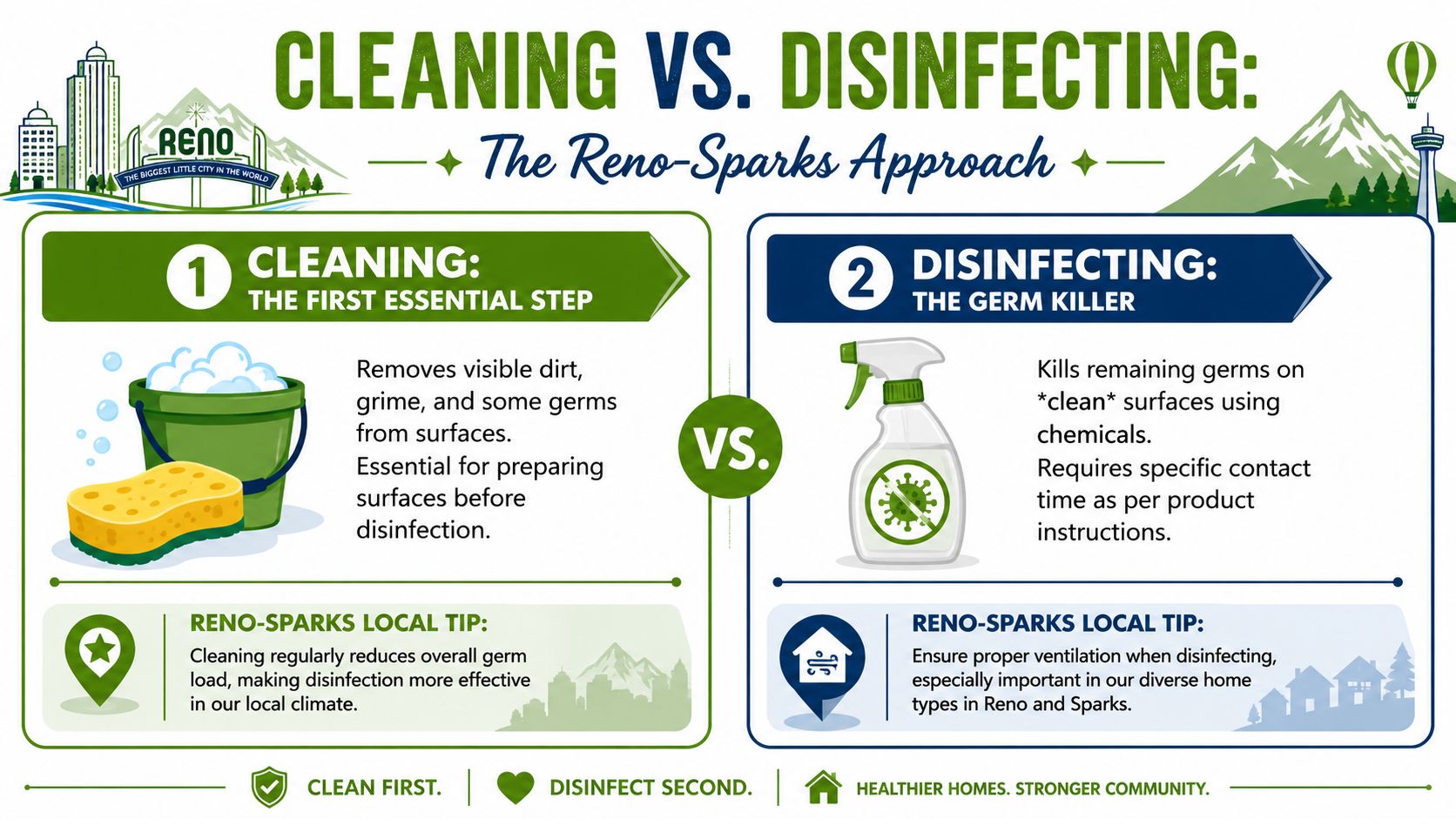
Cleaning removes dirt, grime, and some germs from a surface. Disinfecting is what kills remaining germs on a surface that's already clean. In Reno-Sparks homes, that difference matters more because so many surfaces pick up a fine layer of dust that isn't always obvious until light hits it sideways.
What We See in Reno-Sparks Homes
After windy stretches in Northwest Reno or Spanish Springs, it's common to find dust gathered along baseboards, window ledges, blinds, and the tops of switch plates. In South Reno and Damonte Ranch, newer homes can still hold construction dust in vents, trim lines, and closet shelves long after move-in.
That matters because the two-step disinfection method is the only one that reliably works. The National Center for Healthy Housing notes that surfaces need to be physically cleaned with soap and water before an EPA-registered disinfectant is used, because dirt, grease, and food residue can inactivate 70-95% of disinfectant effectiveness on contaminated surfaces, and disinfectants can't penetrate grime on their own (healthy housing cleaning and disinfection guidance).
Why local dust changes the job
In a dry climate, people often mistake a surface that looks matte for a surface that's clean. But kitchen counters, bathroom vanities, and entry tables can hold a film of dust, ash, pollen, or cooking residue that interferes with disinfectant contact.
Here's the plain version:
- Dust acts as a barrier: The product hits the dust first, not the surface underneath.
- Grease does the same thing: This is why kitchen handles and backsplash areas need a wash step.
- Ash and tracked-in debris add friction: During wildfire season or winter slush days, residue spreads further than commonly realized.
If you're comparing this to a true reset, this is also where people start realizing the difference between surface tidying and a more detailed service. A proper deep cleaning house guide helps show what gets missed when the goal is only speed.
Cleaning removes the barrier. Disinfecting works on what's left.
Over-disinfecting is another common mistake. In many situations, routine cleaning is enough. What usually needs disinfection are the high-touch surfaces and any area tied to illness, shared use, or obvious contamination. If you want a straightforward outside perspective on daily habits that support that approach, these effective home cleaning tips are worth reviewing.
Safe and Effective Disinfectant Choices
The best disinfectant isn't the harshest one on the shelf. It's the one you use correctly.
A lot of failed disinfecting jobs in homes happen because someone sprays a product, wipes it off right away, and assumes the smell means it worked. It didn't. Most disinfectants need time to stay wet on the surface.
What contact time really means
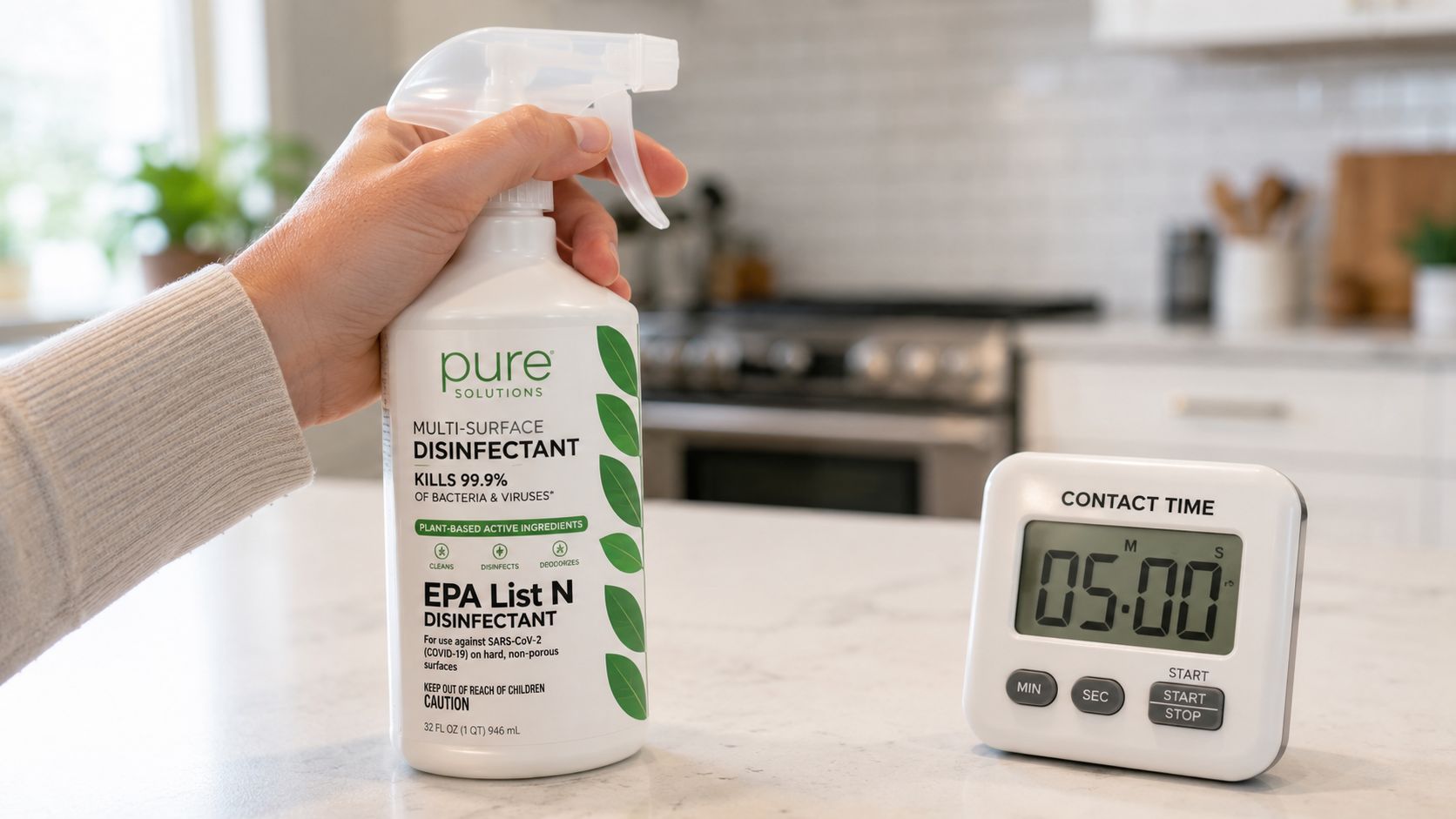
According to the CDC, most disinfectants require a contact time of 4 to 10 minutes to kill germs effectively, and the surface needs to remain visibly wet for that full period (CDC home cleaning and disinfecting guidance). That's the step often skipped.
In real homes, that means:
- Spray lightly but evenly: Enough to keep the surface wet, not dripping into outlets or seams.
- Work in sections: Don't spray the whole kitchen if it will dry before the timer is up.
- Read the label: Some products work faster than others, and some require longer dwell time.
- Reapply if needed: In dry Reno air, some surfaces dry quickly.
Better choices for family homes
If you've got kids, pets, or tight indoor airflow during smoky weather, product choice matters. Many homeowners prefer EPA-registered products with active ingredients commonly seen as lower-exposure options, such as hydrogen peroxide, citric acid, or ethyl alcohol, as long as the label fits the surface and the use case.
What doesn't work well is mixing products or guessing.
The strongest chemical isn't the smartest option. Correct use beats overuse every time.
A practical setup usually includes gloves, clean microfiber cloths, a labeled disinfectant, and a simple timer. If you're building or updating your kit, this cleaning supplies list is a solid place to start.
What to avoid
Some mistakes are dangerous, not just ineffective.
One of the biggest is mixing chemicals. Bleach and ammonia should never be combined. Ventilation also matters, especially in bathrooms, laundry rooms, and closed bedrooms. If the job involves something more serious than normal household germs, such as backups or contamination from wastewater, basic disinfecting advice isn't enough. In that situation, these sewage cleanup tips for homeowners are a better starting point before deciding whether a professional remediation crew is needed.
For everyday use, keep it simple. Clean the surface first, pick the right product, keep it wet for the label time, and ventilate the space.
A Room-by-Room Disinfection Checklist for Your Home
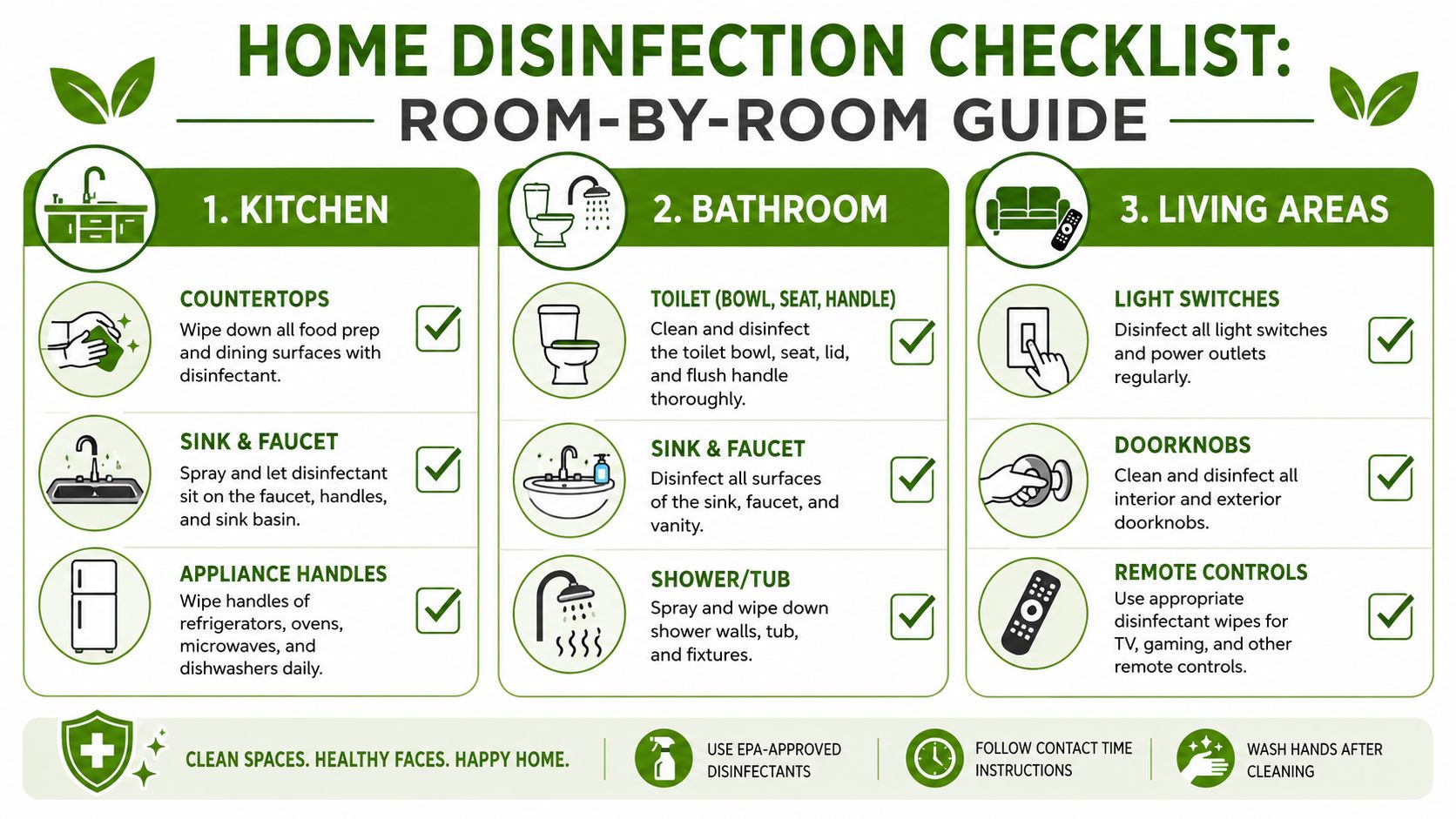
When homeowners ask how to disinfect home properly, they usually need a workflow more than they need more products. The most reliable way is to move room by room and stay focused on the spots people touch most.
Kitchen
The kitchen gets overtreated in some places and undertreated in the right ones.
Start by washing counters, appliance pulls, and the sink area with soap or detergent to remove food film and crumbs. Then disinfect the surfaces that see repeated hand contact.
Focus here:
- Counter edges and prep zones: Especially near the coffee maker, toaster, and trash pullout
- Refrigerator and microwave handles: These get touched constantly and are easy to miss
- Faucet and sink controls: One of the most-used areas in the room
- Chair backs and table edges: In family homes, these often carry more hand contact than center tabletops
If the home has dusty vents or a layer of grit coming in from open windows, it's worth clearing that first. Dust from neglected airflow points tends to redistribute fast, which is why this guide on how to clean air vents matters more than people think.
A quick visual walkthrough can help before you start:
Bathroom
Bathrooms are where Reno-Sparks conditions really show up. Hard water leaves mineral film on faucets, shower glass, and handles, and that buildup makes routine wipe-downs less effective.
In nearby Dayton, water hardness reaches 15 grains per gallon , which is classified as very hard and leads to rapid calcium and magnesium buildup on shower fixtures, glass doors, and faucets within weeks (Dayton hard water example). Reno-area homes see the same kind of cleaning challenge even if the exact water conditions vary by neighborhood and setup.
Use a two-part approach:
- Remove mineral film first
- Then disinfect touchpoints
Key targets:
- Toilet handle, seat, lid, and surrounding touch zones
- Sink handles and faucet base
- Vanity pulls and drawer fronts
- Shower door handle and nearby tile edges
For visible mineral deposits on chrome or stainless fixtures, a 50/50 mix of water and vinegar can help break down buildup if it's allowed to soak for at least 15 minutes before rinsing (hard water stain removal method). That's a cleaning step, not the disinfecting step.
Living areas and bedrooms
These rooms fool people because they don't look dirty.
But in Damonte Ranch homes after a windy week, it's common to find fine dust on remotes, lamp switches, headboards, and nightstands even when the floors were vacuumed recently. Electronics and touchpoints collect a lot of hand contact in a short time.
Prioritize:
- Light switches
- Doorknobs
- Remote controls
- Bedside tables
- Desk surfaces
- Closet handles
In homes with pets, the issue isn't just hair on the floor. Hair and dust collect around furniture legs, under beds, and along trim where hands also touch walls and switches.
For soft surfaces like couches, rugs, and bedding, cleaning and laundering usually matter more than trying to spray everything with disinfectant.
When to Call a Pro Disinfection for Special Cases
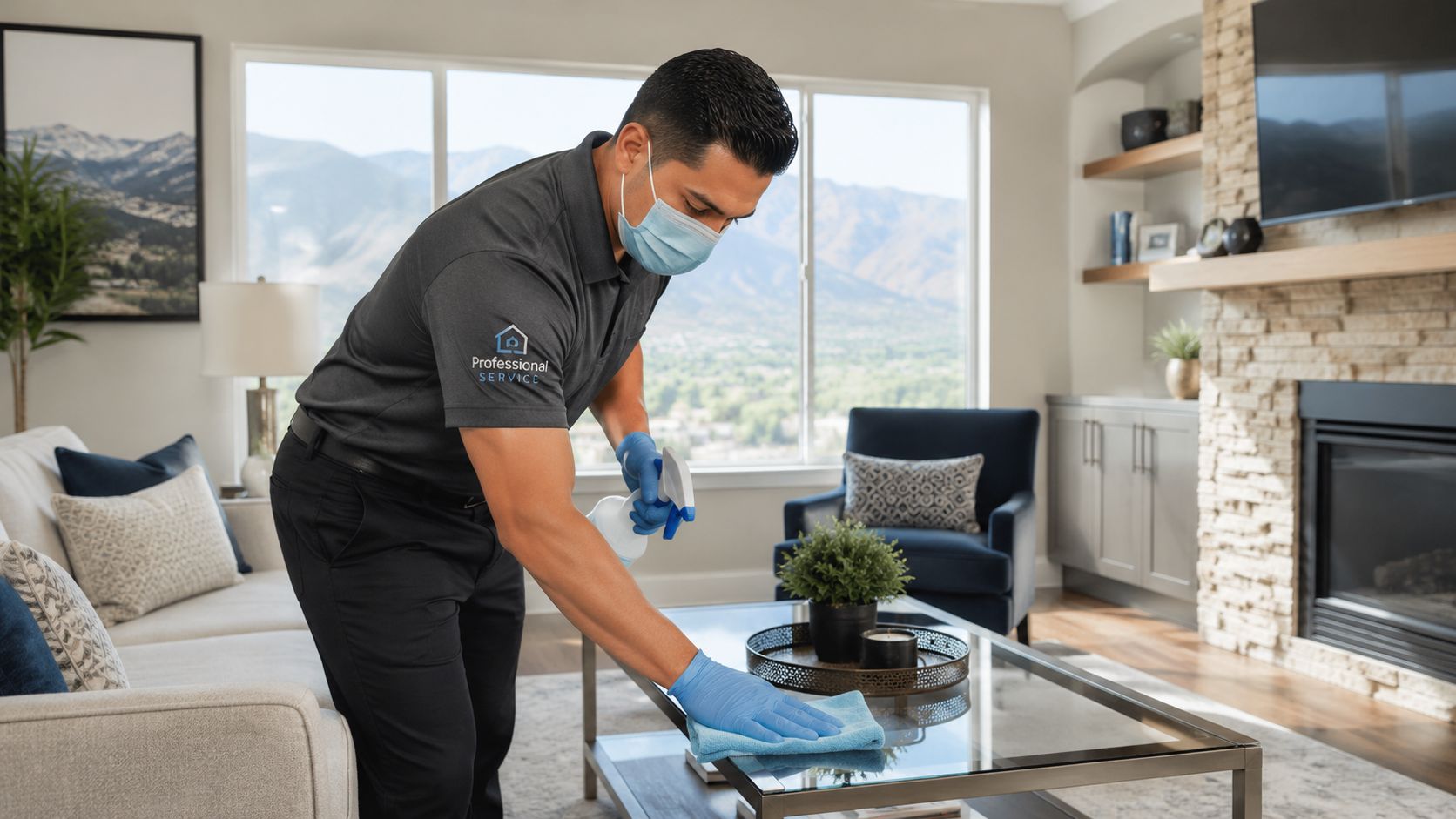
DIY disinfecting works well for normal upkeep. It stops being simple when time is short, dust is heavy, or when the need for a thorough clean is greater than usual.
That's what happens in Reno-Sparks move-outs, post-construction resets, and short-turn turnovers. A home can look mostly fine at first glance and still fail when closely examined because the problem is in the details people inspect closely.
Situations where a pro usually makes sense
In Sparks move-out cleans, kitchens often need more than disinfecting. Cabinet faces may be sticky, baseboards hold dust, bathroom fixtures have mineral scale, and the inside of appliances can affect the whole impression of the property.
In Spanish Springs and newer-build areas, post-construction cleanup is its own category. Fine drywall dust settles on trim, vents, sills, and closet shelving. Until that dust is removed, disinfecting high-touch surfaces is incomplete.
In Midtown Reno and South Reno short-term rentals, the issue is speed plus consistency. Hosts often need a guest-ready home on a tight window, with bathrooms, remotes, switches, countertops, and entry touchpoints handled without shortcuts.
What's included in a professional disinfecting-focused clean
A detailed service usually covers:
- Bathrooms: Toilets, sink areas, counters, mirrors, handles, and fixture wipe-downs
- Kitchen degrease: Counters, appliance exteriors, sink, faucet, and handle touchpoints
- Floors and edges: Vacuuming, mopping, and detail work along baseboards where dust settles
- High-touch disinfecting: Switches, doorknobs, remotes, pulls, and shared contact points
- Dust removal: Ledges, sills, baseboards, and reachable surfaces affected by Reno dust
- Fixtures and mirrors: Especially in bathrooms where mineral film can dull the finish
Common add-ons include:
- Inside oven
- Inside fridge
- Inside cabinets
- Wall spot cleaning
- Pet hair focus areas
- Heavy buildup areas
- Interior window cleaning
Schedule Clean Inspect Enjoy
The easiest cleaning systems are the ones people can stick with.
- Schedule: Book online or call. You'll get a confirmation and arrival window so the day isn't wasted waiting around.
- Clean: The crew arrives with supplies and follows a checklist based on the home's condition and priorities.
- Inspect: A quick quality check catches missed details before the job is considered done.
- Enjoy: You come back to a home that feels cleaner, safer, and less stressful to manage.
Price range
Pricing depends on bedrooms, bathrooms, square footage, condition, and add-ons. Most homeowners request a custom estimate so the quote matches the actual scope.
Most cleans range from $200 to $600 depending on size, condition, and add-ons.
Reno dust has a way of showing up on baseboards, blinds, and floors faster than expected. In Sparks homes, pet hair and hard water buildup are two of the most common things people need help getting under control before a showing, turnover, or final walkthrough.
Your Disinfection Questions Answered
How often should I actually disinfect my home
Not every home needs constant disinfecting. In many situations, regular cleaning is enough, and targeted disinfecting makes the most sense when someone is sick, a person has a weakened immune system, or shared high-touch areas need extra attention.
A good rule for most Reno-Sparks homes is to clean routinely and disinfect intentionally.
Can you get rid of wildfire ash residue and smell
Yes, but it usually starts with removal, not disinfection.
Ash on window tracks, sills, entry floors, and hard surfaces needs to be physically cleaned away first. If smoke season has left a fine residue inside, wiping random spots with disinfectant won't solve it. The home usually needs dust removal, surface washing, floor care, and fabric attention before the space feels normal again.
Is professional disinfection worth it for a move-out clean
Often, yes. Move-out pressure is different because you're not just cleaning for yourself. You're cleaning for a landlord, property manager, buyer, or incoming guest who's looking closely at kitchens, bathrooms, floors, and overlooked edges.
If deposit return, turnover timing, or a walkthrough matters, professional help can take a lot of risk off your plate.
Are supplies included when a crew comes out
Most professional crews bring their own supplies and tools, which makes the appointment simpler for the homeowner or tenant. That's especially helpful for larger jobs, second homes, rentals, and vacant properties where nobody wants to scramble for microfiber cloths, gloves, or the right bathroom products at the last minute.
Don't mix bleach with ammonia or other cleaners, and don't skip ventilation in closed spaces. Those are two of the most common safety mistakes in home disinfecting, and poor ventilation can lead to respiratory irritation for 30-40% of users in enclosed spaces as noted in earlier CDC guidance.
Move-out cleans around Reno-Sparks often come down to the details landlords notice first, kitchens, bathrooms, floors, and baseboards. And if you've lived through one windy week in this area, you already know dust doesn't stay politely in one room.
If your home needs more than a quick wipe-down, professional house cleaning Reno NV service is often the fastest way to get clean surfaces before disinfecting. Altitude Cleaning Crew provides reliable house cleaning in Reno, Sparks, Spanish Springs, South Reno, Northwest Reno, Damonte Ranch, Somersett, Midtown Reno, and Wingfield Springs. Call 775-376-5527 or book online at Altitude Cleaning Crew booking.