
How to Clean Air Vents: A Reno Homeowner's Guide
Learn how to clean air vents in your Reno home. Get DIY tips for desert dust and know when to hire a pro for a deep clean that actually works.
When dust keeps appearing around vents, baseboards, and floors despite regular wiping, the need for house cleaning Reno NV often arises from a desire to address two issues: clean-looking vents and cleaner-feeling air. In Reno, Sparks, Spanish Springs, and the rest of the Truckee Meadows, that matters more than people expect because desert dust, pollen, pet hair, and wildfire season all settle into the same places fast.
A vent can look dusty for simple reasons, or it can be the first visible sign that substantial buildup is in the return grille, the filter, or deeper in the HVAC system. Knowing the difference saves time, avoids pointless scrubbing, and helps you decide whether a basic DIY clean is enough or whether the home needs a broader reset.
Your Guide to Cleaner Air in Reno
You clean the vent cover on Sunday, run the vacuum, change the sheets, and by midweek there is already a light film back on the grille and the nearby trim. In Reno, that usually means more than a dirty vent face. Desert dust is fine enough to keep recirculating, pet hair collects at returns, and wildfire season adds ash that settles on upper surfaces fast.

A DIY vent cleaning has its place. It removes visible dust from the cover, clears hair and lint from the reachable opening, and improves how the room looks. For many homes, that is enough to deal with light buildup around a supply vent. If dust keeps showing up on shelves, sills, and hard floors, the better fix usually includes room-by-room dust control habits like those in this guide on how to prevent dust in house.
The bigger question is not just how to wipe a vent. It is whether that quick cleanup will change the air in the room in any noticeable way.
Opening Takeaways
- DIY vent cleaning helps with surface buildup such as dust on the grille, light debris just inside the opening, and pet hair around return covers.
- It does not address every dust problem in the system or the home. A wiped vent can still sit in a room with dirty baseboards, loaded returns, neglected filters, and fine dust that keeps resettling.
- Professional help becomes more useful when the problem goes beyond the vent face. If dust is blowing out, airflow seems restricted, odors start when the system runs, or ash and fine debris keep spreading through the room, a simple wipe-down is too limited.
Practical rule: If the buildup is on the cover, clean the cover. If the room keeps getting dusty right after cleaning, look at the return grille, the filter, and the surrounding surfaces before assuming the vent itself is the whole issue.
This guide is for homeowners, renters, Airbnb hosts, and property managers who want a straight answer to how to clean air vents in Reno homes. A quick wipe can improve appearance. A more effective result comes from deciding whether you are dealing with basic surface dust or a wider indoor air problem tied to our local mix of grit, pollen, pet hair, and seasonal smoke.
What We See in Reno-Sparks Homes
Reno-Sparks homes don't collect one kind of mess. They collect layers.
In Damonte Ranch and other newer developments, floor registers often catch that sandy, gritty dust that gets tracked in and then pulled toward returns. It doesn't always look dramatic, but when you remove the cover, you can usually see the heavier debris sitting just inside the bend.
In Sparks and Spanish Springs homes with dogs, the return grilles are often the bigger issue. The vent covers in bedrooms may look manageable, but the returns pick up the combination of pet hair, lint, and fine dust that builds a fuzzy mat across the grille face.
Local field notes by area
- South Reno and Damonte Ranch: Fine tan dust on floor vents, especially near entries, hallways, and open-plan living rooms.
- Midtown rentals and older homes: Painted-over vent covers, older screws, and brittle finishes that chip if someone gets too aggressive.
- Somersett and Northwest Reno: Wildfire ash settling on ceiling grilles and upper trim during smoke season.
- Wingfield Springs and Sparks: Carpeted bedrooms where pet hair drifts toward returns and collects around the edges.
One local pattern people miss is what happens after remodels. We often see homes where the visible vent face got wiped down, but fine renovation dust still lingers in the surrounding room and around the nearest return. If you've had drywall, flooring, cabinet, or tile work done, the better reference point is broader cleanup, not just vent cleaning. That's why many property owners dealing with that kind of residue look first at cleaning after construction before they worry about a single dusty register.
In Sparks move-out cleans, kitchens and living areas can look decent at first glance, but the return grille usually tells the real story. That's where dust, hair, and lint have been collecting the whole lease.
Why local conditions matter
Desert winds don't leave behind fluffy dust. They leave behind fine particles that cling to vent louvers, settle in corners, and show up again after the system runs. During wildfire season, that residue tends to be even finer. In carpeted homes, pet hair grabs onto it and makes the buildup look worse around returns.
That changes expectations. A quick wipe helps the cover. It doesn't fix the surrounding dust cycle by itself.
How to Clean Air Vents the Right Way
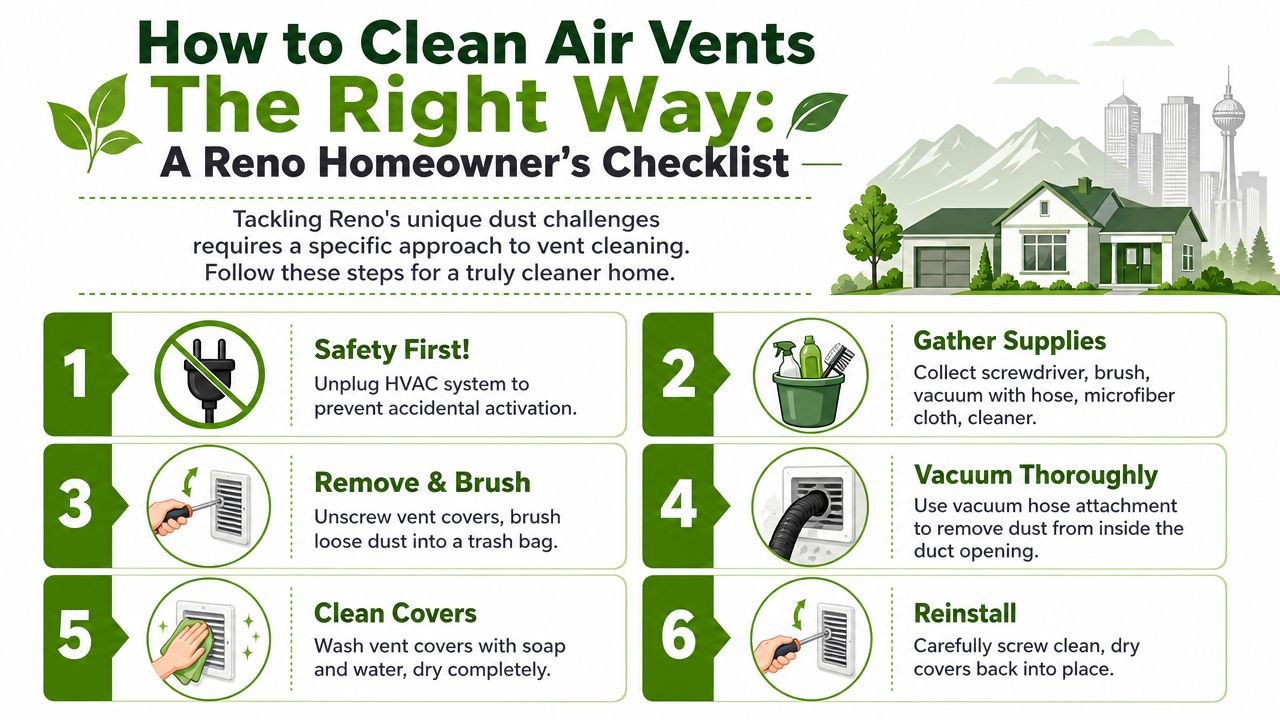
If you're handling this yourself, the goal is source removal inside the accessible opening , not just making the grille look better. A technically sound DIY workflow starts with shutting off HVAC power, removing and washing grille covers, then using a long brush and a shop vacuum with hose attachments to clean the reachable duct opening, as described in COIT's step-by-step vent cleaning guide.
What you'll want nearby
Reno dust is so fine that the wrong tool just spreads it around. A solid DIY setup usually includes:
- Screwdriver: For vent covers that are secured, especially wall and ceiling grilles
- Shop vacuum with hose: Better reach than an upright vacuum
- Long flexible brush: To loosen dust just inside the opening
- Microfiber cloths: Better than paper towels for fine dust
- Mild soap and water: For washing metal or plastic grille covers
- Step stool or ladder: If you're cleaning ceiling diffusers
- Soft brush attachment: Helpful around painted trim and older covers
If you're dealing with very fine dust from a renovation or garage-adjacent entry, choosing the right vacuum matters more than often realized. This breakdown of the best vacuum for construction dust is useful because standard household vacuums often struggle with the powdery residue common in local homes.
The actual cleaning steps
-
Turn off the HVAC system
Don't skip this. You don't want the system pulling loose dust while you're cleaning. -
Remove the grille or register cover
Set screws aside somewhere obvious. In older homes, back them out gently so you don't strip them or crack paint around the plate. -
Wash the cover fully
Use mild soap and water. If the vent has greasy buildup, which is common near kitchen returns, let it soak a bit and use a soft brush.
Before the next step, this video gives a useful visual on the difference between a quick wipe and a more effective clean.
-
Brush and vacuum the accessible duct opening
This is the part many people skip. Loosen buildup with a brush, then pull it out with the vacuum hose. You're cleaning what you can reach, not pretending to remediate the whole system. -
Clean around the vent
Wipe the surrounding wall, ceiling, or floor edge. In Reno homes, the halo around the vent is often what makes the area still look dirty even after the cover is clean. -
Dry everything and reinstall carefully
Make sure the cover is dry before it goes back on.
What's included in a thorough DIY vent clean
- Vent cover removal and wash
- Vacuuming the visible opening
- Brushing loose dust toward the vacuum
- Wiping nearby trim, wall, or floor surface
- Cleaning the return grille face
- Checking for obvious signs of heavier buildup
Basic DIY vent cleaning improves appearance and removes reachable debris. It doesn't clean the full HVAC system.
Where debris usually hides
A practical benchmark is to clean more than the register face. Debris tends to build up in the blower compartment, return drops, and nearby duct bends where airflow slows, and professional process descriptions commonly use agitation tools or compressed air to move debris toward a vacuum before access points are sealed again, as shown in this professional process walkthrough on YouTube.
That doesn't mean every homeowner should open up the system. It means a dusty grille can be the least important part of the problem.
When a Simple Wipe-Down Is Not Enough
You wipe the grille, put it back, turn on the system, and a light ring of dust shows up on the wall again by the end of the week. In Reno, that usually means the problem is bigger than the vent cover. Desert dust, pet hair, pollen, and smoke residue do not stay neatly on the metal face. They collect in the return side, settle around registers, and keep recirculating through the room.
In Northwest Reno rentals, I see this after turnovers all the time. The vent cover looks clean enough for photos or a walkthrough, but once the heat or AC runs, fine debris starts showing up on nearby floors, bedding, and baseboards. A wiped grille improved the appearance. It did not fix the source.
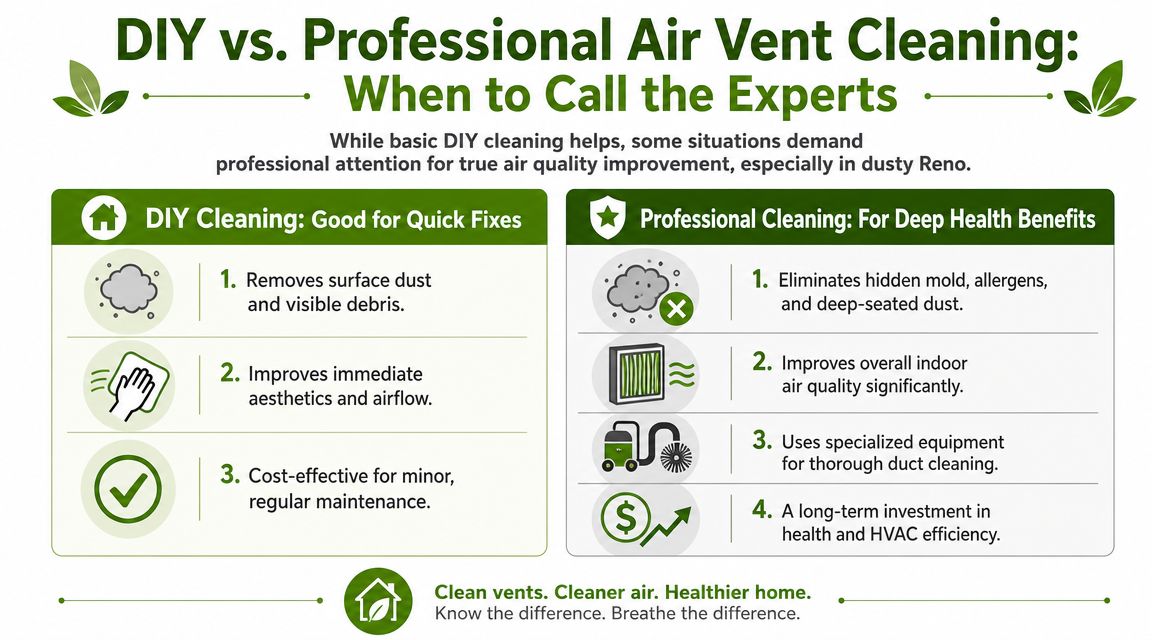
Signs the issue goes past the vent face
Earlier in the article, we covered the standard for treating duct cleaning as an as-needed job, not something every house needs on a schedule. That matters in real homes, because a dusty grille by itself is common. These signs point to a larger problem:
- Dust or dark specks blow out when the system starts
- One or two rooms stay noticeably dustier than the rest
- Airflow drops at specific vents
- The return grille loads up with fuzz fast
- Odors show up only when heating or cooling is running
- There was recent remodeling, water damage, or pest activity
Wildfire season changes the equation too. After smoky weeks, homes often have a fine film on horizontal surfaces even when the vent cover looks acceptable. In that case, the HVAC may be part of the issue, but so is the layer of ash and dust already sitting throughout the home.
Vent cleaning and whole-home dust control are different jobs
A lot of homeowners ask about vents, though the core complaint is, 'Why is my house dusty again two days after I cleaned it?' That is a room-by-room dust control problem as much as a vent problem. If residue has already spread to sills, fan blades, blinds, trim, and floors, the fix usually involves both targeted vent attention and a full surface reset. Looking at what a comprehensive home deep cleaning covers can help separate those tasks.
That trade-off matters. A DIY vent clean can remove what you can reach and improve how the register looks. It will not pull smoke residue off ledges, remove pet hair packed along baseboards, or address buildup farther inside the system. For many Reno-Sparks homes, the practical goal is cleaner air in the rooms people live in, not just a cleaner-looking vent.
One problem to treat differently
Staining around a vent opening is not always dust. If the drywall has spotting, discoloration, or signs of past moisture, stop treating it like routine vent grime. Start with this guide to mold on sheetrock near vents and drywall before you scrub or paint over it.
A wiped vent cover improves appearance. Cleaner indoor air usually requires dealing with the dust and residue the system has already spread through the home.
Our Process for a Cleaner, Healthier Reno Home
For most Reno-area homes, the practical fix isn't "clean the vent and hope." It's cleaning the places where vent dust settles and deciding whether the HVAC system also needs separate professional attention.
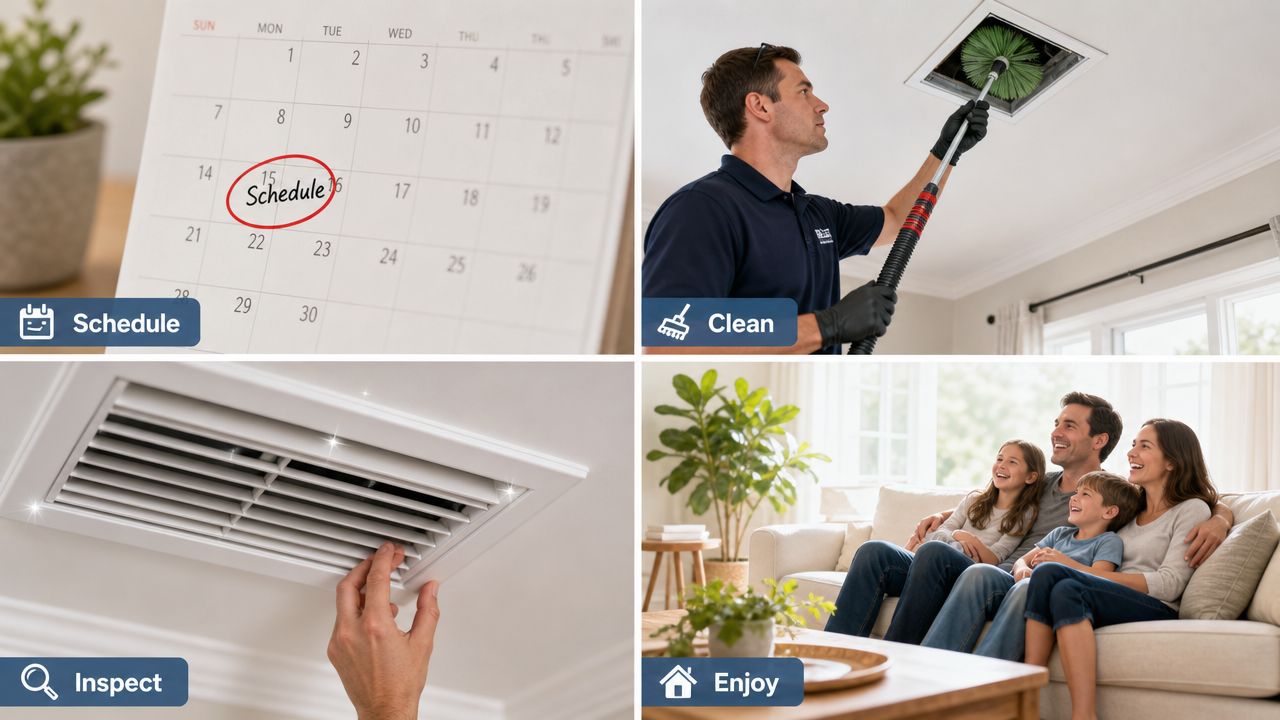
Schedule
Book online or call. You'll get a confirmation and an arrival window, which matters when you're juggling work, school pickup, guest turnover, or a property walkthrough in Reno or Sparks.
Clean
Cleaners arrive with supplies and work from a checklist. For homes where vent dust is part of the complaint, the focus usually isn't just the vent face. It's the surrounding dust pattern throughout the room.
What's typically included in a deeper whole-home reset:
- Baseboards and ledges: Where fine dust settles after airflow moves it around
- Floors vacuumed and mopped: Especially around registers, returns, and bed edges
- Kitchen and bathroom wipe-downs: Because dust doesn't stay in one room
- Mirrors, counters, and fixtures: To remove the light film that builds during dusty weeks
- Window sills and interior ledges: Common collection points during wind and smoke season
- Exterior vent covers and nearby trim: As part of detailed surface cleaning
Optional add-ons often make sense when dust is heavy:
- Inside oven
- Inside fridge
- Inside cabinets
- Wall spot cleaning
- Pet hair focus areas
- Heavy buildup areas
Inspect
After the clean, a quick quality check catches the details that stand out in real homes. That includes dust left on vent slats, grit in floor vent corners, or residue still sitting on the trim around returns.
Enjoy
You come back to a home that feels reset, not just spot-cleaned.
For the HVAC side, the standard is separate. NADCA recommends cleaning the entire HVAC system , not just visible vents, and many residential guidance materials pair that with about every 3 to 5 years for full system cleaning, with more frequent attention in some homes. NADCA's proper cleaning methods for homeowners also stress source removal using agitation tools and negative pressure. If you're trying to think long term about system care, this explanation of long-term HVAC system benefits is a helpful companion to regular home cleaning.
Price range
Pricing depends on bedrooms, bathrooms, square footage, condition, and add-ons. Most homeowners request a custom estimate so the quote matches the actual scope.
For whole-home cleaning around vent-related dust problems, most cleans range from $180 to $500 depending on size, condition, and add-ons.
Reno dust has a way of showing up on baseboards, blinds, and floors faster than expected. In Sparks homes, pet hair and hard water buildup are two of the most common details people want handled at the same time.
Reno Air Vent Cleaning FAQ
How often should I clean vents in Reno?
In Reno, the better question is not how often to wipe the vent cover. It is how often your home is loading up with desert dust, pet hair, pollen, or wildfire ash.
A visible wipe-down makes sense anytime the grille looks dusty or the return is collecting buildup. That is basic upkeep. In homes near busy roads, open land, or heavy wind exposure, that can be part of a regular cleaning routine because the dust comes back fast.
A full HVAC cleaning runs on a different schedule and solves a different problem. If dust blows out when the system starts, the smell gets worse when the air kicks on, or the returns are packed with buildup, cleaning the cover alone will not change much. Earlier in this guide, we covered the whole-system standard and why surface cleaning only reaches part of the problem.
Will cleaning vents fix wildfire smoke smell?
It can help if the smell is coming from ash and residue on the grille or just inside the opening you can reach safely.
If the odor shows up every time the system runs, the source is often deeper. At that point, check the filter first. Then look at returns and HVAC components. Smoke residue tends to spread farther than homeowners expect, especially after a rough fire season.
I'm renting in Midtown Reno. Can I remove the vent covers?
Sometimes, but check your lease before you start. In older rentals, vent covers are often painted in place, and forcing them loose can chip paint, strip screws, or leave damage that gets flagged at move-out.
For renters, the safer DIY option is simple. Vacuum the grille face with a brush attachment, wipe the slats, and clean only the accessible area just inside the opening. If you want a renter-focused walkthrough, this guide on how to clean air vents in an apartment covers the basics.
Are supplies usually included in a professional home clean?
Yes. For a standard or deep house clean, the cleaning team usually brings supplies and tools.
Mention heavy pet hair, ash residue, or extra dust ahead of time. Those conditions change the amount of detail work needed around returns, baseboards, blinds, and floors, and they affect how much improvement you will see after the clean.
Can same-day or short-notice cleaning help before an inspection?
Sometimes, depending on the schedule and the condition of the home.
For inspections and walkthroughs, visible dust matters more than people think. Grilles, returns, floor vent corners, baseboards, and the trim around vents are the spots that stand out fast. A short-notice clean can improve those surfaces, but it will not replace deeper HVAC work if the actual issue is dust circulating through the system.
That distinction matters in Reno. A quick vent wipe makes the room look better. A deeper cleaning approach does more to reduce the dust that keeps settling back onto the same surfaces.
If vent dust keeps coming back, the fix is usually bigger than the grille itself. Altitude Cleaning Crew provides house cleaning Reno NV homeowners, renters, and property managers can book for deep resets, move-out prep, and dust-heavy homes across Reno-Sparks. Call 775-376-5527 or book online at Altitude Cleaning Crew booking.