
How to Clean a Marble Floor: A Reno Homeowner's Guide
Learn how to clean a marble floor in Reno's dusty climate. Our guide covers hard water stains, safe mopping, and when to call a pro for lasting shine.

If you're staring at a marble floor in Reno or Sparks that still looks dull after you've mopped it, you're probably not dealing with "dirt" alone. You're dealing with a mix of abrasive desert dust, hard-water residue, and the wrong amount of moisture , which is why learning how to clean a marble floor matters more here than it would in a milder climate.
This guide is for homeowners, renters, Airbnb hosts, and property managers who want a marble floor that looks clean, feels smooth underfoot, and doesn't get slowly damaged by well-meaning cleaning habits. Around Reno-Sparks, the local conditions are half the battle.
The Reno Reality of Marble Floor Care
A lot of people notice the same thing. The marble looked bright when they moved in, but now it has a hazy cast, faint drag marks, or dull patches near the entry, kitchen, or bathroom. They mop it, it dries, and somehow it looks worse in the afternoon sun.
That usually means the floor isn't asking for more soap. It's asking for a better process.
Quick takeaways for Reno homeowners
- Dust comes first: Reno dust and tracked-in grit act like fine sandpaper on marble, so dry removal matters before any wet cleaning. For routine care, guidance commonly recommends a daily or near-daily dust-removal step and a weekly damp-mop cycle to keep grit from scratching the surface, as outlined in Bona's marble floor cleaning guidance.
- Hard water changes the game: In homes with mineral-heavy water, air-drying often leaves film, spots, or a dull look that people mistake for permanent damage. If hard-water residue is already part of your bathroom routine, this guide on removing hard water stains helps explain why floors can develop the same problem.
- Cleaner choice matters: Marble doesn't forgive acidic or harsh products. One wrong cleaner can leave an etched patch that's harder to fix than the original mess.
Why marble floors lose their shine here
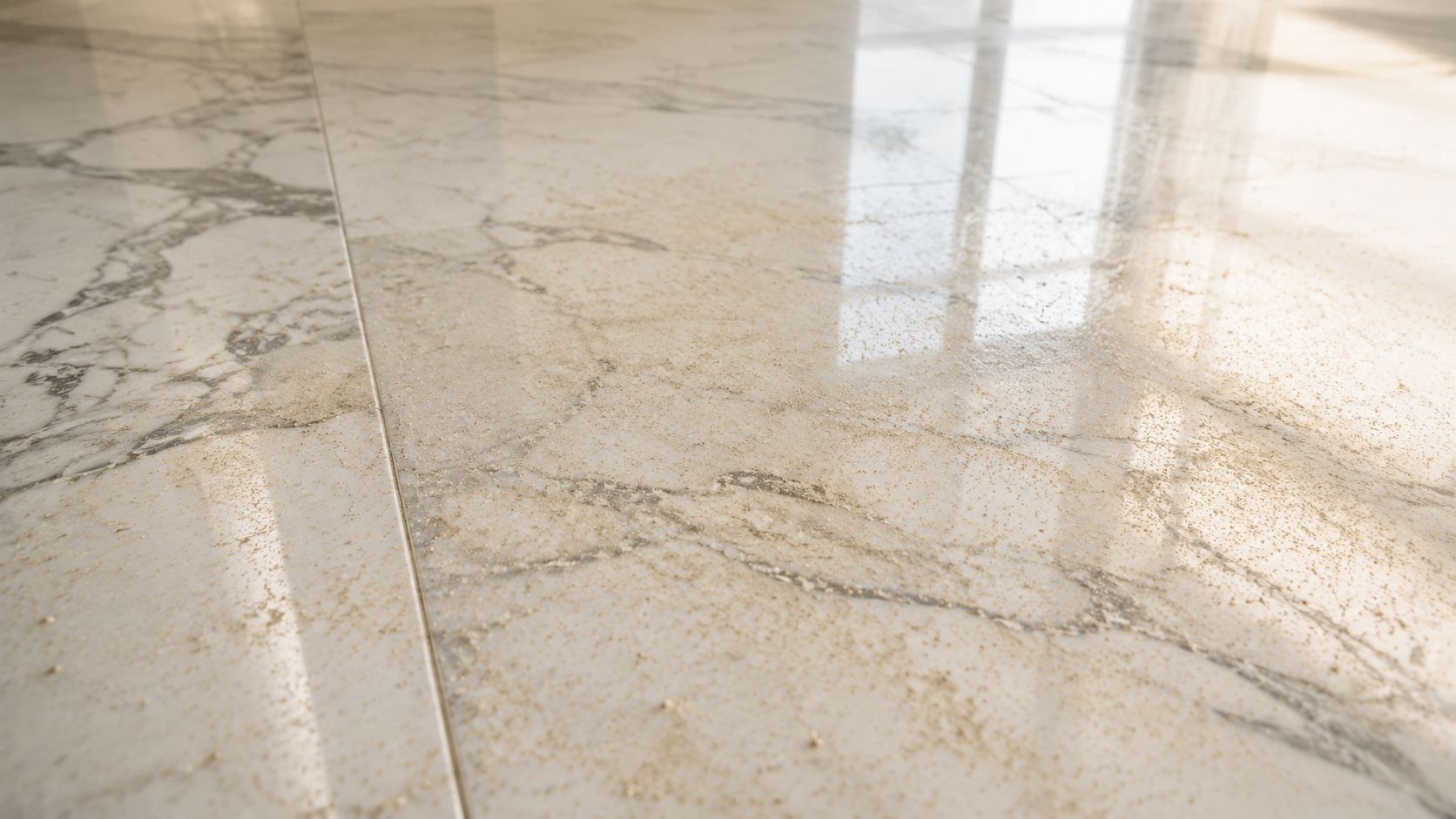
Marble is beautiful, but it isn't bulletproof. In Reno, Northwest Reno, Damonte Ranch, and Wingfield Springs, the issue often starts at the door. Fine grit blows in, settles along grout lines, then gets dragged under shoes, dog paws, or a mop head.
Practical rule: If you can feel tiny particles under your shoe or sock, don't mop yet. Remove the grit first.
Bathrooms are the other trouble zone. Marble around tubs, vanities, and toilet areas doesn't just collect normal soil. It picks up mineral residue from damp feet, overspray, and mopping with hard water. If you're comparing finishes or planning a remodel, it also helps to explore marble tile options so you know whether you're dealing with a polished look that shows every streak or a honed surface that hides a little more but still needs careful maintenance.
For situations requiring deep cleaning Reno NV because regular floor care isn't cutting it anymore, that's usually the point where marble stops being a basic mopping job and starts needing stone-safe handling.
What We See in Reno-Sparks Homes
In Somersett, after a windy week, we often see entry marble that looks clean from across the room and scratched from knee level. The dust is so fine that it settles into corners and along grout edges, but it still has enough grit to leave faint wear when people keep mopping over it.
In South Reno and Damonte Ranch bathrooms, the floor issue usually isn't obvious dirt. It's a cloudy mineral film that builds slowly around the vanity, toilet base, and walking path out of the shower. Homeowners think the shine is wearing off, but sometimes what they're really seeing is residue sitting on top.
The local patterns that keep showing up
- Wind-driven dust at entries: Common in Northwest Reno, Somersett, and Spanish Springs where dirt and grit get tracked onto lighter marble and show up fast.
- Bathroom haze from minerals: More obvious in homes where the floor gets damp often and then air-dries.
- Ash-season smear: After wildfire ash settles, a quick wet wipe can turn that fine material into a gray film if the floor wasn't dry-dusted first.
A point that doesn't get enough attention is humidity, drying, and hard-water residue , especially in bathrooms and entryways. Guidance on marble care often focuses on pH-neutral cleaners and avoiding acids, but fewer sources explain that marble should be dried right after mopping because air-drying can leave marks or dull patches, which becomes a bigger issue in hard-water areas, as discussed in this marble surface care guide from Riluxa.
One thing homeowners miss
A lot of marble-floor problems start outside the floor itself. Dust blowing in from patios, front walks, and exterior ledges eventually lands indoors. If you're trying to cut down on what gets tracked inside, this practical look at South Mountain Window Cleaning's exterior guide is worth a read because cleaner exterior surfaces usually mean less grime migrating to your entry floor.
Reno dust has a way of showing up on baseboards, window ledges, and floors faster than expected.
The Right Way to Mop Marble in a Desert Climate
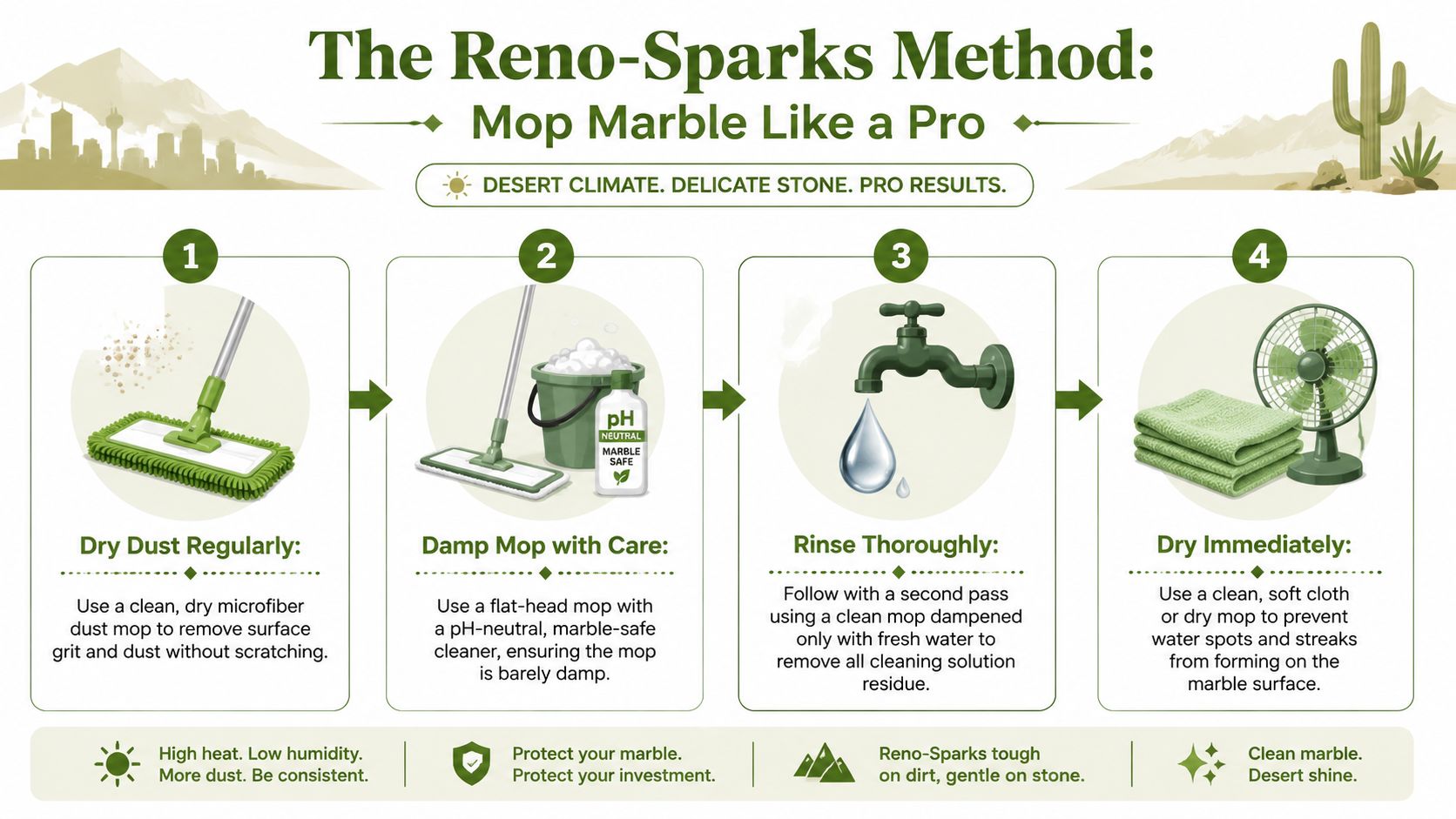
The safest routine isn't complicated, but it has to happen in the right order. For marble floors, the technical workflow is to dry-remove grit first, then mop with a slightly damp microfiber mop using a pH-neutral, acid-free cleaner, then rinse with clean water and dry immediately to prevent streaking and water spots. That's the sequence recommended in this marble floor cleaning workflow.
That order matters more in Reno than people think.
Start dry, not wet
If you only remember one thing, remember this: don't start with a bucket.
Dust, pet hair, sand, and windblown grit should come off with a clean dry microfiber dust mop or a vacuum setup that's safe for hard floors. On marble, wetting that debris before it's removed can drag it across the finish.
For households trying to keep up with local dust, the benchmark can be more frequent than people expect. Granite Gold notes dusting should be done at least once a week in a 2-adult household, twice a week in homes with a child or pet, and three times or more in high-traffic homes, according to their marble floor care recommendations.
Use less water than you think
A marble floor should be mopped with a slightly damp microfiber mop , not a soaked string mop. The mop should feel controlled, not drippy.
What works best in local homes:
- Use a flat microfiber mop: It picks up fine dust better than older cotton styles.
- Choose a pH-neutral cleaner: If the bottle promises to cut lime, dissolve soap scum, or blast buildup, it's probably too aggressive for marble.
- Work in small sections: That matters in bathrooms and entries where minerals can leave a film if solution sits too long.
If you're building a safer floor-care setup, this cleaning supplies list is a useful starting point for microfiber tools, mop types, and general house-cleaning basics.
Marble doesn't need more product. It needs less residue left behind.
Here's a quick visual walkthrough before you try it yourself:
Rinse and dry right away
This is the step people skip, especially when they're in a hurry.
After cleaning, do a second pass with clean water on a fresh damp mop or cloth, then dry the floor immediately with a soft towel or dry microfiber pad. In Reno and Sparks, that last pass is what keeps hard-water spotting and streaking from settling on polished marble.
A simple way to understand it is:
| Stage | What you're removing | What goes wrong if you skip it |
|---|---|---|
| Dry dusting | grit, ash, sand, pet hair | surface scratching during mopping |
| Damp mopping | soil and residue | film stays on the floor |
| Rinse and dry | cleaner trace and water | streaks, spots, dull haze |
A professional visit can make sense in homes with kids, dogs, or heavy entry traffic. Altitude Cleaning Crew handles deep-clean resets that include detailed dust removal and floor-safe cleaning when routine upkeep has fallen behind.
How to Handle Common Stains and Etching
Not every mark on marble is the same. That's where a lot of DIY fixes go sideways.
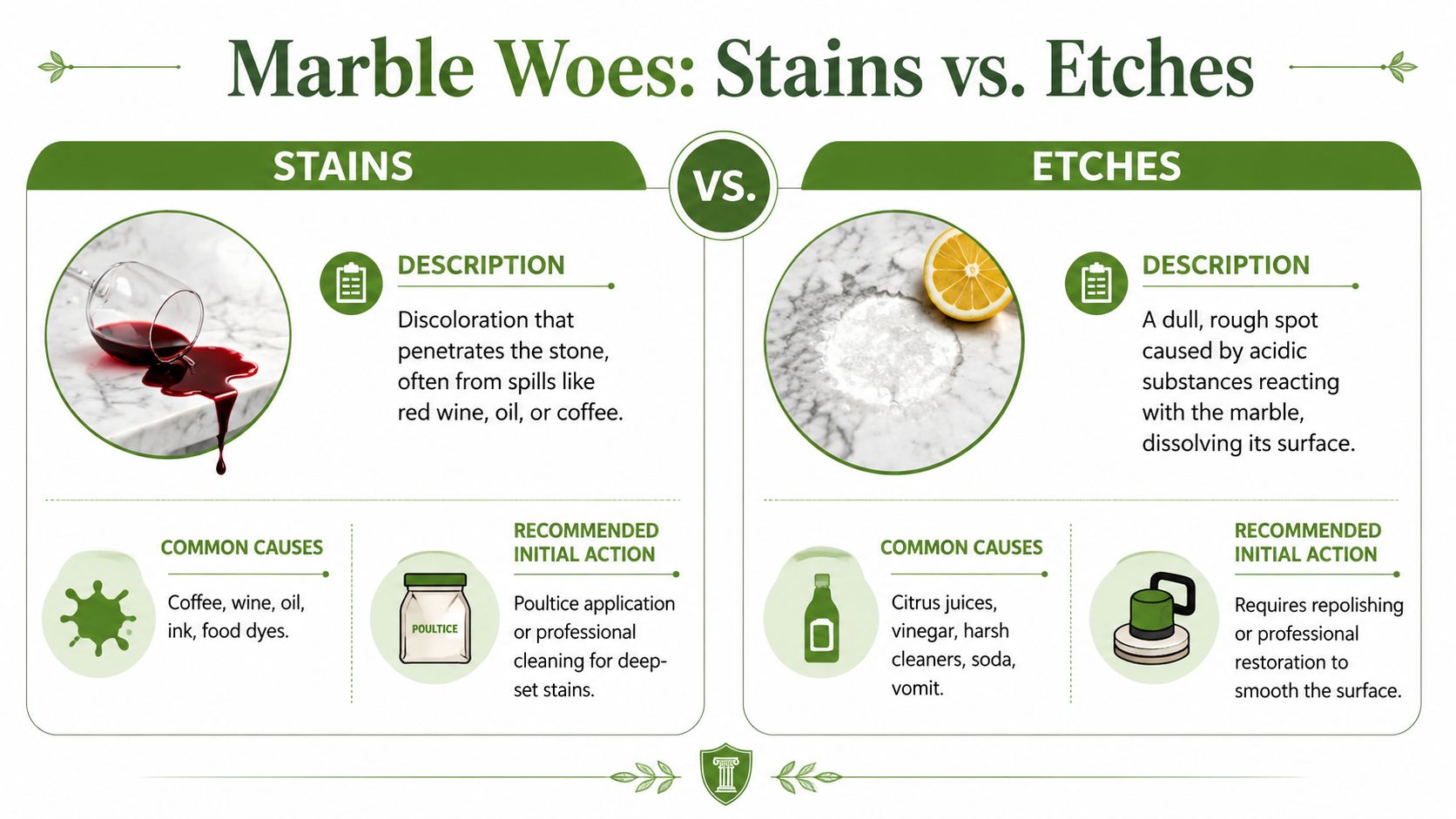
A stain is discoloration that has soaked into the stone. An etch is surface damage, usually a dull or rough-looking patch caused by an acidic product or spill reacting with the marble itself. One sits in the stone. The other changes the surface.
If it's a stain
Coffee, oil, food dye, or tracked-in grime can leave a discolored patch that doesn't lift with normal mopping. For those, a poultice is the usual first-aid move. The basic idea is to apply a paste that draws the stain upward over time rather than scrubbing harder.
What helps:
- Blot first: Don't rub a fresh spill deeper into the stone.
- Test in a small area: Marble can react differently depending on finish and prior sealing.
- Give it time: Deep-set discoloration rarely disappears on the first attempt.
If you're trying to choose products that are gentler on stone surfaces in general, this overview of effective cleaners for natural stone pavers is useful for understanding the kind of stone-safe approach you want.
If it's an etch
Etching won't mop out. It often looks lighter, flatter, or more matte than the surrounding area. On polished marble, it can stand out badly under bathroom lighting or afternoon sun.
We recently visited a home in Midtown Reno where the owner had tried to clean a hard water ring on their marble bathroom floor with a popular bathroom cleaner. The cleaner removed the ring but left a much larger dull patch that was more noticeable than the original problem. That's why pH is everything with marble.
What to watch for: If the spot feels smooth but looks dull, or feels slightly rough under your fingertips, you're probably dealing with etching rather than a simple stain.
When DIY stops helping
If the mark has changed the sheen of the stone, home cleaning usually won't restore it. That's when polishing or restoration comes into the conversation.
Bathrooms are especially tricky because the same products people use on shower tile can ruin marble floors. If that sounds familiar, this guide on cleaning a marble shower explains why stone-safe habits matter even more in wet areas.
Move-out cleans around Reno-Sparks often come down to the details landlords notice first, and damaged-looking bathroom floors are one of them.
Sealing and Polishing Your Marble Floors
Routine cleaning keeps marble from getting worse. Sealing and polishing are what protect it over the long run.
A sealer works like a temporary barrier. It doesn't make marble indestructible, but it helps slow down stain absorption and makes routine cleanup easier. In Reno, your floor's sealant is its first line of defense against the fine grit that blows in on a windy day.
When sealing helps most
Sealing is especially useful on marble in:
- Entryways: where dust and outdoor debris get tracked in
- Bathrooms: where damp feet and mineral-heavy water leave residue
- Kitchens: where spills need time to be noticed and cleaned safely
For protection, sealing is commonly recommended every 3 to 6 months , and some stone-care sources advise letting sealer cure overnight before foot traffic resumes, as noted in Granite Gold's marble floor care article.
Polishing is different from cleaning
Polishing isn't about removing crumbs or residue. It's about improving the appearance of a surface that has gone flat from wear, light scratching, or etching. That's where DIY gets risky.
Using the wrong pad, too much pressure, or the wrong product can leave swirl marks or uneven sheen. Homeowners sometimes assume a shinier product will fix dull marble, but film-forming products often create a temporary cosmetic gloss and a bigger cleanup problem later.
A good sealer buys you time. It doesn't replace careful cleaning.
If you're comparing stone-care habits across surfaces, this article on granite cleaner DIY helps show why natural stone needs a different approach than standard household flooring.
For lightly used marble in a well-maintained home, some owners handle sealing themselves. For larger areas, visible dullness, or patchy results from past attempts, professional polishing usually gives a more even finish without the guesswork.
Your Marble Floor Rescue Plan
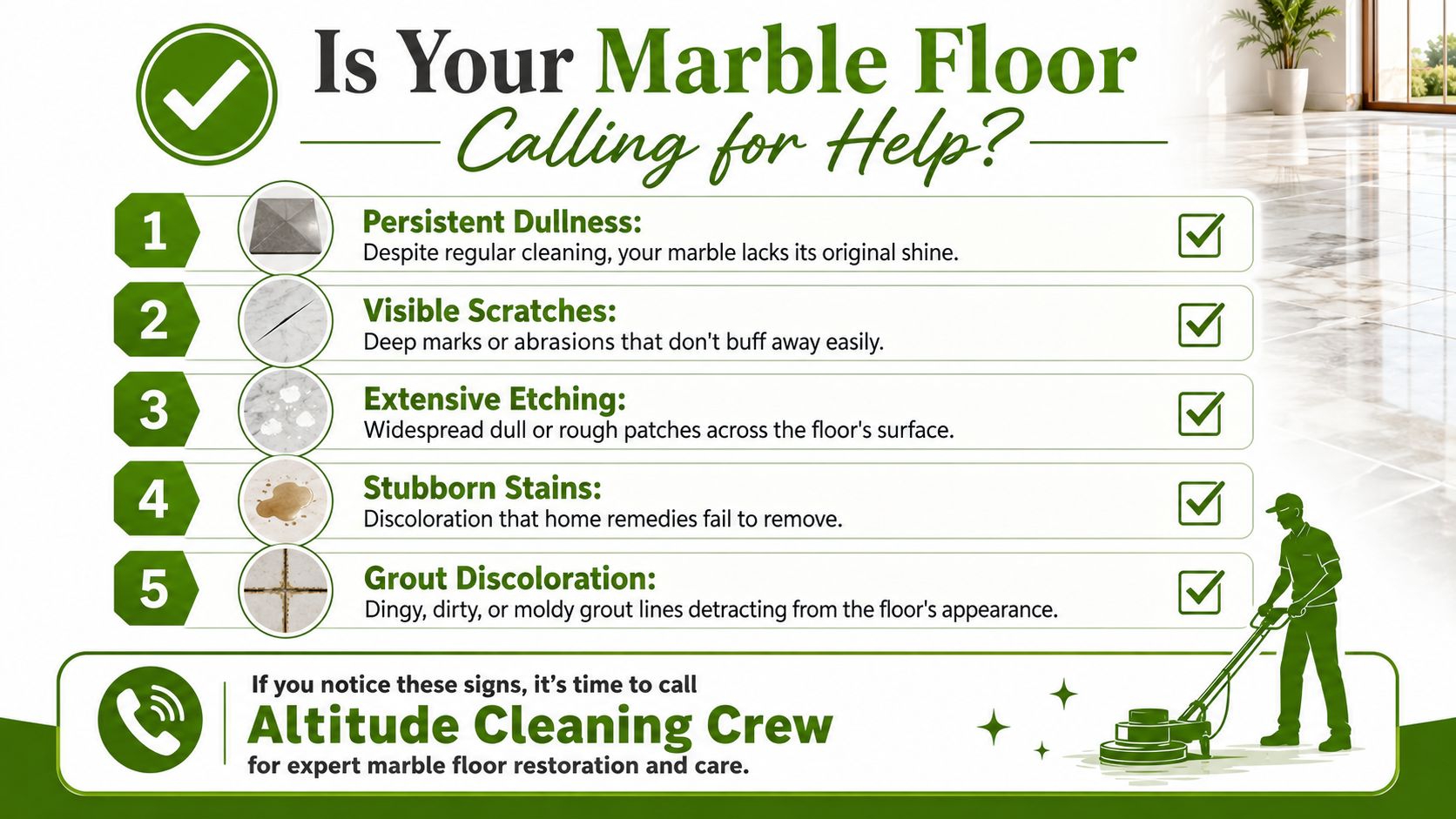
If your marble floor still looks cloudy after careful mopping, if you can feel scratches under your hand, or if dull spots keep showing up around water-prone areas, it's probably past the point of routine maintenance. That's when a reset makes more sense than another round of trial-and-error products.
In Sparks homes, pet hair and hard water buildup are two of the most common things clients ask us to focus on. On marble, those issues tend to show up as drag marks, residue haze, and dirty grout lines that make the whole floor look tired.
What's included in a marble floor deep clean
For homeowners searching for deep cleaning Reno NV because their marble floors need more than a quick mop, the scope usually includes:
- Dry grit removal: detailed dust and particle pickup before moisture touches the stone
- Marble-safe floor cleaning: using pH-neutral, acid-free methods
- Residue removal: attention to haze, tracked-in film, and bathroom mineral buildup
- Edge and grout detail: along baseboards, corners, and grout lines where dust settles
- Spot review: checking problem areas for staining, etching, or old-product residue
- Optional add-ons: nearby baseboards, bathroom detail work, and heavy buildup areas
Schedule, Clean, Inspect, Enjoy
Schedule
Book online or call. You'll get a confirmation and arrival window so you know when to expect us.
Clean
Our cleaners arrive with supplies and follow a checklist-based process specific to the floor condition and surrounding areas.
Inspect
We do a quick quality check and look for any spots that may need a different approach, especially where hard-water film or etching is involved.
Enjoy
You come back to a cleaner home, and a marble floor that looks clearer, less streaky, and better protected from the next round of Reno dust.
Pricing and common questions
Pricing depends on square footage, condition, surrounding buildup, and whether sealing or extra detail work is needed. Most homeowners request a custom estimate so the quote matches the actual scope.
A few common questions:
How long does it take?
It depends on the size of the floor and how much residue, scratching, or bathroom buildup is present.
Are supplies included?
Yes. We bring the cleaning supplies needed for the job.
Can you fix dull spots from an old cleaner?
Sometimes the issue is residue and sometimes it's etching. We can identify which one you're dealing with and advise on the next step.
Can you work around pets and kids?
Yes. We plan the clean so access is simple and the floor can dry properly before regular traffic resumes.
If your marble floor still looks hazy after regular mopping, the problem is usually the local mix of grit, residue, and moisture management. For deep cleaning Reno NV that handles marble floors with the care they need, Altitude Cleaning Crew serves Reno, Sparks, Spanish Springs, South Reno, Northwest Reno, Damonte Ranch, Somersett, Midtown Reno, and Wingfield Springs. Call 775-376-5527 or book online at Altitude Cleaning Crew booking.