
Granite Cleaner DIY: Create Your Own for a Lasting Shine
Learn how to make a safe and effective granite cleaner DIY. Get simple recipes and pro tips to keep your granite countertops sparkling and protected.
Your granite countertops are more than just a pretty surface; they're the workhorse of your kitchen and a serious investment in your home's value. To keep them looking as good as the day they were installed, you need more than just a quick wipe-down. A proper granite cleaner diy approach is what separates a countertop that just looks clean from one that's truly protected.
Why Your Granite Deserves More Than a Simple Wipe
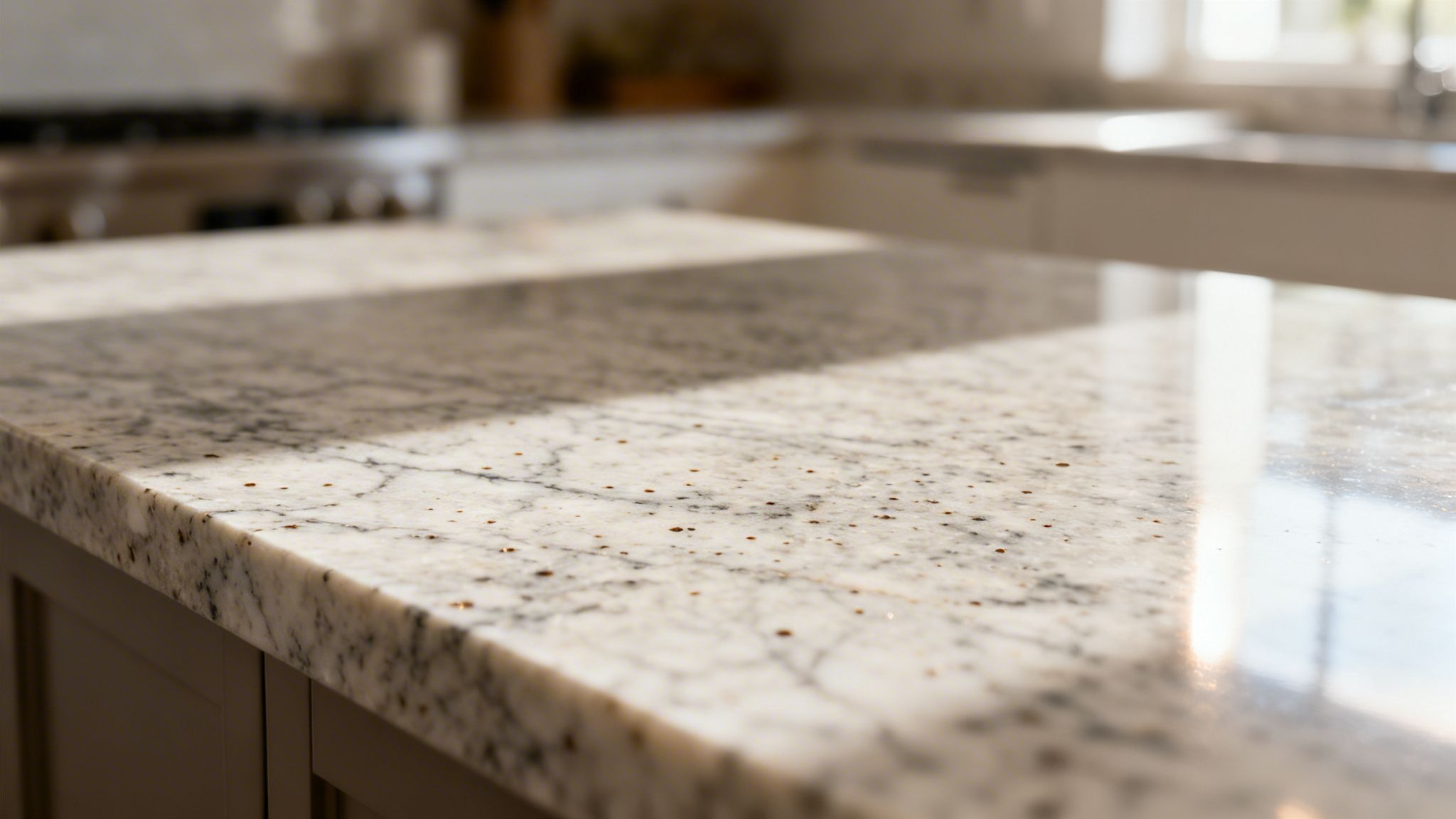
Granite’s appeal, whether in a Reno high-rise or a Sparks family home, comes from its perfect blend of rugged durability and natural beauty. This igneous rock, born from cooled magma, can handle hot pans and the chaos of a busy kitchen without breaking a sweat.
But here’s the catch: for all its toughness, granite is a natural stone, and that means it’s porous.
Think of the surface under a microscope-it’s filled with countless tiny openings. This is where the trouble starts. When you leave a puddle of red wine, a splash of coffee, or even a bit of tomato sauce sitting for too long, the liquid seeps into those pores. Before you know it, you have a deep, stubborn stain that a simple spray-and-wipe won't touch.
Protecting Your Investment
Using the wrong cleaner can be just as destructive as a bad spill. I've seen countless homeowners accidentally damage their beautiful stone with common household products. The biggest culprits are acidic and abrasive cleaners, which cause two major problems:
- Etching: You might think a little vinegar or lemon juice is a great natural cleaner, but on granite, it's a disaster. The acid chemically reacts with the minerals in the stone, literally eating away at the surface. This creates dull, hazy spots called etches that can't be wiped away.
- Sealant Degradation: Your countertops almost certainly came with a protective sealant. This sealant is what fills in those microscopic pores and acts as the first line of defense against spills. Harsh or acidic cleaners strip that sealant away, leaving the stone completely exposed and vulnerable to stains and moisture damage.
This is precisely why a pH-neutral DIY granite cleaner is your best friend for daily care. It has the power to cut through everyday grease and grime without harming the stone or its crucial protective layer.
Once you understand granite's porous nature, your mindset shifts. You're no longer just cleaning-you're actively preserving your countertop. It’s the difference between a surface that looks good for a year and one that retains its beauty and value for decades.
And that value is significant. The global countertops market was valued at around $125 billion in 2023 , with natural and engineered stone projected to become a $31.8 billion segment by 2028. These figures show just how much homeowners are investing in premium surfaces like granite. For a closer look, you can find more details on these countertop industry trends and what they mean for home values. Protecting your piece of that investment starts with using the right cleaner.
Gathering Your Granite Cleaning Essentials
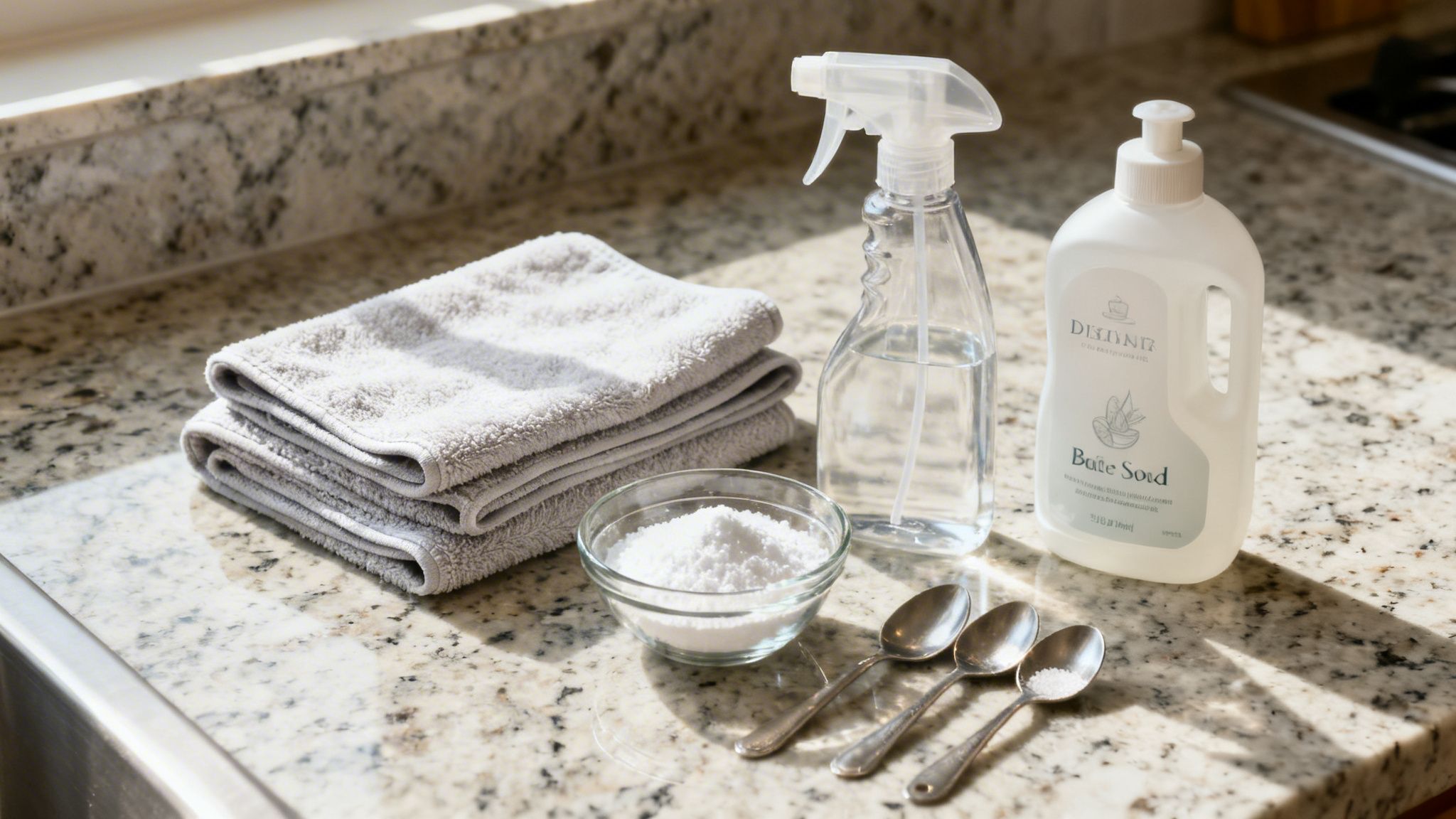
Before we get to mixing up a fantastic DIY granite cleaner, let's talk about your tools. Honestly, what you use to apply the cleaner is just as crucial as the ingredients in the bottle. Using the wrong kind of cloth or an old, contaminated spray bottle can leave behind lint, streaks, or even microscopic scratches.
The good news? You probably have everything you need tucked away in a cabinet already. The goal is to stick with soft, non-abrasive materials that will protect your granite’s beautiful finish and its all-important sealant.
Your Granite Cleaning Toolkit
Think of this as your countertop's dedicated care kit. Having these items on hand and ready to go will make daily wipedowns and deeper cleans an absolute breeze.
- A Quality Spray Bottle: Find a clean, empty 16-ounce spray bottle. It's a good idea to label it "Granite Cleaner" right away-you’d be surprised how easy it is to grab the wrong bottle in a hurry!
- Microfiber Cloths (Get at least two): This is the one item I insist on. Microfiber is a game-changer; its unique weave grabs onto dust and greasy fingerprints without being abrasive. You'll need one cloth for cleaning and a second, completely dry one for buffing.
- Mild, pH-Neutral Dish Soap: Check the label on your dish soap. You're looking for a simple, gentle formula without any extras like moisturizing lotions, "oxy" bleaching agents, or gritty exfoliants. We only need a tiny bit to help cut through any grease.
- Isopropyl (Rubbing) Alcohol: A standard bottle of 70% isopropyl alcohol is perfect. It adds some disinfecting power, but its real magic is how quickly it helps the solution evaporate. This fast evaporation is the secret to preventing those frustrating water spots and streaks.
Using two separate microfiber cloths-one for wiping and one for buffing-is the single most effective trick for achieving that flawless, reflective shine on your granite. It prevents you from simply spreading moisture around and guarantees a perfectly dry, streak-free finish.
With these simple items gathered, you've got a professional-grade setup for keeping your countertops in prime condition. Now, you’re ready to mix a granite cleaner diy recipe that’s both safe and incredibly effective.
My Go-To Recipes for Homemade Granite Cleaner
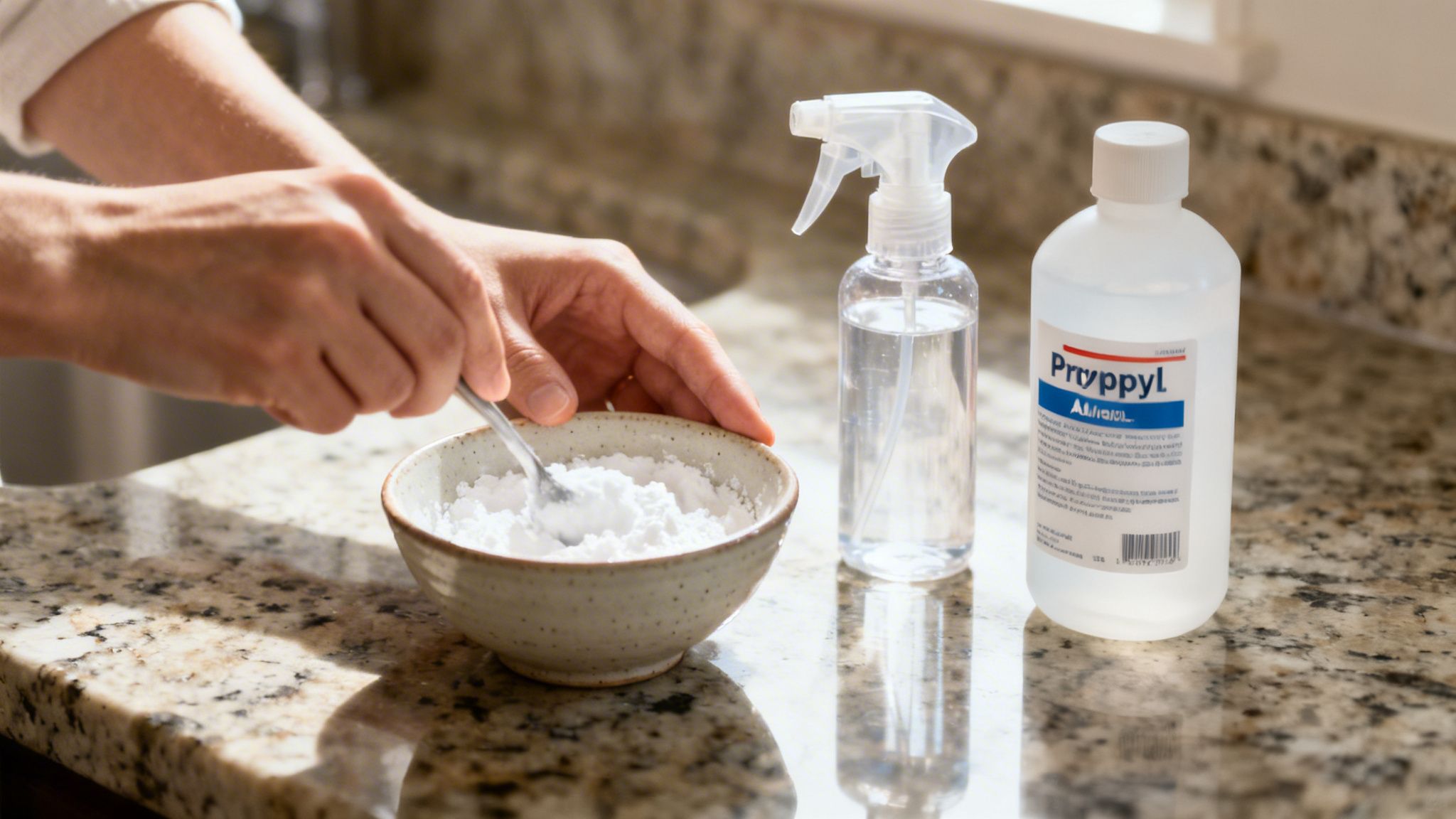
Alright, let's get into the good stuff. Over the years, I've found that you really only need two workhorse recipes to keep granite looking fantastic: a simple daily spray and a targeted stain-lifting paste. Both are incredibly easy to mix up, cost next to nothing, and are perfectly safe for properly sealed granite.
You'll notice isopropyl alcohol is the star player in the daily spray. It’s a great disinfectant, but the real magic is how quickly it evaporates. This is my secret weapon for getting a truly streak-free shine, which is a lifesaver with the fine dust we get here in the Reno area.
The Daily Disinfecting Spray
This is the bottle you'll reach for every single day. It’s a pH-neutral workhorse that effortlessly wipes away fingerprints, light spills, and everyday grime, keeping your counters looking polished and clean without any fuss.
Here’s what you 'll need:
- 1/2 cup of 70% isopropyl (rubbing) alcohol
- 1 1/2 cups of cool water
- 1/2 teaspoon of a simple, pH-neutral dish soap (steer clear of anything with moisturizers, oils, or bleach)
To mix it up, just pour the alcohol into a clean 16-ounce spray bottle. Add the dish soap next, and then top it off with the water. Give it a gentle shake, and you're good to go. This simple formula cuts through grease without ever damaging your granite's sealant.
The Stain-Lifting Paste
For those more stubborn spots-think dried-on pasta sauce or a sticky ring from a glass-this paste is your best friend. It gives you just enough gentle abrasion to lift the mess without a single scratch. Remember, this is for spot-treating only, not for cleaning the whole countertop.
All you need is:
- Baking soda
- Water
In a small bowl, add a little water to some baking soda until you have a thick paste, something like the consistency of toothpaste. Apply it directly over the stain, making sure it's completely covered.
Let it sit and do its thing for about 10-15 minutes. If you're dealing with a really tough stain, you can cover the paste with a piece of plastic wrap to keep it moist and working longer. Afterward, just wipe it away gently with a damp microfiber cloth, rinse the spot with a clean, damp cloth, and buff it dry.
My most important tip: Always-and I mean always -test a new cleaner on a small, hidden spot first. Even with a simple DIY granite cleaner , it's smart to check it on an inconspicuous area (like behind the coffee maker) to make sure it plays nicely with your specific stone and sealant.
To make it even easier, here's a quick cheat sheet for these two essential recipes.
DIY Granite Cleaner Recipes at a Glance
This table gives you a quick overview of the two cleaners you'll use most, so you know exactly which one to grab for the job at hand.
| Cleaner Type | Ingredients | Best For | Frequency |
|---|---|---|---|
| Daily Disinfecting Spray | Isopropyl Alcohol, Water, pH-Neutral Dish Soap | Wiping away daily grime, fingerprints, and minor spills. | Daily or as needed |
| Stain-Lifting Paste | Baking Soda, Water | Targeted spot treatment for tough, stuck-on messes. | As needed for stains |
With the daily spray for maintenance and the paste for emergencies, you have a complete, safe, and effective system to keep your granite countertops in pristine condition for years to come.
Mastering Your Granite Cleaning and Protection Technique
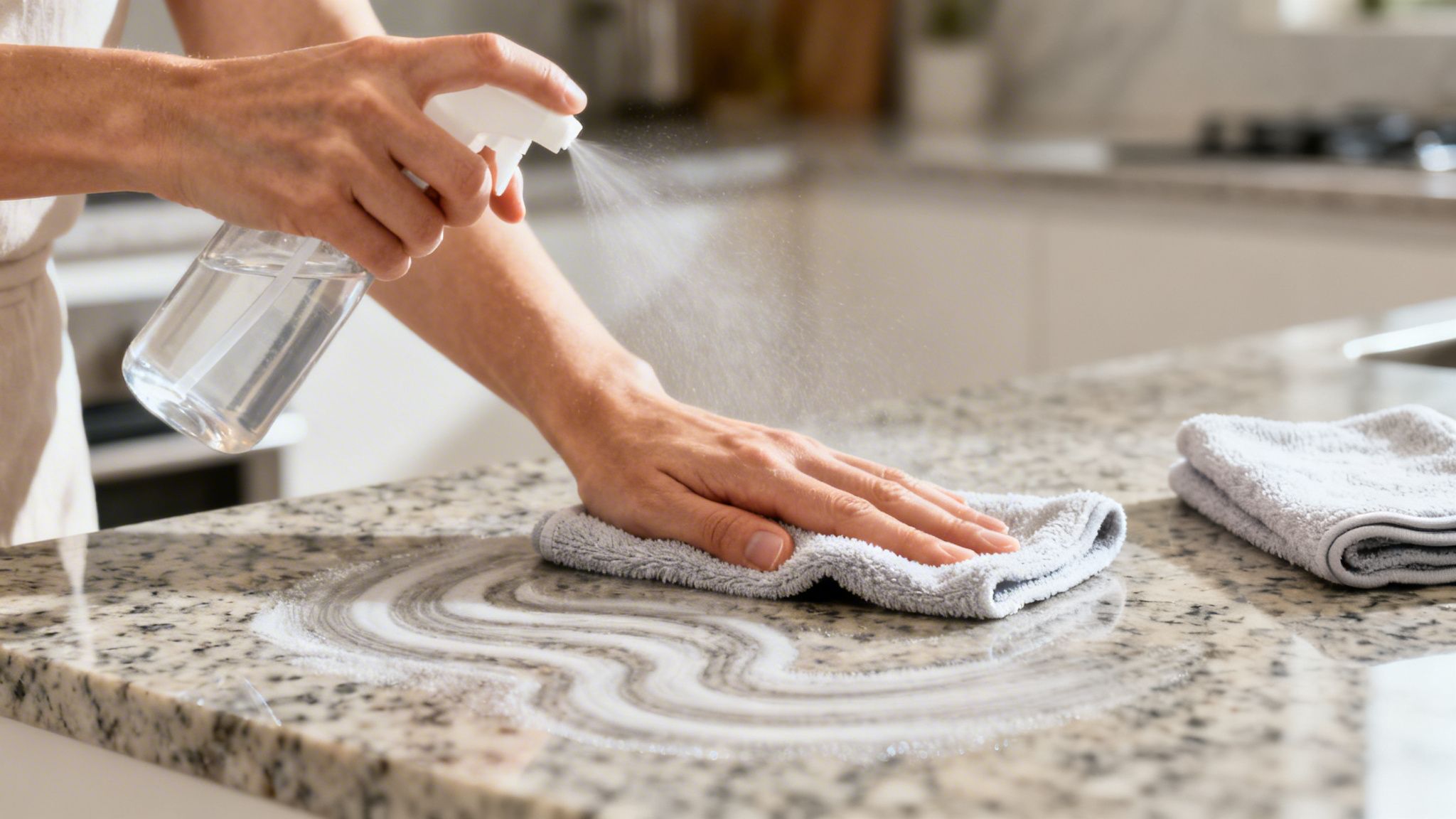
Even with the best DIY granite cleaner in your spray bottle, your technique is what truly separates a decent job from a flawless, professional finish. The right approach does more than just clean; it actively protects your stone and sidesteps common frustrations like streaks and water spots. It’s a simple process, but it makes all the difference in the world.
After cleaning countless countertops, I can tell you the secret isn't about scrubbing harder. It’s about working smarter. Avoid just spraying and wiping at random-that often just spreads grime around. Instead, be deliberate. A methodical pattern ensures you lift every bit of dust and debris, leaving nothing behind.
The Pro Cleaning Method
Forget about putting a lot of muscle into it. For that perfect, streak-free shine every time, it's all about the movement.
First, lightly mist a small, manageable section of your countertop with your daily cleaner. You're aiming for a fine mist, not a drenching. Soaking the surface is a common mistake that actually makes it harder to dry and can leave a dulling residue.
Next, take a clean, damp microfiber cloth, folded into quarters. Wipe the misted area using a consistent 'S' pattern, pulling the cloth from the back of the counter toward you. This little trick is what the pros do to trap dirt instead of just pushing it around.
The final-and most important-step is the buff. Before the cleaner can air-dry, grab a second, completely dry microfiber cloth. Quickly buff the area you just cleaned using swift, circular motions until it's totally dry and gleaming. This is the secret to erasing every last streak and water spot, revealing that brilliant shine.
The two-cloth system is a non-negotiable for a perfect finish. The first cloth cleans, and the second cloth polishes. Skipping the buffing step is the most common reason for a dull or streaky result.
Is It Time to Reseal Your Granite?
Your daily cleaning routine keeps the surface looking its best, but the real long-term protection comes from the sealant. A quality sealant is your granite's armor, preventing spills from soaking into the porous stone and causing deep, permanent stains. Over time, however, this protective layer naturally wears down.
Thankfully, you don't have to guess. There’s a surprisingly simple way to check if your granite's defenses are still up.
The Water Bead Test
Find a high-traffic spot on your counter and sprinkle a few drops of water on it. Now, just walk away and let it sit for about 10-15 minutes.
- If the water beads up: Fantastic! Your sealant is holding strong and repelling the water just like it's supposed to.
- If the water soaks in and darkens the stone: This is your sign. The sealant has worn off, leaving the granite vulnerable. It’s definitely time to reseal.
Making a habit of doing this quick test every six months to a year is one of the smartest things you can do for your countertops. A fresh coat of sealant is the single best defense against damage. Proper sealing and a good DIY granite cleaner work hand-in-hand to protect your investment.
The Granite-Killing Mistakes I See All The Time
Knowing what to put in your homemade granite cleaner is only half the battle. The other half-and arguably the more important one-is knowing what to leave out. Trust me, I've seen countertops ruined by well-intentioned cleaning efforts.
Using the wrong product can cause permanent damage, turning a simple cleaning task into a costly restoration project. To save you the headache and expense, think of this as your official "never-ever" list for granite care. The most common culprits are cleaners that are too acidic, too abrasive, or just way too harsh. They'll etch the surface, dull its beautiful shine, and strip away the sealant that protects it from stains.
The Granite ‘Do Not Use’ List
To keep your countertops looking brand new, you have to steer clear of these ingredients. A single misstep can cause damage that’s impossible to undo.
- Anything Acidic: This is public enemy number one for granite. We're talking about vinegar, lemon juice, or any cleaners with citrus oils. Acid has a chemical reaction with the calcium carbonate in the stone, which causes etching-those dull, milky spots that look like water stains but can't be wiped off. Even a forgotten splash of orange juice left overnight can leave a permanent mark. While vinegar has its uses, you can learn more about its powerful properties and why it's a terrible choice for stone in our article on whether white vinegar can be used to kill mold.
- Abrasive Scrubs and Powders: Scouring powders or even so-called "soft scrub" creams are designed to work by scratching away grime. On a polished granite surface, those micro-abrasives create thousands of tiny scratches. You won't see them individually, but together they'll quickly make your countertop look hazy, worn, and dull.
- Harsh Chemicals: Ammonia-based cleaners, like Windex, and bleach are far too aggressive for granite. Their whole purpose is to break things down, and they'll do just that to your sealant. They eat away at that protective layer, leaving the porous stone completely vulnerable to stains from coffee, red wine, or cooking oil.
My rule of thumb is simple: if a cleaner has a strong chemical smell or feels harsh on your hands, keep it far away from your granite. Always stick to pH-neutral solutions to protect the stone's finish and integrity.
Mistakes can happen, but being mindful of what goes into your granite cleaner diy mixture is the best defense you have. Avoiding these products will go a long way in keeping your granite looking as stunning as the day it was installed.
When to Call a Professional for Granite Care
Your homemade granite spray is perfect for everyday spills and smudges, but let's be realistic-it's not a magic wand. Knowing when to put down the DIY cleaner and pick up the phone is the most important part of protecting your countertop investment.
Sometimes, a stubborn problem just isn't going to budge with household solutions. Trying to force it can easily lead to permanent damage, and that’s when calling in an expert is the smartest, safest move you can make.
When DIY Just Won’t Cut It
Certain issues go far beyond surface-level cleaning. They demand specialized equipment, commercial-grade products, and the hands-on experience of a stone care professional.
Here are the tell-tale signs that it’s time to call a service like Altitude Cleaning Crew:
- Deep, Stubborn Stains: That dark ring from a leaky olive oil bottle or a red wine splash that has soaked deep into the stone? If your baking soda poultice hasn't made a dent, it's time for the pros. We use powerful, targeted chemical poultices that can pull stains out from deep within the granite's pores.
- Dullness, Haziness, or Etching: If your once-gleaming countertops now look cloudy or have dull spots, you're likely dealing with etching. This is chemical damage, usually from an acid like lemon juice or vinegar, that has eaten away at the surface. A professional can assess the-damage and often restore the shine by mechanically honing and re-polishing the stone itself.
- Scratches and Chips: Run your fingernail over a scratch. If you can feel it, a cleaner won't fix it. The same goes for chips along the countertop edges. These physical imperfections require a stone restoration specialist who can fill the damage with a color-matched epoxy and then polish it until it's virtually invisible.
- Serious Hard Water Buildup: Here in the Reno area, hard water is a constant battle. Those chalky white mineral deposits that build up around your faucet can be incredibly tough to remove without damaging the sealant. Professionals have access to non-acidic solutions and tools to dissolve the buildup safely. If you're struggling with this, our guide on [how to remove water stains from granite](/services/deep-cleaning) has some great first steps.
Calling a professional isn’t giving up; it’s making a smart, strategic decision to protect and restore one of your home's most beautiful and valuable features.
Homeowners are more invested than ever in keeping their stone surfaces pristine. In fact, North America is projected to account for 37% of the total revenue in the granite cleaner market in 2024. This trend shows just how much people value their granite and underscores the growing need for expert care when DIY falls short. You can dive deeper into these trends in the granite cleaner market to see why professional services are so essential.
Common Questions About DIY Granite Care
Even with a simple recipe, questions always pop up. Let's tackle some of the most common ones I hear from homeowners when they start making their own granite cleaner.
Is It Really Safe to Use Alcohol on Granite?
I get this question all the time, and the answer is a resounding yes-as long as you dilute it correctly. The recipe we use, a 50/50 mix of 70% isopropyl alcohol and water, is perfectly safe.
This mixture is pH-neutral, which means it won’t etch the stone or damage the sealant. The real magic of the alcohol is how quickly it evaporates. That’s the secret to getting a streak-free, disinfected shine without any leftover residue. Just remember, never pour undiluted alcohol directly onto your counters.
How Often Should I Deep Clean Granite Countertops?
Your daily DIY spray is your workhorse for wiping up crumbs, spills, and everyday grime. The baking soda paste we talked about earlier? That’s for special occasions only.
Think of it as a spot treatment for tough, set-in stains, not an all-over deep cleaner. If you use an abrasive paste like that too often, you risk dulling the beautiful finish on your stone. Stick with the daily spray for 99% of your cleaning needs.
Can I Add Essential Oils to My DIY Granite Cleaner for Scent?
It’s incredibly tempting to add a few drops of lavender or lemon oil to make your kitchen smell amazing, but please don't. It's best to keep essential oils far away from your granite cleaner.
Many of them, especially the citrus oils that smell so fresh and clean, are acidic. Over time, that acid can slowly eat away at your granite's protective sealant, leaving the stone vulnerable to stains and etching. For the long-term health of your countertops, the simple, unscented recipe is always the best choice.
What If My Granite Still Looks Dull After Cleaning?
If your counters have a persistent cloudy or hazy look even after using your granite cleaner diy spray and buffing them dry, it almost always points to one of two culprits.
First, you might have a simple soap or product buildup. You can usually cut through this by wiping the surface with a cloth dampened with just your 50/50 alcohol and water mix. If that doesn't bring back the shine, the issue is likely a worn-out sealant. When the sealant fails, the stone itself is exposed and can start looking dull. At that point, it’s time to have it professionally resealed to restore its original luster.