Dead Mice in Walls: A Reno Homeowner's Removal Guide

A room in your Reno or Sparks home that suddenly smells rotten, heavy, and wrong prompts immediate questions: is it a dead mouse, where is it, and do I need help right now. For homeowners, renters, Airbnb hosts, and property managers dealing with dead mice in walls, the goal isn't just getting through the smell. It's getting the source out, cleaning the contamination correctly, and making sure your HVAC or wall cavity doesn't keep spreading odor through the house.
Around Reno-Sparks, this gets messy fast. Dry wall voids, dusty returns, older foundations in Midtown, and utility penetrations in newer developments can all turn one hidden carcass into a whole-house smell problem.
- The smell usually doesn't vanish overnight. A small animal like a mouse can take about 1 to 2 weeks to fully decompose inside a wall, which is why odor can linger for days or weeks according to Orkin's guidance on dead animals in walls.
- The fix isn't always just "remove the mouse." If insulation, dust, droppings, or nearby materials are contaminated, odor can hang around after removal.
- Safety matters. Households with kids, pets, allergies, or immunocompromised residents should think carefully before opening drywall.
- Reno homes have an extra wrinkle. Dusty wall voids and forced-air systems can move odor farther than people expect.
- If you want a fuller breakdown of odor timelines, this local guide on how long dead mouse smell lasts is a useful next read.
That Unmistakable Smell Your Guide Starts Here
Most calls start the same way. The smell shows up in one bedroom, a hallway, a laundry room, or near a return vent. At first the homeowner thinks something spoiled in the trash, then they clean the room and the odor is still there the next morning.
That pattern is common with dead mice in walls. The smell tends to feel localized at first, then it seems to drift. In Reno homes with central air running, people often notice it strongest in one room but also catch it in the hallway or near a vent.
What this usually means
If the odor is sharp, rotten, and keeps returning in the same part of the home, a hidden carcass is one likely cause. But the practical issue isn't just confirming your suspicion. It's figuring out whether you're dealing with a single dead mouse, an active rodent problem, or contamination that has spread beyond the wall cavity.
Practical rule: If the smell keeps pulling you back to the same wall, closet corner, or vent line, don't assume air freshener will solve it. Odor masking almost never fixes the underlying issue.
A lot of people hope waiting a few days will handle it. Sometimes the smell does eventually fade. Living with it for days or weeks, especially in a bedroom, nursery, rental turnover, or occupied Airbnb, isn't a great plan.
First priorities
- Confirm the area where the odor is strongest before cutting anything.
- Avoid direct contact with insulation, droppings, or the carcass if you haven't suited up properly.
- Think beyond the body because urine, nesting material, and contaminated insulation can keep producing odor.
- Treat it as sanitation work rather than a simple handyman task.
In Reno-Sparks homes, the best outcome usually comes from a calm, targeted approach. Find the hot spot, decide if access is safe, remove contaminated material if needed, and clean the cavity correctly so the room doesn't keep smelling like the problem never left.
How to Locate Dead Mice in Walls
The fastest way to make this worse is cutting random holes in drywall. Start with observation. Most of the time, your nose gives the best first map.
Follow the odor before you touch the wall
Walk the room slowly and stop at each section of the suspected wall. Check near baseboards, outlets, closet corners, return vents, and where plumbing or utility lines pass through. In many homes, the smell pools low and gets stronger along the lower section of the wall cavity.
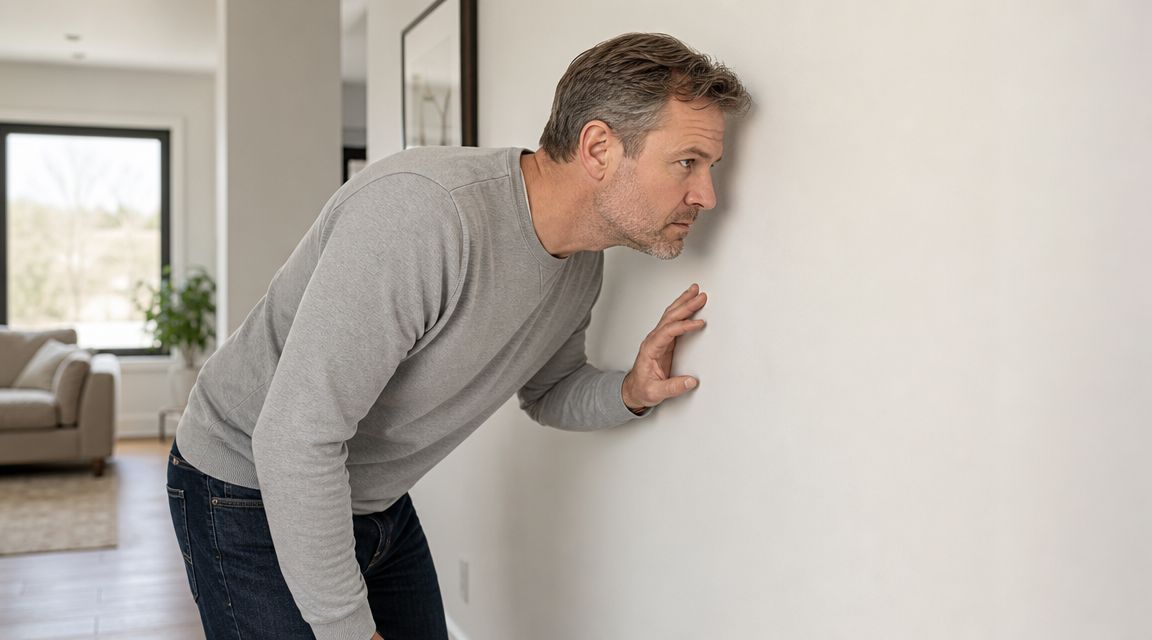
You don't need fancy tools to narrow it down. You need to compare one spot to another and look for a pattern.
Try this:
- Start with the room where the smell is strongest and close nearby doors so odor from other spaces doesn't confuse you.
- Check the same wall line from both sides if it's an interior wall.
- Look low first near the baseboard, then around outlets and vent covers.
- Notice insect activity because flies around one area can point to the access point or cavity.
- Check nearby HVAC paths if the smell seems stronger when the system runs.
Make sure it's the right problem
A lot of homeowners assume every bad smell is a dead mouse. That's not always true. Rodent-related odor can also come from urine, feces, and nesting material, so inspection should include droppings and gnaw marks to tell the difference between one carcass and an active infestation, as noted in this guidance on what to do if a mouse dies in your wall.
That distinction matters in Reno houses with dust-heavy utility spaces. A wall cavity can hold odor from old nesting material even if the mouse is no longer there.
If you smell something foul but also find fresh droppings in cabinets, along garage edges, or under the sink, you may have a bigger rodent issue than one dead animal.
Use non-destructive clues first
If you're trying to avoid unnecessary wall damage, stay patient. Listen for current activity, watch where pets keep sniffing or pawing, and inspect exterior entry points that line up with the room. For a useful outside perspective, these expert tips on wall pests from Vanish Pest Control Inc. can help you think through what kind of activity may be happening behind the wall.
If the smell is clearly centered in one small area, you have enough information to decide whether to open the wall or bring in help.
What We See in Reno-Sparks Homes
In Reno-Sparks, this problem shows up in a few predictable places. Midtown and older Northwest Reno homes often have more gaps around foundations, old utility penetrations, and patched wall sections that mice use like a hallway. In newer South Reno and Damonte Ranch homes, the issue is often around HVAC lines, garage transitions, and exterior penetrations that looked sealed but weren't tight enough.
Seasonal conditions add confusion. After windy weeks, homes in Spanish Springs, Somersett, and Wingfield Springs can already smell dusty and stale from fine debris collecting in returns and along baseboards. During wildfire ash season, people sometimes think the sour smell is trapped smoke until they realize one room is much worse than the rest.
We also see odor travel farther in homes that run forced air constantly. A carcass in a wall near a return can make the whole problem feel bigger than it is. The source may be one small cavity, but the smell moves through dusty duct paths and settles into nearby soft surfaces.
Reno dust has a way of turning a localized issue into a whole-room cleanup.
Safe Removal DIY Steps and When to Call a Pro
Deciding whether to handle removal yourself depends on the contamination level, access, and who lives in your home.
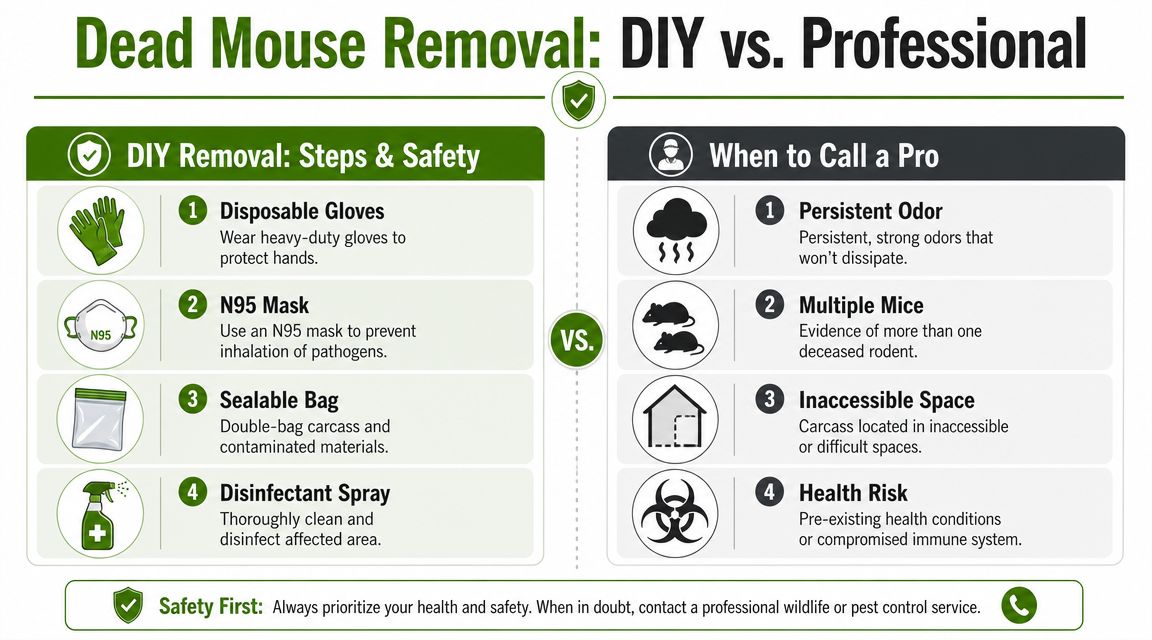
A dead mouse in a wall is not just a retrieval problem. In Reno homes, the harder part is often the dirty wall void around it. Dust, insulation, dried fluids, and odor residue can stay behind and keep circulating through the house, especially if the cavity connects to returns or chases. That is why a simple grab-and-bag fix sometimes works, and sometimes leaves the smell in place for another week.
If you attempt DIY
DIY makes sense only when the source is tightly narrowed down, access is straightforward, and there are no signs of broader rodent activity. If you have to guess where to cut, reach through heavy insulation, or work near wiring or plumbing, the job gets riskier fast.
Use proper PPE. At minimum, wear disposable gloves, eye protection, and a respirator or well-fitted mask rated for dusty debris. Keep pets and kids out of the area, and shut down nearby HVAC flow so you are not pulling contaminated air through the house while you work.
A practical DIY sequence looks like this:
- Confirm the location first so you are opening one small section instead of damaging a larger area.
- Lay down plastic and have bags ready before you cut or remove anything from the cavity.
- Remove the carcass with a tool such as tongs or a grabber, not with bare hands.
- Double-bag the remains and any heavily contaminated debris for disposal.
- Clean the cavity surfaces you can reach with an appropriate disinfectant, and remove insulation that has absorbed fluids or odor.
- Let the area dry fully before closing the wall.
The trade-off is simple. The less access you have, the less complete your cleanup will be. Spraying the room or the outside of drywall does very little if the residue is still inside the wall. Odor treatment only works when it reaches the source material.
If the smell has already settled into nearby carpet, upholstery, or baseboards, surface treatment may also be part of the job. We see that often in bedrooms and bonus rooms where air movement is limited. This guide on removing pet odors from carpet and soft surfaces gives a good baseline for handling absorbed odor near the affected wall.
When DIY stops making sense
Call a pro when the carcass is deep in the wall, close to HVAC components, mixed into insulation, or accompanied by droppings, nesting, flies, or more than one odor pocket. Those are the jobs where removal alone is not enough, because the cavity itself has become the problem.
Households with small children, older adults, pets, allergy sufferers, or anyone with a weakened immune system should be more cautious. The CDC advises care around rodent-contaminated areas because droppings, urine, and nesting materials can carry disease risk. Their guidance on cleaning up after rodents is a useful reference if you are deciding whether the exposure level is beyond a DIY fix.
Here is a practical way to judge it:
| Situation | DIY may be reasonable | Call a pro |
|---|---|---|
| Odor location | One tight, obvious area | Hard to pinpoint or present in multiple rooms |
| Access | Simple cut, easy reach | Deep cavity, plumbing, wiring, or limited reach |
| Contamination | Minimal visible debris | Soiled insulation, droppings, insects, or staining |
| Air movement | No nearby return or strong airflow | HVAC nearby or odor spreading through the system |
| Household risk | No vulnerable occupants | Kids, pets, allergy issues, immune concerns |
If you want another outside reference before deciding, this expert guide on mice in walls is a useful overview of the larger rodent problem that can sit behind a dead-mouse odor.
Before making any cuts, watch this walkthrough to get a better sense of what careful removal should look like.
Altitude Cleaning Crew's Biohazard and Odor Removal Service
A dead mouse in a wall usually starts as a smell complaint, then turns into an air quality and cleanup problem. In Reno homes, dry wall cavities hold dust, insulation fibers, droppings, and body fluids, and nearby returns can pull that odor through the house. Removing the carcass matters, but the job is not finished until the contaminated materials and odor residue are handled.
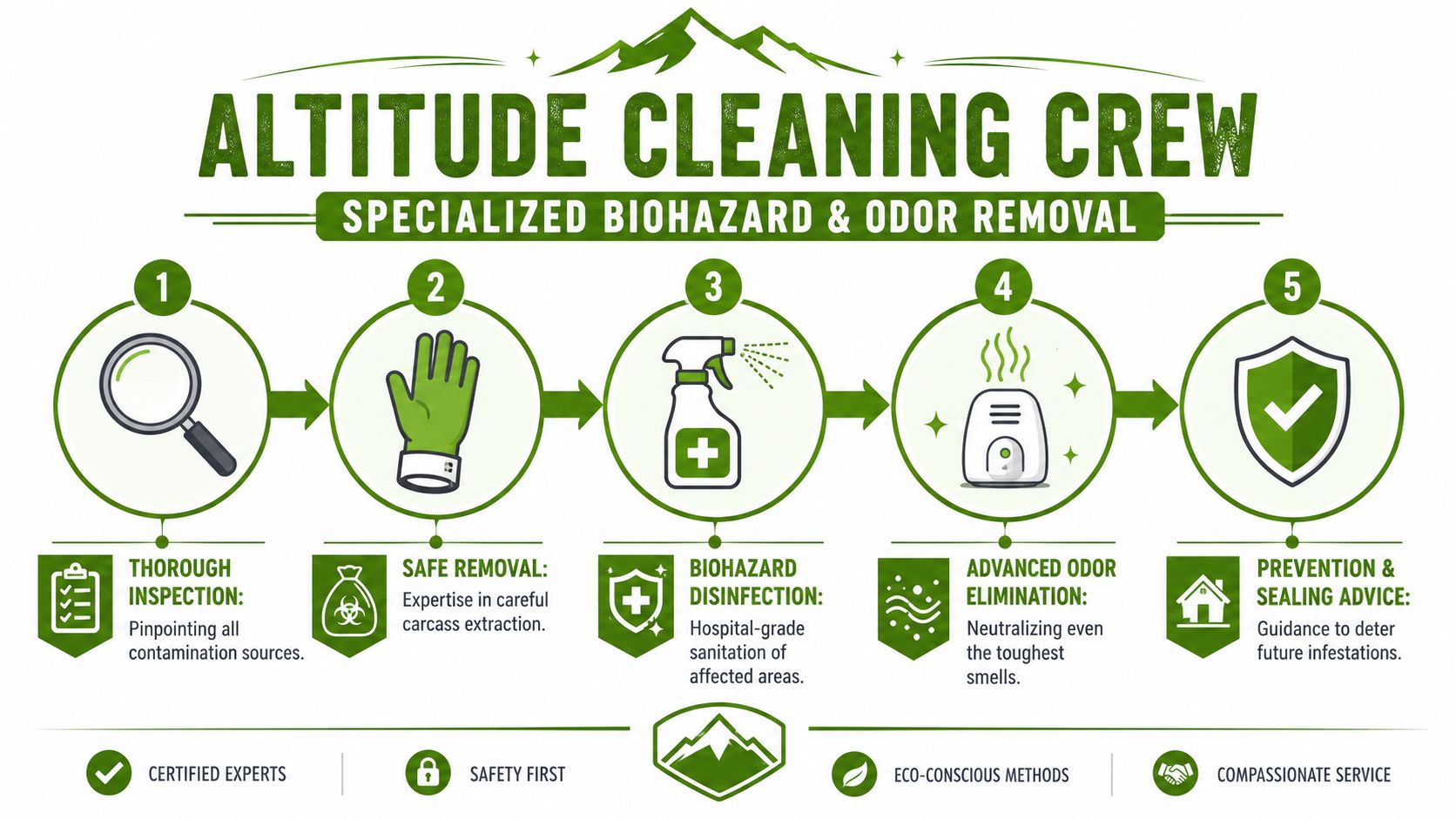
Our approach is built around containment first. We isolate the affected area, use PPE, remove the source carefully, and bag waste so debris does not spread into living space. If insulation is stained or has absorbed odor, we remove that too. Leaving it behind is one of the main reasons a room keeps smelling off days later.
Odor treatment only works when it reaches the material causing the smell. Cover scents and general room sprays do not solve a wall-void contamination issue. We clean the cavity, treat nearby framing and surfaces, and check the path the odor has taken, especially around baseboards, registers, and returns where Reno's dry dust tends to collect.
What's included
The scope depends on access and contamination, but the service commonly includes:
- Source localization with targeted inspection so drywall cuts stay as small as possible
- Carcass removal and disposal using controlled handling procedures
- Removal of contaminated insulation when odor, fluids, droppings, or nesting debris are present
- Disinfection of the cavity and adjacent surfaces to reduce residue and sanitation concerns
- Odor remediation in the affected room with attention to vents, trim, and other hold zones
- Detailed cleaning near the work area including hard surfaces where dust and odor can settle
We also handle secondary odor problems that can confuse the situation. If the room already has pet smell in the carpet or soft furnishings, that can mix with the wall odor and make diagnosis harder. Our guide on how to remove pet odors from carpet helps explain that overlap.
One trade-off homeowners should know about is access. The cleanest result sometimes requires opening a little more wall than expected so we can remove affected insulation instead of leaving a contaminated pocket behind. That is usually better than a smaller cut followed by lingering odor, repeat visits, or dust getting pulled into the HVAC system.
We see this often in Reno-Sparks move-out cleanups. Someone removes the mouse, patches the opening, and assumes the problem is over. Then the room still has a sour, stale smell during the final walkthrough because the cavity was never cleaned and the insulation stayed in place.
For prevention after cleanup, entry points still need to be addressed. This practical guide to keeping mice out is a useful reference if you are reviewing sealing options along with odor remediation.
Schedule Clean Inspect Enjoy
- Schedule by calling or booking online with the location of the odor, how long it has been present, and whether you have noticed droppings, staining, or insect activity
- Clean with a job scope focused on containment, removal, sanitation, and odor treatment
- Inspect the cavity, nearby surfaces, and airflow-related areas where smell can linger
- Enjoy a home that smells clean again, without the reminder sitting behind the drywall
Sealing Your Home Against Future Intruders
If the access point stays open, this whole problem can repeat. That's why exclusion matters just as much as cleanup.
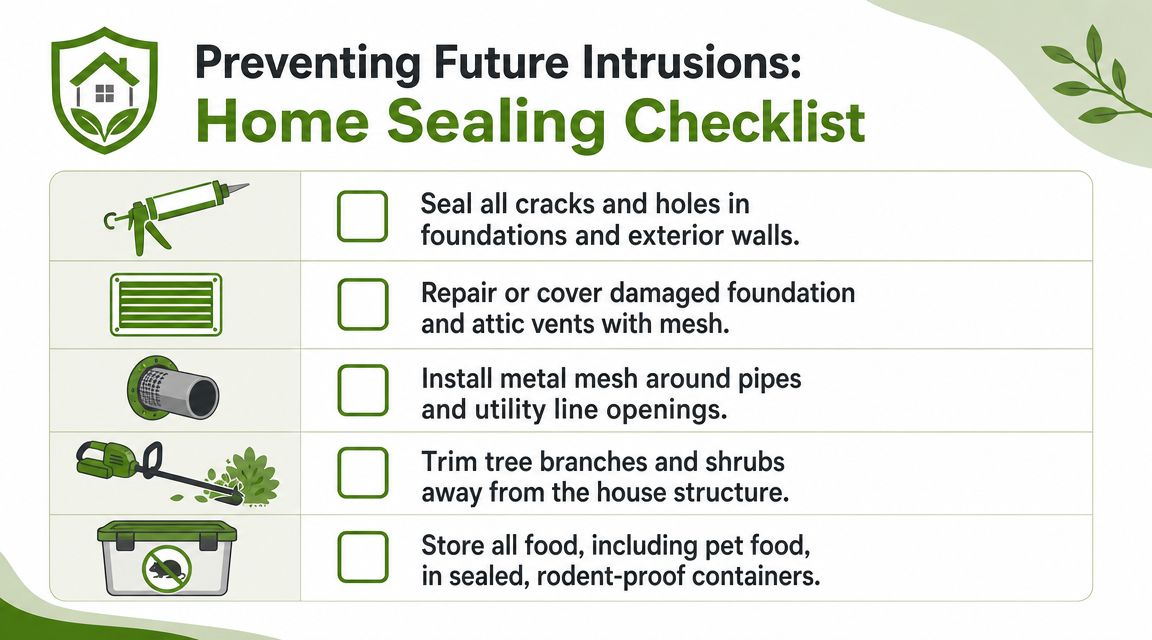
The Illinois Department of Public Health recommends sealing any opening larger than 1/4 inch to exclude mice, and notes that a mix of steel wool and caulk works well around pipes, vents, and foundation cracks in this mouse prevention and control guidance.
Where Reno homeowners should check first
In this market, the repeat offenders are usually practical, not mysterious:
- Garage-to-house transitions where weather seals don't close tightly
- Pipe penetrations under sinks or behind laundry hookups
- HVAC and line-set entries on exterior walls
- Older foundation cracks in Midtown and established neighborhoods
- Vent and utility openings that were patched loosely
For broader insulation and sealing context, this practical guide to keeping mice out is worth reviewing, especially if you're deciding what materials belong where.
What works and what doesn't
Steel wool with caulk is a practical small-gap fix. Loose foam by itself isn't something I'd trust in a mouse-prone area. If you do open drywall during removal, patching it correctly matters too. This local guide on how to patch drywall can help if the access opening now needs a clean repair.
In Sparks homes, pet food in garages and utility rooms is another detail people overlook. Mice don't need much space, and once they find food plus a quiet wall void, they tend to keep using the route.
Pricing and Common Questions for Reno Homeowners
Pricing depends on access, contamination, odor spread, whether insulation needs to be removed, and whether you also need detailed cleaning in the surrounding room. Most homeowners request a custom estimate so the quote matches the actual scope. If you want to compare options before booking, this page on how a cleaning service quote works helps explain what changes the price.
Common questions
How long will the smell last after removal?
Usually less time than if the carcass stays in the wall, but odor can still linger if insulation or nearby materials absorbed it. Thorough cleaning matters.
Are supplies included?
Yes, for professional cleanup, crews typically arrive with PPE, disinfecting products, and odor-treatment supplies appropriate for the job.
Do you just remove the mouse or clean the area too?
The better approach is removal plus sanitation. If the cavity or nearby materials stay contaminated, the room may still smell off.
Can this affect pets and family members?
It can. That's why households with children, pets, allergy concerns, or immunocompromised residents should be cautious about DIY wall opening.
Move-out cleans around Reno-Sparks often come down to details people notice right away. Bad odor is one of them.
If you're dealing with dead mice in walls, the right fix is safe removal plus full cleanup, not just getting the body out. For help from Altitude Cleaning Crew with deep cleaning Reno NV homeowners can book around odor, contamination, and room reset needs, call 775-376-5527 or book online at Altitude Cleaning Crew scheduling.
Flat-Rate House Cleaning Services You Can Count On
From downtown Reno apartments to family homes across Sparks, our team delivers reliable, professional house cleaning you can count on.