
Upholstery Cleaning in Reno: A Homeowner's Guide
Get professional upholstery cleaning in Reno. Our guide covers costs, methods, and tips for dealing with desert dust and pet hair. Book Altitude Cleaning Crew.

Your couch looks dull, smells a little off, or keeps collecting dust no matter how often you vacuum. For upholstery cleaning in Reno , you're in the right place. This is for homeowners, renters, Airbnb hosts, and property managers who want furniture that looks refreshed, dries properly, and holds up better in Reno-Sparks conditions.
In this area, upholstery doesn't just get dirty from normal use. It takes a beating from desert dust, pet hair, dry air, pollen, tracked-in grime, and during some parts of the year, fine ash that settles into fabric faster than generally expected.
Your Guide to Fresh Upholstery in Reno and Sparks
If you've ever wiped down your coffee table, looked over at the sofa, and realized the fabric still looks dusty, that's a very Reno problem. Upholstery in this market collects fine particulate that doesn't always show as an obvious stain. Instead, it shows up as dull fabric, rough-feeling arms, pet hair woven into seams, and that slightly tired look furniture gets even when the rest of the room is picked up.
Professional upholstery cleaning matters here because the issue usually isn't just the top layer. Dust settles deep into fibers, pets grind hair and oils into the fabric, and dry conditions can make old residue and spotting stand out more as the material dries.
Main takeaway: In Reno-Sparks homes, good upholstery cleaning is less about spraying fabric and more about matching the method to the fabric, the soil load, and the drying conditions in the home.
A few points worth knowing right away:
- It 's a real service category: The global carpet and upholstery cleaning services market was estimated at USD 55,160.6 million in 2022 and is projected to reach USD 83,504.0 million by 2030 , with a projected 5.3% CAGR from 2023 to 2030. That tells you upholstery cleaning isn't some fringe add-on. It sits inside a large, established maintenance category.
- It 's firmly established in North America too: In the U.S., Statista estimates annual revenue for the carpet and upholstery cleaning services industry at USD 4.08 billion. Canada also classifies carpet and upholstery cleaning services as a distinct category under NAICS 56174.
- Steam cleaning isn 't always the right answer: Different fabrics require different chemistry and moisture levels. The safe approach depends on the tag, the fabric type, and how much moisture the piece can handle.
- Drying matters as much as cleaning: If a piece is over-wet, the result can be water marks, lingering odor, residue, or fabric distortion.
For people comparing providers right now, that's the filter I'd use. You don't want someone treating every couch like the same couch.
What We See in Reno-Sparks Homes
From Midtown Reno apartments to larger homes in South Reno, Somersett, Spanish Springs, and Wingfield Springs, upholstery problems usually follow a local pattern. The furniture may not look heavily stained at first. Then you start working it, and you see what's in the fabric.

Dust that sits deeper than people think
Reno dust is fine and persistent. After windy weeks, it settles into woven upholstery, cushion edges, armrests, and the fabric folds where hand vacuums often miss. In homes near open lots or active construction areas, that buildup can show up fast.
It's not just visible dirt. The fabric starts to feel dry, flat, and a little gritty.
Pets change the job
In Sparks and Spanish Springs homes, pet hair is one of the biggest upholstery complaints. On microfiber especially, hair gets anchored into the nap and corners, then mixes with oils and dust. A quick lint roll helps the surface, but it usually won't reach what's packed into seams and cushion channels.
If that's your main headache, this local post on how to remove pet hair from furniture is a practical place to start between deeper cleanings.
Upholstery in this area often looks "mostly fine" from six feet away. Up close, that's where you see the dust lines, pet buildup, body oil darkening, and old spotting around the edges.
The local version of wear and tear
We also see furniture that's been spot-cleaned a few times with grocery-store products and now has faint rings or stiff patches. In dry air, those old treatment areas can become more obvious, not less. Rental turnovers and move-outs make this especially noticeable because once the room is emptied out, the sofa or dining chairs suddenly become the thing drawing attention.
That's common in homes with kids, dogs, or frequent guests. It's also common in short-term rentals where the fabric gets regular use but not always the right maintenance between bookings.
Upholstery Cleaning Methods for Our Climate
The first thing to know is simple. " Steam cleaning" is not a universal upholstery method. It's one tool, and it works well in the right situation. In other cases, it's the wrong move.
Start with the fabric tag
For professional upholstery cleaning, the manufacturer code is the control point. According to this guide on upholstery fabric cleaning codes, W fabrics accept water-based cleaners, S fabrics require solvent-based or dry-cleaning products, W/S fabrics can take either, and X fabrics should be vacuumed or lightly brushed only.
That one tag tells you a lot about what's safe.
- W means water-based methods are generally acceptable.
- S means keep water out of the process and use solvent-based or dry-cleaning approaches.
- W/S gives more flexibility.
- X means no wet cleaning. Vacuuming and light brushing only.
If someone skips that step, they're guessing. That's where damage starts.
When hot water extraction makes sense
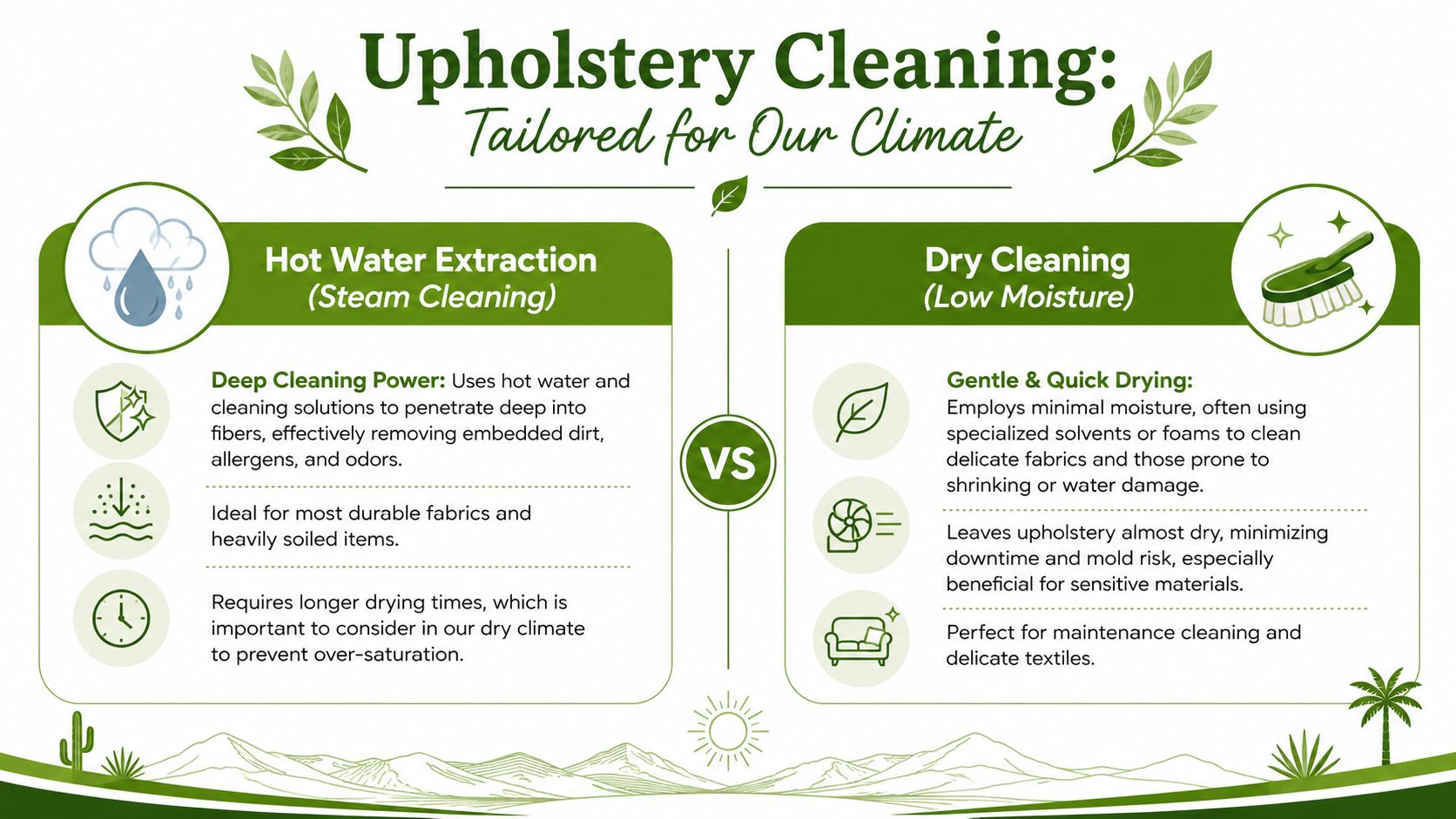
Hot water extraction, which many people call steam cleaning, can be a strong option for durable upholstery with heavier soil load. Think family-room sofas that catch daily use, pet traffic, snack spills, and the steady dust that comes with open windows and windy weeks.
Done correctly, it's controlled. The point is not to soak the furniture. The point is to suspend soil and extract it back out.
This method usually makes the most sense when:
- The fabric code allows it
- The upholstery is durable enough for wet cleaning
- There 's embedded soil that surface cleaning won't touch
- There 's enough time and airflow for proper drying
In Reno, airflow helps. But dry air doesn't cancel out the risks of over-wetting. Too much moisture can still leave marks, residue, or slow-drying pockets in cushions and seams.
When low-moisture or dry cleaning is the better call
Some pieces need a gentler method. Delicate upholstery, slower-drying fabrics, and items that are prone to distortion often do better with low-moisture foam or a dry-cleaning approach.
That's especially relevant for:
- Delicate blends
- Pieces with solvent-only codes
- Velvet or fabric with texture that can change if saturated
- Rental and Airbnb settings where faster reuse matters
- Furniture that already shows water sensitivity
A lot of people assume deeper means wetter. It doesn't. In many cases, lower moisture is the more skilled choice because it cleans while reducing the chance of rings, shrinkage, or long dry times.
Practical rule: The best upholstery cleaning method is the one the fabric can handle safely, not the one that sounds strongest.
What works better than one-size-fits-all cleaning
The good approach is fabric-specific, not marketing-specific. That means checking the code, pre-testing in a hidden area, adjusting moisture, and choosing the least aggressive method that will still get the result.
If you care about what goes onto your furniture as much as what comes out of it, this article on eco-friendly cleaning products is useful background.
In Reno-Sparks homes, I'd rather see a cleaner choose the correct method than promise the same "steam clean" on every couch in every house. That's how furniture stays usable instead of becoming a repair problem.
The Altitude Cleaning Crew Professional Process
Good upholstery cleaning follows a sequence, not a guess. The technical benchmark described in the IICRC S300 draft standard is straightforward: dry vacuuming first, then targeted pre-treatment, controlled application, thorough extraction, and accelerated drying to reduce residue and wicking.
That lines up with what works in lived-in Reno homes.
Schedule
You book online or call. The job should be scoped around the actual furniture, not a vague promise.
That matters because two sofas can look similar and require very different treatment based on fabric, pet load, prior spotting, and whether the piece sits in a busy family room, a rental, or a lower-use formal space.
Clean
The work starts dry, not wet. Loose particulate needs to come out first so it doesn't turn into muddy slurry once cleaning begins.
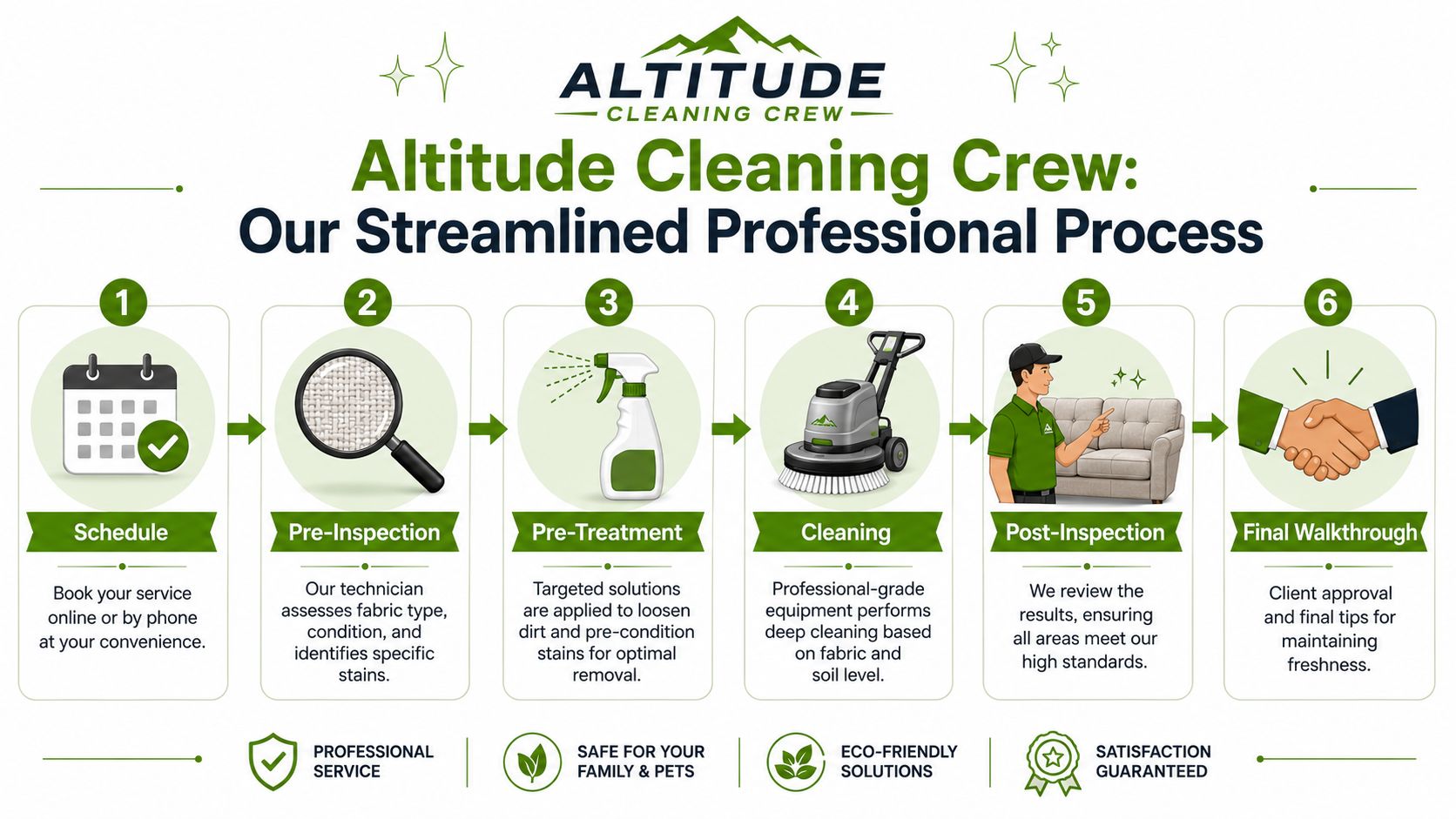
A proper checklist-based clean usually includes:
- Pre-vacuuming: Dry soil, pet hair, crumbs, and loose dust come out first.
- Pre-inspection: The cleaner checks fabric code, tests an inconspicuous area, and identifies spots that may respond differently.
- Targeted pre-treatment: High-contact areas like arms, headrests, front rails, and cushion edges get focused attention.
- Controlled cleaning: The selected method is applied in small sections instead of soaking the whole piece at once.
- Extraction or recovery: Soil and solution need to come back out, not stay in the furniture.
Here's a helpful visual example of process and equipment in action:
Inspect
This step matters more than most customers realize. A quick post-clean check catches areas that need another pass and helps confirm there isn't excess moisture sitting in seams, skirt lines, or cushion piping.
In Reno area homes, you also watch for wicking. Some older spots don't fully show their behavior until cleaning is underway, especially if they were previously treated with too much product.
The difference between a decent result and a clean, even finish is often the inspection step at the end.
Enjoy
Once the piece is drying correctly, the room feels better fast. The fabric looks more even, smells cleaner, and loses that dusty, worn layer that builds up gradually. For homeowners, it's a reset. For property managers and hosts, it's part of presenting a place that feels cared for.
The best process is predictable. Schedule, clean, inspect, enjoy. No drama, no mystery, no blanket method on every fabric.
DIY Maintenance Tips and When to Hire a Pro
Most upholstery benefits from simple maintenance between professional cleanings. In Reno, that starts with controlling dry dust before it grinds deeper into the fabric.
What you can do yourself
A few habits make a noticeable difference:
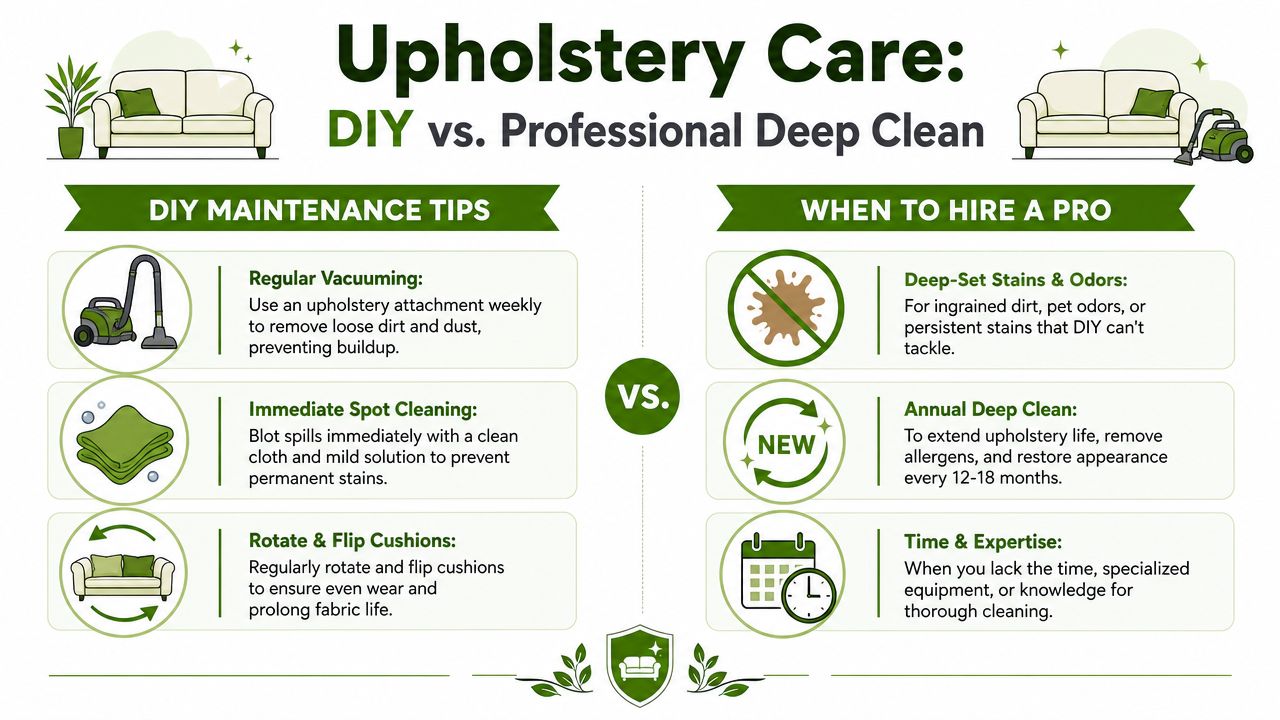
- Vacuum regularly: Use an upholstery attachment on seats, backs, arms, and under cushions. In dust-heavy homes, this matters more than people think.
- Blot spills fast: Don't scrub. Blot with a clean cloth and keep the moisture controlled.
- Rotate cushions: This helps distribute wear, especially on couches that always get used from the same side.
- Watch the products: If you use any spot cleaner, test it in a hidden area first and avoid saturating the fabric.
If you want a general consumer resource for tackling common sofa stains, this practical guide to sofa cleaning gives a decent overview of blotting and basic at-home care. For local maintenance advice tied to real Reno dust and fabric wear, this post on how to clean a sofa is also useful.
When DIY stops helping
There's a point where home maintenance no longer solves the issue. Usually that happens when the problem is below the surface or when a prior DIY attempt has left residue behind.
Hire a pro when you're dealing with:
- Deep-set soil: The fabric still looks dingy after vacuuming.
- Pet odor or body oil buildup: Surface wiping won't fix what's settled into the upholstery.
- Water marks or rings: These often come from over-wetting during spot cleaning.
- Move-out or turnover pressure: You need the piece to present well for a walkthrough or incoming guest.
- Fabric uncertainty: If you don't know the code, guessing can get expensive.
A common Sparks scenario is the couch that “just has one spot.” The homeowner used a spray cleaner and a towel, the spot faded, then dried back with a larger ring around it. In dry air, that residue line can stand out even more once the fabric fully settles.
According to this upholstery FAQ on drying time and over-wetting risk, incomplete drying can lead to lingering odors and water marks, and over-wetting is a primary cause of fabric damage. That's the line DIY often crosses without meaning to.
The real trade-off
Doing it yourself is fine for routine upkeep. It's not the same as corrective cleaning.
If your upholstery needs fabric-specific chemistry, controlled moisture, extraction, and fast drying, that's professional territory. Especially in homes with pets, frequent guests, or the kind of dust that keeps finding its way back no matter how often you tidy up.
What's Included and Upholstery Cleaning Costs
When people ask what's included, they usually want to know whether the service is just a quick once-over or a real cleaning process. A proper upholstery cleaning should include the steps that improve the fabric, not just freshen the surface.
What's usually included
A standard professional upholstery cleaning commonly covers:
- Pre-vacuuming: Removal of loose dust, pet hair, crumbs, and dry soil
- Fabric assessment: Review of tag code, material sensitivity, and visible wear areas
- Spot and soil pre-treatment: Extra attention on arms, headrests, cushions, and traffic zones
- Full cleaning of fabric surfaces: Seats, backs, arms, sides, and exposed upholstered panels
- Controlled moisture or dry-cleaning method: Based on fabric requirements
- Post-clean grooming: Resetting the fabric nap where appropriate
- Drying support: Airflow or speed-dry steps to reduce moisture retention
Optional add-ons may include:
- Pet hair focus areas
- Odor-prone sections
- Dining chair sets
- Sectional configurations
- Spot-heavy problem areas
For anyone trying to compare scope before booking, it helps to request a detailed estimate instead of a vague flat promise. This guide on getting a cleaning service quote is useful for knowing what to ask.
What upholstery cleaning costs
Pricing depends on furniture size, fabric type, condition, and any add-ons. Most homeowners request a custom estimate so the quote matches the actual scope.
If you're comparing providers, ask what the quote includes, whether the cleaner checks fabric codes, and how they handle drying. Those answers usually tell you more than the price line alone.
Your Reno Upholstery Cleaning Questions Answered
How long does upholstery take to dry in Reno
It depends on the fabric, how much soil is being removed, the cleaning method, and indoor airflow. Dry air can help, but it doesn't guarantee a fast dry if the piece was over-wet. Delicate or dense upholstery can still take longer than expected.
Are supplies included
With a professional service, they should be. That includes the cleaning solutions, tools, and equipment matched to the fabric and condition of the furniture.
Can upholstery cleaning help with wildfire smoke smell
It can help when odor is sitting in the fabric and surface soil, especially if the furniture has been carrying ash or smoke residue. Results depend on how far the odor has settled and whether the cushion interiors were affected too.
Do I need to be home during the cleaning
That depends on the company and your access setup. Many homeowners and property managers prefer to be there for the initial walkthrough, especially when there are fabric concerns, pets, or specific problem spots to point out.
Reno dust has a way of showing up on baseboards, blinds, and upholstered furniture faster than anticipated.
In Sparks homes, pet hair and dry dust together are two of the most common reasons people finally book upholstery cleaning instead of putting it off one more month.
If your furniture is holding onto dust, pet hair, odors, or old spotting, a proper fabric-specific clean can make the whole room feel better. Altitude Cleaning Crew provides upholstery cleaning in Reno for homeowners, renters, hosts, and property managers who want reliable results in Reno-Sparks conditions. Call 775-376-5527 or book online at Altitude Cleaning Crew booking.