
Security deposit deductions list for 2025: Reno rules
Explore the security deposit deductions list for 2025 and how Reno landlords apply rules. Learn what counts, what to document, and maximize your refund.

TL;DR: Landlords can legally deduct for unpaid rent, damages beyond normal wear and tear, and major cleaning costs. To get your full deposit back, document everything, fix what you broke, and leave the place spotless-especially with that stubborn dust from our desert winds. Hiring a professional for your move-out clean is the surest way to meet your landlord’s standards.
Moving out is a huge task, especially here in the Reno-Tahoe area where mountain-town weekends are precious. You’re not just packing boxes-you’re probably dealing with mud tracked in after a Tahoe snow day or that fine layer of high desert dust that settles on every surface. The last thing you need after all that work is a surprise chunk of your security deposit disappearing.
Landlords in Nevada have specific rules they must follow when making deductions, and knowing those rules is your best defense against unfair charges. This isn't just about a few scuffs on the wall. We're talking about the critical difference between 'normal wear and tear' and 'damage.' Faded paint from the intense Nevada sun is expected-but a hole in the drywall is not.
This guide provides a comprehensive security deposit deductions list tailored for Reno and Northwest Nevada renters. We'll break down exactly what landlords can and cannot legally charge for, from unpaid rent and cleaning fees to broken appliances and key replacements. Our goal is to give you a clear, actionable roadmap for a successful move-out so you can walk away with your full deposit back in hand. We'll demystify the process and show you how to protect your money, whether you DIY the final clean or call in a pro.
1. Unpaid Rent or Lease Violations
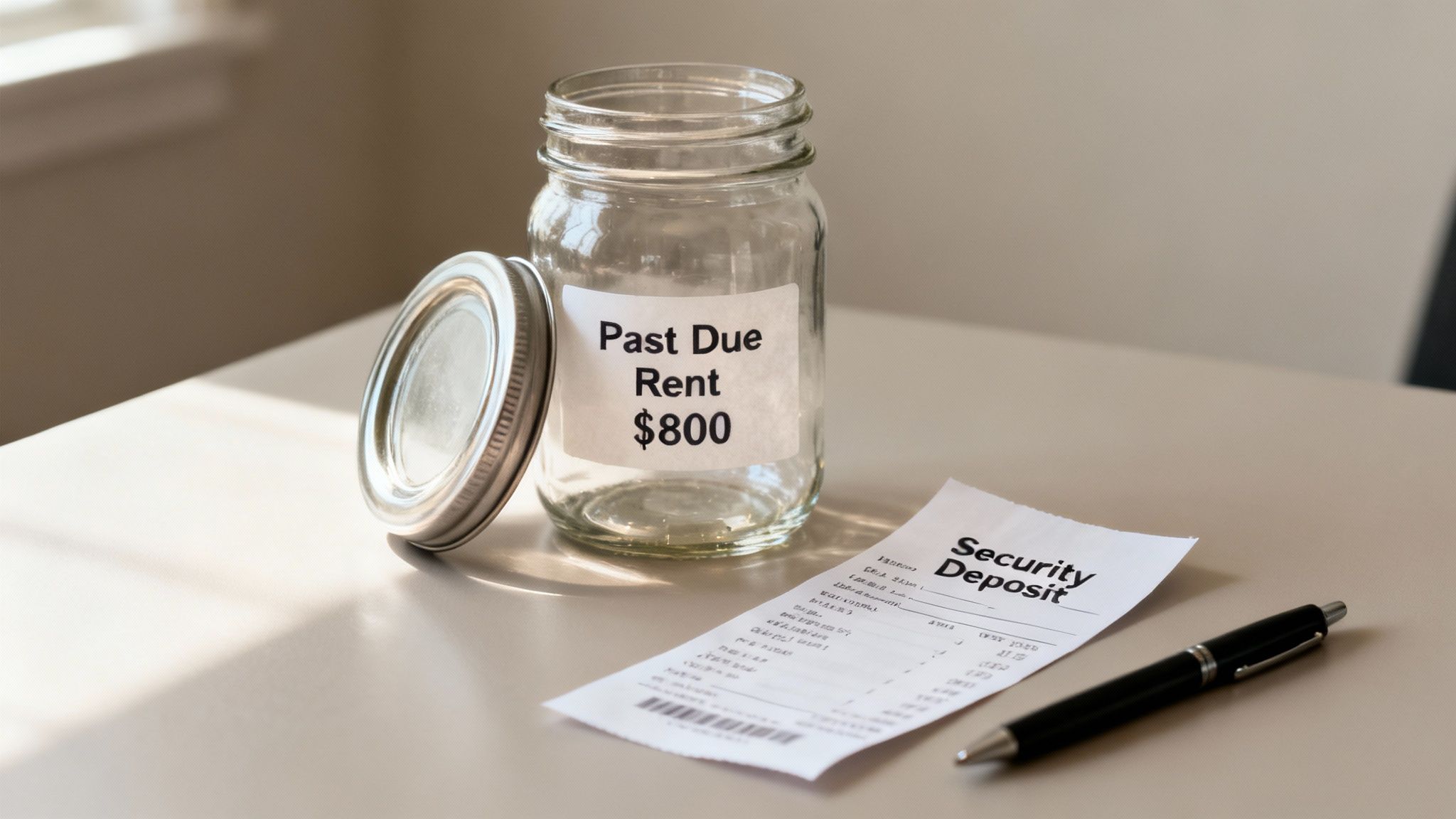
Topping our security deposit deductions list is the most straightforward and common reason a landlord retains funds: unpaid rent and lease violations. A security deposit’s primary purpose is to protect the property owner from financial losses caused by the tenant. When rent payments are missed or lease terms are broken, the deposit serves as the first line of financial recourse for the landlord to recoup those specific, documented losses.
This category isn't just about failing to pay the final month's rent. It encompasses any outstanding financial obligations agreed upon in the lease. This could be accumulated late fees that were never paid, utility bills that were the tenant's responsibility but went into arrears, or specific fines levied for documented violations, such as having an unauthorized pet or long-term guest.
How It Works and What to Expect
In Nevada, a landlord can deduct any rent owed from the security deposit after the tenant vacates. This process must be transparent and follow state law. The landlord is required to provide the tenant with a written, itemized accounting of any deductions within 30 days of the lease termination. This statement must clearly list the unpaid amount and any associated fees.
For example, if a tenant leaves owing $1,200 for the final month's rent and has an outstanding late fee of $75, the landlord can legally deduct $1,275 from the deposit. If the deposit was $1,500, the landlord must return the remaining $225 to the tenant along with the itemized list.
Tips for Tenants to Avoid This Deduction
- Pay Your Final Month: Never assume your security deposit can be used as your last month's rent unless you have explicit written permission from your landlord.
- Clear All Balances: Before moving out, confirm with your landlord that your account is paid in full, including any minor fees or utility charges. Get this confirmation in writing.
- Communicate Early: If you anticipate trouble paying your final month's rent, communicate with your landlord as soon as possible. It’s always better to discuss a potential payment plan than to leave them in the dark.
Understanding your responsibilities is a key step in ensuring a full refund. To make sure you've covered all your bases, you can review this comprehensive guide on how to get your security deposit back and prepare for a smooth move-out process.
2. Damage to Walls, Flooring, and Structural Elements
A close second on any security deposit deductions list involves physical damage to the property that goes beyond normal wear and tear. A security deposit is designed to cover the cost of repairs for negligence, accidents, or intentional harm caused by a tenant or their guests. This includes significant issues with walls, floors, ceilings, and other permanent fixtures that diminish the property's value and require professional repair.
This category covers a wide range of problems, from a large hole punched in the drywall to deep, permanent stains on hardwood floors. It also includes unauthorized alterations, such as painting a room a dark color without permission or installing shelving that damages the structural integrity of a wall. Essentially, if the damage requires more than a simple, routine cleaning or minor touch-up to fix, it can likely be deducted from the deposit.
How It Works and What to Expect
In Nevada, a landlord is permitted to use the security deposit to pay for the repair of damages that are not considered ordinary wear and tear. When a tenant moves out, the landlord will conduct a final inspection to document the property's condition. If damage is found, they must provide the tenant with an itemized statement within 30 days, detailing each repair and its associated cost.
For example, if a tenant caused a three-inch hole in a bedroom wall and left deep scratches across the vinyl plank flooring in the living room, the landlord can get quotes for these repairs. If the drywall patch and paint cost $150 and the floor repair costs $300, the landlord can legally deduct a total of $450 from the security deposit, providing receipts or invoices as proof of the expenses.
Tips for Tenants to Avoid This Deduction
- Document Everything: Complete a thorough move-in inspection checklist with photos and videos, noting any pre-existing damage. Do the same upon moving out to prove the property's condition.
- Use Proper Hangers: For hanging pictures or decor, use small nails or non-damaging adhesive hooks. Avoid large screws or anchors that leave significant holes.
- Protect Surfaces: Use furniture pads to prevent scratches on floors, rugs in high-traffic areas, and coasters to avoid water rings on countertops and windowsills.
- Report Issues Immediately: If accidental damage occurs during your tenancy, such as a water spill that could warp flooring, notify your landlord right away to mitigate the problem.
Fixing minor wall damage often involves sanding and touch-up paint, which can create a surprising amount of fine particles. For guidance on handling the cleanup after such repairs, you can explore our advice on the best way to remove drywall dust to ensure the space is spotless.
3. Cleaning and Remediation Costs
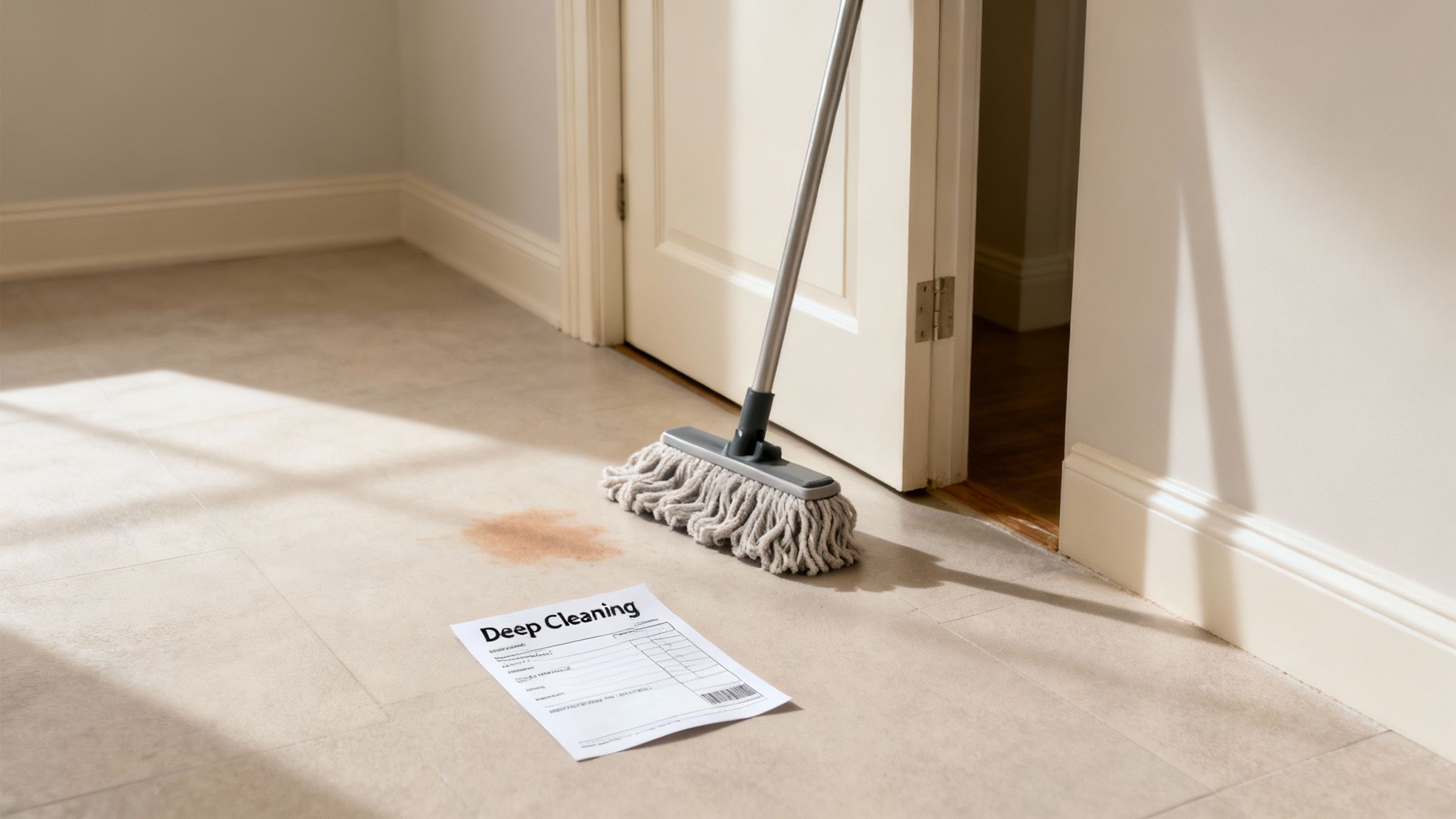
A common point of contention in any security deposit deductions list is cleaning. While landlords cannot charge for "normal wear and tear," they can deduct costs to return the property to its original move-in condition if it's left excessively dirty. This goes beyond a simple tidying up-it refers to situations requiring professional-level intervention, such as deep cleaning grime-caked appliances, removing significant stains from carpets, or remediating odors that weren't present at the start of the lease.
This category covers cleaning that is necessary due to neglect or misuse rather than everyday living. Examples include scrubbing built-up grease in a kitchen that was left in an unsanitary state, addressing pest infestations caused by poor housekeeping, or dealing with mold growth from tenant-induced moisture issues. The key distinction is whether the level of cleaning required exceeds what is considered routine turnover maintenance between tenants.
How It Works and What to Expect
In Nevada, if a landlord determines that the property requires more than a standard cleaning, they can hire professionals and deduct the cost from your security deposit. The landlord must provide you with an itemized statement within 30 days of moving out, detailing the specific cleaning charges and including copies of the invoices or receipts from the cleaning service.
For instance, if you leave behind heavily stained carpets and a filthy oven, the landlord might hire a carpet cleaning company for $300 and a deep cleaning service for $200. These specific, receipt-backed charges totaling $500 could be legally deducted from your deposit. The deduction must be reasonable and reflect the actual cost incurred to address the specific issues you left behind.
Tips for Tenants to Avoid This Deduction
- Follow a Checklist: Use a detailed move-out cleaning checklist to ensure you cover every area, from baseboards and ceiling fans to inside cabinets and appliances.
- Document Everything: Take thorough photos and videos of the clean apartment after you've moved all your belongings out. This serves as proof of the property's condition.
- Hire a Professional: To guarantee the property meets landlord standards and to avoid disputes, consider hiring a professional cleaning service. This is especially wise if you've lived in the unit for a long time or have stubborn issues like dust from desert winds or tracked-in mud.
Ensuring the property is left in a state of cleanliness equivalent to when you moved in is the best way to secure your full deposit. For a guaranteed, landlord-approved clean, you can explore professional move-in/out cleaning services that handle the entire process for you.
4. Unpaid Utilities or Utility Arrears
Similar to unpaid rent, any outstanding utility bills that were the tenant's responsibility can be deducted from the security deposit. A security deposit is designed to shield property owners from financial liabilities incurred during a tenancy, and this includes utility services that were contractually assigned to the tenant but left unpaid. For this to be a valid item on the security deposit deductions list, the lease agreement must explicitly state which utilities are the tenant's responsibility.
This category covers any service that was to be paid directly by the tenant to the provider. This could be an unpaid electric bill from the final billing cycle, water arrears that have accumulated over several months, or a final gas bill that was neglected during the move-out process. It can also include services like trash collection or recycling fees if the lease specified these were the tenant's obligation. The key is clear documentation and contractual responsibility.
How It Works and What to Expect
In Nevada, if the lease agreement clearly outlines the tenant's responsibility for certain utilities, the landlord can use the security deposit to settle any final, unpaid bills. To do this, the landlord must obtain proof of the arrears from the utility company, such as a final bill or a statement of the outstanding balance. This amount is then included in the itemized statement of deductions provided to the tenant within 30 days of the lease's termination.
For example, if a tenant moves out and the landlord receives a final electricity bill for $150 addressed to the property for the tenant's final month, that amount can be legally deducted. If there was also a $75 outstanding balance on the water bill, the landlord could deduct a total of $225. This amount would be clearly listed on the itemized statement sent to the tenant along with any remaining deposit refund.
Tips for Tenants to Avoid This Deduction
- Schedule Final Readings: Contact your utility providers before you move out to schedule a final meter reading for your last day of tenancy. This ensures you are only billed for your actual usage.
- Pay Final Bills Promptly: Keep an eye out for your final bills and pay them immediately. Provide the utility companies with your forwarding address so these final statements reach you.
- Request a "Zero Balance" Letter: Once all final bills are paid, ask each utility provider for a confirmation letter or email stating your account has a zero balance. Share copies of these with your landlord to prevent any misunderstandings.
5. Broken or Missing Appliances and Fixtures
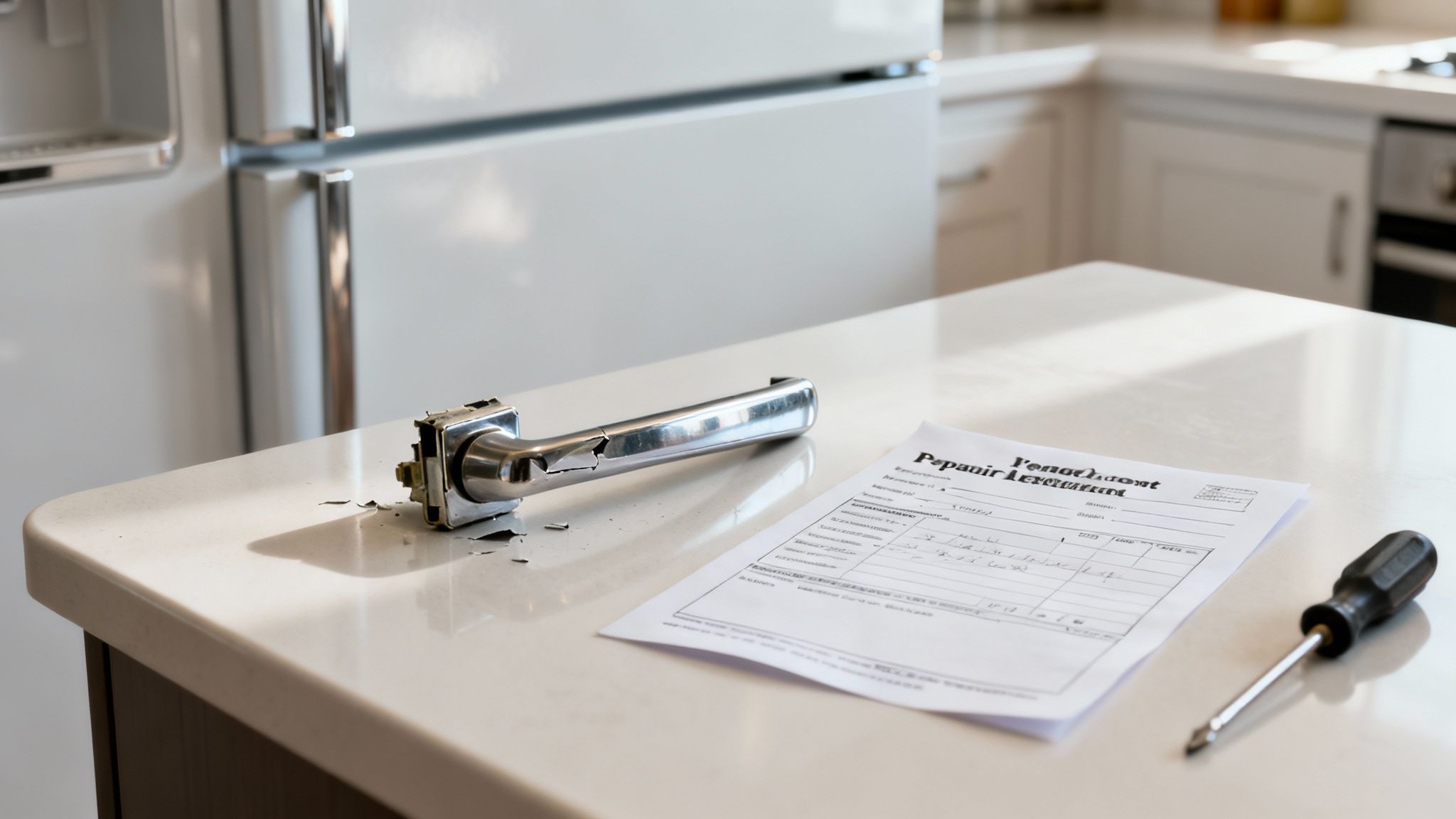
When you rent a property, the included appliances and fixtures-like the refrigerator, oven, dishwasher, and lighting-are expected to be returned in the same condition they were received, accounting for normal wear and tear. If an appliance or fixture is broken due to misuse, negligence, or is missing entirely upon move-out, your landlord can rightfully deduct the cost of repair or replacement from your security deposit. This is a common and often costly item on any security deposit deductions list.
This covers damage beyond ordinary use, such as a cracked oven door from a dropped pot, a dishwasher malfunctioning because it was filled with non-dish items, or a ceiling fan that was removed and not replaced. The key distinction is whether the damage resulted from tenant action or inaction, versus an appliance simply aging and failing on its own. A landlord cannot charge you for a 15-year-old refrigerator that stops working-but they can charge for a new one you dented severely.
How It Works and What to Expect
In Nevada, landlords must prove that the damage exceeds normal wear and tear to justify a deduction. If they need to repair or replace an item, they must provide you with an itemized statement detailing the costs, including receipts for parts or labor. The charge should be reasonable and often must account for the item's age and depreciation-you shouldn't be charged the full price of a brand-new appliance to replace a 10-year-old one.
For example, if you broke the glass stovetop on a five-year-old oven, the deduction would be for the repair, which might cost $250-400. If a light fixture valued at $100 is missing, the landlord can deduct that amount. These costs are subtracted directly from your deposit, and you'll receive the remaining balance, if any, within the 30-day window.
Tips for Tenants to Avoid This Deduction
- Document Everything on Day One: Use your move-in inspection sheet to note the condition of every single appliance and fixture. Take detailed photos and videos as proof.
- Report Issues Immediately: If an appliance malfunctions during your tenancy, report it to your landlord in writing right away. This shows you are not at fault for pre-existing or age-related failures.
- Operate Appliances Correctly: Read user manuals if you're unfamiliar with an appliance to avoid accidental damage. Never force stuck parts or use items for purposes they weren't designed for.
6. Keys, Access Cards, or Lock Changes
A seemingly minor oversight that can lead to significant deductions is the failure to return all issued keys, access cards, fobs, and remotes. The security of the property and its future tenants relies on a complete handover of all access devices. When a tenant fails to return these items, the landlord is justified in using the security deposit to cover the costs of replacement or, more commonly, re-keying the locks to ensure the previous tenant can no longer access the premises.
This category covers more than just the front door key. It includes any item that grants access to the property or its amenities, such as mailbox keys, garage door openers, electronic fobs for gyms or pools, and security gate cards. The cost isn't just for the physical item but for the labor and materials needed to restore the property's security-a crucial part of a landlord's responsibility and a common entry on any security deposit deductions list.
How It Works and What to Expect
In Nevada, if a tenant does not return all keys upon moving out, the landlord can deduct the actual cost of replacing them or re-keying the locks. The landlord must provide receipts or a clear breakdown of these charges in the itemized statement sent to the tenant within 30 days of the lease termination. The charges must be reasonable and reflect the actual expenses incurred.
For instance, if a tenant loses one apartment key and a mailbox key, the deduction might be around $150. This could break down as $125 for a locksmith to re-key the main door lock and $25 to replace the specialized mailbox lock. If an expensive electronic fob valued at $100 is not returned, that specific amount, with proof of replacement cost, can be deducted from the deposit.
Tips for Tenants to Avoid This Deduction
- Create a Move-In Checklist: At the beginning of your lease, document every single key, card, and remote you receive. Have both you and your landlord sign this list.
- Keep Keys Together: Designate a specific, safe place for all your rental-related keys and access devices to prevent them from getting misplaced during your tenancy.
- Plan Your Key Return: Do not leave keys inside the empty apartment. Coordinate a specific time and place to hand them over directly to your landlord or property manager and get a signed receipt confirming their return.
7. HOA Fees, Fines, or Community Violations
When renting a property within a managed community, such as a condo or a home in a specific subdivision, tenants are typically required to abide by the rules set by the Homeowner's Association (HOA). If a tenant violates these rules and incurs fines or fees, the landlord can often deduct these costs from the security deposit, making this a crucial item on any security deposit deductions list. The deposit acts as a safeguard against financial penalties passed on to the property owner due to the tenant's actions.
This category covers any financial penalty levied by an HOA during the tenancy. Common examples include fines for improper parking, noise complaints from neighbors, violations of pet policies (like failing to clean up after a dog or having a prohibited breed), or unapproved alterations to the property's exterior. These fines are billed to the homeowner, who can then pass the documented cost to the responsible tenant.
How It Works and What to Expect
In Nevada, if the lease agreement explicitly states that the tenant is responsible for following HOA rules and paying any associated fines, a landlord can legally deduct these costs from the security deposit. The landlord must provide the tenant with official documentation from the HOA, such as the violation notice and the invoice for the fine, as part of the itemized list of deductions. This ensures transparency and proves the charge is valid.
For instance, if a tenant receives a $150 fine from the HOA for leaving trash cans out past the designated pickup day and fails to pay it, the landlord will be billed. The landlord can then deduct that exact $150 from the security deposit, providing the tenant with a copy of the HOA notice within the 30-day window after move-out.
Tips for Tenants to Avoid This Deduction
- Read the Rules: Before moving in, carefully review the complete list of HOA rules and regulations provided by your landlord. Keep a copy for easy reference.
- Clarify Responsibilities: Ensure your lease clearly outlines your responsibilities regarding HOA compliance and who is responsible for paying fines.
- Address Notices Immediately: If you receive a violation warning or notice, address the issue promptly and communicate with your landlord and the HOA to resolve it.
- Document Everything: Keep records of all communication with the HOA and your landlord regarding any potential violations to protect yourself from unfair deductions.
8. Yard Maintenance, Landscaping Damage, or Grounds Issues
Beyond the four walls of the rental, a tenant's responsibility often extends to the property's outdoor spaces. Deductions for yard maintenance failures, landscaping damage, and other grounds-related issues are a frequent part of the security deposit deductions list, particularly for single-family homes or units with private yards. This covers neglect or misuse that results in costs for the landlord to restore the property to its original condition.
This category includes more than just an unmowed lawn. It can involve the cost of replacing dead or destroyed shrubs, removing junk and debris left in the yard, repairing damaged fencing, or treating significant lawn discoloration caused by improper chemical storage or pet waste. If the lease specifies that the tenant is responsible for yard upkeep, any failure to meet those standards can lead to valid deductions.
How It Works and What to Expect
In Nevada, if the lease agreement assigns responsibility for landscaping and yard care to the tenant, the landlord can deduct the actual costs of restoring the grounds from the security deposit. This requires clear documentation, such as before-and-after photos and receipts for services like junk removal, lawn restoration, or replacing damaged plants. These costs must be reasonable and directly tied to the tenant's neglect-not normal seasonal changes or wear.
For instance, if a tenant leaves behind a large, overgrown lawn that requires professional clearing at a cost of $350 and has also left behind a broken patio chair and other debris costing $150 to haul away, the landlord can deduct a total of $500. This amount would be itemized in the security deposit disposition letter sent to the tenant within the 30-day timeframe.
Tips for Tenants to Avoid This Deduction
- Document Everything: Take extensive, date-stamped photos and videos of the entire yard, lawn, and landscaping upon moving in. Note the season- a patchy brown lawn in winter is normal in Reno.
- Clarify Responsibilities: Before signing the lease, ensure you understand the specific yard maintenance expectations. Are you responsible for mowing, weeding, watering, or all of the above? Get it in writing.
- Perform Final Upkeep: Before moving out, perform a thorough final yard cleanup. Mow the lawn, remove all personal items and trash, and address any weeds or minor issues.
- Distinguish Damage from Nature: Be prepared to differentiate between tenant-caused damage (like tire ruts in the lawn) and natural issues (like a tree branch falling during a storm). Good move-in documentation is your best defense.
8-Point Security Deposit Deductions Comparison
ItemImplementation Complexity 🔄Resource Requirements 💡Expected Outcomes ⭐📊Ideal Use Cases ⚡Key Advantages ⭐Unpaid Rent or Lease ViolationsMedium 🔄🔄 - requires notices & recordsLow 💡 - payment ledgers, invoicesHigh ⭐⭐⭐ 📊 - recoverable and enforceableFinal month rent, fee breaches ⚡Legally defensible; easy to calculate ⭐Damage to Walls, Flooring, and Structural ElementsHigh 🔄🔄🔄 - must distinguish wear vs. damageHigh 💡💡💡 - photos, repair quotes, inspectionsHigh ⭐⭐⭐ 📊 - protects property valueHoles, stains, breaks after move-outObjective with photo evidence; preserves asset ⭐Cleaning and Remediation CostsMedium 🔄🔄 - prove beyond normal cleaningModerate 💡💡 - professional invoices, photosMedium-High ⭐⭐📊 - prepares unit for re-rentalExcessive dirt, odors, pests, biohazards ⚡Invoices justify charges; readies unit quickly ⭐Unpaid Utilities or Utility ArrearsMedium 🔄🔄 - requires utility statementsLow-Moderate 💡💡 - final bills, meter readingsHigh ⭐⭐⭐ 📊 - verifiable by providersFinal billing cycles when lease assigns utilities ⚡Easy to verify; recovers direct costs ⭐Broken or Missing Appliances and FixturesHigh 🔄🔄🔄 - prove negligence vs. failureHigh 💡💡💡 - repair/replacement estimates, photosMedium-High ⭐⭐📊 - subject to depreciation disputesTenant-caused appliance breakageProtects investments; documentable repairs ⭐Keys, Access Cards, or Lock ChangesLow 🔄 - checklist and receipts sufficeLow 💡 - issued-item log, locksmith billsMedium ⭐⭐📊 - small, defensible deductionsMissing keys/fobs or security concerns ⚡Security-justified; straightforward to document ⭐HOA Fees, Fines, or Community ViolationsMedium 🔄🔄 - needs lease clause assigning liabilityModerate 💡💡 - official HOA notices, correspondenceMedium ⭐⭐📊 - depends on lease clarityCondo/community rule violationsTransfers HOA liability; backed by HOA records ⭐Yard Maintenance, Landscaping Damage, or Grounds IssuesMedium 🔄🔄 - account for seasonal variationModerate 💡💡 - photos, landscaping quotesMedium ⭐⭐📊 - can be subjective due to seasonsNeglected lawns, destroyed plants, debrisPreserves curb appeal; before/after photos useful ⭐
Leave Your Place Spotless and Your Deposit Secure
Navigating the end of a lease can feel like walking a tightrope. You're juggling packing, coordinating movers, and planning your next chapter-all while trying to ensure you get your hard-earned security deposit back. As we've detailed, the path to a full refund is paved with diligence, documentation, and a deep understanding of your rights and responsibilities as a tenant. From unpaid rent and utility arrears to the subtle differences between normal wear and tear versus actual damage, knowledge is your most powerful asset.
This comprehensive security deposit deductions list was designed to be more than just a list of potential problems-it's a strategic roadmap. It equips you with the foresight to document your move-in condition thoroughly, the checklists to perform a meticulous move-out, and the confidence to communicate effectively with your landlord. Remember, the goal is to leave no room for ambiguity.
Key Takeaways for Protecting Your Deposit
To distill everything we've covered into a clear action plan, focus on these core principles:
- Documentation is Your Defense: Your move-in and move-out checklists, complete with timestamped photos and videos, are non-negotiable. They are your primary evidence against unfair claims. Without proof, it's just your word against your landlord's.
- Know Your Local Laws: Nevada law, specifically NRS 118A.242, sets clear timelines and rules for security deposit returns and deductions. Understanding that a landlord has 30 days and must provide an itemized list of deductions is crucial for holding them accountable.
- The Power of Proactive Communication: Don't wait for a dispute to arise. Maintain open, respectful, and written communication with your landlord throughout your tenancy and especially during the move-out process. A simple email confirming your move-out date and requesting inspection details can set a professional tone.
- A Professional Clean is an Investment, Not an Expense: One of the most common and largest deductions is for cleaning. Landlords can charge professional rates even if they do the work themselves. Hiring a pro service often costs less than the deduction and provides a receipt as undeniable proof of your efforts.
Your Final Move-Out Action Plan
Think of your move-out as a final project with a clear deliverable: getting your deposit back in full. First, review your original lease agreement for any specific move-out clauses or cleaning requirements. Next, use the checklists provided in this guide to conduct a self-inspection a week before your final day, giving you time to address any issues.
This is especially critical in our Reno-Sparks environment. The fine dust from desert winds settles on every surface, from ceiling fan blades to window tracks. After a winter of enjoying Tahoe, mud and salt can get tracked deep into carpets. These are the details that landlords notice. A standard wipe-down often isn't enough to tackle the specific kind of grime our mountain-desert climate creates.
Ultimately, mastering the concepts in this guide transforms you from a passive tenant into an empowered advocate for your own finances. It’s about more than just one security deposit-it’s about building a foundation of knowledge that will serve you in every rental situation to come. You've invested time, money, and care into making your rental a home. Now, it's time to ensure you get the financial return you deserve by leaving the property in impeccable condition, ready for the next person to enjoy.
Don't let the final clean-up stand between you and your full deposit. Altitude Cleaning Crew specializes in detailed move-out cleans that meet the highest landlord standards, making us the go-to house cleaning Reno NV service for tenants. Book your cleaning with Altitude Cleaning Crew – your trusted maid service in Reno. Call (775) 376-5527.