
Range Hood Vent Cleaning: A Reno Homeowner's Guide
A practical guide to range hood vent cleaning in Reno, NV. Learn how to degrease filters, clear vents, and know when to call a pro for desert dust buildup.

A need for range hood vent cleaning in Reno, NV, often arises when you're dealing with a kitchen that smells like old cooking, a hood that sounds louder than it used to, or smoke that hangs around longer than it should. That usually means the problem isn't just on the surface. In Reno-Sparks homes, grease often grabs onto desert dust, pollen, and seasonal ash, then hardens into a sticky film that a quick wipe won't touch.
That matters for homeowners in South Reno, renters in Midtown Reno, Airbnb hosts in Sparks, and property managers in Wingfield Springs alike. You want a kitchen that feels clean, vents properly, and holds up under daily use or a move-out walkthrough.
Your Guide to a Cleaner Reno Kitchen
You wipe the cooktop, empty the drawers, and the kitchen still smells like old grease the minute the burner kicks on. In Reno, that usually points back to the hood. The visible stainless may look passable, but the actual buildup is often packed into the filters, the fan housing, and the narrow seams where grease grabs dust and turns into a sticky film.
That buildup behaves differently here than the generic advice you see online. In Reno-Sparks homes, dry air, open windows, construction dust, and seasonal ash mix with cooking residue and create a heavier paste that does not rinse off with a quick soak. I run into it most often after pan-frying, wok cooking, bacon, and high-heat meal prep where oil vapor gets pulled straight into the hood.
Quick takeaways
- Filter cleaning needs to stay regular: Light-use homes can often stay ahead of buildup with routine filter cleaning, but frequent cooking calls for much more attention.
- The hidden grease matters most: The problem area is usually inside the hood, around the fan intake, filter track, and interior cavity where residue collects out of sight.
- Dust changes the job: Reno grease often feels gritty and adhesive because airborne dust bonds to oil. That is why surface wipes leave the hood looking better without clearing the worst buildup.
- Move-out cleans get judged on details: Property managers and landlords notice greasy filters, staining under the hood lip, lingering odor, and residue that transfers to a white cloth.
- Some hoods need more than a DIY reset: Once grease hardens around the blower area or along the frame, a stronger process and more careful disassembly usually gets better results.
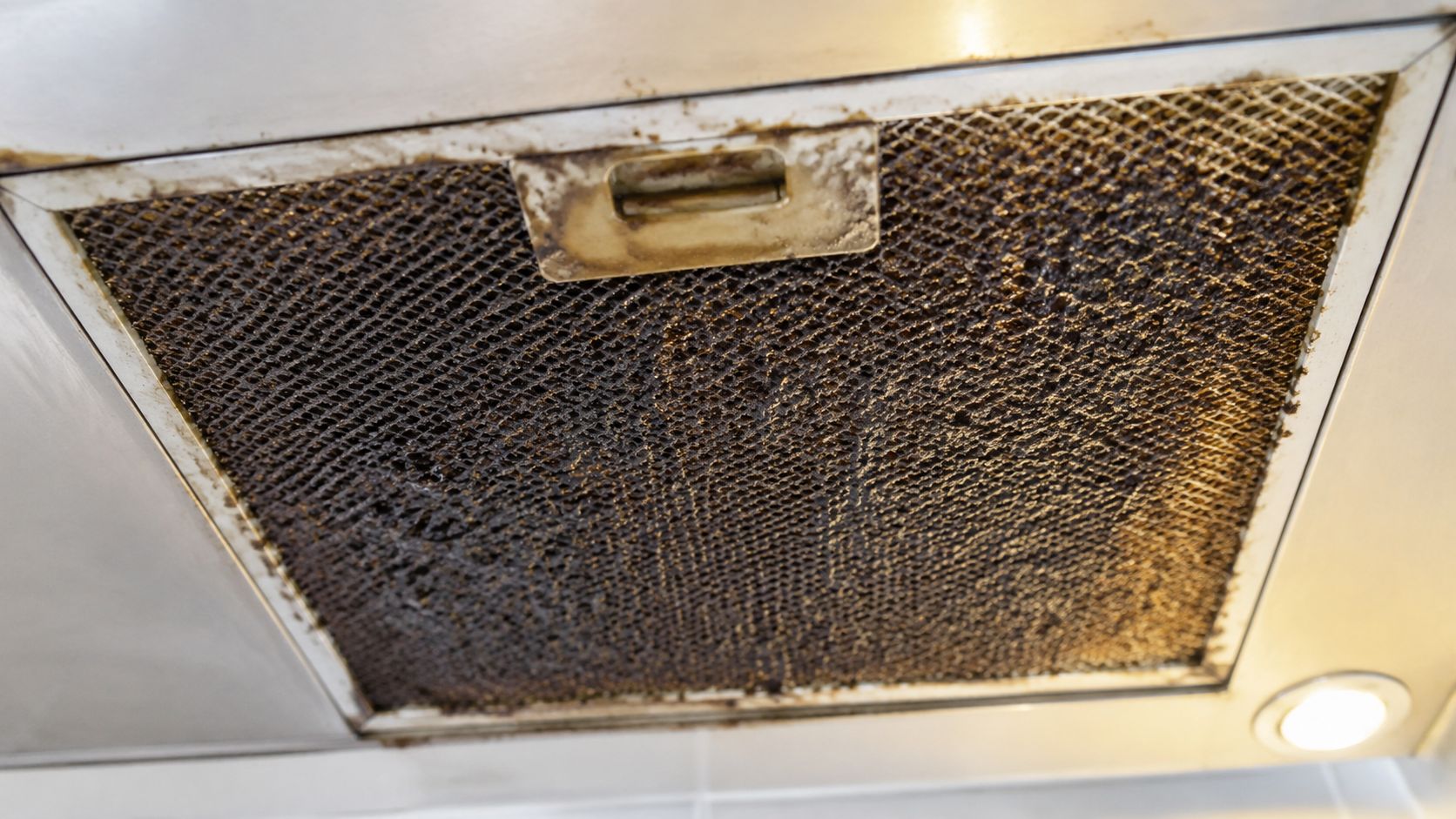
I have cleaned plenty of hoods that looked fine until the filters came out. Then you see the actual condition of the kitchen. Heavy residue around the mesh, brown drip lines near the light cover, and a fan chamber that has been recirculating odor for months.
Practical rule: If the hood gets loud, the kitchen holds smoke longer than it used to, or a greasy smell comes back after you clean the stove, the buildup is usually inside the vent path, not on the surface.
What We See in Reno-Sparks Homes
In Reno-Sparks, range hood grime has its own texture. It isn't always the soft, fresh grease you can wipe off with a microfiber and a little soap. More often, it's a paste. Fine beige dust from open windows, dry wind, nearby construction, and normal desert air settles on the hood, then cooking oils lock it in place.
Neighborhood patterns we run into
In Midtown Reno apartments and older rentals, it's common to find years of layered grease around the filter frame and on the underside lip of the hood. The exterior may have been wiped many times, but the removable parts were ignored.
In Damonte Ranch, South Reno, Somersett, and Northwest Reno , newer homes often have stronger ventilation systems and cleaner-looking kitchens overall. Even so, high-output cooking can leave a surprising amount of residue inside the fan area, especially in homes where people cook nightly.
In Wingfield Springs, Spanish Springs, and Sparks , we often see a mix of dry dust and kitchen grease collecting faster because of wind exposure and tracked-in debris from garages and entryways. That same dust doesn't stay in one room. It circulates, settles on cabinet tops, and gets pulled toward kitchen ventilation.
Cooking style changes the buildup
Not all kitchens foul up the same way.
- High-heat searing and frying: This leaves the heaviest, stickiest film.
- Frequent oil-based cooking: You see more residue inside the filter mesh and around the fan housing.
- Lighter cooking with lots of steam: Even without much frying, steam carries particles upward and can leave grime when airflow is reduced.
- Move-out neglect: Kitchens that "don't look bad" at first glance often have hidden buildup inside the hood line that shows up immediately during close inspection.
Reno dust has a way of turning into sticky grime where you least expect it. Range hoods are one of the biggest examples.
Property managers notice this during turnovers. A kitchen can have clean counters, swept floors, and polished appliances, but if the hood smells stale or the filter looks brown and tacky, the whole room reads as not fully cleaned.
A Complete Range Hood Cleaning Checklist
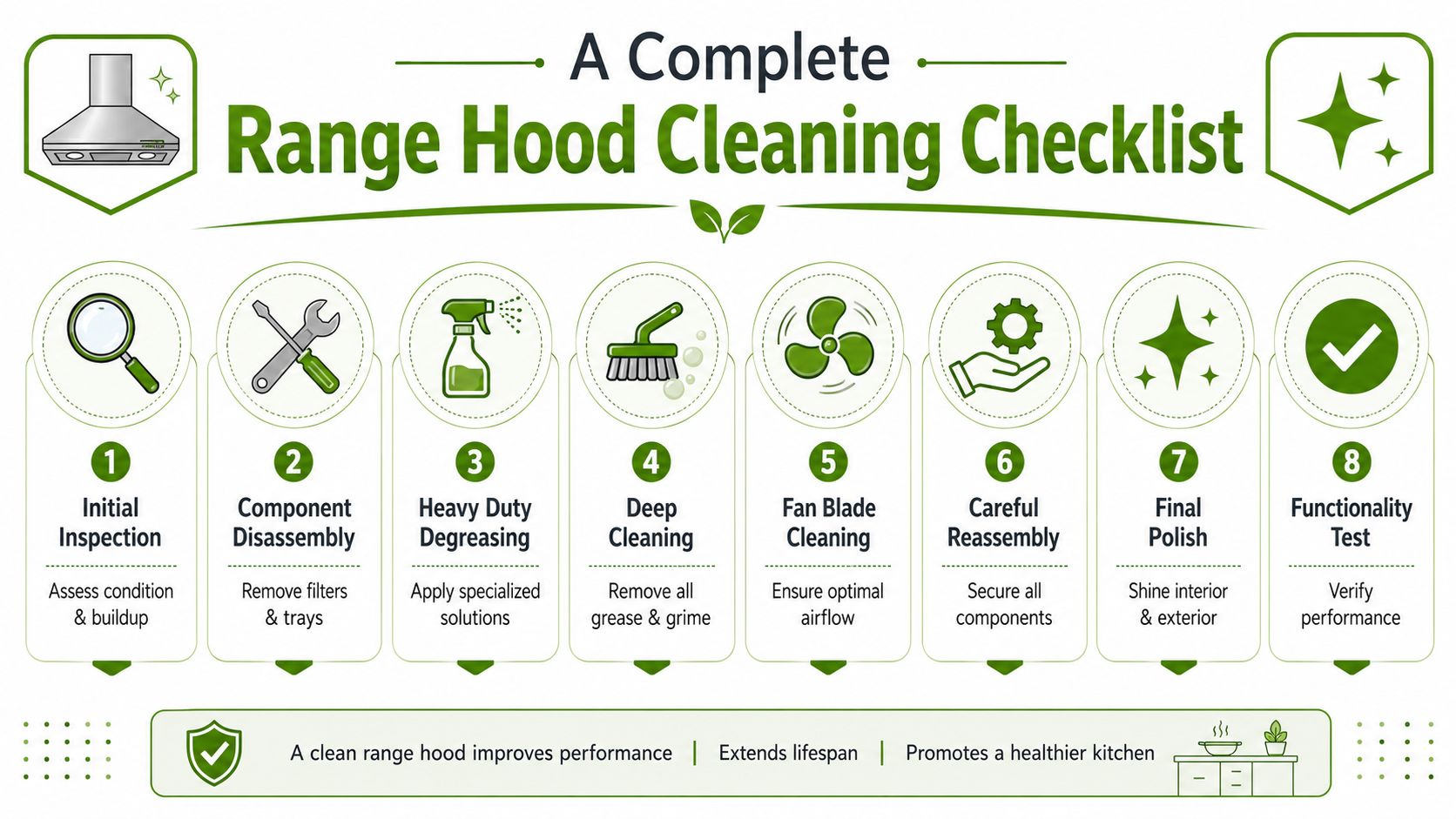
A proper hood cleaning isn't one task. It's several smaller tasks done in the right order so grease doesn't just get moved around. The biggest mistake I see is treating the hood like a flat stainless panel when the dirtiest parts are usually the filters, fan area, and internal surfaces just behind them.
What should be included
For homeowners and renters searching for deep cleaning in Sparks or Reno kitchen detail work, a thorough hood service should usually include:
- Filter removal and assessment: Mesh or baffle filters come out first so you can see what the buildup looks like.
- Filter degreasing: Heavy grease needs a soak, not just a spray.
- Interior hood wipe-down: This includes the cavity behind the filters where grease collects on metal surfaces.
- Fan area cleaning: The fan area often has sticky buildup that gets missed.
- Exterior face cleaning: Stainless or painted surfaces should be cleaned without scratching the finish.
- Edge and seam detail work: Grease loves corners, trim lines, and screw heads.
- Reassembly after full drying: Parts should go back in only when dry and secure.
Optional add-ons often make sense in the same visit:
- Inside oven cleaning
- Inside cabinet cleaning near the cooking zone
- Wall spot cleaning behind the range
- Interior vent-adjacent dust removal
- Heavy buildup focus areas
Filters need soaking, not wishful thinking
The most effective method for heavily grease-saturated filters is a boiling water and commercial degreaser soak for 15 to 30 minutes , followed by gentle scrubbing with a soft nylon sponge, as described by World CopperSmith's range hood cleaning method. That matters because the fine mesh traps oil deep inside, not just on the top layer.
Spraying degreaser on a cold filter and wiping the visible face might improve appearance, but it usually leaves grease inside the mesh. That's why the hood still smells off after a "cleaning."
A soft nylon sponge or soft brush is the right tool. Abrasive pads can damage the mesh and create a bigger problem than the grease itself.
The fan area is where shortcuts show
A lot of DIY jobs stop after the filters. That's the point where the hard part starts.
If the fan blades and surrounding interior surfaces are coated, airflow drops and odors linger. Fotile's step-by-step process for hood cleaning includes powering off the unit, soaking filters in a degreasing solution, applying a non-abrasive degreaser to interior surfaces and fan blades, wiping carefully while avoiding electrical components, and drying thoroughly before reassembly in its guide to how to clean a range hood.
If the filters come out clean but the fan blades stay greasy, the hood may still sound strained and pull poorly.
This is also where caution matters. Some parts are easy to access. Others sit close to wiring or fasteners that shouldn't be forced.
Ducted and ductless hoods aren't the same
A ducted hood vents air outside. A ductless hood recirculates air through filters and sends it back into the kitchen. The cleaning approach overlaps, but expectations are different.
- Ducted systems: More attention goes to the hood interior, fan area, and any accessible short run near the hood opening.
- Ductless systems: Filters matter even more because that's the main line of defense before air comes back into the room.
- Charcoal-style recirculating components: These aren't a scrub-and-reuse situation in the same way metal filters are. Homeowners should check the unit's care instructions before forcing a cleaning method onto every part.
DIY Cleaning vs Professional Service
A lot of Reno hoods look manageable until the filters come down. The outside may only show a light film, but inside you often find tan desert dust glued into old grease around the fan housing, filter track, and lower interior seams. That buildup wipes differently than fresh cooking residue. It smears, clumps, and hangs on.
When DIY is enough
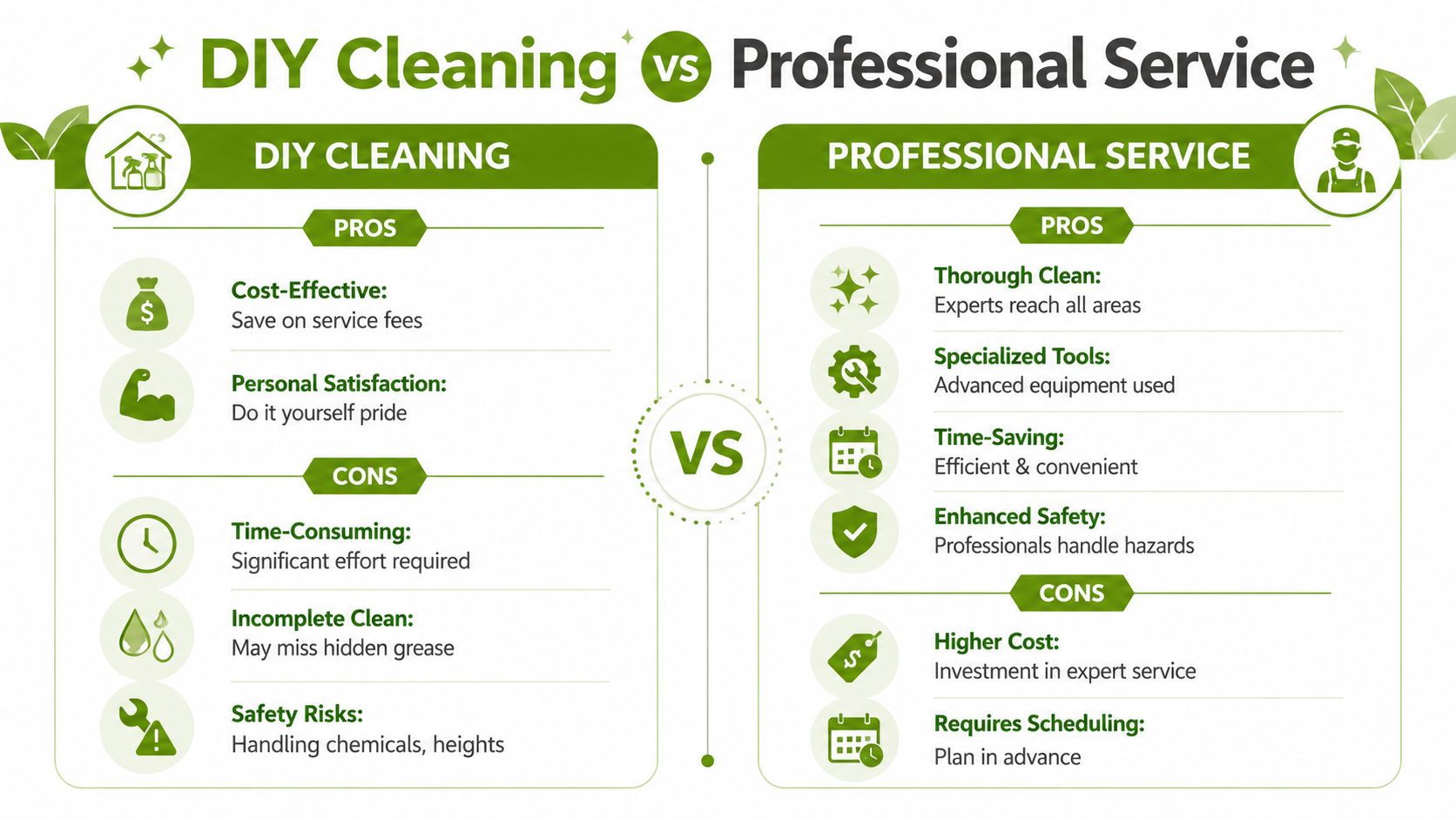
DIY works best on a hood that has been kept up all year, not one getting its first real cleaning before a move-out or showing. If the residue is still soft, the parts come apart without a fight, and the hood is pulling air normally, routine maintenance is usually realistic.
DIY usually makes sense when:
- The filter has light residue: No thick yellow buildup packed into the mesh or baffle channels.
- The hood still clears smoke and cooking odor fairly well: Airflow has not dropped off in a noticeable way.
- The parts are easy to remove and reinstall: No stripped fasteners, bent tabs, or tight access near wiring.
- You are maintaining, not restoring: The goal is upkeep between deeper cleanings.
| Approach | Best for | Likely limitation |
|---|---|---|
| DIY wipe-down and filter soak | Regular maintenance | Dust-heavy grease often remains around the fan, housing edges, and hidden interior surfaces |
| Professional range hood vent cleaning | Heavy buildup, move-out prep, odor issues | Requires scheduling and a service cost |
When calling a pro is the better move
Professional service makes more sense when the grease is old, sticky, and mixed with dust from open windows, construction, or long dry seasons. I see this a lot in Reno-Sparks kitchens where people cook frequently with oil, sear meat at high heat, or fry foods that leave a heavier airborne residue than simple reheating or boiling. The result is not just a dirty hood. It is a tacky layer that grabs more dust every week and can leave the hood looking clean from five feet away while still failing a close inspection.
For renters, landlords, and property managers, that close inspection matters. On a move-out clean, they usually check the filter edges, the underside lip, the light cover area, and any visible grease transfer on a paper towel or fingertip. A hood can look fine in photos and still cost time at turnover because the hidden surfaces feel slick.
For a more thorough residential kitchen hood cleaning that includes the hood, removable filters, and a short duct run, homeowners typically pay between $200 and $400 per visit, according toHomewyse's residential range hood cleaning cost guide. Pricing changes with hood size, access, and how much hardened buildup has to be broken down by hand.
One more trade-off matters. DIY can handle visible grime, but once grease has worked into tight seams or areas close to the fan and electrical parts, the risk of incomplete cleaning goes up fast. That is usually the point where people spend half a day scrubbing and still end up with a hood that smells stale during the next cooking session.
If stale air or contamination is also a concern in the rest of the duct system, AMPM Restoration's mold tips are worth reviewing.
Booking logic: If the hood has dust-bonded grease, odor that lingers after cooking, or a pending walkthrough, professional cleaning is usually the safer call.
Our Simple Process for a Cleaner Kitchen
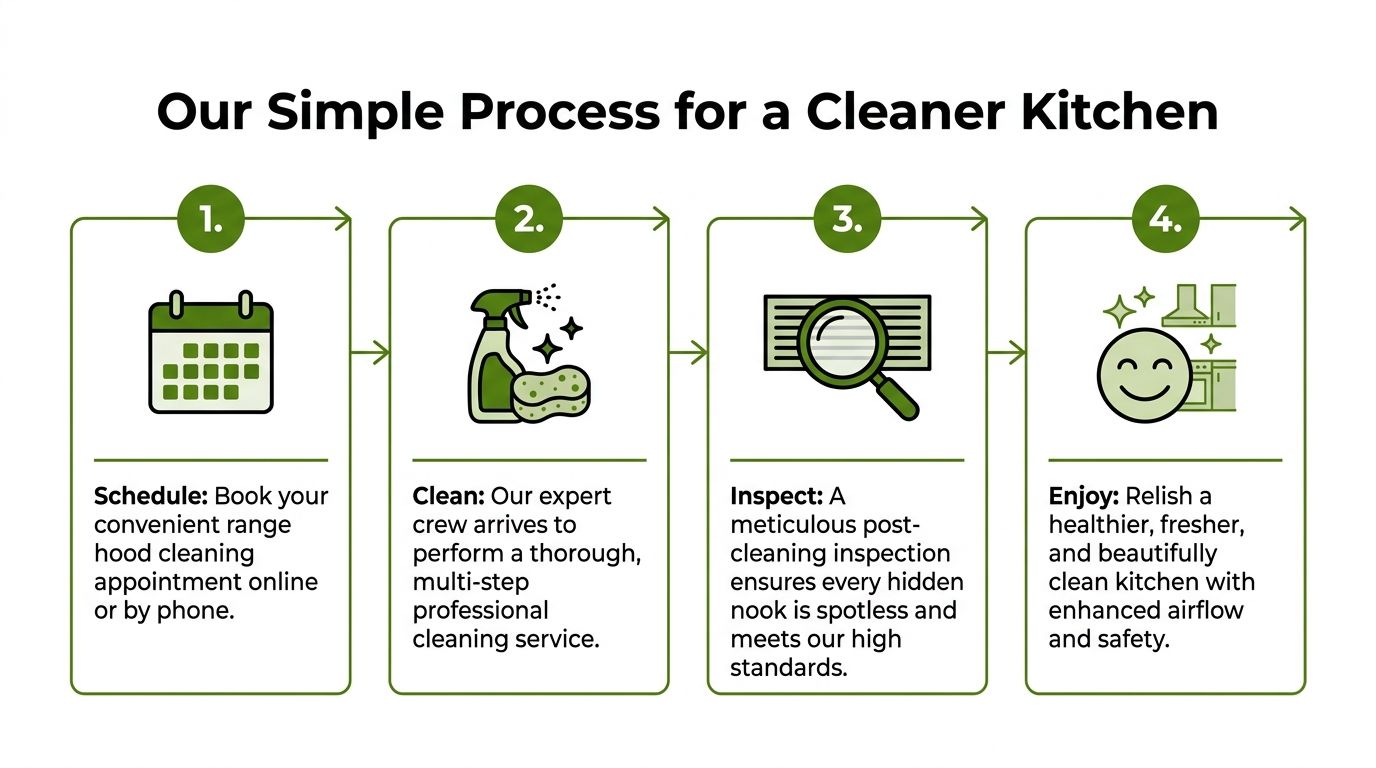
Booking a hood-focused kitchen clean shouldn't feel complicated. In Reno-Sparks, people are usually squeezing it between work, kids' schedules, showing appointments, or move-out deadlines, so the process needs to be straightforward.
Schedule
You book online or call. From there, you get a confirmation and arrival window, which matters in places like South Reno, Spanish Springs, and Wingfield Springs where people are often coordinating access around workdays, school pickup, or tenant turnover timing.
Clean
The crew arrives with supplies and works from a checklist instead of winging it. That's important on kitchen jobs because grease cleaning goes sideways fast when someone uses the wrong pad, skips the soak, or puts damp parts back too soon.
For homeowners who like knowing what a well-stocked appointment looks like, this cleaning supplies list gives a helpful look at the tools and products behind a real deep clean.
Inspect
After the cleaning, there should be a quick quality check. Filters should be seated correctly. Surfaces should feel clean, not slick. The hood should look better, smell fresher, and give you a kitchen that feels reset rather than just shined up.
- Visible check: No remaining greasy film on the face, underside, or trim lines
- Touch check: Edges and filter frames shouldn't feel tacky
- Practical check: The kitchen should feel less stale after cooking
Enjoy
This is the part clients usually notice right away. The kitchen doesn't carry that old oil smell, and the hood area stops feeling grimy every time you reach for the controls.
In Reno homes, especially after dusty weeks or wildfire ash season, that difference is more noticeable than people expect. A clean hood doesn't just improve looks. It makes the whole cooking zone feel less heavy.
Reno Range Hood Cleaning FAQ
How often should a residential range hood be cleaned in Reno
A good working schedule in Reno is to wash the grease filters about once a month, and clean the fan housing and interior on a deeper cycle every few months. Homes that do a lot of pan frying, stir-frying, searing, or cooking with oil usually need service sooner. So do homes where windows stay open during windy weeks, because fine desert dust sticks to warm grease and turns into a heavier film than you see in less dusty climates.
That Reno-Sparks buildup is the part many homeowners underestimate. It is not just kitchen grease. It is grease mixed with dust, and that combination gets tacky fast.
What signs tell me the hood needs more than a quick wipe-down
A quick wipe only handles the visible metal. If steam hangs in the kitchen, the fan sounds strained, the controls feel sticky, or cooking odors linger long after dinner, the problem is usually inside the hood.
I also tell clients to check the filter edges and the underside seams. If those areas feel gummy, or if dust is glued into the grease instead of sitting loosely on top, the hood is past basic maintenance. At that stage, fire risk and air quality become more than a cosmetic issue.
Does this matter for move-out cleaning in Reno-Sparks
Yes. Property managers notice the kitchen fast, and the hood is one of those small areas that changes the whole impression of the unit. During move-out cleans, they usually look for greasy filter screens, yellowed residue on the underside, oil buildup around the light cover, and any stale cooking smell near the range.
A hood can look decent from eye level and still fail that check once someone runs a hand along the underside.
Can this help with lingering smoky kitchen smell after wildfire season
It can, especially if ash has settled into an already greasy hood. In Reno, wildfire smoke, desert dust, and cooking residue can collect in the same spot and leave the kitchen smelling dull even after the counters are cleaned.
A hood cleaning will not fix every indoor air problem in the home, but it often removes one of the dirtiest odor-holding surfaces in the kitchen. That makes a noticeable difference after smoke season.
Reno dust does not stay on windowsills. It settles into vents, trim, fan covers, and greasy kitchen surfaces faster than homeowners often expect.
In Sparks rentals and owner-occupied homes alike, hard water marks and pet hair get noticed right away. The hood gets missed until someone cooks, turns on the fan, and realizes the whole area still smells like old oil. That is why a proper hood cleaning matters. It improves how the kitchen looks, how it smells, and how it performs.
A clean range hood helps the kitchen feel fresher, safer, and easier to hand off at move-out. For help with deep cleaning Reno NV and detailed kitchen cleaning in Reno, NV, visit Altitude Cleaning Crew. Call 775-376-5527 or book online at Altitude Cleaning Crew's booking page.