
How to Prevent Hard Water Stains: Reno Tips 2026
Learn how to prevent hard water stains on Reno shower doors & fixtures. Get local tips from Altitude Cleaning Crew to beat mineral buildup.

For those seeking how to prevent hard water stains in Reno, you're probably already tired of wiping the same shower glass, faucet bases, and toilet rings over and over. This is for homeowners, renters, Airbnb hosts, and property managers across Reno-Sparks who want surfaces to stay cleaner longer in a place where hard water and fast evaporation work against you.
In Reno, this matters because the problem doesn't stay small for long. What starts as a light haze on glass can turn into stubborn mineral buildup that makes a clean bathroom still look neglected.
Your Guide to a Spot-Free Reno Home
Hard water is a daily reality here, from South Reno master baths to rental turnovers in Midtown. In the U.S., over 85% of households experience hard water issues , and an after-shower wipe-down can reduce stain formation by nearly 90% in hard water regions, according to the ResearchGate summary of the 2014 safe water study.
Reno dust has a way of showing up everywhere, but hard water is what keeps bathrooms looking dull even after a decent scrub.
Opening takeaways
- Best daily habit: Dry shower glass, chrome, and tile right after use. The less water that sits and evaporates, the fewer mineral spots you'll fight later.
- Best weekly habit: Use a vinegar-based maintenance routine on the right surfaces before scale hardens.
- Best long-term fix: If buildup keeps coming back no matter what, the issue may be the water itself, not your effort.
- When DIY is enough: Light haze, fresh spotting, and early fixture scale usually respond well to consistent upkeep.
- When to get a reset clean: If the glass looks cloudy all the time, faucet bases have crusted mineral rings, or the toilet line keeps returning fast, it's usually time for a full detail clean before maintenance will be effective.
A lot of people make the same mistake. They buy stronger and stronger cleaners before fixing the issue, which is evaporation. Good prevention starts with routine, not brute force.
If you're building a bathroom kit for this, keep it simple. A squeegee, microfiber cloths, a spray bottle, and the right non-scratch tools matter more than a cabinet full of products. This cleaning supplies list for a practical home setup is a solid place to start.
What We See in Reno-Sparks Homes
In Reno-Sparks homes, hard water doesn't show up the same way everywhere. The pattern changes by fixture age, finish type, and how much daily use that bathroom gets.
In Damonte Ranch and South Reno, we often see newer bathrooms with dark counters and frameless glass where every white mineral trace stands out. The room may be modern and well kept, but the shower glass still gets that chalky banding near the bottom where droplets dry over and over.
Neighborhood patterns we notice
- Midtown Reno: Older brass and chrome fixtures tend to show buildup around handles and aerators first. Once that scale sits, it starts to make the finish look older than it is.
- Spanish Springs and Wingfield Springs: Windy days bring in fine dust, and when that mixes with hard water residue on shower floors or around tracks, it creates a gritty film that doesn't wipe away cleanly.
- Somersett and Northwest Reno: Large primary bathrooms with more glass mean more surface area to spot. These homes often look bright and open, which also makes every streak easier to see.
Hard water stains don't just make surfaces look dirty. They make routine cleaning less effective because you're always working on top of leftover mineral film.
A lot of renters and homeowners think they just need a better product. Sometimes they do. But just as often, they need a proper first reset. If the buildup is already established, normal wipe-downs won't touch it. That's where a more targeted approach helps, and this guide on how to remove hard water stains is useful when prevention alone isn't enough.
Daily Habits That Stop Stains Before They Start
You finish a shower in South Reno, walk away for ten minutes, and the glass already has a dull film starting to show. That is how hard water behaves here. In Reno's dry air, prevention is less about heavy cleaning and more about interrupting that drying cycle before minerals set on the surface.
For most homes, the best daily habit is simple. Remove the water while it is still water.
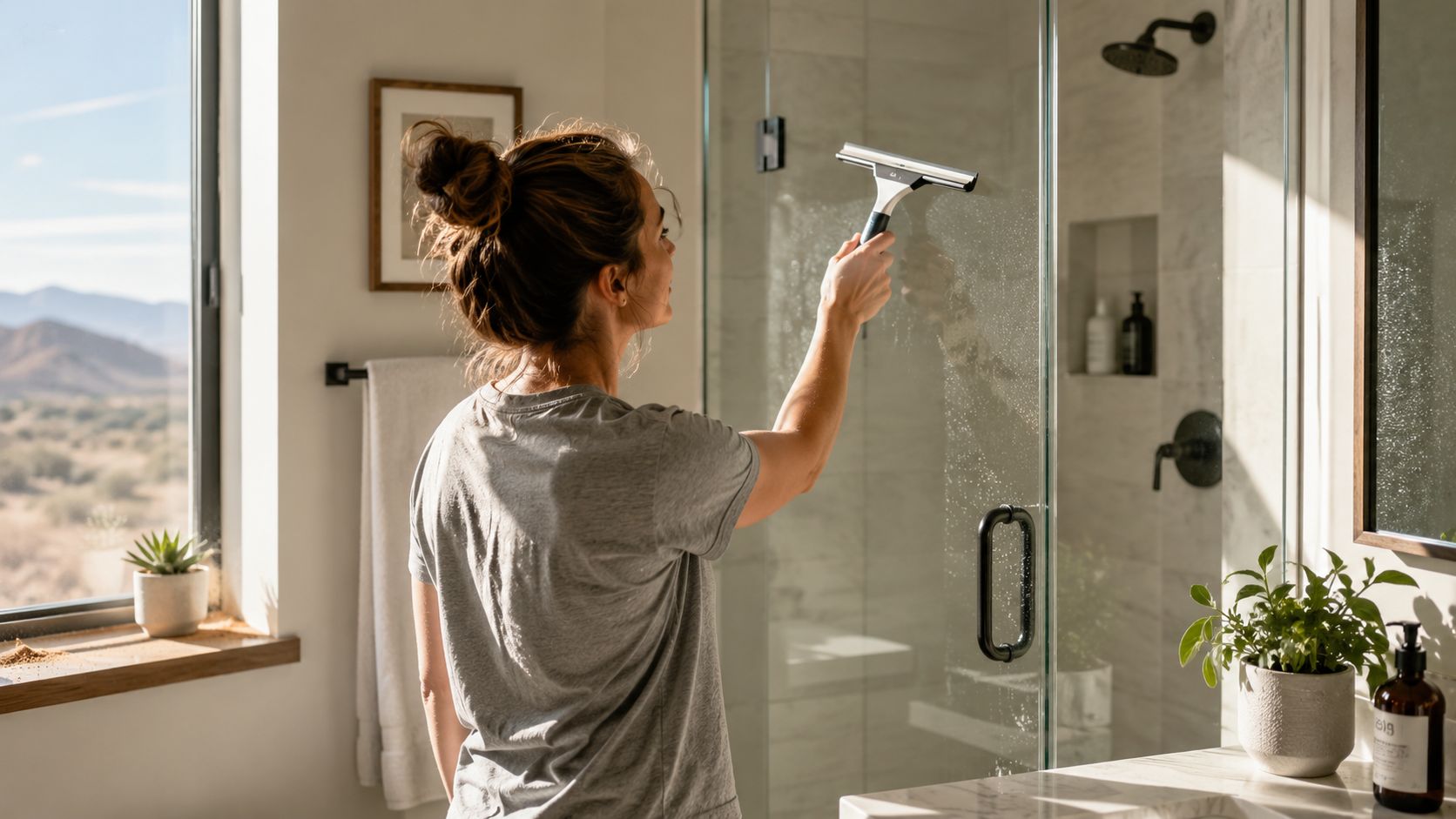
The 60-second routine that holds up in real Reno homes
After the last shower of the morning or evening:
- Pull water off the glass with a squeegee, top to bottom.
- Wipe metal trim, handles, faucet tops, and the bottom edge of the door with a dry microfiber cloth.
- Hit the spots that always hold water, especially corners, hinges, tracks, and the strip near the shower curb.
- Leave the cloth where you can grab it fast. Habits stick when the tool is within reach.
This works especially well in newer homes in Damonte Ranch and Somersett, where frameless glass shows every spot. In older Midtown bathrooms, the microfiber step matters just as much because buildup starts around handles, faucet bases, and aerators long before the whole room looks dirty.
Squeegee or microfiber?
Use the squeegee on broad, flat glass. It is faster, and it removes the bulk of the droplets before they can dry into a haze.
Use microfiber for the detail work:
- Fixture bases: around faucet mounts and handles
- Tight corners: shower door hinges, tracks, and trim edges
- Final buffing: chrome, mirrors, and dark finishes that show spotting quickly
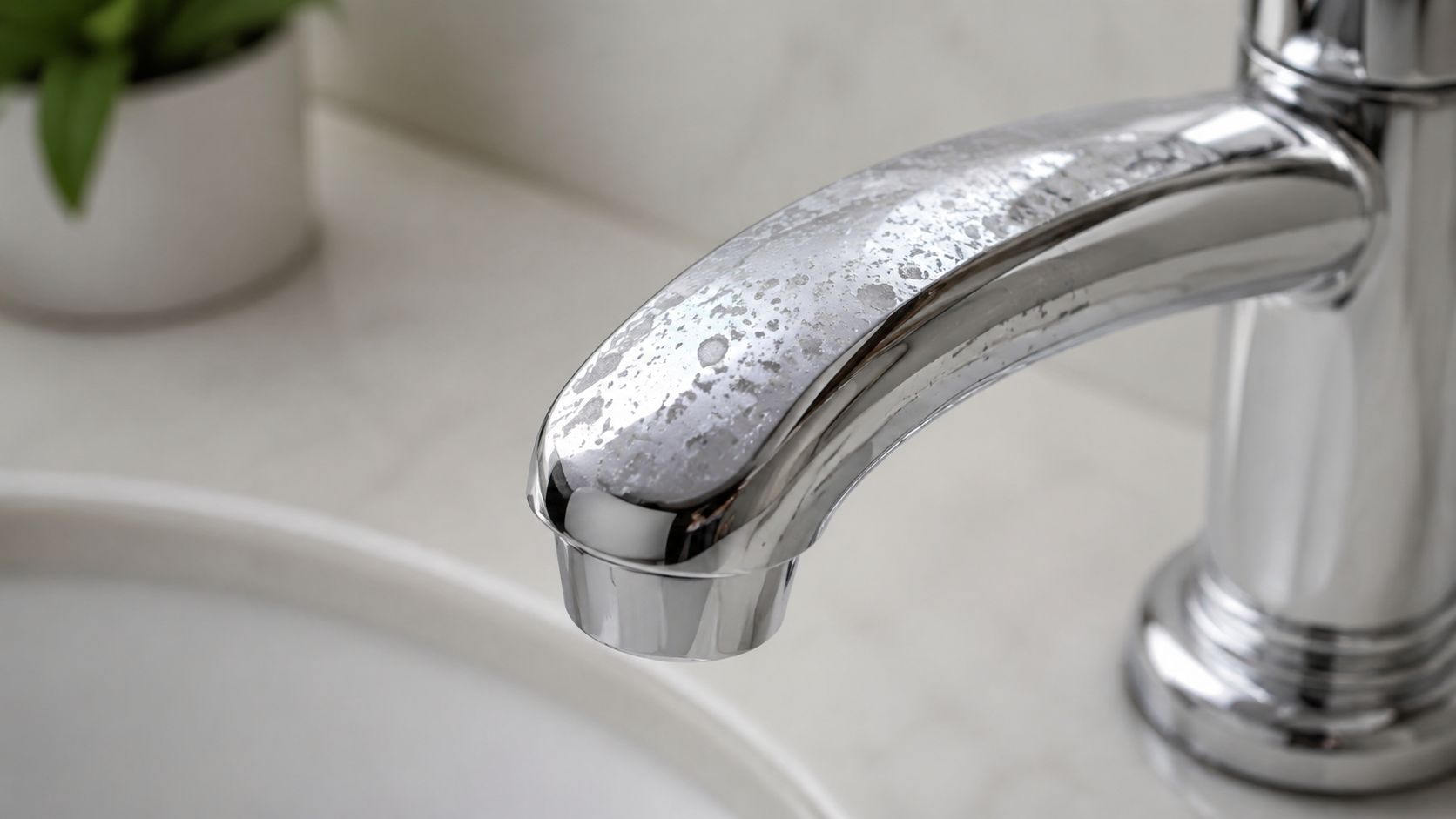
There is a trade-off here. A squeegee is the best daily tool for glass, but it will not do much for the places where minerals collect out of sight. If your faucet bases feel crusty, your aerators clog often, or the shower track has a chalky ring that keeps coming back, it helps to read about understanding water scale in plumbing. The same minerals spotting the glass are also collecting around the fixture itself.
I see this all the time in Spanish Springs and Wingfield Springs. Dust gets pulled into damp corners, then the minerals dry over it and create a gritty film that a quick swipe will not remove. In that situation, daily wiping still matters, but DIY only works if the surface is mostly clean to begin with.
A good rule is this. If the glass feels smooth and just looks spotty, daily drying is enough to keep it under control. If it feels rough, cloudy, or etched near the bottom, you are no longer in prevention mode. You are maintaining buildup.
For homeowners who want a tighter routine for shower glass, this guide on keeping glass shower doors clean walks through the details.
A short demo helps if you've never built the habit before.
Your Weekly Routine for Hard Water Prevention
In Reno, the weekly clean is what keeps a manageable bathroom from turning into a reset job. Daily drying helps, but the minerals that settle around faucet bases, shower tracks, and toilet edges still need a scheduled pass before they harden.
For most glass shower doors, chrome fixtures, and shower trim, a simple vinegar and water mix works well if the buildup is still light. Spray it on, give it a few minutes to loosen the residue, then wipe, rinse, and dry the surface fully. The trade-off matters. Vinegar is fine for mineral film, but it can etch natural stone and can dull some specialty finishes if it sits too long.
Weekly maintenance that fits real life
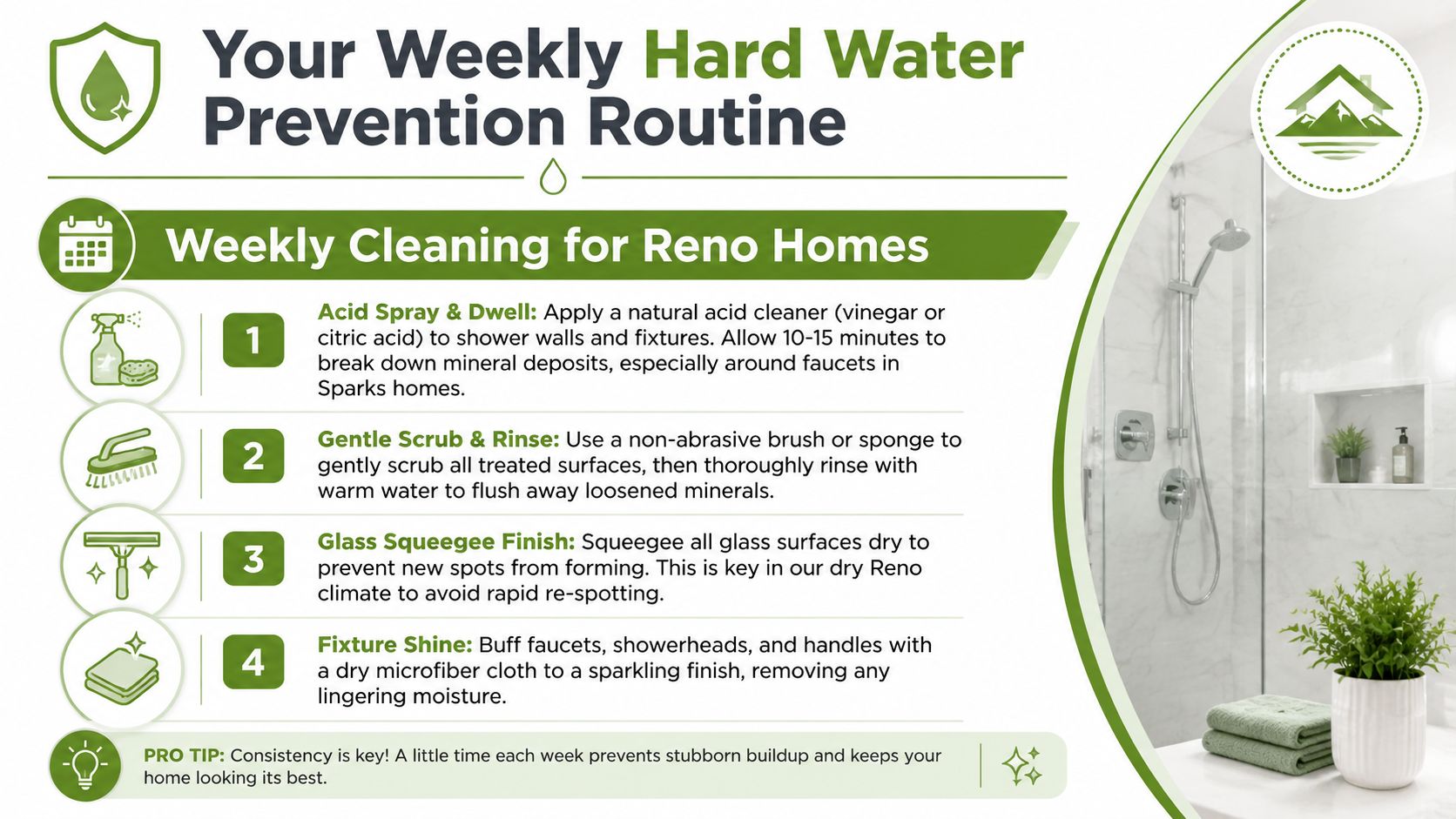
Use the weekly routine on:
- Shower glass
- Chrome faucet bodies
- Shower trim
- Toilet bases where splashes dry
- Sink areas that spot daily
What to avoid:
- Natural stone vanities or tile: vinegar can etch the surface
- Delicate coated finishes: test first and don't let acidic product sit too long
- Letting vinegar dry on the surface: that can leave its own streaking behind
I see this a lot in South Reno and Somersett. Homeowners buy a strong cleaner to get rid of spots fast, then end up with haze on black fixtures or dull patches on stone. The right weekly routine is less about strength and more about matching the product to the material.
Use vinegar for minerals on durable surfaces. Use a stone-safe or finish-safe product where the surface calls for it.
Showerheads, faucets, and toilet rings
Removable showerheads do well with a short vinegar soak. Fixed faucet heads and stubborn crust around bases usually respond better to a vinegar-soaked cloth wrapped around the area for a bit, followed by a soft brush, a full rinse, and a dry microfiber wipe. If you need a step-by-step method, save this guide on how to descale bathroom fixtures.
If buildup keeps coming back fast in more than one bathroom, cleaning alone may not be the whole answer. A house with very hard water often needs a plumbing-side fix too. This overview of how to fix hard water problems is a useful starting point if you're weighing a softener or service call.
The weekly goal is simple. Remove fresh mineral film while it is still easy to lift. Once the surface feels rough or looks cloudy after cleaning, weekly maintenance is no longer enough to get that fixture back to baseline.
When to Call for a Professional Hard Water Reset
Some bathrooms are past the maintenance stage. If the shower glass already looks permanently cloudy, the faucet bases have thick white crust, or the toilet bowl has a ring that comes back quickly, you're not dealing with light spotting anymore.
In Nevada, water hardness frequently exceeds 180 mg/L , which classifies it as very hard , and in those conditions visible stains can form in 24 to 48 hours. The same U.S. Geological Survey source also notes that a whole-house water softener has been historically proven to prevent stain formation entirely in 90% of installations , making it the strongest long-term fix when recurrence is severe, according to the USGS page on water hardness.
Signs DIY is still enough
DIY usually makes sense when:
- The glass is spotty, not cloudy
- Fixture buildup is fresh and still softens with routine care
- You can stay on a weekly schedule
- The issue is isolated to one bathroom or sink
Signs it's time for a reset
Professional help makes more sense when:
- The buildup has been there for a long time
- You inherited the issue after a move-in or tenant turnover
- You 're prepping for guests, photos, or a move-out inspection
- You want the surfaces restored to a point where maintenance is realistic again

A hard water-focused deep clean is usually about the bathrooms first, but it often extends into the rest of the home because mineral spotting and Reno dust tend to travel together.
What's typically included in that kind of reset:
- Descaling shower glass
- Detailing chrome fixtures and faucet bases
- Cleaning around handles, trim, and shower edges
- Toilet bowl mineral ring attention
- Sink, counter, and mirror cleanup
- Floors, baseboards, and dust removal in the same wet areas
- Exterior cabinet wipe-downs and splash-zone detailing
Optional add-ons often make sense too:
- Inside cabinets
- Wall spot cleaning
- Heavy buildup areas
- Interior window cleaning
- Inside oven or fridge for move-out situations
In Sparks move-out cleans, one thing that comes up a lot is the bathroom that "looks fine" from the doorway but fails on details. The shower track has scale, the faucet base is ringed white, and the toilet edge has mineral staining the landlord notices right away. That's where a reset clean earns its keep.
If the issue keeps recurring despite solid upkeep, the long game may be plumbing-related. This overview on how to fix hard water problems is helpful for homeowners deciding whether cleaning alone is enough.
Pricing depends on bedrooms, bathrooms, square footage, condition, and add-ons. Most hard water-focused deep cleans range from $250 to $450 depending on the home 's size, condition, and specific add-ons.
The Altitude Cleaning Crew Process
Booking a hard water-focused clean shouldn't be complicated. The process is simple and built for busy Reno-Sparks schedules.
Schedule
Book online or call. You'll get a confirmation and an arrival window, so you're not left guessing when someone will show up.
Clean
The cleaners arrive with supplies and work from a checklist-based plan. That matters on hard water jobs because detail work around glass, fixtures, toilet lines, and splash zones gets missed when a team is winging it.
Inspect
Before wrapping up, there's a quick quality check. That final pass is where obvious misses get caught, especially on reflective surfaces like shower glass, chrome, and mirrors.
A bathroom can be sanitized and still not look clean if mineral film is left behind.
Enjoy
You come back to a home that feels reset, not just tidied. That's especially helpful in Reno homes where dust, dry air, and hard water can make a space lose that freshly cleaned look faster than people expect.
Your Reno Hard Water Questions Answered
Can you actually get old, cloudy hard water stains off my shower glass
Sometimes yes, sometimes partly. Fresh and moderate buildup usually responds much better than long-neglected etched glass. If the minerals sat long enough to damage the surface itself, cleaning can improve it without making it look brand new.
Is the water harder in some parts of Reno-Sparks than others
Homeowners definitely report different levels of buildup from one neighborhood to another, and fixture age also changes how obvious the staining looks. In practice, Spanish Springs, South Reno, and older parts of Reno can all have hard water headaches. The exact experience tends to show up more in the bathroom surfaces than in a map.
Do cleaners bring special products for hard water
A professional team should arrive with the supplies needed for detail cleaning and safe surface-specific work. The key isn't just bringing acidic cleaners. It's knowing where to use them, where not to use them, and when to switch to a gentler method.
I'm moving out. How do I help the fixtures pass inspection
Focus on bathrooms, kitchens, floors, and baseboards. On fixtures, the details matter more than people think. Aerator crust, sink rings, toilet lines, and cloudy glass are the things that make a place feel not fully cleaned during a walkthrough.
If you also manage spa or hot tub areas at a rental, TubTabs' advice on hard water spas is a useful side read because the same mineral habits show up there too.
Sparks homes often bring the same two requests again and again. Hard water buildup and the kind of dust that settles back onto bathroom ledges right after a windy week.
Get Your Home Sparkling Again
If you've been fighting shower glass, faucet scale, and bathroom haze on repeat, prevention works best after the surfaces are brought back to a manageable baseline. That's usually the difference between a bathroom that stays clean with a quick wipe and one that feels like a constant project.
For homeowners and renters comparing deep cleaning Reno NV options, a hard water-focused reset can make regular upkeep much easier. If you're ready to book deep cleaning Reno NV service with Altitude Cleaning Crew, call 775-376-5527 or book online at http://altitudecleaningcrew.fieldd.co.