
How to Keep Flies Out of Your House: A Reno Guide
Learn how to keep flies out of your house in Reno with expert tips on sanitation, sealing entry points, and local pest management. Stop flies for good.

If you're searching for deep cleaning Reno NV because flies keep showing up around windows, sinks, trash, or pet areas, the problem usually isn't just the flies. In Reno-Sparks homes, desert dust, hidden food residue, and moisture around drains or bowls create the kind of buildup that makes a house feel clean on the surface but still attractive to pests.
This is for homeowners, renters, Airbnb hosts, and property managers who want a cleaner home and fewer recurring fly problems without relying on constant sprays. Around Reno, Sparks, Spanish Springs, South Reno, and Northwest Reno, the local mix of dust, dry air, pet hair, hard water residue, and windy weeks changes how fly problems start and why they keep coming back.
Why Flies Love Reno Homes and How to Win the Battle
A lot of fly problems in Reno don't start with a dramatic mess. They start with small things people stop noticing. Dust packed into a window track. Sticky residue on a trash can lid. A pet water bowl tucked beside a baseboard that hasn't been wiped closely in a while.
That matters here because general fly prevention guides often miss how low humidity and dust in high-altitude desert climates like Reno make the problem different , and local reporting notes up to 30% higher fly complaints during Nevada 's dry seasons in these conditions, where flies are drawn to rare moisture sources like leaky faucets, pet bowls, and dust-clogged drains as described in this Reno-focused fly prevention reference.
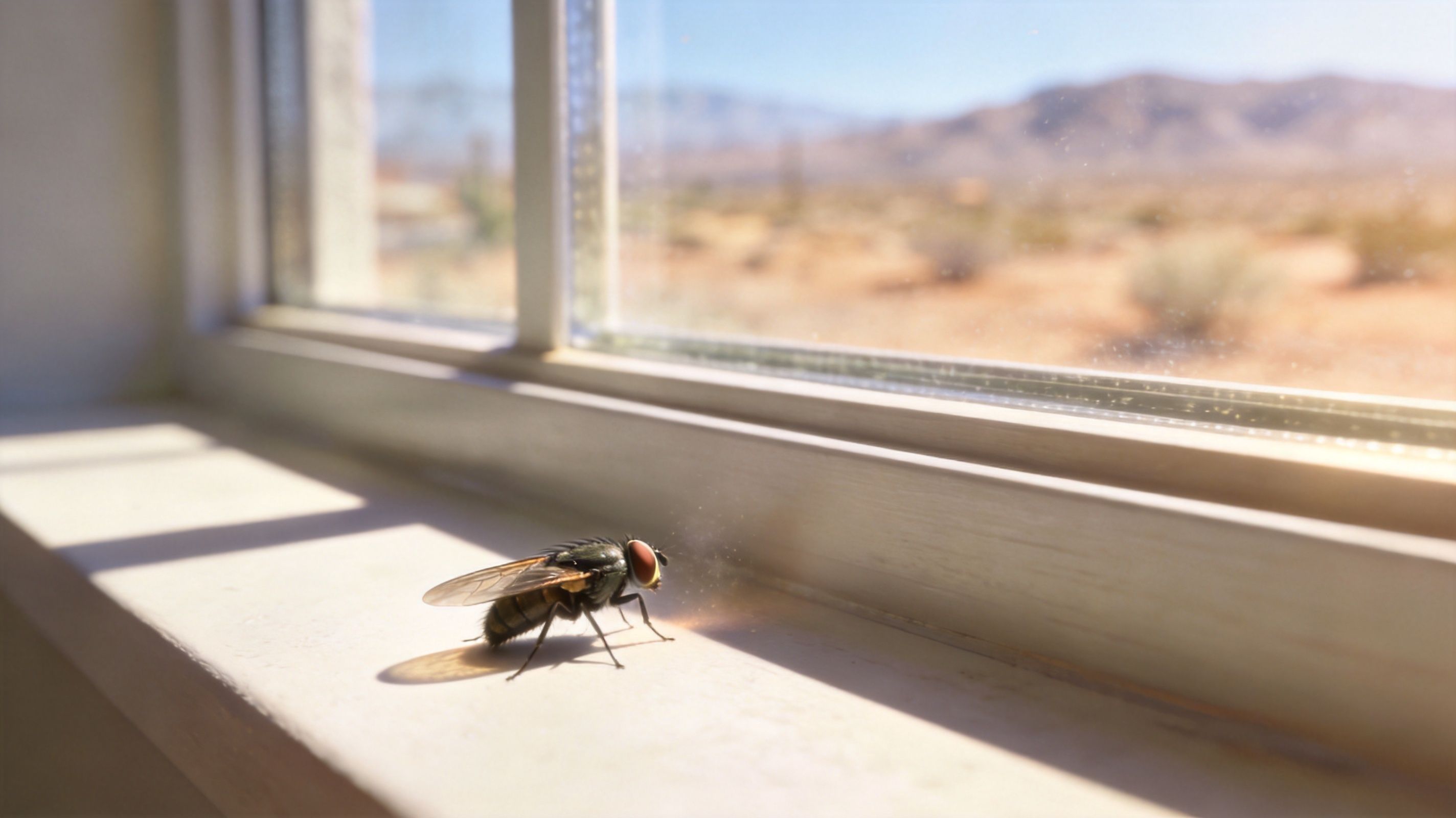
What We See in Reno-Sparks Homes
In South Reno and Damonte Ranch, newer homes often look sealed up well, but vents, sills, and sliding door tracks still collect fine dust fast. In Midtown and older Northwest Reno homes, it's common to find hidden gaps around utility lines, older screens, and kitchen corners where grease and dust have mixed into a film that keeps attracting activity.
In Sparks and Wingfield Springs, pet-heavy homes often have another pattern. Hair, kibble dust, and water splash collect around feeding stations and under nearby cabinets. That combination doesn't look major, but it keeps creating odor and residue.
Practical rule: If flies keep returning to the same room, inspect what that room is holding for them, not just how they got in.
The trade-off is simple. Sprays may knock down the few flies you see. They don't fix the grime inside drains, the sticky cabinet face near the trash pullout, or the buildup around the can itself. That's why flies are usually a symptom of a bigger cleaning problem.
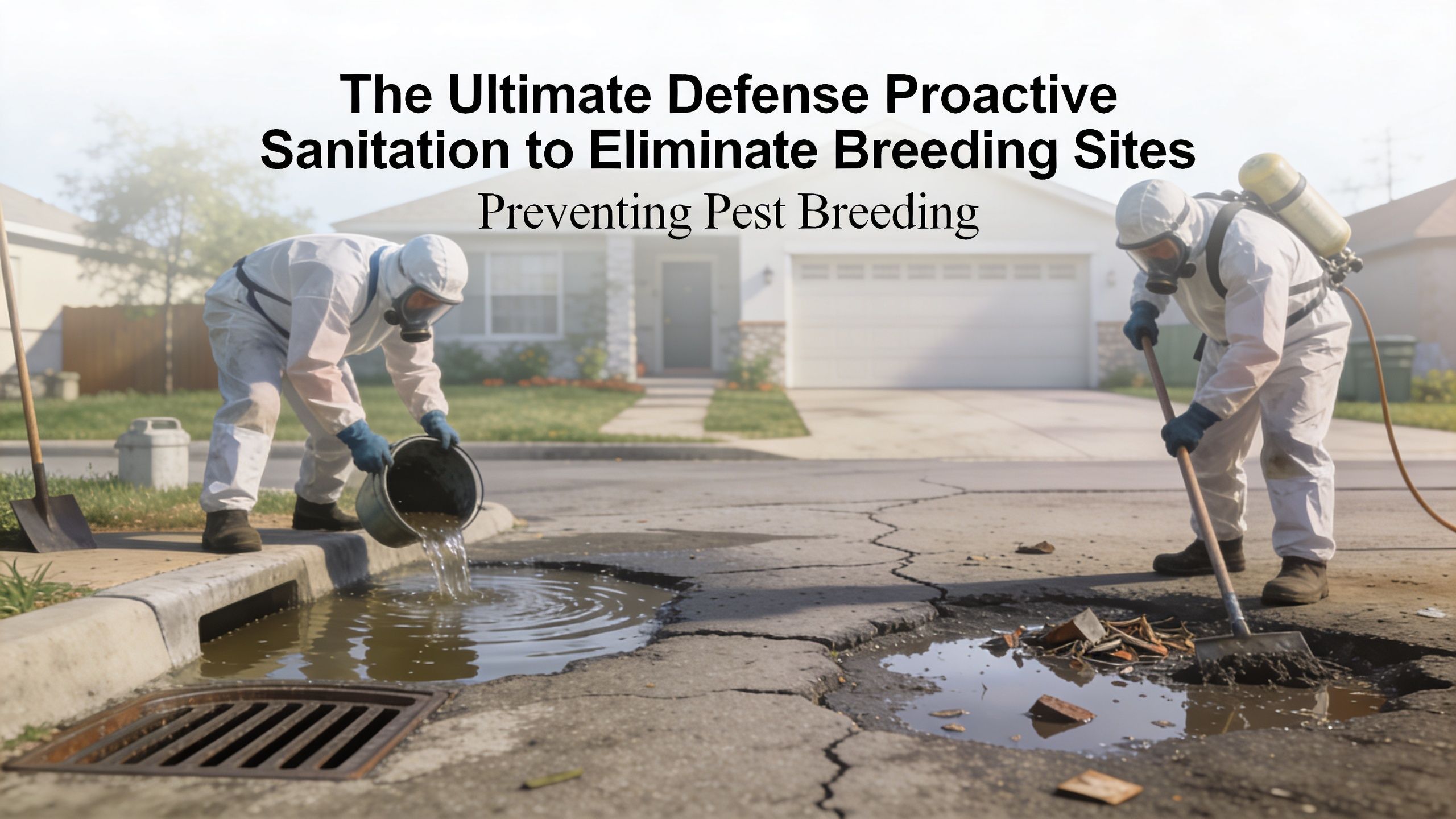
The Ultimate Defense Proactive Sanitation to Eliminate Breeding Sites
The most effective answer to how to keep flies out of your house starts with sanitation, not traps. Purdue Extension benchmarks say a proper IPM sanitation protocol can reduce potential house fly breeding sites by 80-90% , and daily garbage removal into tight-lid bins, weekly deep cleaning of drains and trash areas, and keeping outdoor bins over 50 feet from entry points can cut fly attractants by over 70% before barriers are even considered according to Purdue Extension.
The spots people miss first
Most homes with recurring flies have one thing in common. The obvious surfaces get wiped, but the problem areas don't get broken down thoroughly enough.
The biggest misses are usually:
- Kitchen drains and disposal edges where moist residue clings below sightline
- Trash can rims, lids, and pullout cabinets where spills dry into a sticky film
- Under appliances where crumbs and grease collect in warm, undisturbed areas
- Pet zones where wet food, kibble dust, and splash marks build up around bowls
- Baseboards and floor edges where dust mixes with tiny organic debris
In Reno homes, dry debris doesn't always smell strong right away. That's why people underestimate it. But once moisture enters the picture, even a little, those neglected areas start acting like a magnet.
What a real sanitation reset looks like
A useful fly-prevention clean isn't just "wipe counters and take out trash." It's closer to a deep reset.
- Empty and wipe food waste daily
Garbage, compost pails, food scraps, and pet waste need to leave the house fast and go into tight-lid containers.
- Break down drain film weekly
The issue isn't just standing water. It's the organic coating inside the drain line and around the strainer.
- Clean the trash system, not just the bag
The can, lid hinge, outer sides, nearby wall, and floor all hold residue.
- Pull out what can be safely moved
Under the toaster, behind the microwave, beside the fridge edge, and around the stove line is where crumbs hide.
- Detail pet feeding areas
Wash mats, wipe the wall nearby, clean the floor edge, and don't let splash marks sit.
- Dust low and wipe low
In Reno, fine dust settles along baseboards, vents, ledges, and under cabinets. That's where small food particles disappear into it.
A house can look tidy and still feed flies. The test isn't what you see at eye level. It's what collects at edges, corners, drains, and trash zones.
For room-by-room prep, a detailed cleaning checklist by room helps homeowners catch the places that usually get skipped.
What works and what doesn't
A few practical trade-offs matter here.
| Approach | What it does well | Where it fails |
|---|---|---|
| Quick spray | Knocks down visible adults | Doesn't remove residue or breeding material |
| Surface wipe-down | Improves appearance fast | Misses drains, can lids, under-appliance buildup |
| Deep sanitation | Removes attractants at the source | Takes more time and consistency |
| Trap-only approach | Helps monitor fly activity | Doesn't solve why they're there |
What's Included in a deep clean for fly prevention
For deep cleaning in Reno , the most useful service scope usually includes:
- Kitchen detail work \- counters, sink area, cabinet exteriors, trash area wipe-down, and floor edges
- Bathroom and utility attention \- sinks, drains, fixtures, floors, and corners where moisture lingers
- Dust removal \- baseboards, window sills, ledges, vents, and fan areas where desert dust settles
- Floor cleaning \- vacuum and mop with focus on edges, under tables, and pet zones
- High-touch wipe-downs \- handles, switches, and frequently used surfaces
- Optional add-ons \- inside oven, inside fridge, inside cabinets, wall spot cleaning, pet hair focus areas
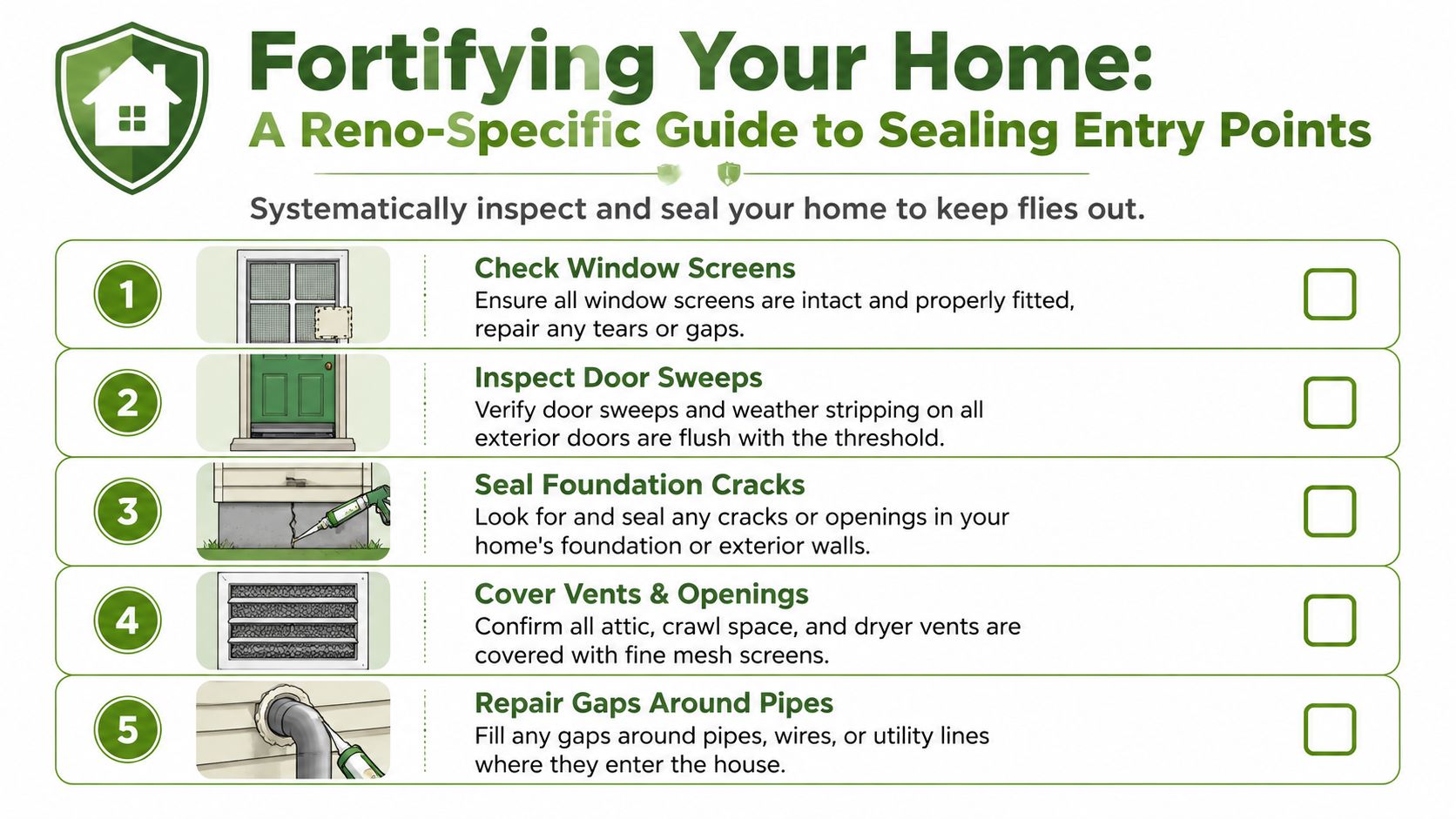
Fortifying Your Home A Reno-Specific Guide to Sealing Entry Points
Once the inside stops attracting flies, the next layer is blocking access. The standard that matters here is specific. Insect exclusion mesh with openings no greater than 0.038 inches (0.965 mm), or about 22 openings per linear inch, is the entomological standard for keeping house flies out , and proper installation on windows, doors, and vents can achieve near-100% exclusion based on the University of Arizona guidance.
Start with the openings you use every day
In Reno-Sparks homes, the biggest failures usually aren't dramatic holes. They're everyday wear points.
Check these first:
- Window screens \- look for tiny tears, loose corners, and poor frame fit
- Sliding doors \- inspect the lower track and side seals
- Front and garage side doors \- look for light under the sweep
- Attic and crawl space vents \- make sure mesh is intact and fitted
- Dryer and bath exhaust exits \- confirm covers close correctly
Older drywall around utility penetrations can also crack or separate. If you're sealing wall gaps around lines or vents, this guide on how to patch drywall can help with the cosmetic side after the gap itself is addressed.
Reno-specific weak points
Homes here deal with expansion, dust, and windy conditions that expose weak sealing fast. In Somersett and Spanish Springs, wind-driven dust often highlights entry points because you'll see buildup tracing the gap. In older Midtown properties, window hardware and screen frames tend to loosen first.
Field note: If dust keeps appearing on an interior sill right after a windy week, that opening usually isn't sealed as well as it looks.
A quick walkthrough helps:
| Area | What to look for | Why it matters |
|---|---|---|
| Window sills | Dust lines, dead insects, loose screens | Signals both air and pest entry |
| Door thresholds | Visible daylight or debris trails | Common low-entry point |
| Vents | Missing or damaged mesh | Flies use overlooked utility openings |
| Pipe entries | Small perimeter gaps | Easy access in laundry and utility zones |
A visual walkthrough can help homeowners spot the most common failure points before they become a recurring problem.
What We See in Reno-Sparks Homes
After dusty weeks, one of the most common patterns is this. The homeowner notices flies near a back slider or kitchen window and assumes the issue started with the door opening. Then you look closer and find a worn sweep, dusty vent cover, and a screen corner that no longer sits tight in the frame.
That combination is common in house cleaning in Reno jobs where the home is generally well kept, but the sealing details haven't been checked in a while. Exclusion works well, but only if those details are still intact.
Managing Common Fly Attractants in the High Desert
Sanitation solves the inside, sealing helps the shell, but daily living habits still decide whether flies keep circling back. Reno's dry heat changes what becomes attractive. A little spilled dog food by the pantry. Residue inside an outdoor bin. BBQ grease on a patio side shelf. These don't always smell huge to people, but they hold scent and moisture long enough to keep fly pressure up.
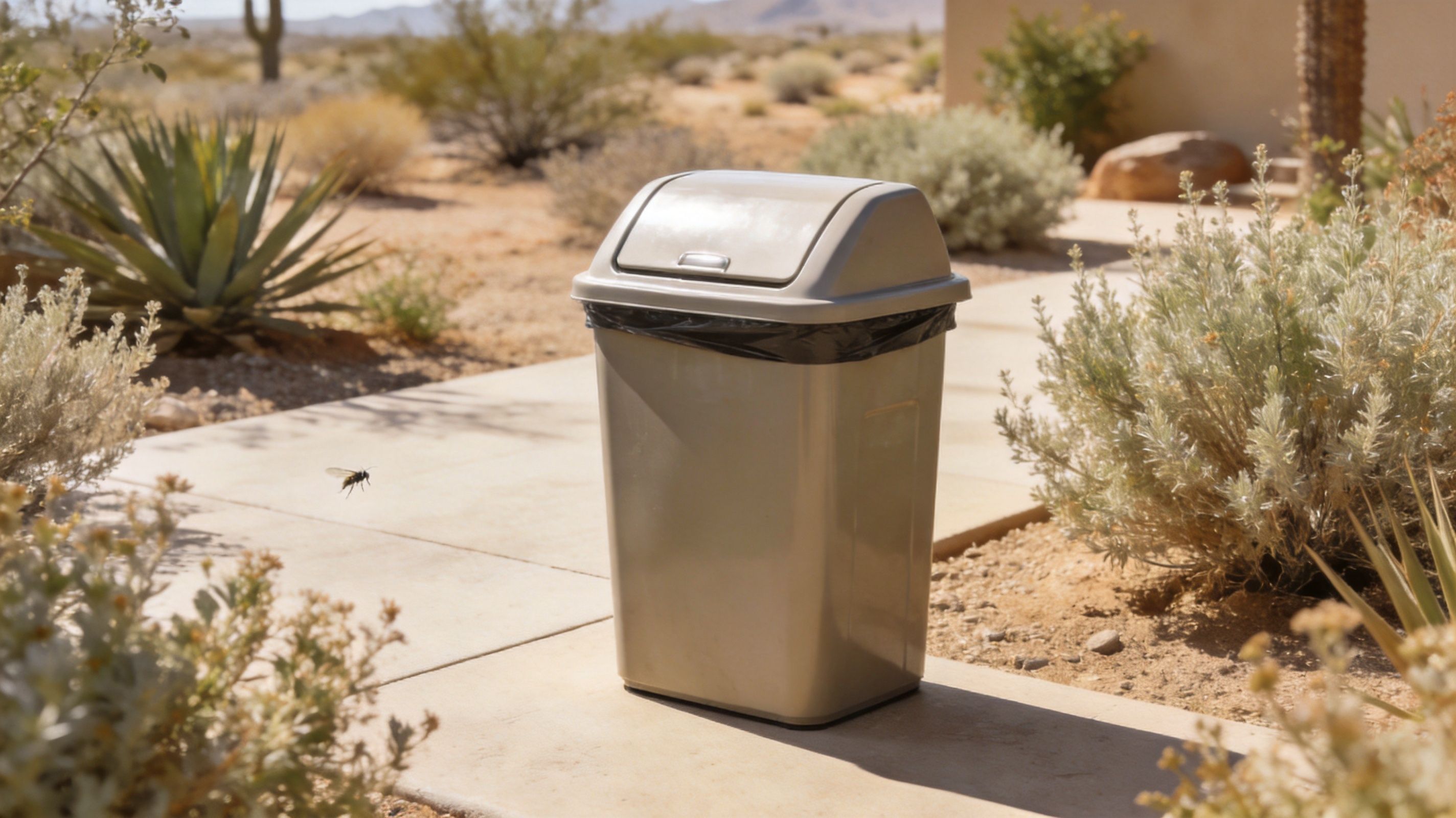
Trash and recycling need their own cleaning routine
A tied bag isn't enough if the bin itself is dirty. In Reno and Sparks, outdoor cans heat up fast, and dried residue on the lid, handle, or wheel side starts smelling stronger than people expect.
Focus on:
- Bin interiors \- rinse and scrub when leaks happen
- Lids and hinge zones \- these hold the worst sticky residue
- The ground below the cans \- spills under the bin keep attracting activity
- Recycling containers \- cans and bottles should be emptied before they sit
If fridge leaks or forgotten produce are part of the issue, this post on mold in the fridge is useful because cold storage problems often overlap with odor and residue problems that attract pests.
Pet areas are one of the biggest blind spots
Homes with dogs and cats usually need a stricter fly-prevention routine. The attractants aren't just pet waste. It's the full zone around the pet.
Common issues include:
- Water bowl splash rings on hard floors
- Wet food residue on feeding mats
- Hair and kibble dust caught along nearby baseboards
- Litter or yard waste tracking near doors and mudroom areas
In Sparks homes with carpet in the bedrooms and hard flooring in the kitchen, pet debris often moves farther than people realize. You can vacuum the center of the room and still leave the edges doing most of the attracting.
Keep looking where air pushes debris. Under cabinets, along patio door tracks, behind indoor trash cans, and beside pet stations tell the real story.
Outdoor living areas count too
Back patios, grills, and side yards get overlooked because they aren't "inside the house." But they still influence what comes through the door.
If you host often, check:
- BBQ side shelves and grease trays
- Outdoor dining surfaces
- Compost lids and surrounding ground
- Pet relief areas
- Back door thresholds where people track spills in
Specific scenario
In Reno rental turnovers, a kitchen may look decent until cabinet toe-kicks, trash pullout edges, and the floor under the eat-in counter get detailed. That's where crumbs, dust, and sticky buildup usually collect. If flies are showing up around one end of the kitchen, that's often the zone worth opening up and cleaning properly.
Reno dust has a way of sticking to the exact places people don't wipe often enough. In homes with pets, that buildup shows up fastest around bowls, baseboards, and the path to the back door.
Your Tactical Toolkit Safe DIY Traps and When to Use Insecticides
Traps help. They just don't deserve top billing.
If you're dealing with a few adult flies after cleaning and sealing, a simple trap can reduce the nuisance. If you're using traps while the trash cabinet is sticky, the drain is dirty, and the patio bin hasn't been cleaned, you're treating symptoms.
DIY traps versus commercial tools
A basic vinegar-based trap can help catch some flies in the right setting. Sticky traps can also help you confirm where activity is strongest. Commercial products may look more polished, but they still work best as cleanup tools after the main cause has been addressed.
Here's the practical comparison:
| Tool | Best use | Limitation |
|---|---|---|
| DIY vinegar trap | Small indoor nuisance activity away from food prep | Can attract flies toward the area if placed poorly |
| Sticky strip | Monitoring low-traffic corners or utility spaces | Not ideal in visible living areas |
| Fly swatter | Fast response for one or two strays | No prevention value |
| Indoor spray | Targeted knockdown of visible adults | Doesn't fix sanitation or entry points |
For small flying insects around sinks, fruit, or drains, this guide on home remedies for gnats can help you sort out whether you're dealing with house flies or a different moisture-related pest.
When insecticides make sense
Use insecticides as a limited tool, not a main plan. They're most useful when you already cleaned the source, reduced attractants, and sealed the likely entries, but you still need to knock down the remaining adults.
A few rules make the difference:
- Use them for targeted treatment in problem spots, not as a whole-house habit
- Keep them away from food prep surfaces unless the label clearly allows that use
- Don 't spray dirty areas and call it solved because residue will keep pulling in new flies
- Escalate if the pattern keeps returning since that usually points to a hidden source
If a trap fills up quickly, that's not proof the trap solved anything. It's proof the house is still offering something flies want.
The best use for traps and sprays is tactical. They buy breathing room while you fix the cleaning and exclusion issues underneath.
Seasonal Fly Control for Reno, Sparks, and Northern Nevada
Fly pressure shifts with the season here, and the timing matters. In spring, the mistake is waiting until you see regular activity before cleaning up winter neglect. In summer, the mistake is underestimating how fast a small trash or drain issue turns into a repeating problem. In fall, people forget that flies can keep pushing indoors even when the worst heat is gone.
Spring and early summer
As temperatures rise, this is the time to reset the house before patterns get established.
Good spring tasks include:
- Deep cleaning window sills and tracks
- Washing trash cans and checking lids
- Cleaning pet feeding stations thoroughly
- Inspecting screens, vent covers, and sweeps
- Wiping down patios and grill zones before regular use
Peak summer in the high desert
Summer exposes every weak point. Dry heat bakes residue faster, and open-door traffic goes up. In Reno, Sparks, and Spanish Springs, homes also deal with more dust movement through sliders, garages, and back entries.
What usually helps most in summer:
- Shorter trash hold times
- More frequent kitchen floor-edge cleaning
- Closer attention to water sources
- Quick wipe-downs after outdoor meals
- Keeping entry points closed tight during heavy fly hours
Fall and smoke season
When wildfire smoke pushes people to close up homes, sealing matters even more. So does cleaning window ledges, door tracks, and vents where ash and dust collect. Those particles don't create the same problem as food residue, but they do make neglected edges worse and highlight where the home needs a reset.
Micro-FAQ
How long does it take to get fly activity down?
If the issue is mostly sanitation and access, improvement can happen quickly once the source areas are cleaned and sealed. Chronic problems usually mean something hidden is still being missed.
Are supplies included with a professional clean?
Most professional deep cleans include supplies and tools, but always confirm when booking.
Can you clean during winter weather?
Yes, but tracked-in slush, mud, and wet entry buildup often need extra attention in colder months.
Reno dust builds up on baseboards, ledges, and sills faster than most new residents expect. In Sparks homes, pet hair and hard water residue often make kitchens and utility areas harder to keep clean.
When to Call the Pros The Altitude Cleaning Crew Deep Clean Solution
Some fly problems are really cleaning backlog problems. That's especially true after renovations, move-outs, vacancy periods, or long stretches of surface-only upkeep. One overlooked issue in vacant and post-construction properties is how quickly dust and hidden grime set the stage for pests. Uncleaned renovation sites can have five times the fly larvae compared to sanitized ones, and neglected short-term rental turnovers can spike fly populations by 25% as described in this post-construction and vacancy discussion.
Specific scenario
In move-out cleaning around Reno-Sparks, kitchens often pass the first glance test. Then the walkthrough gets to the inside of cabinets, the oven, the fridge seals, the baseboards, and the floor under the appliances. That's where the actual story is. The same hidden grime that can hurt a deposit also keeps attracting pests.
Schedule - Clean - Inspect - Enjoy
Schedule
Book online or call. Share the size, condition, and any problem areas like pet zones, post-construction dust, or move-out needs.
Clean
Cleaners arrive with supplies and work from a checklist. For fly-related reset work, the biggest gains usually come from kitchens, bathrooms, trash areas, baseboards, sills, vents, and floors.
Inspect
A quick quality check helps catch the little misses that matter, especially around edges, fixtures, and heavy-use zones.
Enjoy
You come back to a home that feels cleaner because the buildup has been thoroughly removed, not just wiped around.
What's included
For BOF buyers comparing deep cleaning Reno NV services, the most relevant scope usually includes:
- Bathrooms \- sinks, counters, fixtures, mirrors, toilets, tubs, showers, and floors
- Kitchen degrease \- counters, exterior cabinet wipe-downs, sink area, appliance exteriors, and visible buildup zones
- Floors and edges \- vacuuming, mopping, and detail work along baseboards
- Dust removal \- ledges, sills, baseboards, vents, and fan areas
- High-touch areas \- switches, handles, and commonly used surfaces
- Add-ons when needed \- inside oven, inside fridge, inside cabinets, wall spot cleaning, pet hair focus areas
Price range and booking questions
Pricing depends on bedrooms, bathrooms, square footage, condition, and add-ons. Most homeowners request a custom estimate so the quote matches the actual scope.
How long does it take?
It depends on size and buildup. Deep cleans and move-out cleans take longer because detail areas matter.
Can I book same-day?
Sometimes, but tight weekend scheduling in Reno-Sparks means earlier booking gives you better options.
What if I have pets?
That's common. Let the team know where you want extra focus, especially feeding stations, hair-heavy rooms, and odor-prone areas.
Do you clean for landlord walkthroughs?
Yes. Move-out cleaning often focuses on the exact details landlords notice first, especially kitchens, bathrooms, floors, and baseboards.
Move-out cleans around Reno-Sparks often come down to the details property managers notice first. Kitchens, bathrooms, floors, and baseboards. Post-construction homes around South Reno and Somersett also need a true dust reset, not a quick wipe.
Book your cleaning with Altitude Cleaning Crew - your trusted deep cleaning Reno NV provider in Reno. Call 775-376-5527 or book online - Altitude Cleaning Crew online booking