
How to Clean Shower: Pro Tips for Reno, NV Homes
Learn how to clean shower with our expert guide for Reno, NV homes. Tackle hard water, mold, and soap scum, or book your deep cleaning today.

Reno shower glass gets that cloudy film fast. You scrub, rinse, step back, and it still looks dull. If you're searching for deep cleaning Reno NV help or trying to figure out how to clean shower buildup yourself, the fix usually comes down to using the right method for Reno hard water, dust, and everyday bathroom moisture.
This guide is for homeowners, renters, and property managers in Reno and Sparks who want a shower that looks clean, feels sanitary, and doesn't keep sliding back into grime a day later. If you want a realistic DIY plan plus a clear sense of when a professional deep clean makes more sense, you're in the right place.
Your Ultimate Guide to a Spotless Reno Shower
A lot of people assume shower grime is just soap scum. It isn't. In real homes around Reno and Sparks, shower mess usually builds from several things at once. Soap residue, body oils, hair products, and mineral deposits all layer together until the surface starts looking permanently dirty.
There's also the simple fact that the shower gets dirty because people use it. Human skin constantly renews itself, shedding about 30,000 to 40,000 skin cells every minute , or roughly 50 million skin cells a day , according to Cleveland Clinic's showering guidance. Add that to shampoo, conditioner, makeup residue, and deodorant wash-off, and it makes sense that shower walls, grout, doors, and fixtures need regular attention.
What most people are dealing with
The common complaints sound familiar:
- Cloudy glass doors that never quite clear up
- Orange, pink, or dark buildup around caulk and grout
- White crusty spots on fixtures and showerheads
- A gritty film on ledges and corners after windy days
- Tile floors that still look dingy even after scrubbing
Practical rule: If the shower still looks dirty after a basic spray-and-wipe, the problem usually isn't effort. It's buildup that needs the right cleaner, enough dwell time, and a proper dry finish.
In homes with busy families, short-term rentals, or teen-heavy households, showers just cycle through grime faster. That doesn't mean you need to deep clean every day. It means your weekly maintenance has to be smarter than a quick rinse.
Why Shower Cleaning in Reno Is Different
Reno showers fight a tougher battle than generic cleaning blogs admit. Local conditions stack the deck against you. You have hard water, dry air, blowing dust, pollen, and bathrooms that still trap a lot of moisture right after hot showers.
Hard water changes the job
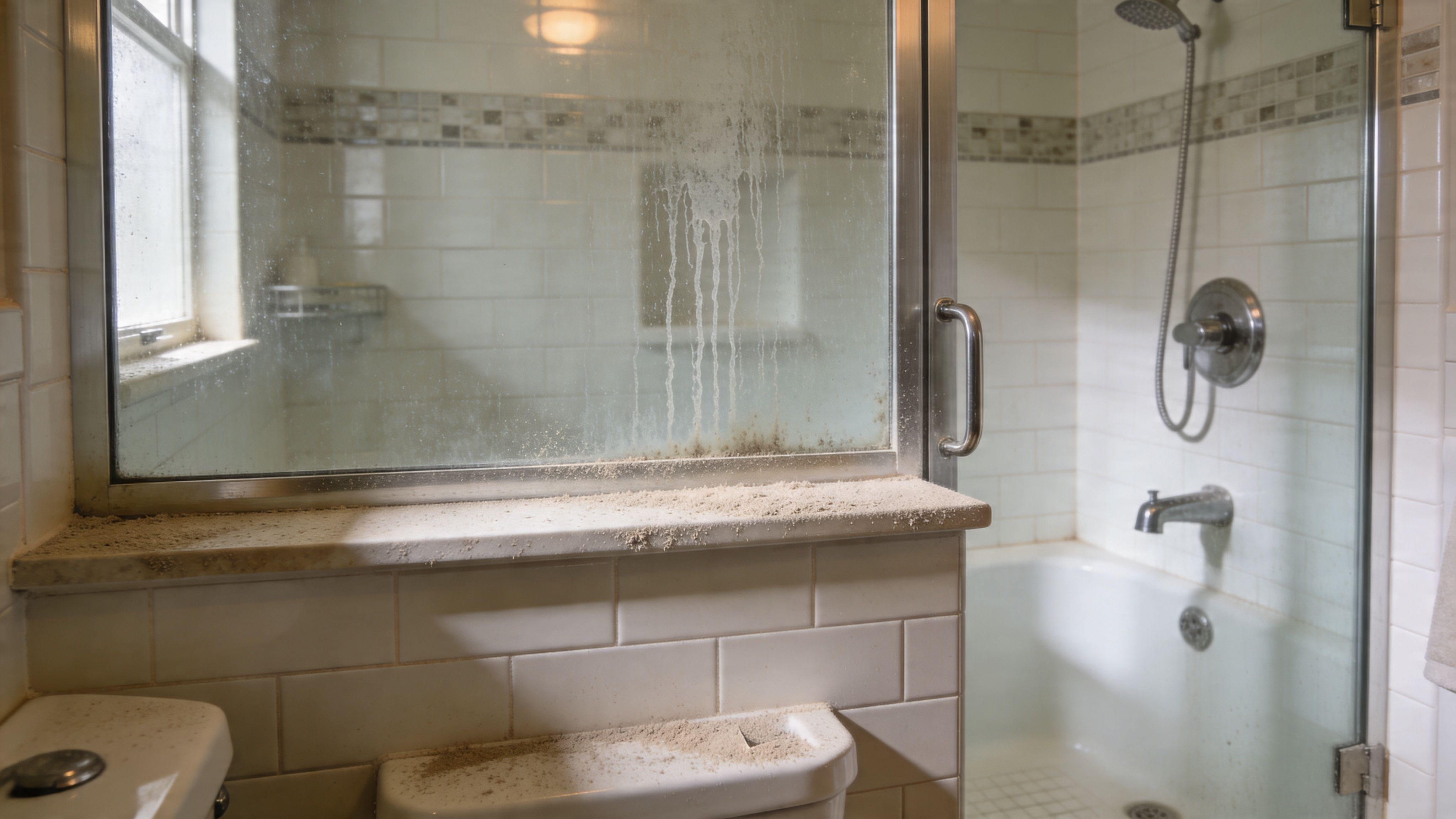
In Northwest Nevada, mineral-heavy water leaves behind stubborn spotting and scale. That interacts badly with soap, especially on tile, glass, and chrome. The result is the dull, chalky haze people keep trying to wipe away with a standard bathroom spray.
A local challenge is that general shower advice often ignores regional water quality. As noted in this discussion of hard water cleaning limits in Northwest Nevada, standard vinegar approaches may underperform in high-mineral environments, which is one reason local showers often need a different cleaning rhythm and more targeted deep cleaning.
Dust and pollen don't stay outside
Reno desert dust settles everywhere. If the bathroom window gets cracked open, if people move through the house with dusty shoes, or if wind pushes fine particles in through screens and gaps, that dust lands on damp surfaces. Wet shower ledges and door tracks catch it fast.
Then the grit mixes with soap residue. That's why some showers feel tacky one week and sandy the next.
Why the buildup feels endless
A shower can look clean for a day, then lose the battle almost immediately if these conditions line up:
- Hard water spots stay behind after every shower
- Residual moisture lingers in corners, grout, and caulk
- Dust settles on wet surfaces
- Product residue sticks to mineral film
- Airflow isn 't strong enough to dry everything quickly
Reno homeowners aren't doing anything wrong. The local mix of minerals, dust, and bathroom humidity makes showers look dirty faster than expected.
You see this a lot during dry windy stretches and pollen season. Then winter rolls in, people shower hotter and longer, and the bathroom stays damp even longer afterward. Same room, different mess.
Assembling Your Shower Cleaning Toolkit
A clean shower starts with having the right tools before you spray anything. Most frustrating shower jobs happen because the cleaner doesn't match the surface, the brush is too aggressive, or the person cleaning tries to do the whole job with one all-purpose product.
If you want a broader house setup beyond the bathroom, this cleaning supplies list from Altitude Cleaning Crew is a useful starting point. For showers specifically, keep the toolkit simple and surface-safe.
The tools worth keeping on hand
Some tools are for quick upkeep. Others are for the deep reset.
- Squeegee for glass, tile, and smooth wall panels after each use
- Microfiber cloths for drying and buffing without leaving lint
- Nylon scrub brush for tile and grout
- Old toothbrush or detail brush for corners, tracks, and around fixtures
- Non-scratch scrub pad for soap scum on durable surfaces
- Plastic scraper for thick neglected buildup
- Spray bottles so you can keep separate solutions ready
- Gloves because shower cleaners can be rough on skin
Cleaners and what each one does
Different soils need different chemistry. That's where a lot of DIY attempts go sideways.
For soap scum: use an alkaline cleaner designed for bathroom buildup.
For mineral spots: use an acidic descaler carefully, and only on surfaces that can handle it.
For routine upkeep: use a lighter daily or weekly shower spray.
For stubborn patches: use baking soda paste as a mild abrasive on safe surfaces.
One of the most useful combinations for hard water areas is vinegar and water, but it's not universal. It can help with fixtures and some buildup, yet it isn't the answer for every material or every level of neglect.
What not to use blindly
This matters as much as the product list.
- Avoid metal brushes on porcelain, tile glaze, chrome, fiberglass, and glass
- Don 't use harsh abrasives on acrylic or fiberglass pans
- Don 't use acidic cleaners on natural stone
- Don 't mix cleaners together
- Don 't assume bleach fixes everything, especially when the issue is mineral buildup rather than organic residue
The wrong tool can make a shower look worse. A scratched fiberglass wall or etched stone tile won't polish back out with more effort.
Build two kits, not one
A practical setup is better than a giant pile of products.
Maintenance kit
- Squeegee
- Microfiber towel
- Mild shower spray
- Small detail brush
Deep-clean kit
- Alkaline soap scum cleaner
- Vinegar solution for appropriate surfaces
- Baking soda
- Nylon brush
- Plastic scraper
- Gloves
That split keeps weekly cleaning fast. It also means you won't grab the heavy-duty stuff every time you see one spot on the glass.
A Surface-by-Surface Deep Cleaning Reno NV Guide
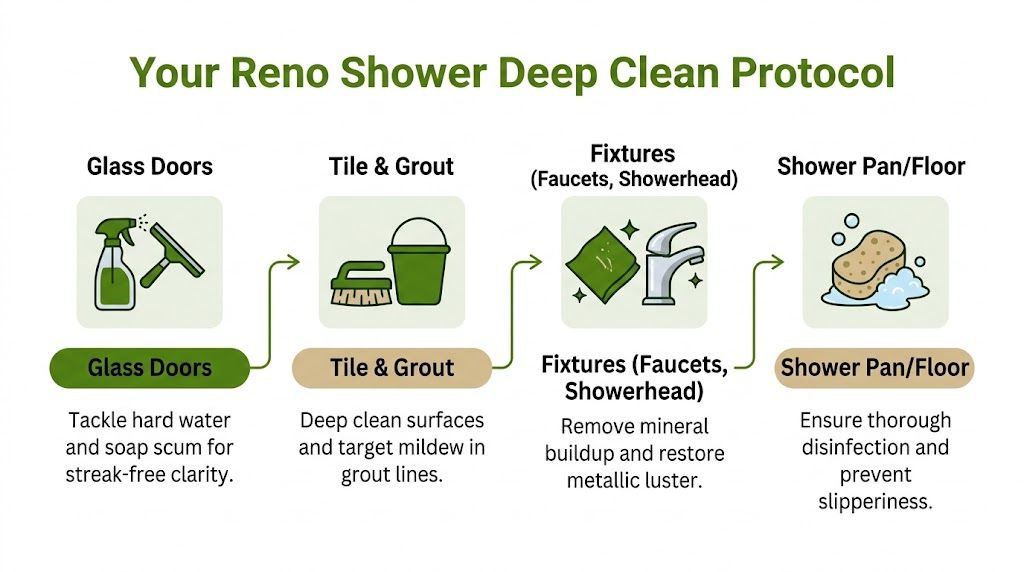
A Reno shower usually tells on itself fast. White crust builds around the showerhead, dust settles into corners, and glass picks up a chalky haze that comes right back after a rinse. A good deep clean works best when you treat each surface for what it is, instead of attacking the whole shower with one spray bottle and one scrub pad.
Tile and grout
Tile and grout take the worst of Reno's mix of hard water, soap residue, and windblown dust. Grout lines hold onto all of it. On ceramic or porcelain, start with a hot rinse, apply your cleaner evenly, give it time to work, then scrub grout lines first and tile faces second. If you scrub too soon, you waste effort and usually leave the deeper film behind.
I tell clients to look at the grout color before they start. If the lines are dark from moisture and residue, use a brush with enough stiffness to reach the joints, but not one that will scratch the tile glaze. Work in small sections so the cleaner stays active instead of drying on the wall.
A simple sequence keeps the job under control:
| Step | Action | Pro Tip |
|---|---|---|
| 1 | Remove bottles, mats, and accessories | Clear shelves and corners fully so dust and residue are not left behind |
| 2 | Rinse with hot water | Start at the top wall and let runoff carry loose grime downward |
| 3 | Apply cleaner matched to ceramic or porcelain | Keep coverage even so you do not get patchy results |
| 4 | Scrub grout first, then tile | Grout usually needs tighter, slower passes |
| 5 | Rinse thoroughly | Leftover cleaner leaves haze and attracts fresh soil |
| 6 | Dry with microfiber or a squeegee | Drying cuts down on new water spotting |
Natural stone needs a different touch. Marble, travertine, and similar surfaces can etch if you use the wrong product. If your shower includes stone, this guide on cleaning a marble shower is the better starting point.
Glass doors and panels
Glass shows Reno hard water first and worst. Mineral spotting, soap film, and fine desert dust stack together into that cloudy look people keep wiping without managing to remove. If the panel looks dull even while it's wet, the buildup is bonded on, not just sitting on the surface.
Start with warm water and a soft applicator. Use a cleaner meant for glass-safe mineral and soap film removal, then wipe in overlapping passes. Pay attention to the top edge, handle area, bottom rail, and the strip near the curb. Those spots collect overspray, residue, and pollen, especially if the bathroom window gets opened in spring.
Drying matters here more than on any other shower surface. A clean door can still dry blotchy if rinse water stays on the glass or sits in the metal track.
Fixtures and showerheads
Fixtures in Reno often get that rough, chalky ring long before the rest of the shower looks dirty. The U.S. Geological Survey overview of hard water helps explain why. Minerals in the water stay behind after each shower and build up on metal surfaces and inside showerhead nozzles.
For routine scale, spray or soak only the affected area with a product safe for the finish, let it sit, then scrub seams and nozzles with a soft toothbrush. Rinse well and buff dry. A bag soak can work on many showerheads, but check the finish first. Some decorative coatings do not handle repeated exposure well.
Use this order:
- Apply the cleaner to the fixture or showerhead.
- Give it a few minutes to loosen mineral residue.
- Brush around nozzles, bases, and trim seams.
- Rinse thoroughly.
- Dry and buff with microfiber.
If water pressure is still weak after cleaning the face, the clog may be inside the showerhead body. At that point, removal and a more careful descaling job usually works better than another round of surface wiping.
Fiberglass and acrylic surrounds
Fiberglass and acrylic need a lighter hand. They scratch easily, and those scratches hold onto body oils, soap film, and the fine grit that blows around Reno homes. I see this a lot in showers cleaned with gritty powder or the rough side of a heavy-duty sponge.
Use a mild cleaner and a soft sponge or non-scratch pad. Focus on the waterline, shelf seams, and the corners where residue turns yellow or gray. Rinse fully, then check the surface with your hand. If it feels draggy, there is still product or film left behind.
Avoid gritty powders, metal brushes, and razor scraping. A dull surround often has buildup on it, not permanent wear.
Shower floors and pans
The shower floor collects everything that runs off the walls, plus dust from bare feet and whatever blows in from the rest of the house. In Reno, that often means a mix of soap, minerals, skin oils, and fine grit. Textured pans are the hardest because residue settles into the low spots and holds on.
Clean the floor last so you are not re-soiling it while working above. Rinse, apply the right cleaner for the material, scrub with a brush that can reach the texture, then rinse again. Check around the drain, the pan edge, and any molded corners. Those are the places where slippery residue usually hangs on.
If the floor still feels slick after rinsing, keep rinsing. In my experience, that slippery feel usually means loosened grime or cleaner is still sitting on the surface.
Caulk, corners, and edges
Caulk lines and tight corners need detail work, not brute force. Use a small brush and controlled amounts of cleaner so the seam does not stay soaked. That matters in older showers, where worn caulk can absorb staining and stay discolored even after the grime is gone.
These edges also collect the mix of moisture and airborne debris that Reno homes deal with year-round. Dust and pollen settle there, then steam turns them into grime that keeps coming back. If corners re-stain quickly after a careful cleaning, the issue may be failed caulk, poor ventilation, or hidden moisture behind the joint. At that stage, cleaning helps the appearance, but it will not fix the cause.
Advanced Tactics for Stubborn Stains and Mold
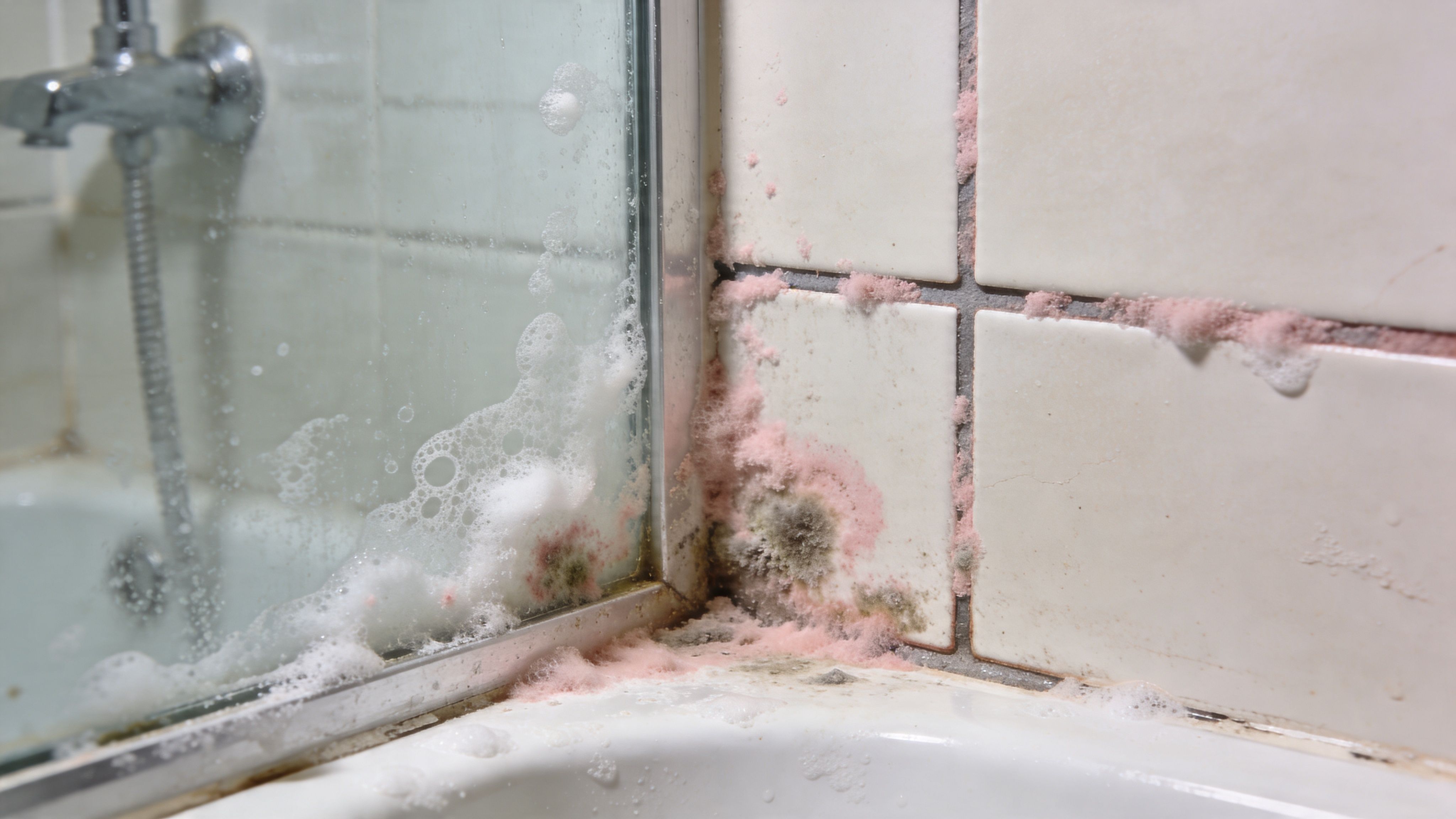
Some shower problems don't respond to a standard weekly clean. Thick soap scum, hard water crust, pink slime, and mold around caulk need a more targeted approach. Without one, people often waste time trying random products in random order.
Breaking through soap scum and hard water buildup
When the buildup is thick, don't keep re-spraying and wiping. Start by softening it. Hot water helps. So does letting the cleaner sit long enough to work.
For crusty buildup on durable surfaces:
- rinse first with hot water
- apply your cleaner and give it dwell time
- use a nylon brush or non-scratch pad
- use a plastic scraper gently if a layer is lifting but not releasing
- rinse well
- dry the surface fully
Baking soda paste can help on stubborn patches where a mild abrasive is appropriate. On neglected showers, the first pass may only remove the top layer. That's normal. A second controlled pass is better than attacking the surface with something too harsh.
Mold and mildew need speed
Bathrooms stay damp, and that creates the opening mold needs. The EPA-based shower cleaning guidance recommends cleaning the shower at least once a week to prevent mold growth. That matters because bathrooms can sit at 60-80% relative humidity during and after showers, which is exactly the kind of moisture-heavy environment where fungal growth takes off.
The practical takeaway is simple. Don't let wet surfaces stay wet longer than necessary.
Dry the shower after use if you can. Mold prevention is easier than mold cleanup, especially around grout joints, caulk lines, and door tracks.
If mold is limited to a small visible area, use a cleaner appropriate for that surface, wear gloves, ventilate the bathroom, and avoid splashing product around the room. If caulk is significantly stained or mold keeps returning from inside the seam, cleaning may not solve it. Replacement may be the smarter fix.
For caulk-specific help, this guide on removing mold from shower caulk covers the problem in more detail.
A quick visual can help if you're comparing techniques before you start:
Know when cleaning becomes remediation
If discoloration spreads beyond a simple surface patch, if drywall or framing may be involved, or if the area keeps coming back despite repeated cleaning, stop treating it like normal bathroom grime. At that point, you're not just cleaning a shower. You're dealing with a moisture problem.
That distinction matters for health, materials, and cost. A bottle of cleaner won't fix water getting behind tile or trapped under failed caulk.
Your Reno Shower Rescue Plan When to Call the Pros
You scrub the glass, the haze lightens, and two showers later the white spotting is back. In Reno, that usually means hard water minerals are stacked on top of soap film, with desert dust and pollen sticking to every damp edge. A regular wipe-down helps, but some showers reach a point where a professional reset saves time, frustration, and a lot of wasted product.
A pro deep clean makes sense when buildup is spread across multiple surfaces, the shower still looks dingy after repeated DIY attempts, or you are getting a property ready for guests, inspection, or move-out. I see this a lot in Reno bathrooms with glass doors, dark tile, textured grout, and older fixtures. Those surfaces show mineral scale and trapped dust fast.
What a professional shower-focused deep clean includes
For homes in Reno and Sparks, the job usually goes beyond the shower itself because grime rarely stays in one spot. Overspray lands on mirrors, dust settles on baseboards and vents, and hard water spotting shows up on every chrome surface nearby.
Common deep cleaning tasks
- Bathrooms with shower walls, tub or pan, fixtures, glass, mirrors, toilet, and sink cleaned in detail
- Kitchen degrease on accessible exterior surfaces if part of a full-home deep clean
- Floors vacuumed and mopped
- Baseboards wiped during deep cleaning service
- Dust removal from surfaces, ledges, and common buildup zones
- Mirrors polished
- High-touch disinfecting on switches, handles, and frequently touched surfaces
Optional add-ons
- Inside oven cleaning
- Inside fridge cleaning
- Inside cabinets wipe-down
- Wall spot cleaning
- Pet hair focus areas
The key difference is the process. A professional cleaner chooses products by surface, gives them enough dwell time, uses brushes and pads that will not scratch tile or glass, and rinses thoroughly so residue does not attract more dust. That matters in Reno, where leftover cleaner can grab airborne grit and make a shower look dull again sooner than it should.
Signs it is time to hand the job off
Call in help if you are dealing with any of these:
- hard water film that keeps coming back on glass and fixtures
- grout lines that still look dark after scrubbing
- soap scum layered over mineral deposits
- shower tracks, corners, and textured tile that trap Reno dust
- prep for move-out, guests, open houses, or rental turnover
- caulk staining or recurring moisture issues that may need more than cleaning
Some problems are still cleaning jobs. Others are repair jobs. If caulk has failed, water is getting behind tile, or staining keeps bleeding back through a seam, paying for repeated scrubbing is usually the expensive route.
How the service usually works
Schedule
Book online or call. You get a service window and can flag the problem areas ahead of time.
Clean
Cleaners arrive with their own supplies and equipment, then work through the bathroom and any other agreed areas based on condition and priority.
Inspect
A final walkthrough catches missed spots and helps you decide whether the shower needs simple upkeep, periodic deep cleaning, or a repair referral.
Enjoy
The bathroom looks reset, and you are not left wondering whether another bottle and another hour of scrubbing would have fixed it.
Pricing depends on size, condition, and add-ons, so it is better to compare scope than chase the lowest number. If you want a clearer picture of what is included, this guide to a deep cleaning service near me lays out what full-service deep cleaning typically covers.
Frequently Asked Questions About Shower Cleaning
How often should a shower be cleaned in Reno
Weekly maintenance is the safest baseline, especially if the shower gets daily use or has glass and grout that show hard water quickly. In Reno, dust and mineral spotting make it worth staying ahead of buildup instead of waiting for a full reset.
Are supplies included with professional service
Yes. Professional cleaners typically arrive with their own supplies and equipment, which matters when the job needs more than a store-bought spray and paper towels.
Can pink slime be removed for good
It can be cleaned off, but it often returns if the shower stays damp and corners don't dry well. Better ventilation, drying surfaces, and staying on a routine help keep it from coming back as fast.
What if I have a rental or short-term rental property
A maintenance plan matters more than a one-time scrub. Rental showers are easier to keep inspection-ready and guest-ready when buildup gets handled before it turns into visible staining around grout, tracks, and fixtures.
Book your cleaning with Altitude Cleaning Crew - your trusted deep cleaning Reno NV provider in Reno. Call 775-376-5527 or book online - Altitude Cleaning Crew booking page