
Get Oil Stain Out of Shirt: Quick Home Remedies
Learn how to get oil stain out of shirt with simple steps. For tougher messes & deep cleaning in Reno, trust our local experts to help you in 2026.

You spilled cooking oil on a shirt in the middle of dinner prep, or brushed against something greasy in the garage, and now you're searching for the fastest way to get oil stain out of shirt fabric before it sets. That search makes sense in Reno, where dry air, dusty homes, and busy schedules make it easy to miss a stain until later in the day.
If you're also comparing house cleaning Reno NV options because the same grease and dust are showing up on cabinets, floors, and baseboards, you're in the right place. Small laundry problems and bigger home-cleaning problems tend to show up together around Reno-Sparks.
Your Guide to Getting Oil Stains Out in Reno
If you're trying to save a favorite work shirt, a school uniform, or a button-down before an outing in Midtown Reno or South Reno, speed matters. Oil doesn't look dramatic at first, but once it grabs onto fabric and picks up dust, it becomes much harder to ignore.
This is one of the most common home laundry headaches. Roughly 65% of adults report dealing with grease or cooking-oil stains on clothing at least once per month, and about 78% prefer household products before considering professional help , according to Apartment Therapy's summary of consumer behavior around oil stains.
Opening takeaways
- Blot first: Press with a paper towel or napkin. Don't rub.
- Use an absorbent if you can 't wash right away: Baking soda or a similar powder can buy you time.
- Match the treatment to the shirt: Cotton and polyester blends don't behave the same.
- Keep heat away until the stain is gone: Dryer heat turns a simple fix into a frustrating one.
- Look beyond the shirt: The same grease that lands on clothing usually leaves film on kitchen fronts, floors, and nearby surfaces too.
Reno homes have their own version of this problem. Oil from cooking collects on cabinet faces, then desert dust sticks to it. Garage grime gets tracked across entry tile. If you're dealing with recurring buildup, a more thorough reset often helps, especially with professional house cleaning services in Reno.
Practical rule: Treat the shirt immediately, then take a look at the surrounding area. If grease got on your clothes, there's a good chance it also landed somewhere in the house.
Some stains are trickier than kitchen splatter. If the problem involves scented oil rather than food grease, this guide on how to remove fragrance oil from clothing is worth reading because fragrance oils behave differently than standard cooking oil.
Immediate Steps for Fresh Oil Stains
A fresh oil spot on a shirt is one of the few laundry problems that usually stays manageable if you act before the fabric goes through a full wash cycle or sits all day in Reno's dry air. Around here, that dry air can fool people. The surface looks less wet fast, but the oil is still sitting in the fibers, ready to grab lint, dust, and whatever else is floating around the house.
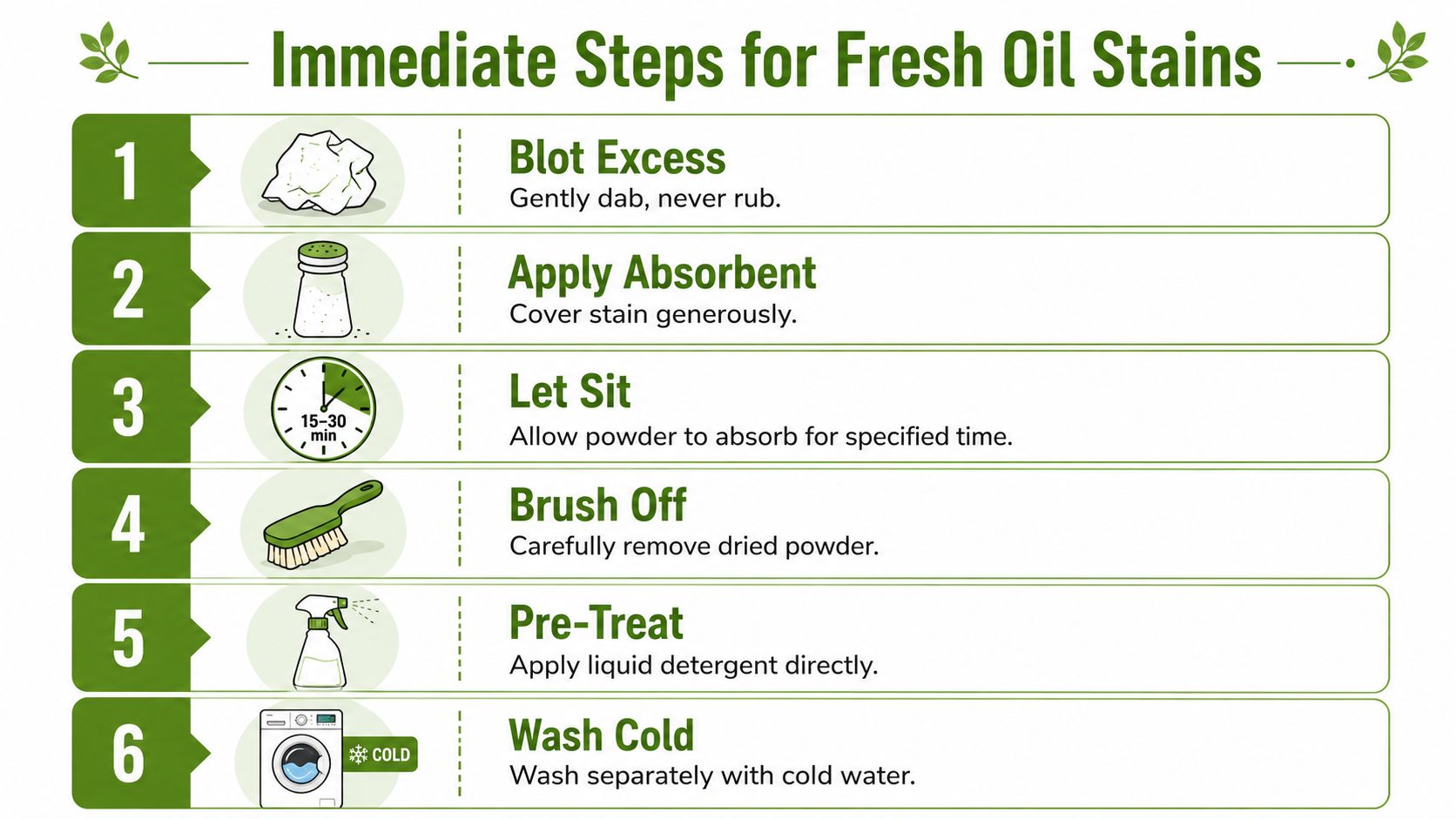
Start dry and keep the stain contained
Head to the sink later. First, get off as much loose oil as you can while the fabric is still dry.
- Blot the excess with a paper towel, napkin, or clean cloth.
- Press straight down instead of rubbing side to side.
- Cover the spot with an absorbent powder if you cannot wash the shirt soon.
Baking soda works well for that waiting period because it pulls some oil up before it spreads deeper. If you use baking soda for small messes around the house too, this guide on a baking soda and water paste covers a practical version of that method.
Treat cotton shirts with detergent first
Cotton usually gives you a better chance of full removal than a slick synthetic shirt, but the order matters. Blot first. Then work in a liquid detergent that is built to break down oily residue, let it sit for several minutes, and wash in the warmest water the care label allows.
Research published in the Indian Journal of Natural Products and Resources found that bio-enzyme detergent improved removal of oily stains from cotton fabric under controlled washing conditions, which lines up with what cleaners see in real laundry rooms. Enzyme formulas need contact time. They do not do much if you apply them and toss the shirt straight into the washer.
A good cotton routine looks like this:
- Blot off loose oil
- Apply liquid detergent directly to the spot
- Work it in gently with your fingers
- Let it sit for 10 to 15 minutes
- Wash warm or hot only if the care label allows
- Air-dry before you decide the stain is gone
Dish soap is a reasonable backup if you are standing in the kitchen with no laundry pretreater nearby. Maytag's grease stain advice also recommends pretreating before washing and holding off on machine drying until you check the result.
Handle polyester blends more carefully
Polyester blends, workout shirts, and performance fabrics hang onto oil differently. The oily patch often sinks into the synthetic portion and leaves a shadow even after one wash.
Use a grease-cutting dish soap or stain remover, spread it gently across the spot, let it sit, then wash according to the care tag. Skip hot water unless the label clearly allows it. High heat can help in some cases, but on synthetic fabrics it can also make the stain harder to shift or damage the finish on the shirt.
This is also why car upholstery and activewear stains behave similarly. If you deal with greasy fabric beyond clothing, this article on mastering car seat oil removal is a useful comparison.
Mistakes that make a fresh stain harder to remove
A few habits cause most of the frustration:
- Aggressive rubbing , which spreads oil into clean fibers
- Throwing the shirt straight into water , which does little at the start
- Using fabric softener right after pretreating , which can leave more residue behind
- Putting the shirt in the dryer before checking it in good light
- Assuming the stain is gone because the wet spot faded
That last mistake shows up a lot in Reno-Sparks homes. People clean the shirt, miss the faint ring, then later notice the same greasy film on cabinet pulls, pantry doors, or the floor near the stove where dust has already stuck to it. A shirt stain is sometimes just the visible part of a bigger cleaning problem.
How to Tackle Stubborn Set-In Oil Stains
The most frustrating stains aren't fresh. They're the ones you notice after the shirt has already gone through the wash, or worse, the dryer.
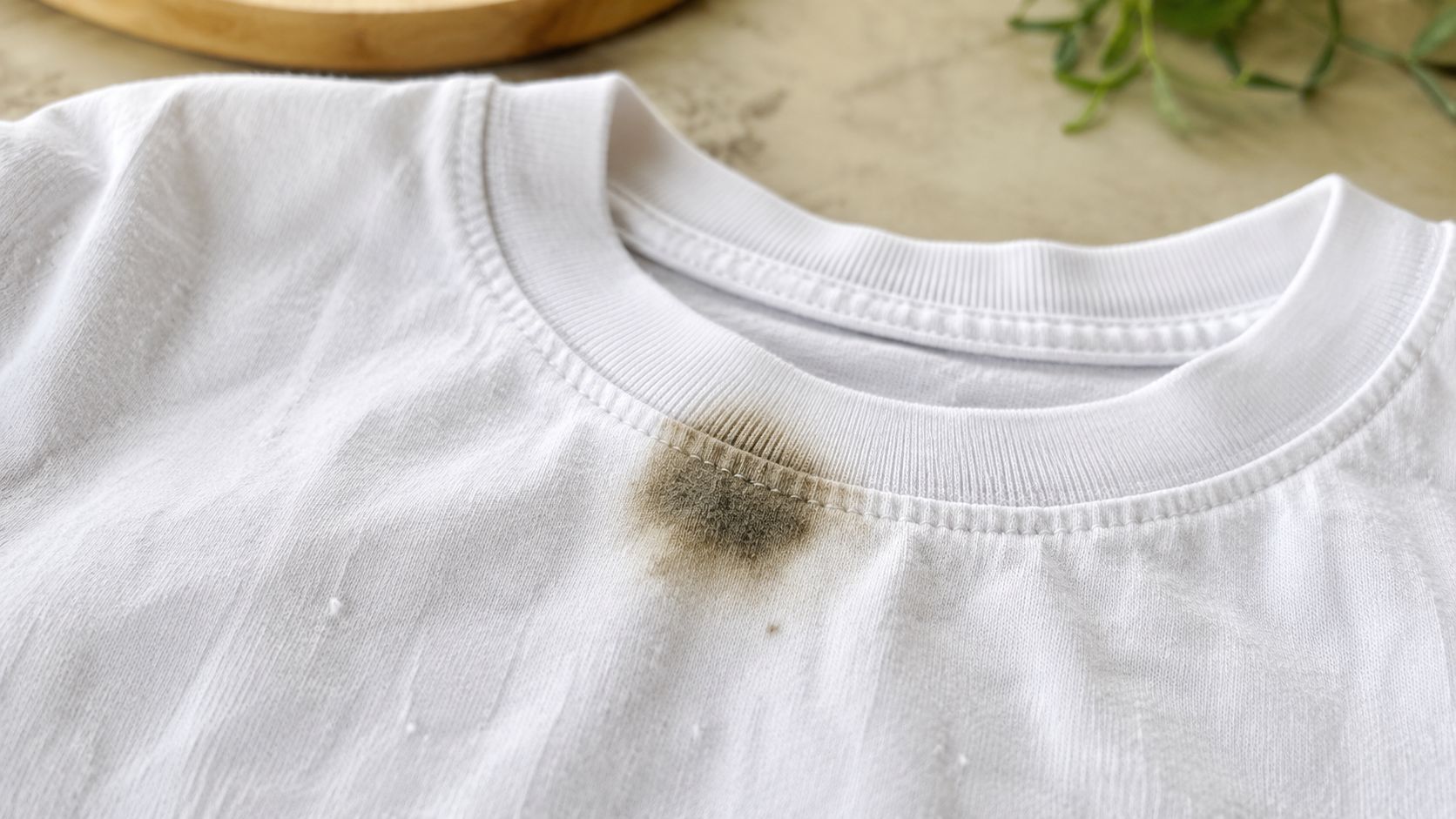
Many guides gloss over this stage, but it's where people usually get stuck. As noted by Seventh Generation's article on oil stains, many resources don't properly address stains that have already been washed and dried, even though heat can set the oil into the fabric fibers.
Why set-in stains fight back
Once heat hits the stain, the shirt often looks clean at a glance but still carries a darker patch or ring. That happens a lot with collars, hems, and shirt fronts where the fabric folds over itself in the dryer.
The fix is slower and more deliberate:
- Check the care tag first
- Test any stronger treatment on an inside seam
- Apply a grease-cutting pretreatment directly to the stain
- Let it sit longer than you would for a fresh spot
- Wash again without softener
- Air-dry and inspect in daylight
If the stain has been dried once, assume you'll need more than one round. Repeated gentle treatment beats one aggressive attempt that damages the fabric.
A practical second-round method
For set-in kitchen oil on everyday shirts, dish soap or an enzyme stain remover still has value. Work it into the dry fabric first, not soaking wet fabric. Then wash in the warmest water the shirt can handle and inspect before drying.
For synthetic-rich shirts with a greasy shadow that won't move, home methods start reaching their limit. If you're also cleaning grease from upholstery or vehicle fabric, this guide on mastering car seat oil removal gives a useful comparison because car-seat fabric often holds oil in a similarly stubborn way.
A lot of people also use baking soda as part of a repeat-treatment routine. For a broader look at where that works well and where it doesn't, this piece on baking soda stain removal is a solid reference.
A quick visual walkthrough helps if you want to see the process in action:
When to stop pushing it at home
Stop if the shirt is:
- Dry clean only
- Dyed in a way that may bleed
- Already showing fiber damage
- Contaminated with motor oil or industrial grease
Those heavier stains aren't just about appearance. They can involve contaminants that call for more careful handling than a normal home wash.
What We See in Reno-Sparks Homes
You get a small oil spot on a shirt while cooking dinner or working in the garage. By the end of the week, the bigger problem is usually in the house, not the laundry basket.
In Reno, Sparks, Spanish Springs, and Wingfield Springs, oil rarely stays in one place. A shirt brushes a cabinet edge. Hands touch the fridge handle. Shoes cross the kitchen after a garage project. Then our dry air and constant dust do the rest. Fine particles stick to that light greasy film on cabinet fronts, vent hoods, backsplash edges, and the floor near the stove.
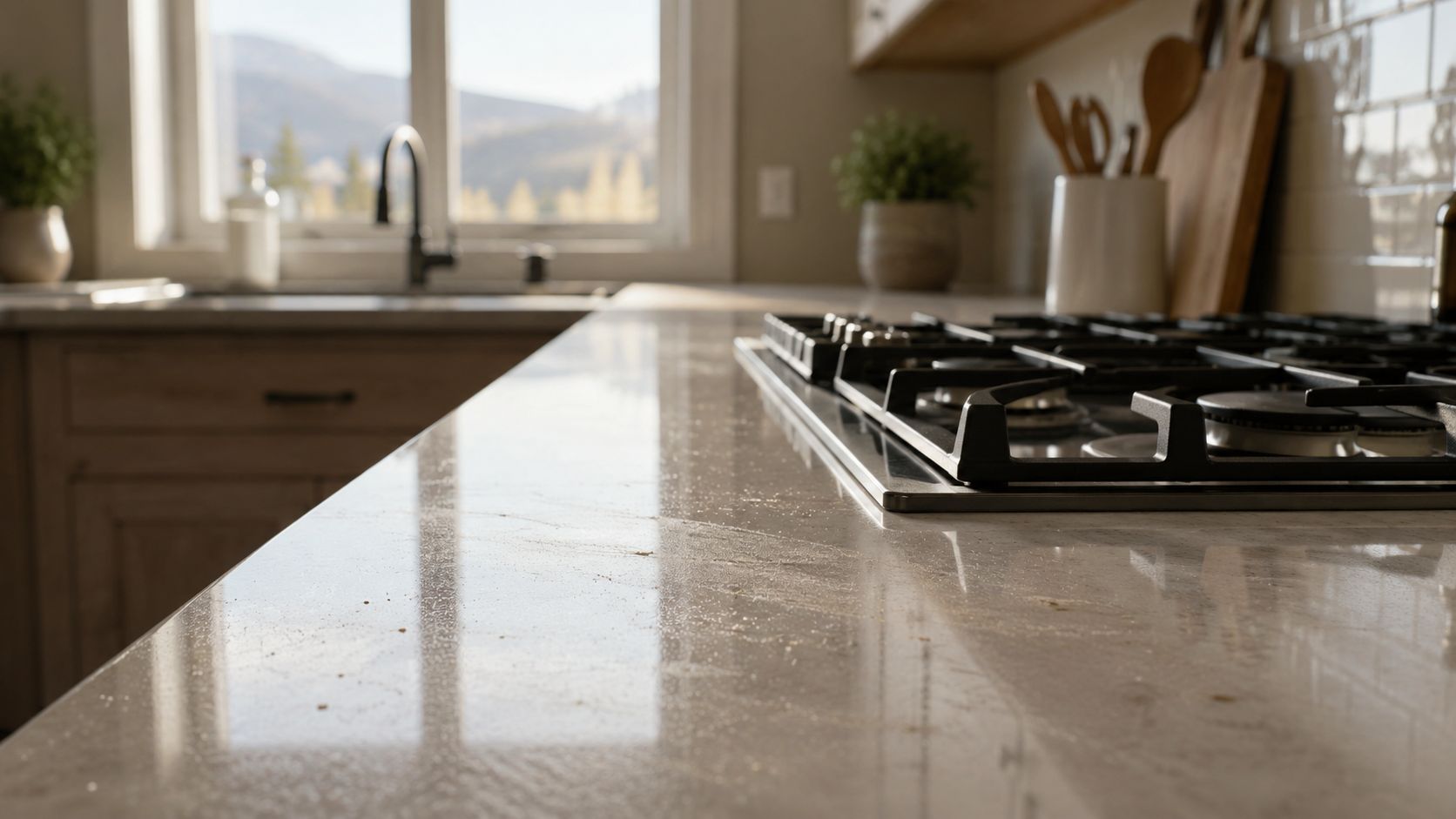
I see the same pattern across neighborhoods, just in slightly different forms. In Northwest Reno and Somersett, garage-to-kitchen traffic leaves light grime in entries and along the first stretch of hard flooring. In South Reno and Damonte Ranch, newer homes still collect sticky dust on baseboards and cabinet faces because airborne dust keeps circulating and clings fast once a surface gets tacky.
Workwear adds another layer. Shirts and pants exposed to motor oil, grease, or shop residue need more care than a normal food stain. The stain is only part of the issue. The residue can transfer to hampers, laundry room surfaces, car seats, and upholstered furniture if it is handled casually.
That spread usually looks like this:
- Kitchen film: Cooking oil settles on cabinet fronts, pulls, and nearby trim.
- Entry buildup: Garage residue gets tracked onto tile, vinyl, or wood floors.
- Dust grab points: Tacky spots collect Reno dust faster than dry surfaces do.
- Laundry area residue: Pretreating greasy clothes can leave drips or smears on counters and machines.
Oil is not the only spill that turns into a house-cleaning job. A fabric stain often becomes a floor, hamper, or surface problem too. The same thing happens with colored drink spills, and this guide on how to get grape juice out of clothes without spreading the mess shows that pattern clearly.
That is why a shirt stain can be a useful warning sign. If cabinet faces feel dull or tacky, baseboards look dusty right after you wiped them, or the kitchen floor keeps holding onto grime, the home usually needs more than another load of laundry.
Our Simple Process for a Spotless Home
A grease stain on a shirt is annoying. A house that has grease film in the kitchen, dust on ledges, pet hair in corners, and hard water on fixtures is where the bigger time drain starts.
That matters for homeowners, renters, Airbnb hosts, and property managers comparing house cleaning Reno NV services right now. If the home needs to feel guest-ready, move-in ready, or just under control again, a whole-home clean solves the part that laundry tips can't touch.
What's included in a deep clean
For homes in Reno, Sparks, Spanish Springs, South Reno, Northwest Reno, Damonte Ranch, Somersett, Midtown Reno, and Wingfield Springs, the scope usually includes:
- Kitchen degrease: Cabinet exteriors, counters, stovetop area, sink surfaces, and visible film removal
- Bathrooms: Showers, tubs, toilets, mirrors, sinks, counters, and fixture wipe-downs
- Floors: Vacuuming and mopping, especially in entries and kitchen paths where grime collects
- Dust removal: Baseboards, sills, ledges, and surfaces where desert dust settles
- High-touch areas: Switches, handles, and commonly used touchpoints
- Finishing details: Mirrors, exterior cabinet wipe-downs, and visible buildup removal
Optional add-ons often make sense when the home needs a reset:
- Inside oven
- Inside fridge
- Inside cabinets
- Wall spot cleaning
- Pet hair focus areas
- Heavy buildup areas
- Interior window cleaning
A local scenario we see often
In Sparks move-out cleans, kitchens often look decent from the doorway. However, the issue usually shows up when cabinet doors are opened, baseboards are checked, and the floor edges near the stove are inspected. That's where grease, crumbs, and dust collect before a landlord walkthrough.
In Damonte Ranch and South Reno rentals, another common pressure point is timing. People are juggling packing, key handoff, and weekend traffic, so they want a checklist-based clean that doesn't leave them guessing.

Schedule Clean Inspect Enjoy
- Schedule: Book online or call. Share bedrooms, bathrooms, condition, and any add-ons like oven or inside cabinets.
- Clean: Cleaners arrive with supplies and follow a checklist matched to the home.
- Inspect: A quick quality check catches missed dust, streaks, or heavy-buildup spots.
- Enjoy: You come back to a home that feels lighter, cleaner, and easier to maintain.
In Sparks homes, pet hair and hard water buildup are two of the most common things clients ask cleaners to focus on.
Pricing and Answers for Reno Homeowners
Pricing depends on bedrooms, bathrooms, square footage, condition, and add-ons. Most homeowners request a custom estimate so the quote matches the actual scope.
For house cleaning Reno NV , most cleans range from $150 to $500 depending on size, condition, and add-ons.
Quick answers
How long does a clean take in Reno-Sparks?
It depends on the home's size and condition. A smaller maintenance clean is faster than a first-time deep clean or move-out job with inside appliances and cabinets.
Are supplies included?
Yes, professional cleaners typically arrive with supplies and tools needed for the job. If you have a specialty request or product preference, mention it when booking.
Can you handle dust from windy weeks or wildfire ash season?
Yes. That's one of the most common local pain points, especially on window ledges, baseboards, blinds, and floors near entries.
What add-ons are worth it for a move-out clean?
Inside oven, inside fridge, and inside cabinets are the big ones. Those are areas landlords and property managers tend to inspect closely.
What if I have pets?
Say that upfront. Pet hair in carpeted bedrooms, on stairs, and along baseboards usually needs extra attention.
Move-out cleans around Reno-Sparks often come down to the details landlords notice first, kitchens, bathrooms, floors, and baseboards.
If you've managed to get the oil stain under control but the rest of the house still feels dusty, greasy, or overdue, it may be time for a full reset. Altitude Cleaning Crew provides reliable house cleaning Reno NV service for Reno, Sparks, Spanish Springs, South Reno, Northwest Reno, Damonte Ranch, Somersett, Midtown Reno, and Wingfield Springs. Call 775-376-5527 or book online at Altitude Cleaning Crew online booking.