

Rug Cleaning Tips for Reno Homes: 10 Local Pro Methods

Ready for cleaner rugs in Reno-Sparks? Whether you're a homeowner in Northwest Reno trying to stay ahead of desert dust, a renter in Sparks worried about a move-out walkthrough, or an Airbnb host in South Reno flipping a guest room fast, these rug cleaning tips are for people who want results, not vague advice. In this market, rugs take a beating from windblown grit, pet hair, mountain dust, tracked-in slush, and the occasional stain that shows up right before company arrives.
If you're comparing options for professional rug cleaning service in Reno NV, it helps to know what is effective at home, what tends to backfire, and when a rug needs a lighter hand. Some rugs respond well to careful DIY maintenance. Others get damaged because someone used too much water, too much soap, or the wrong machine on the wrong fiber. If you also have plush synthetics, this guide to luxury faux fur cleaning is worth a look.
- Rugs in Reno-Sparks collect dust faster than many homeowners expect, especially near entries, hallways, and slider doors after windy weeks.
- Hard water and pet accidents create a different kind of problem. Surface cleaning can make both look better for a day and worse a week later.
- The best rug cleaning tips are usually the least flashy. Test first, vacuum often, use less moisture, and dry thoroughly.
What We See in Reno-Sparks Homes
In Damonte Ranch and Wingfield Springs, we often see living room rugs that look decent from standing height but hold a surprising amount of dust along the edges and underneath furniture. In Midtown Reno rentals, older pet spots tend to hide in bedroom corners, then reappear when the room heats up in the afternoon.
South Reno homes with kids and dogs usually show the same pattern. Clean center lanes, darker traffic paths, and a few problem spots near the back door. During wildfire ash season, fine gray dust settles into fibers and sticks around unless the rug gets multiple vacuum passes and a proper rinse if it needs wet cleaning.
What's Included When Clients Ask for Rug Help
When homeowners and property managers call us about rug issues, they're usually asking about a mix of maintenance and deeper cleaning decisions.
- Surface soil removal: Vacuuming, edge work, and lifting dry debris before it gets ground in
- Spot response: Safer treatment for spills, pet accidents, and dingy traffic zones
- Odor reduction: Dry deodorizing steps before wet methods when appropriate
- Fiber-sensitive care: Adjusting methods for wool, synthetics, and rugs with jute content
- Drying and reset: Moisture removal, airflow, and brushing fibers back into place
Optional add-ons around a full home clean usually include inside oven, inside fridge, inside cabinets, wall spot cleaning, pet hair focus areas, and interior window cleaning.
1. Spot-Test Before Any Deep Cleaning Method
A rug can look sturdy right up until the cleaner hits it. Then the red border starts walking into the beige field, or a soft spot turns wiry after it dries. We see that in Reno move-outs all the time, especially after someone tries to fix one visible stain the night before photos.
Spot-testing is the first step for a reason. Use the same product, the same dilution, and the same dwell time you plan to use on the full rug. Test a hidden area first, such as a back corner, a tucked edge, or the section under a sofa leg, then blot with a white cloth and let it dry fully before you decide the rug can handle more.
That dry-down matters in local homes. Desert dust can hold onto old shampoo residue. Hard water can leave mineral buildup that changes how a cleaner reacts on the fiber surface. If you have seen crusty edges or pale rings on a rug near an entry or pet bowl area, it helps to understand how hard water stains and mineral residue build up in Reno homes before using more moisture.
Sun exposure adds another variable. Rugs near big South Reno windows or slider doors in Sparks often have faded sections that are weaker than they look. Wildfire ash season makes it trickier too, because fine soot settles into the pile and mixes with old residue from past spot treatments.
A good test checks more than color bleed.
- Pick a hidden spot: Back corner, under furniture, or a folded edge
- Use a white towel or cloth: Dye transfer shows up fast
- Match the cleaning plan: Same product, same mix, same contact time
- Wait for full drying: Some damage only shows after the fiber sets
- Stop if texture changes: Stiffness, fuzzing, or rough pile means the method is too aggressive
We run into this often on decorative rugs in bedrooms, entry rugs in rentals, and pet-zone rugs that have already been treated with store-bought spray. The label might say washable, but that does not tell you how the dyes will react after years of sun, dust, ash, pet hair, and mineral-heavy tap water.
If the test spot lightens, bleeds, or dries rough, change methods. A dry-cleaning approach or professional wash is safer than pushing through and leaving a permanent patch that looks worse than the original stain.
2. Vacuum High-Traffic Areas First and Frequently
By the time a rug in a Reno entry looks dirty, the worst of the wear has usually already started. Desert dust is fine, gritty, and constant. Add pet hair, wildfire ash, and foot traffic, and that mix settles deep into the pile fast.
Start with the areas that get walked on every day. Hall runners, front entries, the path from the garage door to the kitchen, and the stretch between the sofa and hallway usually need attention before the rest of the rug. In Sparks and Spanish Springs homes, I often see the darkest buildup where people least expect it. Not in the center of the room, but in those repeated walk lines where grit gets pressed into the fibers over and over.
Vacuuming those lanes first, and doing it more often than the rest of the rug, helps you remove dry soil before it starts cutting at the pile. That matters even more in homes with dogs, because pet hair holds dust in place and keeps suction from reaching the base of the rug.
For a broader home maintenance routine, our post on vacuuming the floor the right way pairs well with this step. If pet zones are part of the problem, our guide on removing pet odors from carpet helps with what vacuuming can't solve on its own.
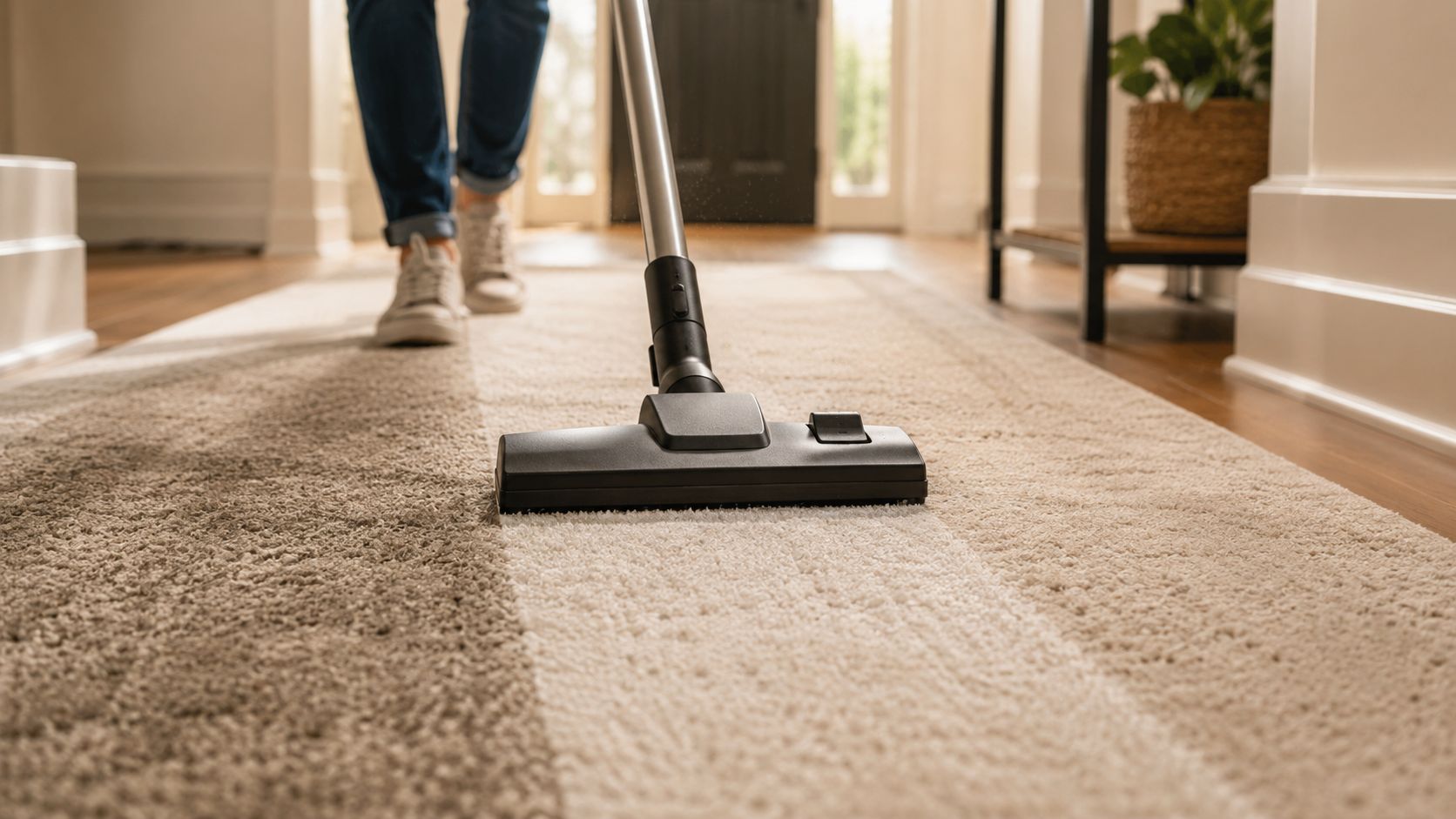
A few habits make a visible difference.
- Hit traffic lanes first: Entry rugs, hallways, bedside edges, and living room walk paths collect the heaviest dry soil
- Vacuum slowly: Quick passes miss the grit that sits low in the pile
- Overlap each pass: That helps in homes with shedding dogs or rugs that trap ash and fine dust
- Check the vacuum before you start: A full canister, clogged filter, or hair-wrapped brush roll cuts cleaning power fast
- Adjust for the rug type: Strong brush agitation helps some synthetic rugs, but it can be too rough on delicate or looped piles
One trade-off matters here. More vacuuming helps high-traffic rugs last longer, but aggressive settings can fuzz edges, pull loops, or rough up older fibers. If the rug is handmade, vintage, or already thinning near the doorway, use suction only or the gentlest setting your machine has.
Hot water and scrubbing usually get blamed when stains set, but dry soil creates its own problems long before wet cleaning starts. Boat Juice's boat care advice makes a useful point about setting residue with heat, and the same caution applies indoors when dirt and oils have been left to sit in a rug for too long.
3. Use Baking Soda for Odor Removal Before Wet Cleaning
When a rug smells stale, a lot of people jump straight to sprays or shampoo. That's usually backward. Dry odor removal first tends to work better, especially if the smell is light and widespread instead of coming from one obvious stain.
A light, even layer of baking soda can help absorb surface odors before you introduce any moisture. That's useful in guest rooms, bedrooms, and living rooms where smoke, cooking smells, or pet odor has settled into the pile.
Where this helps most
This is a practical move for Sparks rentals, Midtown apartments, and Airbnb turnovers where the rug doesn't necessarily look dirty but still doesn't smell fresh. In dry Reno air, some odors hang in fibers longer because nothing is really flushing them out. Baking soda gives you a lower-risk first step before you decide the rug requires a wash.
It also helps you avoid over-wetting a rug just to solve a smell problem that might not require water at all.
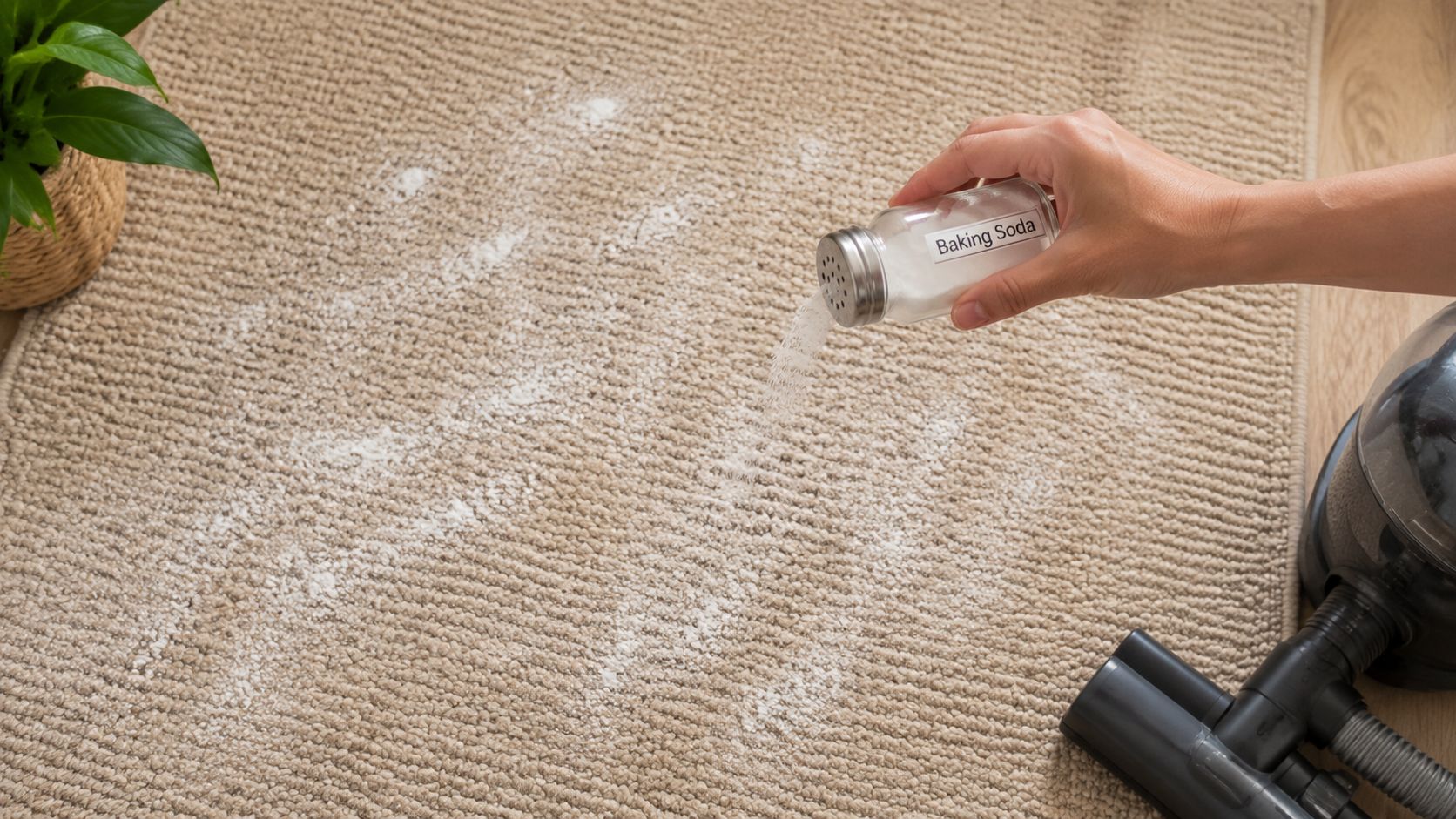
For stain and odor basics around the house, our article on baking soda stain removal methods covers where this old standby helps and where it doesn't.
Let the baking soda sit long enough to do something, then vacuum it out thoroughly. Leaving powder behind defeats the point.
A few practical notes:
- Keep coverage light: You want contact with the fibers, not a thick layer that's hard to remove
- Vacuum well afterward: Multiple passes are worth it
- Repeat if needed: Mild odor often improves with a second round
- Don't expect miracles: For urine or deep organic odor, this is usually a first pass, not the final answer
We see this trade-off all the time. Baking soda is helpful for light odor maintenance. It is not a substitute for targeted treatment when a pet accident has soaked through.
4. Apply White Vinegar Solution for Hard Water Stains and Mineral Buildup
A lot of Reno-Sparks rug issues do not start as dramatic stains. They start as a pale, chalky film on the edges of a bathroom rug, a stiff patch near a laundry room door, or splash marks on an entry rug after wet shoes track in hard water, dust, and a little ash.
We run into that all over the area. Local water leaves mineral residue behind, and rugs hold onto it. Add desert dust and pet hair, and the fibers start looking flat and tired even after regular vacuuming. If you want a broader breakdown of what hard water does around the house, our guide on how to remove hard water stains covers the basics.
A lighter method works better on rugs
For rug fibers, white vinegar needs a careful hand. A light mix of white vinegar and water can loosen mineral buildup, but soaking the rug creates a second problem because minerals, moisture, and detergent residue are all harder to pull back out once they sink in.
Always test a small hidden area first. That matters even more with wool rugs, rugs with unstable dyes, and any backing that does not handle moisture well.
For light buildup, use a spray bottle to mist the area lightly, let it sit briefly, then blot with a clean white cloth. Follow with a small amount of clean water and blot again so the loosened residue does not stay in the pile.
- Mist lightly: Keep the solution near the surface instead of driving it deep into the rug
- Use white cloths: Colored towels can transfer dye
- Blot in passes: One heavy pass usually spreads residue around
- Rinse lightly: A little clean water helps remove vinegar and minerals together
- Dry with airflow: Fans help prevent that damp, stiff feel afterward
This approach makes the most sense on bathroom rugs, utility-area rugs, and entry rugs with visible splash residue. It is a poor choice for delicate natural fibers or any rug that already feels waterlogged from past cleaning attempts.
Around South Reno and Sparks, this is one of those small maintenance steps that pays off when used carefully. Vinegar can help with mineral film. It cannot fix every dull-looking rug, especially if the problem is packed-in soil, smoke residue from wildfire season, or pet messes sitting below the surface.
5. Blot Spills Immediately and Never Rub Fresh Stains
A spill on a rug in Reno usually gets worse in the first two minutes, not the first two days. Somebody grabs the nearest towel, scrubs hard, and pushes coffee, wine, or dog mess deeper into the pile and out into a wider ring.
The better move is simple. Blot fast with a clean white cloth or paper towels, start at the outer edge, and work inward with steady pressure. Press. Lift. Repeat. Rubbing frays fibers, spreads the stain, and can drive liquid into the backing, which is where odor and discoloration get harder to fix.
In real Reno-Sparks homes, the details matter. Desert dust already sitting in the pile can turn a small spill into muddy grit if it gets scrubbed around. Hard water from a rushed rinse can leave a pale outline after the spot dries. During wildfire season, ash and fine soot on the rug surface can mix with moisture and leave the area looking dingier than the original spill.
What fresh-stain response looks like in real homes
In Damonte Ranch family rooms, I usually see sports drinks, coffee, or greasy takeout drips near the sofa. In Midtown rentals, red wine and makeup are common right before inspections or listing photos. In homes with pets, the visible spot is only part of the problem because liquid can move down fast, especially on thicker rugs and older pads.
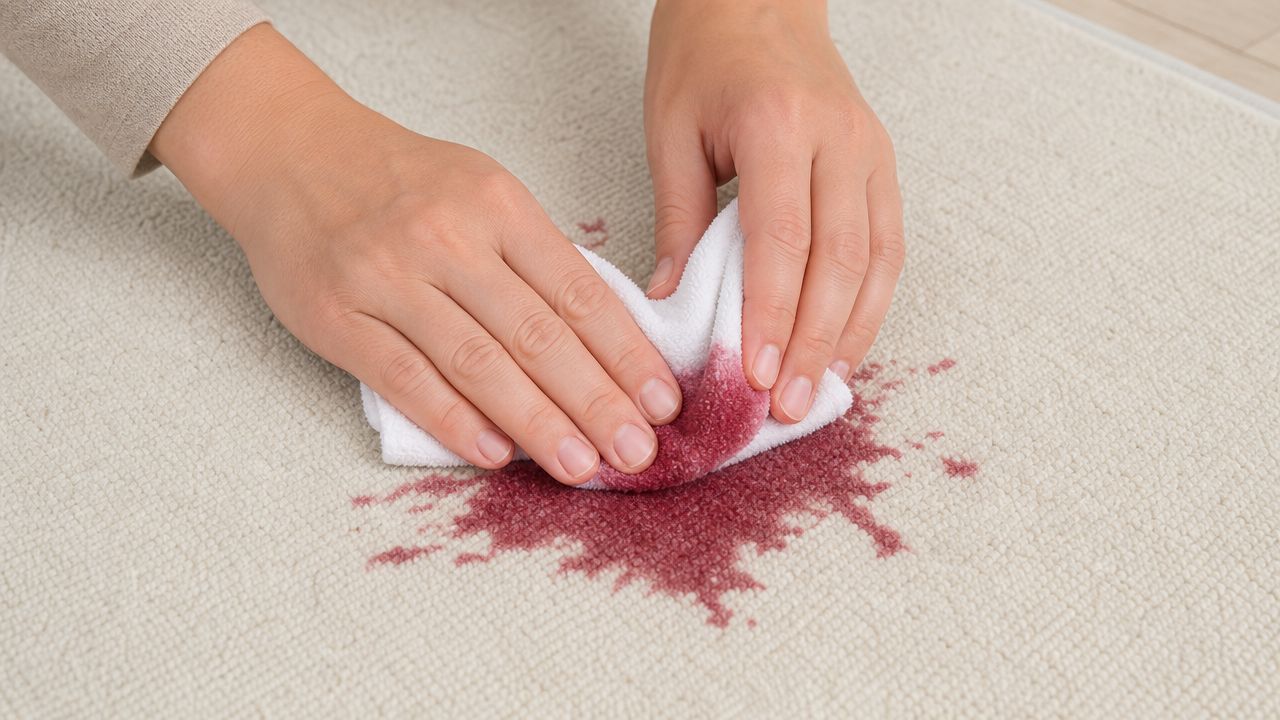
A good first-response routine stays boring on purpose:
- Use white cloths only: Colored towels can bleed into damp fibers
- Blot from the outside in: That keeps the spot from spreading into a larger halo
- Change to a dry section often: A saturated towel starts pushing liquid around instead of lifting it
- Hold off on cleaner at first: Get out as much spill as you can before adding moisture or product
- Use gentle pressure: Heavy scrubbing distorts pile and leaves fuzzy, worn-looking patches
One more trade-off matters here. Fast action helps, but overreacting causes its own damage. Dumping soap or water onto a fresh spill often creates a bigger cleanup job, especially on wool, dense synthetic rugs, and anything with a backing that stays damp.
Fresh stains are usually easiest to save in the first few passes with a dry white cloth. Panic scrubbing is what turns a quick fix into a set-in problem.
This step gets a lot of attention during move-out cleaning because it shows. A single stain near the living room entry or under the dining table can pull the eye right away, even if the rest of the place is tidy.
6. Use Enzyme-Based Cleaners for Organic Stains and Pet Odors
For pet urine, vomit, food spills, and other organic messes, baking soda and vinegar have limits. They can help around the edges, but they don't reliably break down the source the way an enzyme cleaner can.
This matters in Sparks homes with dogs, rentals with old pet history, and guest spaces where a room has that faint odor people notice even if they can't point to the spot. The smell doesn't come from nowhere. It comes from residue left in the fibers or below them.
Don't use heat on urine
One of the biggest mistakes with pet accidents is using hot water or steam because it feels more sanitary. Heat can lock in the problem instead of solving it. That's why heat-based cleaning on urine spots is a bad gamble. The issue isn't just what you see. It's what gets set into the rug.
For local pet-heavy homes, our guide on how to remove pet odors from carpet walks through the first response and when to bring in stronger help. There's also useful general stain context in Boat Juice's boat care advice on whether hot water sets a stain.
Use enzymes with patience. Most need dwell time. If you spray and wipe right away, you haven't really given the product a chance to work.
- Blot first: Don't pour cleaner into a soaking-wet spot
- Read the label: Contact time matters
- Keep expectations realistic: Old contamination may need repeated treatment
- Follow with extraction: Residue left behind can still attract soil
A real local scenario. In Somersett and Wingfield Springs, we often hear some version of this: "We cleaned the pet spot three times, and it still smells when the room warms up." That's usually a sign the treatment never reached or removed the full residue.
7. Extract Excess Water After Wet Cleaning to Prevent Mold and Mildew
A Midtown homeowner scrubs a rug on Saturday, opens a window, and figures Reno air will handle the rest. By Sunday, the top feels dry. By Monday, the room has that sour, swampy smell. The problem is usually water trapped in the backing, pad, or floor underneath.
We see this in Reno-Sparks more than people expect because our climate can fool you. Desert air dries the surface fast, especially after a warm afternoon with the ceiling fan on. The lower layers can still stay damp, particularly on heavier rugs, rugs cleaned wall-to-wall on hardwood or LVP, and any piece sitting over a pad that grabbed the rinse water. Add hard water residue or a little wildfire ash already sitting in the fibers, and that damp rug can dry stiff and dirty instead of clean.
If you wet clean a rug, extraction is part of the job.
Towels help, but they do not pull enough moisture out of a thick rug. A wet-dry vacuum does a much better job. Slow passes matter more than one quick pass, and two or three extraction passes usually beat adding more rinse water and hoping for the best.
A few practical ways to get the rug dry faster and cleaner:
- Vacuum out water right after cleaning: Do several slow passes, changing direction if the pile allows it
- Lift the rug off the floor: A driveway, patio, sawhorses, or any raised setup with air underneath works better than leaving it flat indoors
- Use moving air, not just open windows: Box fans or air movers cut drying time a lot more than passive airflow
- Check the backing with your hand: If the underside feels cool or damp, it is not ready
- Keep furniture off until fully dry: Table legs and sofa feet can trap moisture and leave marks or odors behind
One trade-off here. Hanging a soaked rug can speed up drainage, but some rugs can stretch or distort if they carry too much water under their own weight. For larger area rugs, flat drying on a raised surface is usually the safer call.
Field note: In South Reno and Spanish Springs homes with pets, the last damp spots are often the dirtiest ones. Hair, dander, and cleaner residue hold moisture longer than the rest of the rug.
For Airbnb hosts and property managers, this is the step that gets skipped under a tight turnover. The rug looks presentable first. It is actually ready only when the backing, edges, and the floor under it are dry too.
8. Treat High-Traffic Areas and Pet Zones First During Deep Cleaning
Not every inch of a rug gets dirty the same way. If you deep clean the whole thing evenly, you often under-clean the places that needed the most attention and over-wet the parts that didn't.
The smarter play is to identify the problem zones first. Hall lanes, recliner spots, dog-bed corners, and the area just inside a back patio door usually need extra passes or a longer dwell time than the center of a guest room rug.
The spots that tell the real story
In Reno rentals, the hallway runner often looks worse than the living room rug because everybody crosses it all day. In family homes in South Reno and Spanish Springs, the pet zone is usually obvious once you kneel down. The pile lays differently, feels oilier, and traps more hair.
This is also where fiber type matters. General advice online often pushes aggressive wet cleaning for everything, but that can damage mixed-fiber rugs. If the rug has jute content, moisture can cause warping, while wool benefits from vacuuming without beater bars to reduce shedding. That fiber-specific warning is one of the most overlooked parts of rug care (rug care notes on wool and jute blends).
- Map the trouble areas first: Look for darkening, odor, or pile change
- Start there: Give those sections first use of your cleaner and your time
- Adjust for fiber: Jute-heavy rugs need a much drier approach
- Finish with a full pass: After the problem zones are handled
One short example from move-out work. A rug can look passable in the middle and still fail the vibe test because the traffic path by the kitchen is dingy. That's the section the eye goes to first when a landlord or new tenant walks in.
9. Avoid Over-Wetting and Excessive Detergent
A lot of rugs we inspect around Reno and Sparks have the same DIY-cleaning problem. They are not heavily stained anymore, but they stay damp too long, feel slightly tacky underfoot, and start grabbing fresh desert dust, pet hair, and wildfire ash faster than they should.
Water and soap both need restraint. Too much moisture can soak into the backing and pad, especially in thicker rugs or rugs laid over wood or laminate. Too much detergent leaves residue in the pile, and Reno's hard water can make that residue harder to rinse out cleanly.
Use enough solution to work the soil loose, not enough to saturate the rug. For many home cleanups, that means a light application, gentle agitation, and more attention to extraction than scrubbing. If the rug is wool, jute-blend, or a delicate imported piece, the safer call is an even drier method.
A simple field check helps. Press a dry white towel into the cleaned area after rinsing. If it comes back soapy, dingy, or damp enough to wet your hand, the rug still needs more extraction or more drying time. The white towel test gets skipped all the time, and it catches a lot of problems before they turn into that stiff, quick-to-resoil feel noted in eco-friendly rug cleaning tips mentioning the white towel test.
- Measure detergent carefully: A small amount usually cleans better than a heavy pour
- Mist or apply lightly: Do not flood the face fibers or backing
- Extract as thoroughly as you can: Towels, a wet vac, or dry passes all help
- Check drying conditions: Use fans and airflow, especially during smoky or monsoon-season days
- Brush lightly only after full drying: Reset the pile gently and skip aggressive tools on delicate rugs
One real trade-off from local jobs. Homeowners often want a fresh-smelling rug right away, so they add extra soap. That can make the rug look good for a day, then the residue starts catching hallway dust and dog hair again. Cleaner is not the goal. Cleaner, rinsed, and dry is the goal.
9-Point Rug Cleaning Comparison
| Method | Implementation Complexity 🔄 | Resource Requirements ⚡ | Expected Outcomes ⭐📊 | Ideal Use Cases 📊 | Key Advantages & Tips 💡 |
|---|---|---|---|---|---|
| Spot-Test Before Any Deep Cleaning Method | Low 🔄, simple procedure, 24‑hour observation | Minimal ⚡, small amount of solution, hidden area | ⭐⭐⭐, prevents discoloration/fiber damage; confirms compatibility | Before any chemical/wet cleaning; delicate or valuable rugs; move‑out checks | Prevents irreversible damage; tip: test same concentration & document result |
| Vacuum High-Traffic Areas First and Frequently | Low–Medium 🔄, routine with directional technique | Moderate ⚡, beater‑bar vacuum, regular time investment | ⭐⭐⭐, removes surface grit, extends rug life, reduces allergens | Weekly maintenance, homes with pets, Airbnb turnovers | Prevents matting and reduces deep cleaning frequency; tip: vacuum toward exit, empty canister |
| Use Baking Soda for Odor Removal Before Wet Cleaning | Low 🔄, sprinkle, wait 15–30 min, vacuum | Minimal ⚡, baking soda and vacuum | ⭐⭐, absorbs odors for weeks; not a stain remover | Pre‑treatment for pet/smoke/cooking odors; rental turnovers | Chemical‑free odor control; tip: distribute evenly and vacuum thoroughly (repeat if needed) |
| Apply White Vinegar Solution for Hard Water Stains and Mineral Buildup | Low–Medium 🔄, mix and spray, must spot‑test | Minimal ⚡, vinegar, distilled water, spray bottle | ⭐⭐, effective on mineral deposits; not for organic stains | Hard‑water marks, mineral buildup common in Reno‑Sparks; move‑out cleans | Cost‑effective mineral remover; tip: use distilled water, blot lightly, ensure full drying |
| Blot Spills Immediately - Never Rub or Scrub Fresh Stains | Very Low 🔄, immediate, simple action | Minimal ⚡, clean cloths or paper towels | ⭐⭐⭐, prevents permanent penetration and spread; simplifies later cleaning | Fresh spills/emergencies; Airbnb turnovers and move‑out incidents | Fast prevention of set‑in stains; tip: blot edge→center and replace saturated cloths |
| Use Enzyme-Based Cleaners for Organic Stains and Pet Odors | Medium 🔄, correct application and moisture maintenance | Moderate ⚡, enzyme product, coverings, possible extraction | ⭐⭐⭐, digests organic stains/odors at source; long‑term removal | Pet urine/biological stains, persistent odors, rentals with pets | Permanently removes organics; tip: keep moist 24–48h, spot‑test first |
| Extract Excess Water After Wet Cleaning to Prevent Mold and Mildew | Medium 🔄, proper extraction technique required | High ⚡, wet‑dry vacuum or professional extractor, fans/dehumidifier | ⭐⭐⭐, prevents mold, speeds drying, reduces musty odors | After any wet or steam cleaning; quick Airbnb turnovers | Critical to avoid mold; tip: multiple passes, focus padding, allow full drying before furniture |
| Treat High-Traffic Areas and Pet Zones First During Deep Cleaning | Medium 🔄, assessment and staged treatment | Moderate ⚡, targeted cleaners, extra contact time | ⭐⭐, improves visible results where it matters most | Move‑out/rental inspections, pet‑heavy homes, entryways | Maximizes perceived cleanliness; tip: pre‑spray problem zones and document before/after |
| Avoid Over-Wetting and Excessive Detergent - Less is More with Modern Cleaners | Medium 🔄, requires correct dilution & method | Moderate ⚡, concentrated cleaners, proper extraction equipment | ⭐⭐, faster drying, less residue, longer cleanliness between cleans | Tight turnovers, DIY cleaning, low‑humidity climates | Reduces mold/soap buildup; tip: follow dilution ratios and extract thoroughly |
Keep Your Rugs Fresh and Durable
You see it fast in Reno homes. A rug near the front door looks dusty again two days after cleaning, the hallway runner feels rough underfoot, and the bedroom rug starts holding onto pet odor after one accident that did not fully dry. In Sparks, Spanish Springs, South Reno, and the North Valleys, that usually comes back to the same local mix of desert dust, hard water, wildfire ash, and hair packed into the pile.
Good rug care here comes down to timing, moisture control, and using the mildest method that will solve the problem. Spot-test first. Vacuum traffic lanes before grit gets ground deeper into the fibers. Use baking soda for light odor, enzyme cleaners for pet messes, and a vinegar solution only when mineral residue is part of the problem. A soaked rug is harder to save than a stained one, especially with wool, cotton blends, and rugs that already have wear in the backing.
For homeowners, renters, Airbnb hosts, and property managers, the job is bigger than making a rug look cleaner for an afternoon. The rug has to dry fully, stay usable, and avoid that stiff or crunchy feel that shows up after too much soap. Natural fibers need extra care. Some rugs can handle a careful wash. Others do better with low-moisture treatment and targeted spot work.
Professional deep cleaning still makes sense for rugs that carry heavy soil, repeated pet accidents, or residue from past DIY attempts. Annual service is a solid rule for many homes, and busy entry rugs or family-room pieces may need attention sooner. Dirt acts like fine grit under foot traffic, and over time it wears down fibers, dulls color, and shortens the rug's useful life. That helps explain why many households now treat rug cleaning as routine maintenance instead of waiting for a major spill. The broader market reflects that demand, with the area rug cleaning services market data showing steady growth.
If you're deciding between DIY and hiring it out, drying is often the dividing line. Stronger extraction equipment pulls out more water, which usually means faster dry times, less chance of musty odor, and fewer issues in the pad or backing. For delicate rugs, larger urine spots, or anything that already smells sour after cleaning, that difference matters more than the wash step itself. This overview of spot removal for oriental rugs is also useful if you are dealing with finer pieces at home.
Pricing usually depends on size, fiber type, soil level, stain type, and whether odor treatment or extra drying time is needed. Quotes tend to be more accurate when the rug's condition is described plainly, especially if there is pet contamination, ash buildup after fire season, or mineral spotting from hard water.
Schedule - Clean - Inspect - Enjoy
Book online or call. You'll get a confirmation and arrival window. Our cleaners arrive with supplies and work from a checklist-based clean. We do a quick quality check before wrapping up, and you come back to a home that feels noticeably cleaner.
Micro-FAQ
How long does rug cleaning take?
It depends on the rug size, fiber, soil level, and whether odor treatment or drying time is part of the job.
Are supplies included?
Yes. For in-home cleaning visits, cleaners arrive with supplies.
Can you help with pet hair and wildfire ash dust?
Yes. Those are common Reno-Sparks issues, especially in carpeted bedrooms, living rooms, and entry areas.
What if I'm booking around a move-out or turnover?
Tell us the deadline and access details up front so we can plan around walkthrough timing, guest arrivals, and weekend scheduling.
Rug cleaning tips work best when they match real Reno conditions. If you're looking for professional rug cleaning service in Reno NV that understands dust, pet hair, and real-life scheduling, call 775-376-5527 or book with Altitude Cleaning Crew online.
Need help turning these rug cleaning tips into a cleaner, guest-ready home? Altitude Cleaning Crew provides reliable house cleaning and deep cleaning across Reno-Sparks, including Reno, Sparks, Spanish Springs, South Reno, Northwest Reno, Damonte Ranch, Somersett, Midtown Reno, and Wingfield Springs. If you're ready to book house cleaning Reno NV service with a local team that understands dust, pet hair, hard water, and move-out pressure, call 775-376-5527 or schedule online at Altitude Cleaning Crew booking.
Flat-Rate House Cleaning Services You Can Count On
From downtown Reno apartments to family homes across Sparks, our team delivers reliable, professional house cleaning you can count on.
