How to Remove Rust Stains from Any Surface in Reno
TL;DR: Altitude Cleaning Crew is your trusted provider for removing tough rust stains in Reno and Sparks, NV. Our deep cleaning services tackle everything from hard water stains in sinks to rust on concrete, ensuring a spotless home.
If you're a homeowner or property manager in the Reno area, you know how frustrating stubborn rust stains can be, and you're looking for a reliable service to get rid of them for good. You want a home that’s spotless and free from those ugly orange marks caused by our hard water or outdoor elements. This is where Altitude Cleaning Crew comes in, providing expert rust stain removal as part of our deep cleaning services.
What's Included in Our Deep Cleaning Service
Our deep cleaning service is designed to tackle tough grime, including rust stains, leaving your Reno or Sparks property immaculate.
- Bathrooms: Sinks, toilets, tubs, and showers scrubbed clean of rust and mineral buildup.
- Kitchen Degreasing: Countertops, sinks, and backsplashes degreased and polished.
- Floors: All flooring types vacuumed and mopped.
- Baseboards: Wiped down to remove dust and scuffs.
- Dust Removal: All surfaces, including high-touch areas, dusted and sanitized. We know how to handle that persistent Reno desert dust.
- Mirrors & High-Touch Disinfecting: Left sparkling and germ-free.
We also offer optional add-ons to customize your clean:
- Inside oven cleaning
- Inside fridge cleaning
- Inside cabinets
- Wall spot cleaning
- Pet hair focus areas
Our Simple Process for a Spotless Home
We make getting your home professionally cleaned easy, even with busy weekend schedules and Reno traffic.
- Schedule: Book online or give us a call to set up your service.
- Clean: Our friendly cleaners arrive on time with all necessary supplies and follow a detailed checklist to ensure a thorough, rust-busting clean.
- Inspect: We perform a quick quality check to make sure everything meets our high standards.
- Enjoy: You return to a spotless, rust-free home.
How Much Does Deep Cleaning in Reno Cost?
Every home is different, but we believe in transparent pricing. Most deep cleans in Reno or Sparks range from $250 to $550, depending on the size of your home, its current condition, and any add-ons you select.
Your Guide to Banishing Stubborn Rust Stains
There's nothing more frustrating than finding a sudden, ugly orange-brown splotch on an otherwise clean surface. These stains are caused by oxidation, which is just a fancy term for what happens when iron or steel meets oxygen and moisture. It sounds scientific, but understanding this simple reaction is the first step to erasing those stubborn marks.
Here in the Reno and Sparks area, we see this a lot. The high mineral content in our local water is often the culprit behind rust stains in sinks, tubs, and toilets. It’s not a reflection of your cleaning habits; it’s just a common part of life here. You might also find them where metal patio furniture sat through a storm, or from an old shaving cream can left on a shower ledge.
The secret to success is knowing your surface. What works on a tough-as-nails concrete driveway could permanently damage a silk blouse. In the same way, a gentle, natural remedy that's perfect for a kitchen sink won't stand a chance against a heavy rust patch on your garage floor.
To make it easier, this flowchart gives you a simple path to follow for choosing the right removal strategy.
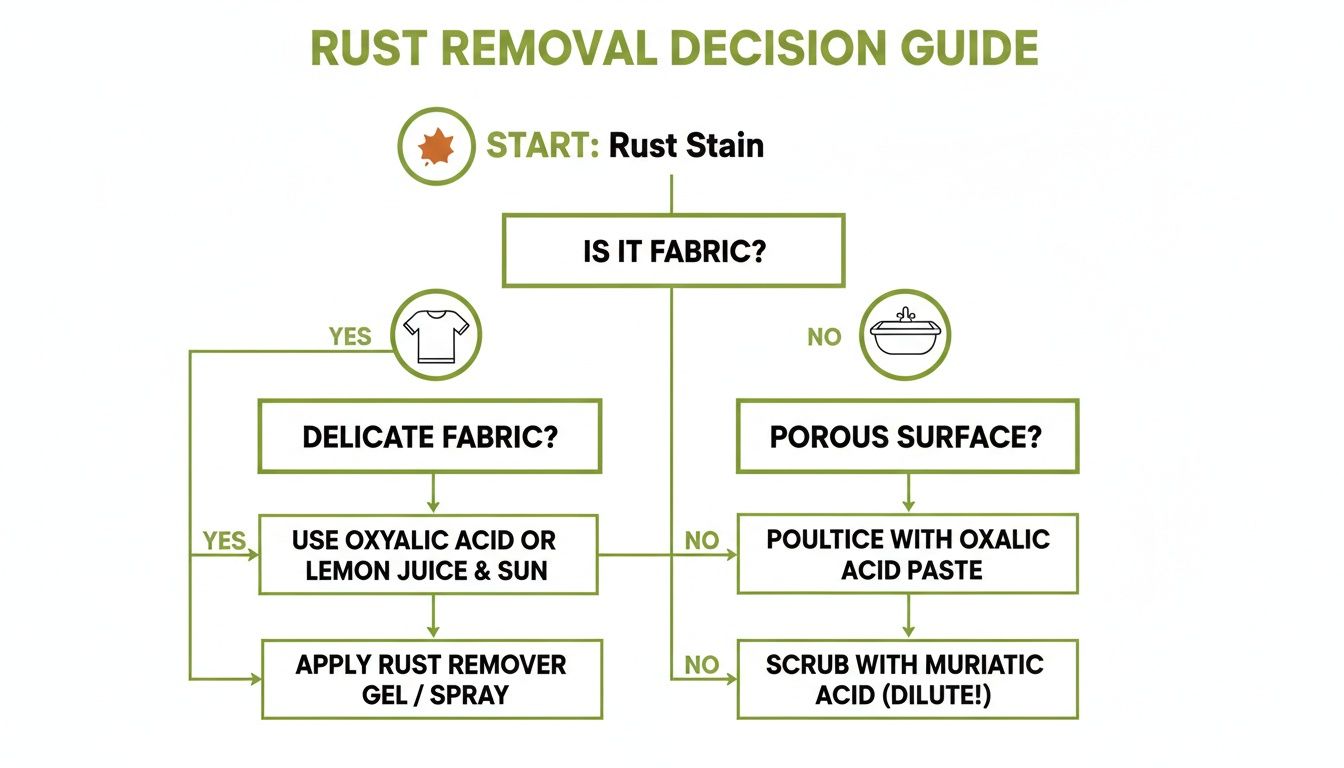
As you can see, the first thing you always have to do is figure out what kind of material you're working with before you even think about grabbing a cleaner.
Why the Right Method Matters
Picking the wrong product can turn a small problem into a disaster. For example, a lot of people instinctively reach for chlorine bleach, but that’s a huge mistake. Bleach reacts with rust and chemically sets the stain, turning a removable spot into a permanent yellowish-brown blemish. This guide is here to help you avoid those kinds of mistakes by walking you through proven, safe techniques for all sorts of surfaces.
We’ll get into the specifics of how to:
- Use gentle, natural ingredients you already have for everyday rust spots.
- Safely treat rust on clothing and other fabrics without causing damage.
- Tackle tough, set-in rust on concrete and outdoor metal.
Think of this as your friendly neighbor's guide to keeping your home spotless. We want to give you the confidence to look at any rust stain and know exactly how to handle it like a pro, minus the stressful trial and error.
Using Natural Cleaners to Tackle Everyday Rust
Before you head out to buy a bottle of harsh chemical rust remover, take a quick detour to your kitchen pantry. Believe it or not, some of the best tools for fighting everyday rust are probably already on your shelf—things like white vinegar, lemons, salt, and baking soda. This isn't just folklore; the science is surprisingly simple.
The secret lies in a one-two punch of acid and abrasion. The natural acids in vinegar (acetic acid) and lemon juice (citric acid) are brilliant at dissolving rust, chemically breaking down the iron oxide. Then, a gentle abrasive like salt or baking soda comes in to help you scrub away the loosened gunk without scratching up your surfaces. For anyone in Reno and Sparks dealing with those pesky orange stains, these natural solutions are the perfect, non-toxic first step.
They’re my go-to recommendation for light to moderate rust on stainless steel sinks, bathroom fixtures, and even lightly rusted tools. Plus, when you have kids or pets running around, you can’t beat the peace of mind that comes with avoiding strong fumes.
The Power of Pantry Staples
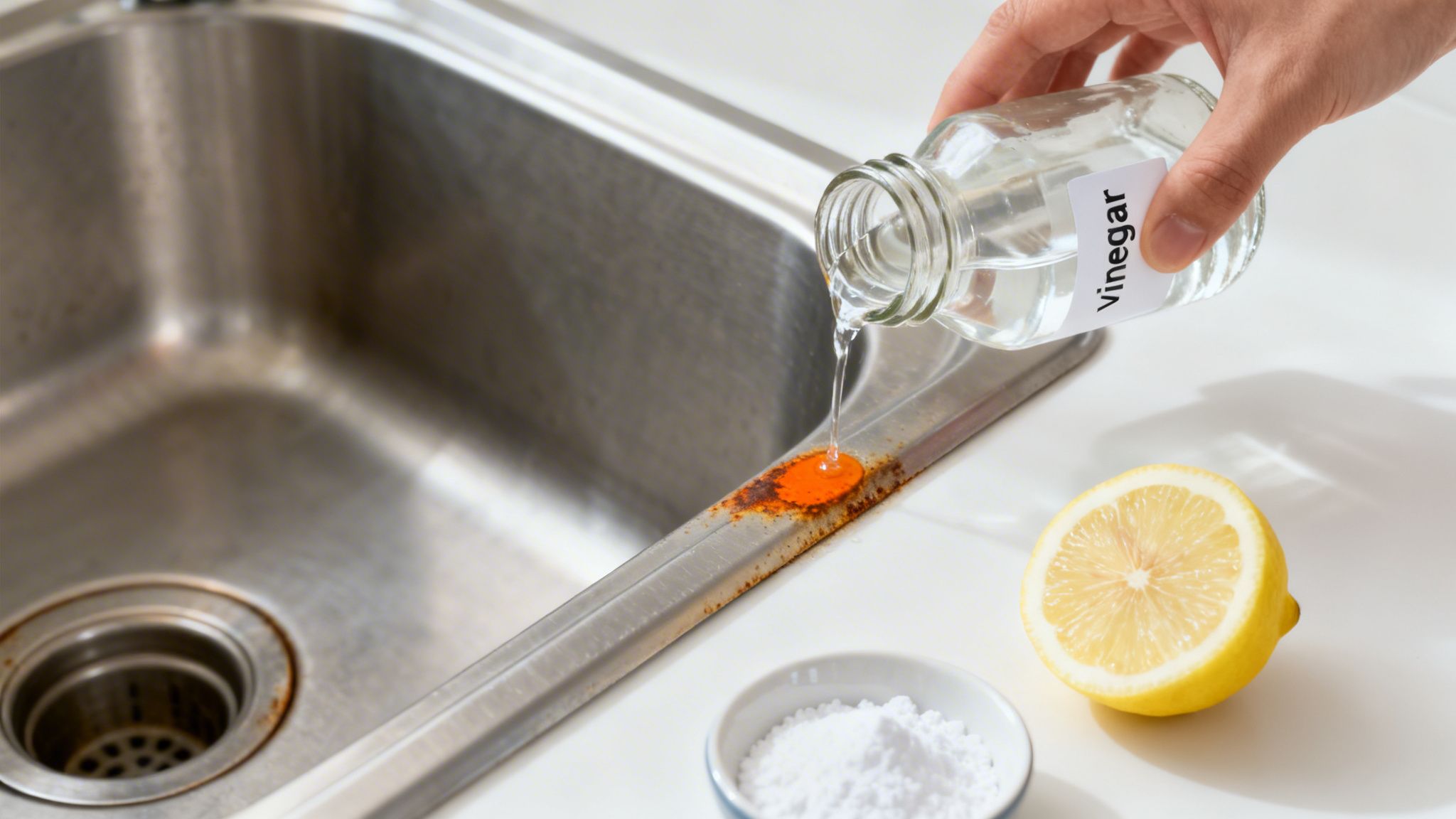
Tackling rust doesn't have to be a big, chemical-laden project. For instance, just soaking a rusty item in plain white vinegar for 1-2 hours can dissolve a significant amount of a light rust stain. I’ve seen it work wonders. Lemon juice mixed with a bit of salt creates a potent paste that works in a similar way, using citric acid to lift rust right off a stainless steel sink—a common sight in many Reno homes.
After letting an acid do its work, I always follow up with a thick paste of baking soda and water. It’s the perfect non-toxic abrasive for a final scrub, polishing the surface and removing any lingering residue. You can find more tips in our detailed guide on using baking soda for stain removal.
Natural DIY Rust Removers at a Glance
Not sure which pantry staple is right for your particular rust problem? I've put together this quick comparison table to help you match the ingredient to the job. It cuts through the guesswork so you can get straight to cleaning.
| Ingredient | Best For | Application Method | Notes |
|---|---|---|---|
| White Vinegar | Metal tools, faucets, showerheads | Soak small items directly; spray on and let sit on fixtures | Its acetic acid is great for dissolving rust. Best for longer soaks. |
| Lemon Juice & Salt | Kitchen sinks, cookware, light fabric stains | Create a paste, apply to the stain, and let it sit in the sun | The salt acts as an abrasive, while the lemon juice dissolves the rust. |
| Baking Soda | Porcelain, enamel, stainless steel surfaces | Make a thick paste with water, scrub, and rinse | A gentle abrasive that’s excellent for final scrubbing and polishing. |
| Potato & Dish Soap | Light surface rust on chrome or knives | Cut a potato in half, add dish soap, and rub on the rust | The oxalic acid in the potato helps break down light rust. |
Each of these methods offers a simple, effective solution without the need for harsh chemicals. Give them a try the next time you spot a bit of rust.
Pro-Tip: For stubborn rust rings around a faucet or drain, soak a paper towel in white vinegar and wrap it snugly around the rusted area. Leave it there for an hour or two. This keeps the vinegar concentrated right where it’s needed most, making the final scrub-down much easier.
Opting for a natural approach is not only safer but also incredibly easy on your wallet. These humble ingredients have some serious power against the frustrating orange stains that pop up, especially with the hard water we often see here in the Reno area. You might just be surprised at how well they work.
How to Get Rust Stains Out of Clothing and Fabrics
It’s a frustrating moment: you pull your favorite white blouse from the laundry, only to find an ugly orange-brown streak. Rust stains can sneak up on you, whether from a forgotten metal snap, a damp coat hanger, or even just brushing against a weathered patio chair. But don't toss that garment just yet. With the right approach, most fabrics can be saved.
Before you reach for what you think is the strongest stain fighter, stop. The most important rule in this battle is to never use chlorine bleach. It might seem like the obvious choice, but bleach has a chemical reaction with rust (iron oxide) that will set the stain permanently, often making it darker and impossible to remove. The actual secret is using a mild acid to gently dissolve the rust particles away from the fabric fibers.
This is a more common problem than you might think. From forgotten coins in a pocket to our iron-rich water here in Reno, rust stains on laundry are a headache for many. In fact, industry data shows this issue affects 25-35% of households annually, contributing to the massive USD 22.3 billion global market for stain removers. You can explore the full findings on stain remover products here to see just how big this challenge is.
The Best Methods for Fabric Rust Removal
For sturdy fabrics like cotton, denim, or canvas, you can often start with a simple, effective DIY paste. Just mix lemon juice and salt, apply it to the stain, and lay the garment out in the sun. The combination of the acid and UV light works wonders. After an hour or so, just rinse it thoroughly and launder as usual.
If you prefer a ready-made solution, a commercial laundry rust remover is a great option. These are specifically formulated with gentle acids, like oxalic acid, that are designed to break down rust without harming fabric. As with any product, just be sure to follow the package directions to the letter.
Another fantastic homemade option combines two common household items:
- Cream of Tartar: A mild acid you probably have in your spice rack.
- Hydrogen Peroxide: A gentle oxygen-based bleach that helps lift the stain out.
Mix these into a paste, spread it over the rust stain, and let it work its magic for about 30 minutes. Then, you can toss the item in the wash. This trick is especially effective on white and light-colored cottons.
Crucial Tip: Always test your cleaning solution on a hidden spot first, like an inside seam or hem. A quick spot test can prevent a disaster, saving you from accidentally discoloring a visible part of your favorite garment.
Treating Rust on Delicate and Upholstered Fabrics
Delicate materials like silk, wool, and rayon need a much more careful approach. Harsh acids or vigorous scrubbing can easily damage or even destroy these sensitive fibers. Your best bet here is to find a commercial rust remover that is specifically marked as safe for delicates. Apply it very carefully with a cotton swab instead of soaking the area.
Upholstery is another beast entirely since you can’t just throw a couch cushion in the wash.
Here’s how to tackle rust on furniture:
- Vacuum First: Start by vacuuming the area with a brush attachment to pull up any loose rust particles from the fabric's surface.
- Apply Sparingly: Using a clean white cloth, gently dab your chosen cleaning solution (a delicate-safe commercial product or a lemon juice and salt paste) onto the stain. The key is to avoid oversaturating the fabric.
- Blot, Never Rub: Take a separate clean, damp cloth and blot the spot. This action lifts the rust and the cleaning solution out of the fibers. Rubbing will only spread the stain and potentially fray the upholstery.
- Dry It Quickly: To prevent a water ring from forming, use a fan or a hairdryer on its coolest setting to dry the damp spot as quickly as possible.
Knowing how to get rust stains out of clothing and upholstery is a skill that will pay off time and time again. Just remember to act fast, keep the bleach far away, and always perform a spot test before you begin.
Removing Heavy Rust from Concrete and Metal Surfaces
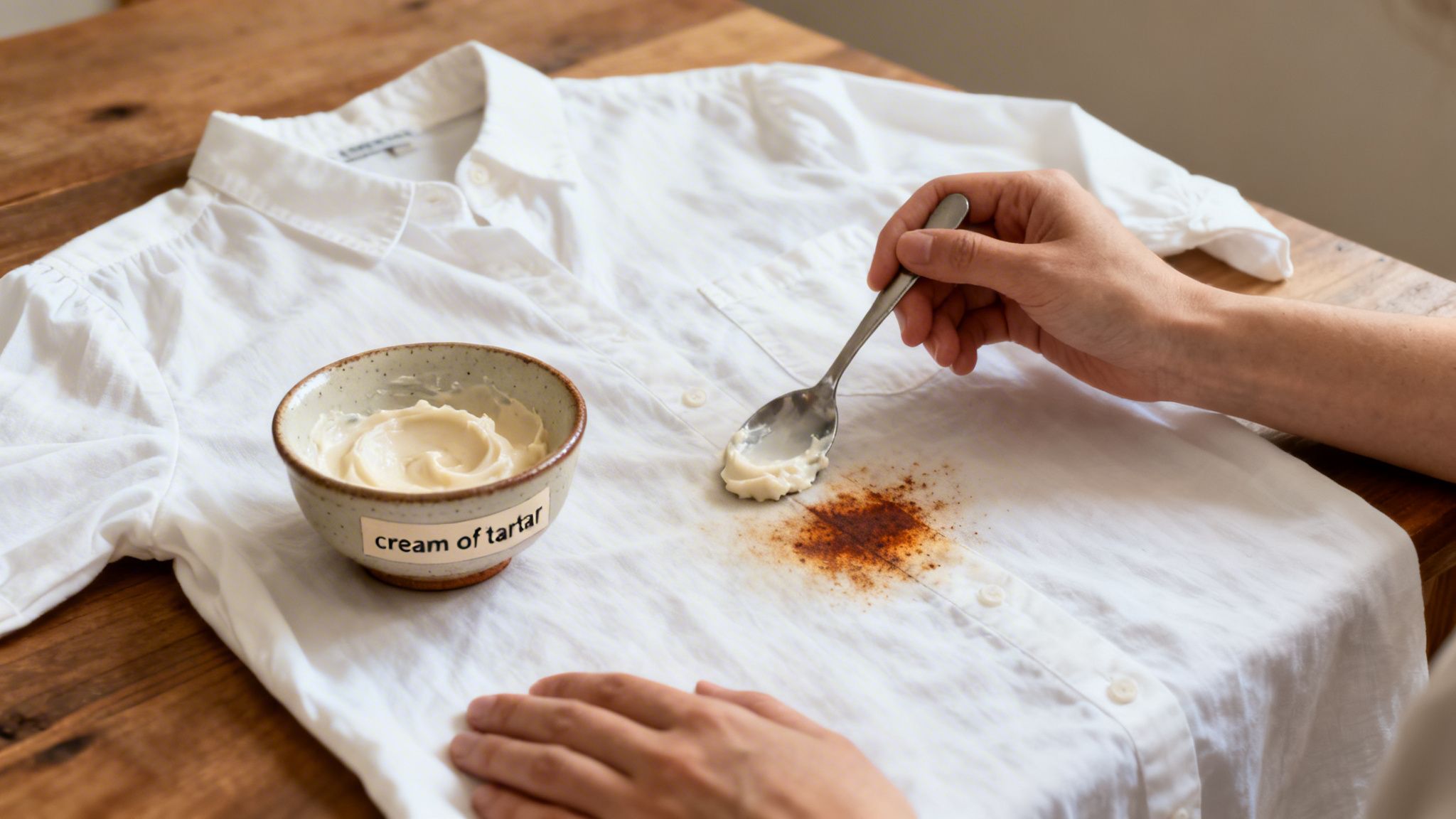
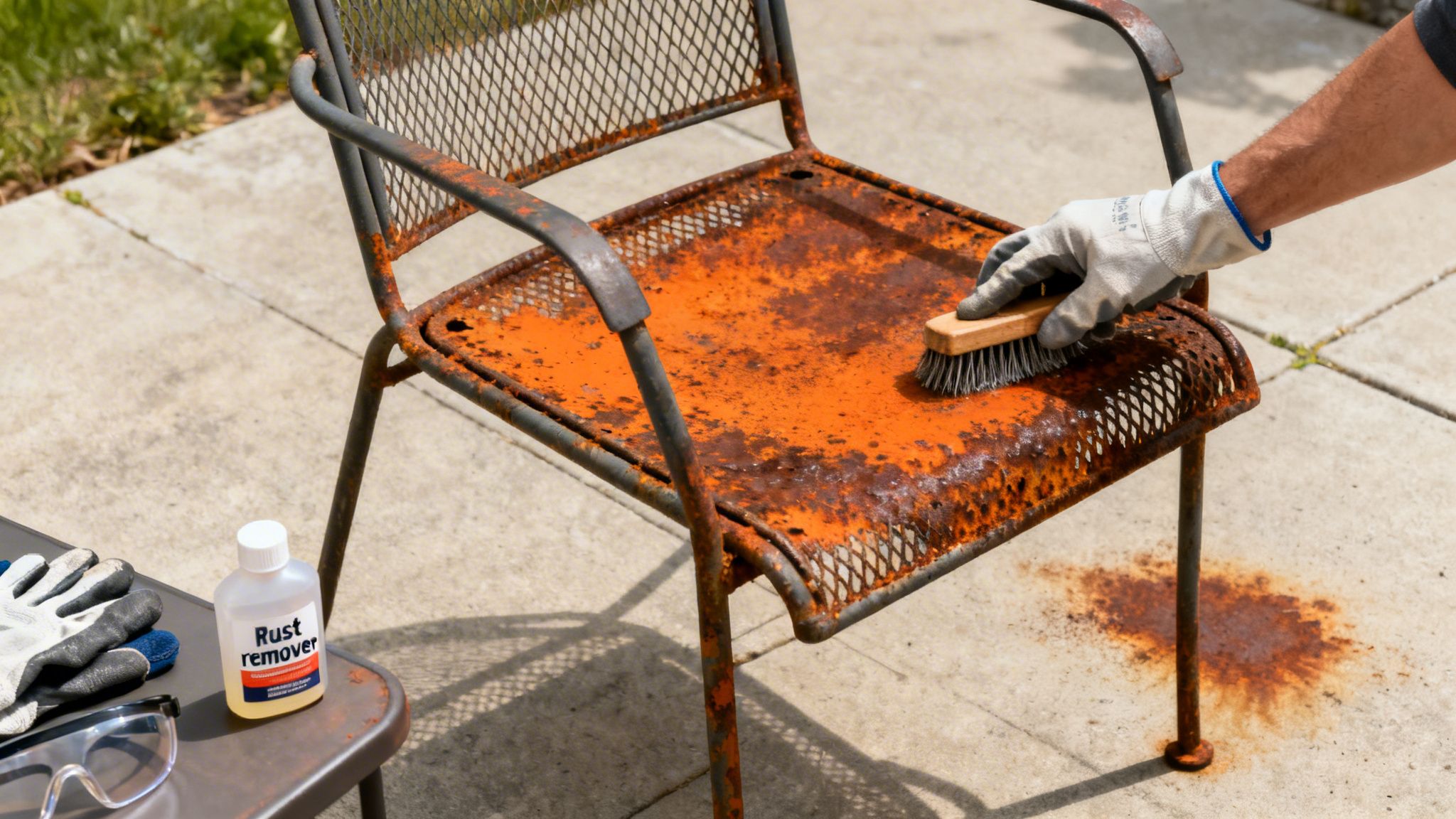
When you’re dealing with the really tough stuff—those deep, ugly rust stains on your concrete driveway, garage floor, or metal patio furniture—your typical pantry remedies just won’t cut it. These heavy-duty jobs call for a much stronger approach. For homeowners in the Reno and Sparks area, this is a familiar battle, especially with outdoor surfaces that are constantly exposed to our climate's dramatic wet-to-dry cycles.
This kind of serious rust removal almost always means turning to commercial products containing strong acids, like oxalic or phosphoric acid. While they are incredibly effective, these solutions demand respect and careful handling. They're designed to chemically dissolve dense rust, restoring surfaces you might have thought were beyond saving.
The key to using these powerful cleaners isn't just the product itself, but the preparation and safety that go with it. They work wonders, but you can’t just splash them on and hope for the best.
Safety First Before Tackling Tough Rust
Before you even think about opening a bottle of commercial rust remover, you need to gear up. This is serious business. These products can cause nasty skin irritation or even permanent eye damage if you're not careful.
Your non-negotiable safety kit should include:
- Safety Goggles: Protect your eyes from any accidental splashes. It's not worth the risk.
- Chemical-Resistant Gloves: Don’t just grab your dish gloves. Look for sturdy nitrile or thick rubber gloves that can stand up to chemicals.
- Plenty of Ventilation: If you’re working inside a garage, open all the doors and windows to get the air moving.
Always take a minute to read the product label carefully and follow the manufacturer's instructions to the letter. This is absolutely not the time to improvise.
Step-by-Step Guide for Concrete and Metal
Once you're geared up, the process itself is pretty straightforward. Here’s how I recommend tackling those stubborn stains on your concrete and metal surfaces.
First, you'll want to prep the surface. Give the area a good cleaning to get rid of any loose dirt, dust, or grime. A quick sweep or a scrub with a stiff brush and plain water usually does the trick. This step is crucial because it lets the rust remover get right to work on the stain itself.
Next, it's time to apply the rust remover. Pour or spray the product directly onto the rust. For vertical surfaces like a wall or metal siding, I've found that gel formulas work great because they cling to the spot instead of just running off. Be generous with it—you want to fully saturate the rusted area.
Now comes the easy part: let it sit. Patience really pays off here. You have to give the product time to penetrate and break down the rust. This could be anywhere from 15 minutes to an hour, so check the label for the recommended time. You’ll often see the rust start to bubble or change color as the chemicals work their magic.
After the solution has had time to sit, it’s time for some elbow grease. Using a stiff-bristled nylon brush for concrete or a brass bristle brush for metal (brass is softer than steel and less likely to scratch), scrub the area vigorously. You need to physically lift the loosened rust particles. For really deep stains, you might need to reapply the solution and give it a second scrub.
Finally, rinse everything thoroughly with clean water. This step neutralizes the acid and washes away all the residue. If you're outside, a garden hose is perfect. Letting the chemical residue dry on the surface can cause new stains or discoloration, so make sure this final rinse is complete.
Important Note: Never, ever mix a chemical rust remover with other cleaners, especially anything containing bleach. When combined, these products can create dangerous, toxic gases. Always stick to one product at a time.
Even for tough jobs, a bit of household science can go a long way. In the construction boom sweeping through Northwest Nevada, rust stains are a common sight. For less severe issues on metal, like a rusted showerhead, white vinegar’s acetic acid can remove 70-90% of rust with an overnight soak. Following up with a baking soda paste can boost its effectiveness by 25% and helps prevent regrowth, which affects 40% of untreated metal surfaces within just one year. You can learn more about the rust remover market and its trends. For tougher buildup in your tub, don't miss our specific guide on bathtub rust stain removal in Reno.
How to Prevent Rust from Coming Back
You’ve put in the elbow grease and scrubbed that rust stain away. Now, how do you keep it from staging a comeback? Winning the battle is one thing, but winning the war means making your home an unwelcome place for rust in the first place. It all comes down to managing the two things rust needs to survive: iron and moisture.
At its core, preventing rust is all about moisture control. That annoying little drip from a leaky faucet isn't just a sound—it's an open invitation for rust to set up shop in your sink or tub. Fixing leaks right away is your single most powerful move. In steamy areas like bathrooms, simply running an exhaust fan or cracking a window after a shower can dramatically lower the humidity that rust loves.
Here in Reno and Sparks, we also have to contend with our local water, which often carries a high iron content. As that water evaporates on your fixtures, it can leave behind those familiar orange-brown mineral deposits, creating stains even without any metal-on-porcelain contact.
Small Habits, Big Impact: Keeping Rust at Bay
It really comes down to a few simple, consistent routines. You don't need to do a deep clean every day, but these small actions will save you a ton of scrubbing later on.
Here are the strategies I recommend to my clients:
- Wipe It Down: After you’re done with the sink or shower, grab a squeegee or microfiber cloth and give it a quick wipe. This removes the iron-heavy water droplets before they have a chance to dry and stain.
- Break the Contact: We’ve all seen it: the classic rust ring left by a shaving cream or air freshener can. The fix is easy—just store metal cans in a cabinet or on a shelf, not directly on a wet tub ledge or countertop.
- Apply a Protective Shield: For any metal outdoors—patio furniture, railings, even hand tools—a good sealant is non-negotiable. A fresh coat of rust-inhibiting paint or a clear sealant creates a barrier that blocks out rain, snow, and humidity.
- Keep Your Tools Dry: Once you’re finished with your garden tools or other metal implements, wipe them clean and make sure they’re completely dry before putting them away. For extra credit, a light coating of oil provides another layer of protection.
Think of it as investing a few minutes today to save yourself hours of cleanup tomorrow. Consistency is what keeps your home looking pristine.
If you find yourself constantly fighting rust stains in your toilets, sinks, and even on your clothes, you might be dealing with a bigger issue. For a more permanent fix, many homeowners find that installing a water softener or a dedicated iron filter is a game-changer. It’s an upfront investment, but it tackles the problem at the source, stopping those high-iron mineral deposits before they ever reach your fixtures.
Frequently Asked Questions for Reno & Sparks Residents
Even with a guide, you might have a few more questions. Here are answers to some common concerns we hear from our Reno and Sparks clients.
Are cleaning supplies included in your service?
Yes, absolutely! Our professional cleaning teams arrive with all the high-quality, effective supplies and equipment needed to handle tough jobs like rust removal. You don't need to provide a thing. We're equipped to handle that fine mountain dust and pollen that finds its way into every corner.
How do I provide access if I'm not home?
We make it easy and secure. When you book, you can provide access instructions for a key under the mat, a lockbox code, or a garage code. Our trusted team will follow your instructions carefully to ensure a smooth and secure cleaning experience while you're at work or out for the day.
Can you handle heavy desert dust and wildfire ash?
Yes. As a local Reno company, we understand the unique cleaning challenges our environment presents. Our teams are trained to use techniques and equipment that effectively capture and remove fine desert dust, mountain pollen, and even lingering wildfire ash, improving your home's air quality and leaving it truly clean.
What if I have pets?
We love pets! Just let us know when you book your service. We ask that you secure any anxious pets for their comfort and our team's safety during the clean. Our cleaners are careful and respectful of your furry family members.
Book your cleaning with Altitude Cleaning Crew - your trusted provider for removing rust stains in Reno. Call 775-376-5527 or book online - http://altitudecleaningcrew.fieldd.co/
Flat-Rate House Cleaning Services You Can Count On
From downtown Reno apartments to family homes across Sparks, our team delivers reliable, professional house cleaning you can count on.