How to Get Scuff Marks Off Hardwood Floors: A Reno Guide

TLDR: If you're searching for deep cleaning Reno NV and your hardwood floors are covered in black shoe marks, furniture streaks, or dusty scuffs, start with the gentlest fix that matches your floor finish. If the mark doesn't lift easily, stop before you dull the finish and turn a simple cleanup into a repair.
If your goal is a clean, polished home without guessing, this guide is for Reno and Sparks homeowners, renters, and property managers who want hardwood floors to look spotless, guest-ready, or inspection-ready.
That Dreaded Mark on Your Beautiful Hardwood Floor
You mop, the sunlight hits just right, and there it is. A dark scuff dragging across the grain like it owns the place.
That happens all the time on hardwood in Reno and Sparks. Fine desert dust gets tracked in, settles like grit, and turns normal foot traffic or a shifted chair leg into an ugly streak. Boots, moving bins, bar stools, rolling suitcases, and kid traffic all leave their signature.
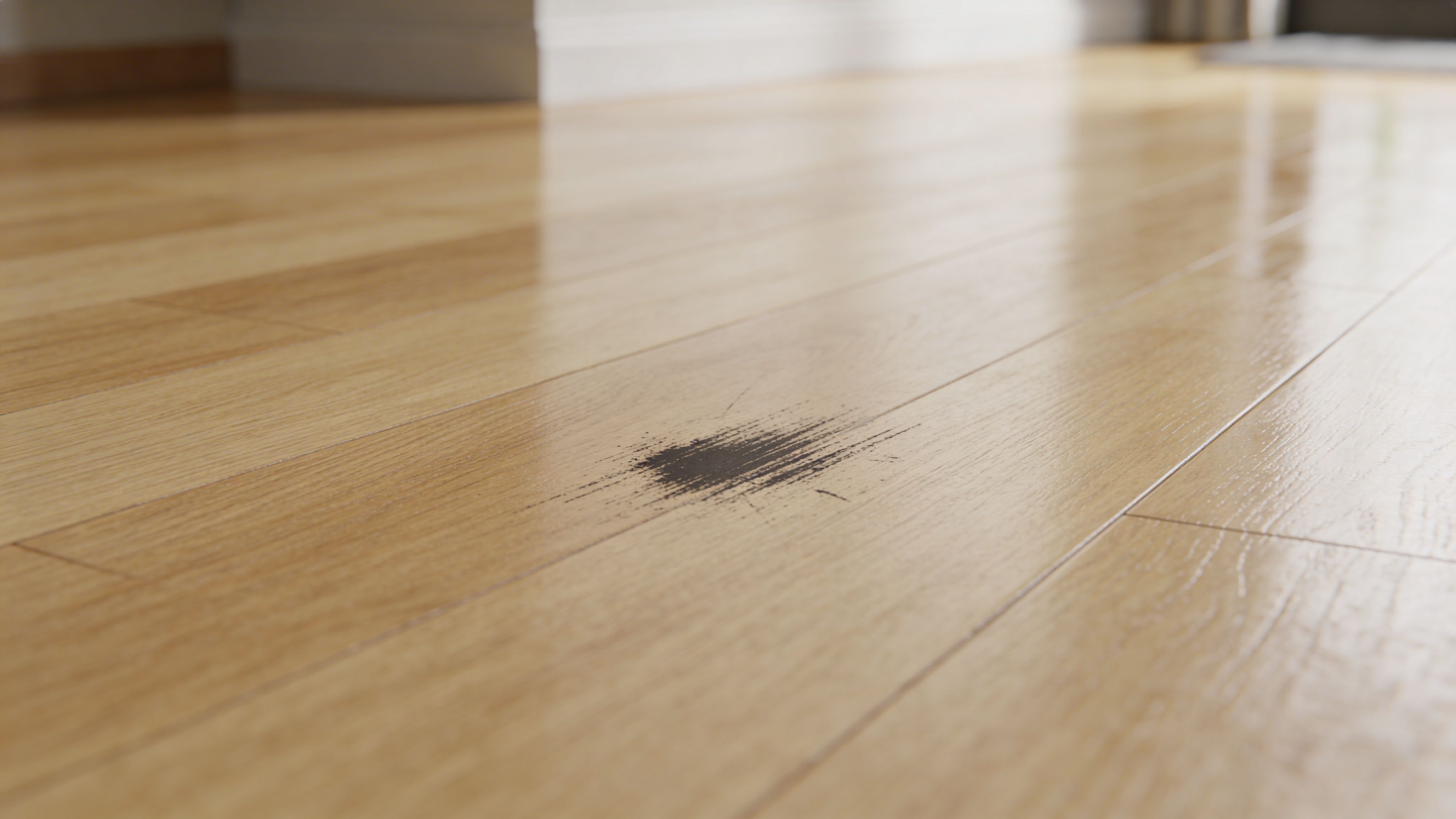
A lot of people searching how to get scuff marks off hardwood floors are dealing with one of two things:
- Surface transfer from rubber soles, furniture feet, or plastic wheels
- Actual finish damage that only looks like a scuff at first glance
Those are not the same problem. If you treat both the same way, you can make a small mark worse.
What scuffs usually mean
A true scuff often sits on top of the finish. You can sometimes feel it before you can remove it. It may look black, gray, or slightly shiny.
A damaged finish is different. The spot may look lighter than the surrounding floor, feel rough, or stay visible even after careful rubbing. That's when aggressive DIY starts to get risky.
Practical rule: If the mark changes color when you wipe it but doesn't disappear, you're probably dealing with transfer. If the sheen looks broken, you're likely dealing with finish wear.
In Northwest Nevada, climate matters too. Dry air, static, and gritty dust make engineered and prefinished floors show marks faster than many homeowners expect. Active households see it first near entryways, hall runs, kitchens, and under dining chairs.
The right approach
The safest approach is simple:
- Identify the finish
- Start with friction, not chemicals
- Escalate carefully
- Stop if the sheen changes
That matters whether you're touching up one hallway mark or deciding whether it's time to book deep cleaning Reno NV service because the whole floor is looking tired.
First Identify Your Hardwood Floor Finish
The wood species matters less than the finish sitting on top of it. That's what decides whether a method is safe.
If you skip this step, you can remove the scuff and leave behind a dull patch that's harder to fix than the original mark.
The common finishes you’ll see
Most modern hardwood has a surface finish such as polyurethane. Some older floors have wax. Others have oil-based or penetrating finishes that need a gentler hand.
A quick field check helps:
- Polyurethane finish usually has a sealed surface and a more uniform sheen
- Wax finish often feels softer and can haze or smear when rubbed with the wrong product
- Oil finish tends to look more natural and can absorb products differently than sealed floors
If you have original flooring in an older Reno or Sparks home, don't assume it's sealed just because it shines.
Start with the least invasive clues
Before you test anything, check paperwork from the installer or manufacturer if you still have it. For engineered hardwood, that's especially helpful.
According to Avalon Flooring's guide to engineered hardwood care, engineered hardwood commonly has a 3-5mm wear layer, a damp sponge pass can lift 40% of light marks, and a clean white vinyl eraser shows 90%+ efficacy on prefinished engineered hardwood while outperforming tennis balls by 25%.
That tells you two useful things. First, engineered floors often respond well to gentle dry methods. Second, the wear layer isn't something you want to grind away with trial-and-error cleaners.
A safe at-home check
Use a small hidden area, such as inside a closet edge or under a bed frame.
- Look at the sheen. Is it glossy and sealed, soft and cloudy, or low-sheen and natural?
- Try a barely damp microfiber cloth. If the spot wipes clean and dries without change, the finish is likely stable enough for gentle scuff removal.
- Avoid soaking the floor. Water isn't your test tool. Control is.
If you already know your floor reacts badly to acidic products, keep that in mind before reaching for homemade cleaners. For more on that, see https://www.altitudecleaningcrew.com/blog/white-vinegar-to-clean-wood-floors.
Match the method to the finish
A sealed polyurethane floor usually tolerates light friction methods best. Waxed and oil-finished floors need more caution because the finish itself can shift, haze, or dull.
If you're unsure, treat the floor like it's delicate. A scuff can wait five extra minutes. A damaged finish can't.
Gentle DIY Methods for Everyday Light Scuffs
Start with friction. Not sprays, not powders, not scrubbing pads.
Most light scuffs are transfer marks sitting on top of the finish. The goal is to lift that transfer without changing the sheen.

The microfiber cloth first pass
A dry, clean microfiber cloth is the safest place to begin. Fold it into a small pad, rub with the grain, and use steady hand pressure.
This works best on fresh marks from rubber soles and light furniture drag. If the mark fades quickly, stop there. Don't keep buffing a clean area.
White pencil eraser for precise spots
A clean white vinyl eraser is one of the best tools for isolated marks, especially on engineered hardwood. Use the flat side, not the corner, and work with the grain.
A few trade notes matter here:
- Use white only so you don't risk color transfer
- Keep it clean because embedded grit can scratch
- Vacuum or wipe away shavings right after
This method is controlled. That's why it's often better than broad rubbing with a larger object when the scuff is narrow or close to a board edge.
On engineered floors, the eraser method is usually the first thing I'd trust before trying anything wetter or more abrasive.
Tennis ball for broad rubber transfer
A clean tennis ball can work well on wider, lighter scuffs. Hold it in your hand and rub gently, or mount it on a stick if reaching under furniture.
It works by friction, not chemistry. That's useful, but it's less precise than an eraser. If the ball is dirty or worn unevenly, skip it.
Damp cloth with a tiny bit of dish soap
For marks that have dust mixed into them, a soft cloth lightly dampened with warm water and a small amount of mild dish soap can help loosen the grime before dry buffing.
Keep the cloth damp, not wet. Wipe the area, then dry it immediately with a second microfiber cloth.
Which gentle method fits best
| Method | Best use | Main caution |
|---|---|---|
| Dry microfiber cloth | Fresh, faint scuffs | Don't over-buff one spot |
| White vinyl eraser | Small stubborn marks | Remove shavings right away |
| Tennis ball | Broad light transfer | Only use a clean one |
| Damp cloth with mild soap | Dusty mixed marks | Don't leave moisture behind |
If you're wondering how to get scuff marks off hardwood floors without risking the finish, this is the right order to try. Gentle methods fix a lot more marks than people think.
Stronger Home Remedies for Stubborn Scuff Marks
If the scuff survives dry friction, move up carefully. At this stage, people tend to get impatient and create dull spots.
The best home remedy for a stubborn transfer mark on a modern sealed floor is usually baking soda used sparingly.

Baking soda done the right way
According to Floor Authority's guide on removing scuff marks from flooring, baking soda has been a household cleaning staple since 1846, has a pH of 8.3, and 1-2 teaspoons on a damp cloth can restore shine in under 60 seconds on scuff marks without scratching modern polyurethane finishes, which protect 85% of hardwood floors. That can help avoid refinishing costs that average $3-5 per square foot.
Use it like this:
- Lightly dampen a soft cloth.
- Add a small amount of baking soda.
- Rub the mark gently in small circles or with the grain.
- Wipe the area clean with a fresh damp cloth.
- Dry and buff with microfiber.
This isn't the moment for heavy pressure. Let the mild abrasiveness do the work.
Where baking soda works best
Baking soda is a good fit for:
- Polyurethane-finished floors with darker transfer marks
- Entryway scuffs where dust and rubber have mixed together
- Chair or stool marks that didn't lift with an eraser
It's not my first choice on waxed floors or anything with an uncertain finish.
What not to use
The fastest way to ruin the look of a hardwood floor is grabbing the wrong product because it "works on everything."
Avoid these on hardwood unless your manufacturer specifically says otherwise:
- Steel wool because it's too aggressive
- Harsh all-purpose degreasers because they can strip or haze finishes
- Undiluted acidic cleaners because they can alter the sheen
- Oversaturated cloths or mops because moisture can work into seams
If you need to press hard enough that your knuckles are white, the method isn't right for that floor.
A quick judgment call
If the mark gets lighter but the surrounding sheen starts to look uneven, stop. You're no longer just removing transfer. You're affecting the finish.
At that point, it's better to live with a faint mark for a day than chase it into a larger repair.
How to Use Commercial Products Like a Professional
Commercial products can work well on scuffs, but only when you use them with restraint. The classic example is the Magic Eraser.
People get into trouble when they treat it like a heavy-duty scrub pad. It isn't one.

Why melamine foam works
Melamine foam acts like an extremely fine micro-scrubber. That makes it effective on transfer marks, but it also explains why too much pressure can dull a finish.
According to Mr. Clean's scuff mark instructions, a Magic Eraser can remove scuff marks in 3-5 swipes when dampened and wrung out properly, and gentle use can lift 99% of marks without added cleaners. The same guidance says testing is especially important for the 40% of pre-2010 floors with older finishes.
The pro technique
Use this sequence:
- Wet it lightly and squeeze out the excess water
- Test a hidden spot first
- Swipe gently over the mark
- Stop and inspect after a few passes
- Wipe with a damp cloth and dry the area
That's the difference between smart use and overuse.
What to watch for
If the scuff disappears but the floor looks flatter or less reflective than the surrounding boards, you've taken off some surface sheen.
That's why I usually keep melamine foam behind gentler methods in the order of attack. It's useful, just not automatic.
For a practical checklist of tools worth keeping on hand, this supply roundup is helpful: https://www.altitudecleaningcrew.com/blog/cleaning-supplies-list
When DIY Is Not Enough for Your Reno Floors
Some marks aren't scuffs. They're scratches, finish wear, or damaged coating from grit, pet traffic, or furniture movement.
If you're trying method after method and the spot still looks lighter, rougher, or uneven in the sun, DIY has probably done all it can. That's when people usually start looking for deep cleaning Reno NV because the floor problem isn't isolated anymore. The whole house is showing dust, edge buildup, and traffic wear.
For homeowners, renters, and property managers who want a polished, move-ready, or guest-ready result, professional cleaning makes sense when the floors need more than one small touch-up.
What’s included
A proper deep cleaning Reno NV visit usually focuses on the full condition of the home, not just one mark on one board.
- Bathrooms cleaned and detailed
- Kitchen degrease on surfaces and touch points
- Floors vacuumed and mopped with finish-safe methods
- Baseboards wiped to remove dust buildup
- Dust removal from reachable surfaces
- Mirrors cleaned
- High-touch disinfecting on commonly handled areas
Optional add-ons can include:
- Inside oven
- Inside fridge
- Inside cabinets
- Wall spot cleaning
- Pet hair focus areas
If pet accidents are part of the floor issue, this related guide may help you judge whether you're dealing with staining instead of a simple scuff: https://www.altitudecleaningcrew.com/blog/dog-pee-on-hardwood-floors-stained
Schedule - Clean - Inspect - Enjoy
Book online or call. You'll get a confirmation and arrival window.
Cleaners arrive with supplies and work from a checklist-based clean. After the job, a quick quality check helps catch anything that needs a final pass. Then you return to a spotless home.
Price range
Most cleans range from $200 to $500 depending on size, condition, and add-ons.
Micro-FAQ
How long does it take?
It depends on the home's size, layout, and buildup level. Heavier dust and floor detailing take longer.
Are supplies included?
Yes. Professional cleaners typically arrive with their own products, tools, and microfiber.
Can you help with Reno dust and wildfire ash residue?
Yes. That's a common local issue, especially around entry paths, baseboards, and hard flooring edges.
What if I have pets?
Pet hair and tracked-in dirt can be worked into the cleaning plan, especially in corners, under furniture, and along floor transitions.
Weekend schedules fill up fast around Reno and Sparks. So do pre-move and turnover dates. Desert dust also doesn't wait for a convenient time.
Prevention The Best Way to Handle Scuff Marks
The best answer to how to get scuff marks off hardwood floors is preventing most of them in the first place.
A simple rule works well. Identify the finish, start gentle, and protect the high-traffic zones before marks build up.
A few habits make a real difference:
- Use felt pads under chairs, stools, and movable furniture
- Place doormats at each entrance to catch Reno dust and grit
- Go shoes-off when possible, especially after wet or dusty days
- Add rugs or runners in hallways, entry areas, and kitchen lanes
- Check furniture feet for worn plastic, exposed metal, or trapped debris
- Clean floors regularly so grit doesn't stay underfoot
In this climate, prevention isn't just about neatness. High-desert dust acts like a fine abrasive. Once it mixes with regular traffic, scuffs show up faster and the finish takes more abuse.
If a mark comes off easily, great. If it doesn't, forcing the issue usually costs more than it saves.
Book your cleaning with Altitude Cleaning Crew - your trusted deep cleaning Reno NV provider in Reno. Call 775-376-5527 or book online - http://altitudecleaningcrew.fieldd.co/
Flat-Rate House Cleaning Services You Can Count On
From downtown Reno apartments to family homes across Sparks, our team delivers reliable, professional house cleaning you can count on.