How to Get Milk Out of Carpet: A Reno-Sparks Guide

When you need to know how to get milk out of carpet in Reno or Sparks, you're probably dealing with one of two problems right now. You either have a fresh spill you need to stop before it sets, or you cleaned it once and now that sour smell keeps coming back. Around Reno-Sparks, that matters more than people expect because our dry air can dry the surface fast while residue stays deeper in the carpet.
This comes up in family homes in South Reno, rentals in Midtown, and turnover properties in Sparks all the time. The goal isn't just to make the white spot disappear. It's to keep that spill from turning into a lingering odor problem that shows up later during a walkthrough, guest stay, or warm afternoon.
- Best first move: Blot right away with a clean white cloth or paper towels. Don't scrub.
- Big local issue: In Reno's dry climate, the top can feel dry before the deeper residue is gone.
- When to stop DIY: If the smell keeps returning or the spot seems to spread, the milk may be below the carpet face fibers.
That Sinking Feeling a Milk Spill on Your Carpet
You set a cup of milk down for a second, it tips, and the carpet looks dry again faster than you expected. In Reno, that quick surface dry-out fools a lot of people. The visible spot can seem under control while milk works lower into the pile, backing, or pad, where the sour smell starts later.
I see this in South Reno bedrooms, Spanish Springs rentals, and Midtown turnover properties all the time. Milk is a small spill with a high callback rate. The stain on top is only part of the job. The primary concern is stopping residue and bacteria from sitting below the surface long enough to create an odor that comes back on warm afternoons or after the room stays closed up.
The first bad move is panic scrubbing. A bath towel, aggressive pressure, and too much cleaner usually push the spill wider and deeper. Then the carpet feels damp, picks up our local dust fast, and starts looking dingy around the edges.
Why milk gets tricky fast here
Reno's dry climate changes how this spill behaves. The face fibers dry quickly, especially in homes with AC running hard or a lot of airflow, but trapped milk solids underneath can keep breaking down. That gap between a dry-looking surface and a dirty lower layer is why DIY cleanup often misses the underlying problem.
It shows up most often in a few places:
- Apartment bedrooms: bedside spills that sit overnight
- Family rooms: cereal milk cleaned from the top only
- Move-out properties: a spot that looks better, but still smells during inspection
A simple rule helps here. Absorb first. Clean with control. Deodorize only after you've removed as much residue as possible.
For homeowners who reach for pantry fixes too soon, that order matters. A baking soda paste can help with some carpet spot cleanup situations, but milk is different because the odor source is often below the visible stain, not just in the fibers you can see.
What this article is really helping you avoid
The expensive part of a milk spill usually shows up later. You wipe it up, the room seems fine, and then a sour odor appears a day or two after the carpet warms up. Property managers catch it at walkthroughs. Hosts notice it before check-in. Families notice it when a bedroom door has been shut all morning.
That is a significant headache in Reno homes. Surface cleanup is easy to overestimate here. Lasting odor control takes more than making the white spot disappear.
Your First 60 Seconds What to Do Immediately
Fresh milk gives you the best chance of a clean result. The first move is simple. Press and lift. Don't scrub.

Use plain white paper towels or a clean white cloth. Press firmly into the spill, lift, switch to a dry section, and repeat until liquid stops transferring. White materials matter because you don't want dye from a colored rag entering the carpet.
For fresh milk spills, the strongest first-step method is immediate blotting or extraction, not scrubbing. Guidance also recommends a mild detergent mix of 2 cups warm water + 1 tablespoon liquid dish soap, then continued blotting until the stain lifts, while avoiding hot water because it can set protein-based residue (fresh spill carpet cleaning guidance).
The safest quick-clean routine
After you've absorbed as much milk as possible:
- Mix lightly: Combine 2 cups of warm water and 1 tablespoon of liquid dish soap.
- Dampen, don't soak: Wet a clean cloth with the solution. Don't pour it straight onto the carpet.
- Blot from the outside in: That helps keep the spill from spreading wider.
- Rinse by blotting: Use another cloth dampened with plain water.
- Dry the area: Press with dry towels again.
If you like simple household spot-cleaning methods for minor messes, this guide on a baking soda and water paste can help with other everyday problem spots. For milk, though, the key is still controlled moisture and careful blotting.
A quick visual can help if you're in the middle of the mess and need to move fast:
Use enough solution to loosen residue. Not enough to push it deeper.
What We See in Reno-Sparks Homes
Milk spills don't look the same across the Reno-Sparks area.
In Damonte Ranch and South Reno, we often see newer homes with soft bedroom carpet where a spill disappears visually fast, but the padding holds onto the problem. In older rentals around Midtown or parts of Sparks, the carpet may already carry dust, pet dander, and old wear patterns, so one milk spill creates a larger dirty-looking patch once that damp area grabs surrounding grime.
Local patterns that show up again and again
A few situations are especially common here:
- Mystery odor in rentals: Someone cleaned the surface, but a sour smell keeps showing up during warm parts of the day.
- Dust-ring effect: Fine desert dust settles into the damp edge of the spill and leaves a grayish outline.
- Pet traffic areas: Dogs and cats track through the spot before it's fully dry, which turns one spill into a wider cleanup issue.
We've also seen this in Wingfield Springs and Northwest Reno homes where high-pile carpet hides more than people think. The visible area may be small, but the actual affected area underneath can be wider.
A milk spill can look handled on top and still be unfinished below.
For renters and property managers, that's the frustrating part. The room can pass a casual glance and still fail the smell test later. Move-out cleans around Reno-Sparks often come down to the details landlords notice first: carpet odor, baseboards, kitchen residue, and bathroom condition.
How to Treat Dried Stains and Sour Odors
A dried milk spot is usually two problems. The visible residue sits in the carpet fibers, and the sour smell often sits lower where a quick surface cleanup never reached. In Reno, that split matters because the top layer can dry fast in our climate while odor-causing bacteria keep working underneath.
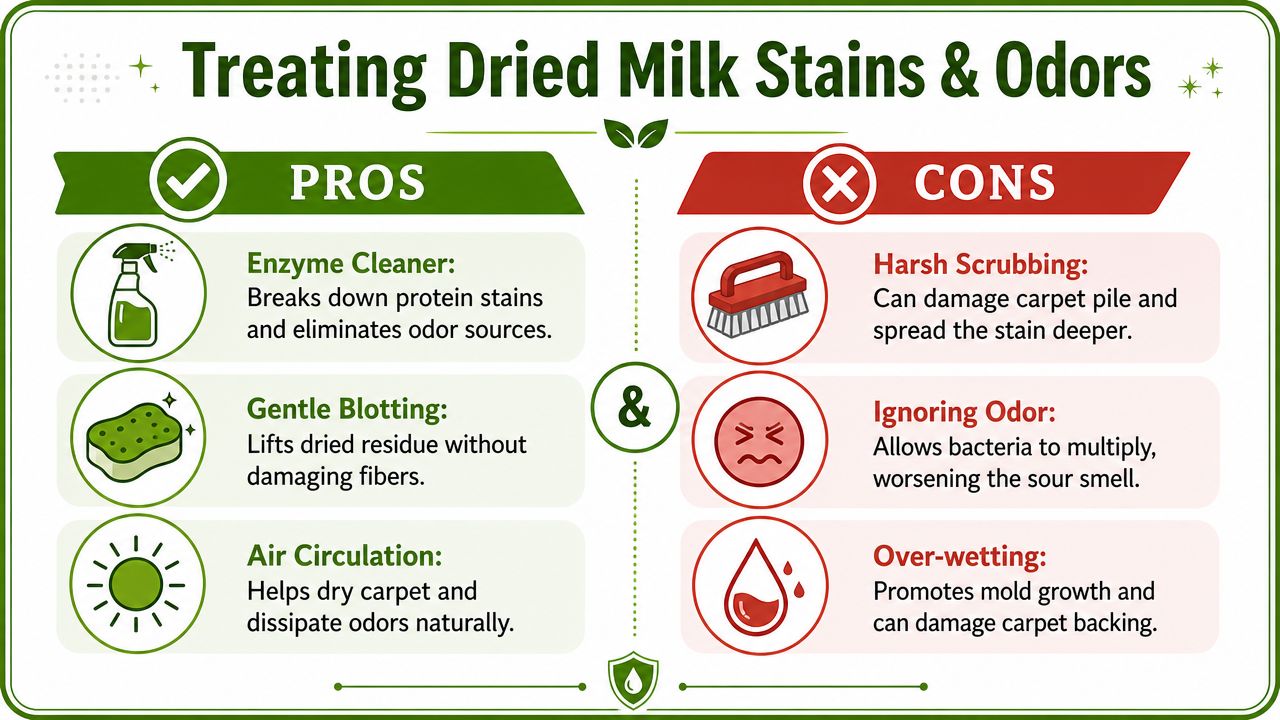
Start dry. Lift off any crusted residue with a spoon or dull edge, then vacuum thoroughly. If you skip that step and go straight to liquid, the dried milk softens into paste and spreads deeper into the pile.
A practical DIY path for older spots
Mix 1 cup of white vinegar with 2 cups of warm water. Dampen a clean white towel, blot the stained area, and let it sit briefly so the residue can loosen. Keep the towel damp, not dripping. Too much liquid is what turns a small dried spill into a pad-level odor problem.
Blot again with a dry towel. If the stain is still there, repeat once. After that, stop adding vinegar and focus on drying the area fully before you try any deodorizing step. In Reno homes, dust settles into damp carpet fast, and that can leave the spill looking larger than it was.
If the smell remains after the carpet is dry, use baking soda overnight, then vacuum it out the next day. For a stronger odor, use an enzyme cleaner made for organic residue and follow the label dwell time exactly. Enzyme products need contact time to break down what milk leaves behind. Rushing that step usually leaves the room looking better but still smelling wrong a day later.
A simple order works best:
- Scrape and vacuum the dried residue first
- Blot with the vinegar mix without soaking the carpet
- Dry the area completely
- Use baking soda or an enzyme cleaner only after the carpet is dry
- Recheck the smell later in the day, especially when the room warms up
If you're comparing cleaners, a professional pet stain removal product is useful to review because it shows the type of formula made for organic odor contamination instead of covering it with fragrance.
What usually makes the problem worse
Hard scrubbing roughs up the carpet fibers and pushes milk residue lower. Over-wetting causes even more trouble. I see that a lot in Reno-Sparks homes where the surface feels dry by evening, but the backing or pad still holds moisture and odor.
Skip heavy soap too. Soap residue grabs dust, which is one reason an old milk spot can turn into a dingy patch a week later. If you want broader carpet stain removal basics for other household spills, that guide is a solid companion.
When Your Carpet Needs Professional Help
A milk spill can look finished by bedtime in Reno and still turn into a sour odor problem a day or two later. Our dry air works against people here. The face fibers dry fast, but milk residue can stay active lower in the carpet, especially if it reached the backing or pad.
That is usually the point where DIY stops paying off.
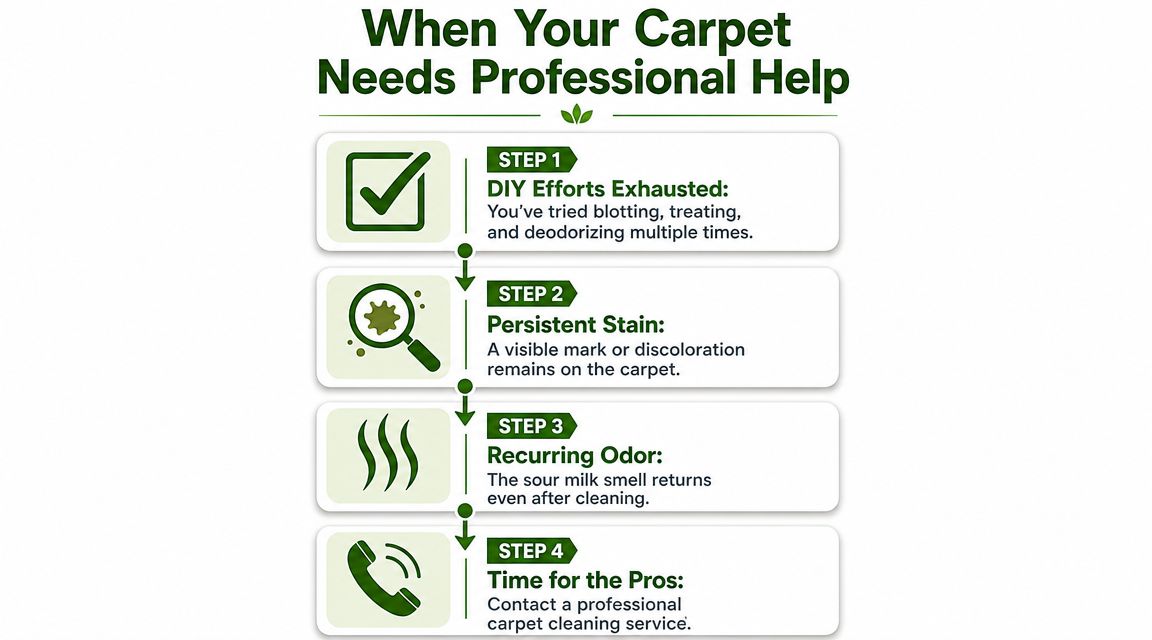
If the stain reappears, the room picks up a sour note after the heat kicks on, or you have cleaned the same spot more than once, the spill likely traveled deeper than surface methods can reach. COIT's sub-surface milk spill problem overview explains the same problem clearly. Once milk gets into the pad, blotting the top layer rarely solves the odor.
A real Reno-Sparks type of situation
I see this most often in rentals, kids' rooms, and living rooms with plush carpet. Someone cleans the visible spot, opens a window, and by the next inspection the room still has that faint spoiled-milk smell. In Reno-Sparks, that happens because the top dries quickly enough to look resolved while the lower layers keep holding residue.
High-pile carpet hides more than people expect. So do rooms packed with furniture, where airflow stays poor near the floor. Add our dust, and a lightly sticky area can turn into a gray-looking patch that draws even more attention.
Signs you should stop DIY
Professional help makes sense when you notice any of these:
- Odor returns after drying: especially in the afternoon or after the room warms up
- The spot keeps wicking back: it looks better, then resurfaces
- You have already treated it more than once: and the result does not hold
- The spill was large: common with cereal bowls, baby bottles, or tipped cups on padded carpet
- You are trying to protect a deposit, sale, or guest experience: cover-up products will not hold up under close inspection
Pet-heavy homes and turnover properties are less forgiving. Any leftover sour smell gets noticed fast.
What a professional visit actually does
The value is extraction and recovery, not just stronger chemistry. A proper carpet cleaning visit for milk contamination focuses on pulling residue out of the carpet system without leaving the area too wet.
A typical visit may include:
- Inspection: checking whether the issue is limited to the fibers or has moved lower
- Targeted treatment: using products meant for organic residue
- Hot water extraction or low-moisture flushing: depending on carpet type and severity
- Moisture recovery: removing as much water as possible so the carpet dries cleanly
- Post-treatment check: confirming whether odor remains near the floor, not just at standing height
If you are comparing service options, Cleaner Connect's carpet cleaning guide gives a useful consumer-level overview of what affects scope and pricing.
For homes that need more than spot treatment, especially after move-out messes or busy family wear, this guide to professional house cleaning services helps sort out what to bundle into the same appointment.
What the process should look like
Keep it simple and specific.
- Book the visit: confirm access, affected rooms, and whether odor treatment is needed
- Treat and extract: clean the contaminated area based on fiber type and depth of spill
- Check the result: look for wicking, smell near the carpet, and confirm drying expectations
- Let it dry fully: avoid foot traffic until the cleaned area is ready
Price range
Price depends on how far the milk traveled, the carpet fiber, the size of the affected area, and whether the pad needs odor-focused treatment. The best quotes come from a quick assessment of the actual spill, not a flat guess over the phone.
Your Reno Milk Stain Questions Answered
How long can the smell stick around
In Reno, a milk spill can seem dry by evening and still smell sour days later. The top fibers dry fast in our climate, but residue under the carpet can keep feeding odor-causing bacteria, especially after the room warms up in the afternoon.
That is why the smell often shows up in waves instead of staying constant.
Is DIY safe on wool or delicate carpet
Use a lighter hand on wool, wool blends, and older carpets with loose pile. Molly Maid's guidance on cleaning spilled milk on carpet and fabric specifically advises against over-wetting and hot water, which matters even more on delicate fibers that can distort, brown, or hold moisture longer than you expect.
In Reno homes, that trade-off is real. Too little moisture leaves milk behind. Too much moisture pushes contamination deeper and slows drying near the backing. If the carpet is high-end, already worn, or installed over a pad that has absorbed the spill, caution beats trial and error.
Can I just use baking soda and be done
Baking soda helps with leftover odor at the surface after the area is dry. It does not remove milk solids from the backing or pad.
If the room smells fine at first and then turns sour again, the residue is still there.
What if the milk smell seems to affect the whole room
Check the soft surfaces around the spill before assuming the carpet is the only source. In many Reno homes, milk lands on the rug edge, baseboard, furniture skirt, or nearby upholstery, then dries without leaving an obvious mark. Dust in the room can also hold onto the smell and make it seem like the carpet failed when the whole area needs attention.
If the spill happened in a bedroom, nursery, or high-use family room, a broader reset sometimes makes more sense than treating one patch. This guide on when a deep cleaning service makes sense can help you decide whether the odor issue is part of a larger cleanup job.
Is there another homeowner-friendly walkthrough worth reading
Yes. If you want another plain-English comparison from a house-cleaning perspective, this expert guide for Portland homeowners is a helpful supplemental read. Portland is not Reno, but the distinction between removing the visible spot and removing the odor source is the same.
Get It Handled the Right Way in Reno
A milk spill on carpet turns into a bigger problem when the smell stays trapped below the surface. If you're dealing with recurring odor, a rental inspection, or a room that still doesn't smell right, it's worth treating the whole issue instead of the visible spot alone.
For homeowners and renters comparing cleanup options, this article on deep cleaning service near me can help if the carpet issue is part of a larger whole-home reset.
If a milk spill still smells sour or keeps coming back, surface cleanup probably wasn't enough. For house cleaning Reno NV support that fits real Reno-Sparks homes, Altitude Cleaning Crew can help with the deeper cleanup issues that show up around carpets, rentals, and move-out prep. Call 775-376-5527 or book online at Altitude Cleaning Crew.
Flat-Rate House Cleaning Services You Can Count On
From downtown Reno apartments to family homes across Sparks, our team delivers reliable, professional house cleaning you can count on.