

How to Clean Textured Ceilings: A Reno & Sparks Guide

If you're looking up how to clean textured ceilings in Reno or Sparks, you're probably staring at cobwebs, dust lines, or a dingy patch overhead and trying to figure out whether you can clean it safely without making a bigger mess. That's a real concern in this area because Truckee Meadows dust, wildfire ash, and older ceiling textures don't give you much room for error.
This matters for homeowners, renters, Airbnb hosts, and property managers who want a cleaner-looking home without knocking loose texture, spreading debris through the room, or disturbing older materials in pre-1990 properties. In Reno-Sparks, ceilings collect more than everyday dust. They catch the fine grit that rides in after windy days, ash during smoke season, and the cobweb buildup that shows up fast in vaulted spaces.
- Dry cleaning comes first: On textured ceilings, the safest routine approach is usually a soft-brush vacuum or soft duster, not scrubbing.
- Older homes need a safety check: If the ceiling may be pre-1990 and you don't know whether it's asbestos-free, stop and get it tested before cleaning.
- Less pressure gets better results: Most ceiling damage happens from moisture, abrasion, or pressing too hard on fragile texture.
- Not every ceiling should be cleaned: Some need spot treatment, some need paint, and some are better left to professional assessment.
Your Guide to Cleaning Textured Ceilings in Reno
A lot of people notice the problem the same way. Morning light hits the ceiling at an angle, and suddenly every cobweb near the vent line and every gray patch over the hallway stands out. In Reno and Sparks homes, especially after a windy stretch, textured ceilings hold onto fine dust in a way flat ceilings don't.
That changes how you approach the job. A textured ceiling isn't something you attack with a wet rag and elbow grease. The texture is fragile, and the dirt sitting in it often includes very fine local dust, pollen, and seasonal ash that can fall everywhere once you start moving it around.
Quick takeaways for Reno and Sparks homes
If you want the short version, here it is.
- Best starting method: Use a vacuum with a soft-brush attachment or a soft-bristled duster. Dry dusting is generally the safest routine method for popcorn ceilings because it lifts debris without scraping the surface, and stiff bristles can pull material off the ceiling, as noted in this popcorn ceiling cleaning guide.
- Biggest mistake: Wetting the full ceiling. Older textured finishes can soften, crumble, or stain when too much moisture gets into them.
- Best use case for DIY: Light dust, light cobwebs, and isolated minor marks on a ceiling you know is safe to touch.
- When to pause: If the home is older and the material history is unknown, safety comes before appearance.
For people also thinking about surface hygiene in the rest of the house, especially after illness runs through the family, a practical companion read is this guide on keeping your home virus-free. Ceiling dusting isn't disinfection, but it does help reduce the settled debris that keeps a room feeling stale.
What We See in Reno-Sparks Homes
The ceiling issues here have a local pattern.
In South Reno and Damonte Ranch, homes near open land often collect a very fine beige dust that settles into ceiling texture around fan boxes, can lights, and HVAC registers. In Northwest Reno and Somersett, wind-driven dust and seasonal pollen tend to show up first along room edges and high corners. In Midtown Reno, older homes can have brittle ceiling texture that looks solid until a brush catches it and a small patch drops.
Field note: Reno dust has a way of sticking where people don't look often. Ceiling texture, door trim, and upper corners tell the story fast.
If you've ever tried to wipe one of these ceilings the same way you'd wipe a painted wall, you've seen the problem. The grime may lighten, but the texture can flatten or start shedding. That's why the main question usually isn't "How do I scrub this?" It's "How do I clean it without damaging it?"
One common local scenario
In a move-out clean in Sparks, we often see ceilings that look acceptable from the doorway but fail the closer look near kitchen transitions, bathroom exhaust areas, and stairwell corners. The issue usually isn't dramatic staining. It's a mix of cobweb strands, long-settled dust, and a few darker spots where someone tried to wipe the texture before.
That's where a careful method matters. A rushed one usually leaves you with a cleaner room and a worse ceiling.
Safety First Asbestos Risks in Older Reno Homes
Before you touch an older textured ceiling, stop and consider the age of the home.
That matters because the first question isn't what tool to use. It's whether the material is safe to disturb at all. If the ceiling may be pre-1990, even routine cleaning can disturb friable material and release fibers. One of the clearest homeowner warnings on this point says that if you're not sure the ceiling is asbestos-free, you shouldn't attempt cleaning and should get it tested by an asbestos remediation company, according to Homes for Heroes on cleaning popcorn ceilings.

Why this matters in Reno
Reno has a lot of older housing stock. Midtown, older parts of Northwest Reno, and some long-held rental properties around Sparks can have ceiling finishes that owners didn't install and tenants know nothing about. The ceiling may have been painted over, patched, or partially repaired over the years, which makes it even harder to judge by appearance alone.
A generic cleaning article will often jump straight into dusting advice. That's not enough for this market. In older homes here, the safest move is often to confirm what you're dealing with before the first vacuum pass.
What not to do
If you suspect the ceiling could contain older acoustic texture, avoid anything that abrades or breaks the surface.
- Don't scrape
- Don't sand
- Don't drill into it
- Don't soak it
- Don't test by poking at a corner
Those are the exact situations where people turn a cosmetic problem into a health and remediation problem.
If there's any doubt, testing is cheaper than guessing wrong.
A practical decision tree
Use this simple filter before any DIY ceiling cleaning.
| Situation | Safe next move |
|---|---|
| Home is newer and ceiling history is known | Proceed with gentle dry cleaning |
| Home is older and ceiling material is unknown | Get testing before cleaning |
| Ceiling is flaking, damaged, or water-stained | Pause and assess before touching it |
| Ceiling has confirmed asbestos | Use professional management options |
What homeowners usually get wrong
The mistake isn't always aggressive removal. Sometimes it's "light cleaning" done repeatedly. A brush, shop vac nozzle, or damp sponge on a questionable ceiling can still disturb material.
If you're in an older Reno or Sparks home and your first instinct is to clean the ceiling before family visits, photos, listing pictures, or a move-out walkthrough, that's understandable. But if you don't know what the texture is made of, the safest cleaning move is restraint.
The Right Tools and Prep for a Reno Ceiling Clean
Once you've ruled out the asbestos question, prep matters almost as much as technique. Ceiling cleaning isn't hard because the dust is stubborn. It's hard because everything falls down onto furniture, flooring, and you.

In Reno-Sparks homes, that falling debris often isn't just lint. It can be fine desert dust, old cobweb fragments, wildfire ash residue, and construction dust if you've had nearby repairs. If your home recently had drywall work or remodel activity, this guide on the best vacuum for construction dust helps explain why the right vacuum setup matters before you ever touch the ceiling.
Tools that actually help
You don't need a huge kit. You need the right contact points.
- Soft-brush vacuum attachment: This is the main tool for lifting loose dust without scraping texture.
- Extension wand: Helps you reach high ceilings and stairwell angles without overreaching from a ladder.
- Soft microfiber duster: Useful for corners, beams, and light cobweb work.
- Lint roller or tape-wrapped paint roller: Good for stubborn dust in small areas if used gently.
- Drop cloths or painter's plastic: Protects floors, beds, sofas, and electronics from falling debris.
- Safety glasses: Dust falls straight into your face on ceiling work.
- Stable ladder: Better control than stretching from the floor.
Prep that saves cleanup later
Start by clearing the room as much as possible. In a lived-in home, that usually means pulling lightweight furniture away from walls and covering the rest. Ceiling cleaning always looks quick until the dust drops onto bedding, counters, and upholstery.
A few prep steps make the work cleaner and safer:
- Turn off ceiling fans so dust isn't blown around the room.
- Close windows during the job if it's a windy day in Reno or Sparks.
- Check the texture first for cracks, soft spots, or loose sections.
- Test one small area before committing to the whole ceiling.
One tool people misuse
The vacuum itself isn't the problem. The pressure is.
A stiff attachment or hard upward push can shave texture right off. The vacuum should glide under light contact. You're lifting loose debris, not polishing the ceiling. That's a good rule whether you're cleaning a flat hallway ceiling in Spanish Springs or a vaulted great room in Somersett.
One practical option for homeowners who'd rather hand the detail work off is Altitude Cleaning Crew for deep-clean support around dust-heavy homes. For ceilings specifically, the same rule still applies. Gentle contact beats aggressive effort every time.
Dry Cleaning Methods for Dust and Cobwebs
If you're searching how to clean textured ceilings, this is the part that matters most. The safest routine workflow is a dry-clean-first approach. A soft-brush vacuum pass, followed by a dry microfiber duster or lint roller used lightly, is the method most aligned with protecting the texture while removing loose dust.

A detailed cleaning reference on this point notes that the safest workflow is vacuuming with a soft brush first, then using a lint roller or dry microfiber duster with only light pressure. It also warns against soaking, saturating spray, and aggressive scrubbing because moisture can soften older acoustic texture and cause flaking or staining. For larger rooms, working in small sections and repeating the dry pass two to three times before any spot cleaning is recommended in this popcorn ceiling cleaning workflow.
The basic method
Here's the approach that works best in most homes with safe, intact textured ceilings:
- Cover the room below.
- Start in one corner and work in small sections.
- Use the vacuum's soft brush attachment with light contact.
- Move slowly so you lift dust instead of knocking it loose.
- Follow with a dry microfiber duster or lint roller only where needed.
Don't rush the first pass. What looks like a stained ceiling is often just layered dust packed into the texture.
Where Reno homes get extra buildup
In Damonte Ranch and South Reno, high ceilings near entryways tend to collect a mix of dust and cobwebs because doors open straight into wind and open space. In Wingfield Springs, we often see buildup around upper corners and loft lines where airflow pushes dust up and leaves it sitting for months.
Practical rule: If dust is coming off easily, keep using dry methods. The minute you feel tempted to add moisture to speed things up, slow down instead.
Here's a useful visual on the basic process before you start:
For general household dust strategy, especially in homes that seem to get dusty again right after cleaning, this article on how to clean dust is worth reading. Ceiling texture is one of the places where airborne dust shows up first and gets ignored longest.
What doesn't work
Some methods seem efficient but cause problems fast.
- Feathering at the ceiling with stiff bristles: Can catch and pull texture.
- Spraying cleaner across the full surface: Can soften the binder and leave drips.
- Using a broom: Too rough for most textured finishes.
- Pressing hard with a lint roller: Can flatten the pattern.
If your goal is to preserve the ceiling and not create repair work, dry, gentle, and repetitive beats fast and forceful.
How to Spot-Clean Stains Without Causing Damage
Dust is one thing. Stains are different.
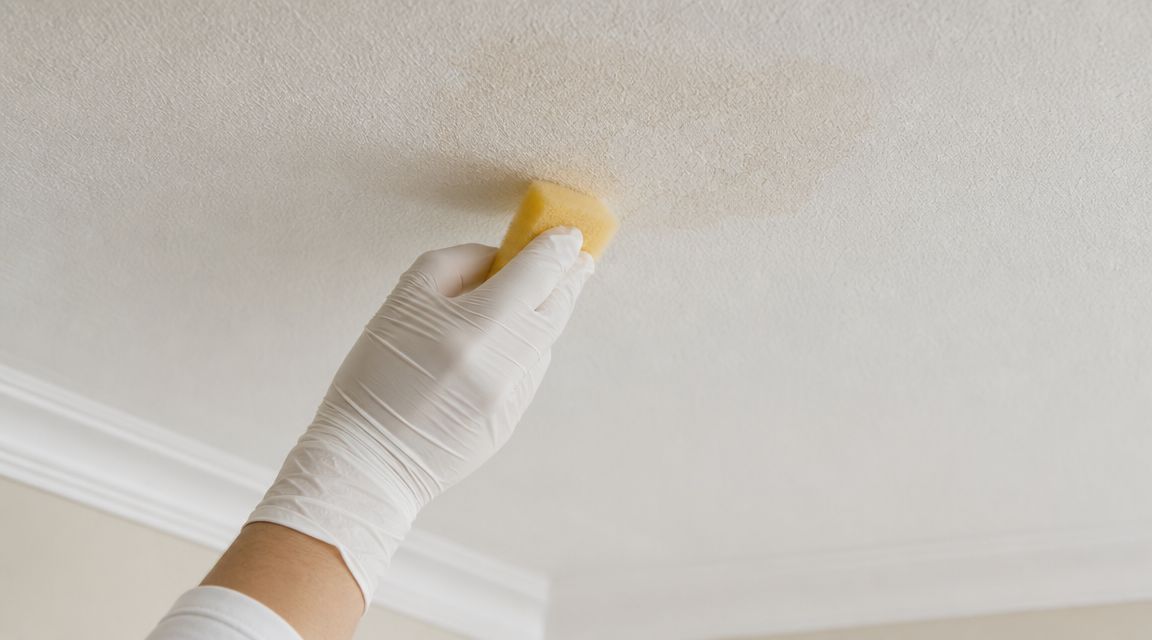
A stained textured ceiling needs a controlled approach, not a full wash. The main benchmark is minimal pressure and minimal moisture. One step-by-step cleaning guide for popcorn ceilings recommends isolating the stain, lightly dampening a soft sponge or brush with a mild cleaning solution, then dabbing or very gently scrubbing only the affected area and stopping as soon as the stain lifts. It also notes that excess pressure can dislodge the textured particles and leave a flattened patch, as explained in this spot-cleaning guide for popcorn ceilings.
Best way to treat a small mark
For a minor spot, think dab, not wipe.
- Use a soft sponge or very soft brush
- Dampen it lightly
- Touch only the stained area
- Stop once the stain improves
Don't chase perfection. On textured ceilings, trying to erase every trace can leave a worse-looking patch than the original mark.
Common stains we see locally
In older Midtown houses, faint water marks sometimes show up around patched areas from past winter leaks. In rental properties in Sparks, kitchen-adjacent ceilings may have light grease haze near air movement paths. In both cases, the goal is improvement without surface damage.
A textured ceiling is a low-shear surface. Short contact, light force, done.
If you also have scuffs or marks on nearby vertical surfaces, this guide on how to clean matte painted walls helps because wall paint often reacts badly to the same over-wetting mistakes people make on ceilings.
What to avoid
A few things usually make the ceiling look worse:
| Mistake | Likely result |
|---|---|
| Spraying cleaner directly overhead | Drips, softening, uneven moisture |
| Scrubbing back and forth | Flattened texture |
| Rewetting the same spot repeatedly | Crumbling or visible patchiness |
| Cleaning the entire ceiling for one stain | Sheen differences and streaking |
If the stain doesn't lift with very gentle treatment, that's usually your answer. It may need paint, repair, or a closer inspection of the source.
When to Repaint or Call for Professional Cleaning
Some ceilings clean up well. Some don't. Knowing the difference saves money and prevents unnecessary damage.
If the ceiling has widespread discoloration, repeated water marks, brittle texture, heavy smoke staining, or confirmed asbestos, cleaning may not be the right fix. At that point, the main decision is whether to preserve it, seal it, repaint it, or remove it.
When cleaning stops making sense
Here are the situations where DIY usually runs out of road:
- The texture is already shedding
- Stains cover broad sections, not isolated spots
- A past leak left visible lines or rings
- Previous cleaning attempts flattened areas
- The home is older and the material is still untested
For homeowners thinking bigger, it helps to understand what full removal can involve. Current estimates put popcorn ceiling removal at about $2,003 on average, or roughly $6 per square foot, while asbestos-containing material can raise remediation to $5 to $20 per square foot plus $75 to $200 per hour in labor. A simple prime-and-paint refresh is often $1 to $3 per square foot, according to Angi's popcorn ceiling removal cost guide.
That cost gap is why a careful evaluation matters. Sometimes the smart move is not "clean harder." It's "stop before this turns into repair and resurfacing."
For anyone comparing finish options and removal considerations in another market, this walkthrough on removing popcorn ceilings in Portland is a useful reference for what a full project can look like once cleaning is off the table.
What's included in a ceiling-focused deep clean
When clients book deep cleaning in Reno or Sparks because the house feels dusty from top to bottom, ceiling cobwebs and upper dust lines are often part of the scope along with the rest of the detail work.
Typical focus areas include:
- Ceiling corner cobweb removal
- Dust removal from vents, ledges, and upper trim
- Bathroom and kitchen surface cleaning
- Baseboards and window sills
- Mirrors, counters, sinks, and fixtures
- Floors vacuumed and mopped
- High-touch wipe-downs
Optional add-ons often include inside oven, inside fridge, inside cabinets, wall spot cleaning, pet hair focus areas, and heavy buildup areas.
Schedule - Clean - Inspect - Enjoy
The process stays simple.
Schedule
Book online or call. You'll get a confirmation and arrival window that fits the home, whether it's a house in Northwest Reno, a condo in South Reno, or a rental turnover in Sparks.
Clean
Cleaners arrive with supplies and work from a checklist-based scope. That matters in dusty homes because upper surfaces, edges, and overlooked buildup need a repeatable process.
Inspect
A quick quality check catches anything that needs one more pass before wrap-up.
Enjoy
You come back to a home that feels cleaner overhead and at eye level, not just in the obvious spots.
Price range
Pricing depends on bedrooms, bathrooms, square footage, condition, and add-ons. Most homeowners request a custom estimate so the quote matches the actual scope.
Most cleans range from custom-estimate pricing based on scope and condition. For ceiling-related dust issues, the main cost driver is usually whether it's part of a general deep clean, a move-out clean, or a larger reset after smoke, renovation dust, or prolonged buildup.
Move-out cleans around Reno-Sparks often come down to the details landlords notice first. Kitchens, bathrooms, floors, baseboards, and the dust sitting where no one looked for months.
Your Reno Ceiling Cleaning Questions Answered
How often should textured ceilings be dusted in Reno-Sparks
It depends on the home's airflow, pets, ceiling height, and how much dust moves through the property. In this region, homes near open areas, busy roads, or active construction usually need more frequent attention because fine dust settles fast on upper surfaces.
Can heavy stains always be cleaned off
No. Some stains can be lightened, but not all should be aggressively treated. If the discoloration is tied to moisture, the source matters more than the cosmetic mark. If you're trying to figure out whether a spot is old staining or an active problem, these common signs of ceiling leaks can help you decide whether cleaning is even the right next step.
What if a little texture comes off while cleaning
Stop and reassess. A small amount of loss usually means the surface is more fragile than it looked, or too much pressure was used. Continuing usually makes the patch more obvious.
Do you handle ceiling dust during move-out cleaning in Sparks or Reno
Yes, when it's part of the agreed scope and the ceiling is safe to address. In move-out work, upper-corner cobwebs and visible dust lines are common requests because they're easy for landlords and property managers to spot during walkthroughs.
Reno dust shows up on baseboards, blinds, and ceilings faster than one might expect.
In Sparks homes, older textures and rental wear often mean the right answer is caution first, cleaning second.
Textured ceilings can look simple until one wrong pass leaves a permanent patch or turns an older ceiling into a bigger problem. If you need help with house cleaning Reno NV and ceiling-related dust issues in Reno, Sparks, Spanish Springs, South Reno, Northwest Reno, Damonte Ranch, Somersett, Midtown Reno, or Wingfield Springs, Altitude Cleaning Crew can help. Call 775-376-5527 or book online at Altitude Cleaning Crew booking.
Flat-Rate House Cleaning Services You Can Count On
From downtown Reno apartments to family homes across Sparks, our team delivers reliable, professional house cleaning you can count on.
