
How to Clean Plastic Bathtubs: A Reno Homeowner's Guide
Learn how to clean plastic bathtubs and remove tough stains in Reno, NV. Get DIY tips for hard water & soap scum, or book professional bathtub cleaning.

TLDR: If you're searching for deep cleaning Reno NV help because your plastic tub still looks dull after scrubbing, you're probably fighting Reno hard water, soap film, and fine dust all at once. A gentle weekly routine handles normal buildup, but stubborn mineral staining often needs a more targeted approach or professional deep cleaning.
A lot of homeowners and property managers end up here for the same reason. The tub looks clean-ish, but it isn't clean. This guide is for anyone who wants a plastic tub that looks spotless, guest-ready, or deposit-ready without damaging the surface.
Your Guide to a Spotless Plastic Tub in Reno
A plastic tub can fool you. It may look like it just needs more elbow grease, when the real problem is a mix of soap scum, hard water residue, and a slightly scratched surface that keeps grabbing new grime.
That happens a lot around Reno and Sparks. Our mineral-heavy water leaves a chalky film, and the dry desert air carries fine dust that settles into corners, ledges, and around the drain. If you keep scrubbing with the wrong tool, the tub gets duller and harder to clean.
For everyday care, a simple DIY routine works well. For deep-set staining, especially the white crusty buildup that keeps coming back, it helps to know what works on plastic and what makes things worse.
Practical rule: If the tub feels rough after you rinse it, you're usually dealing with mineral residue, not just soap.
Plastic tubs need a gentler touch than many people expect. Acrylic-safe methods matter because once the finish gets scratched or chemically dulled, dirt sticks faster and the tub stops looking bright even right after cleaning.
If you're comparing options for deep cleaning Reno NV , this is the primary trade-off. DIY is fine for routine maintenance and light staining. When Reno water has left stubborn scale around the drain line, overflow, or side walls, a deeper reset is often the smarter move.
Gathering the Right Tools for the Job
Start with tools that clean without grinding the finish down.
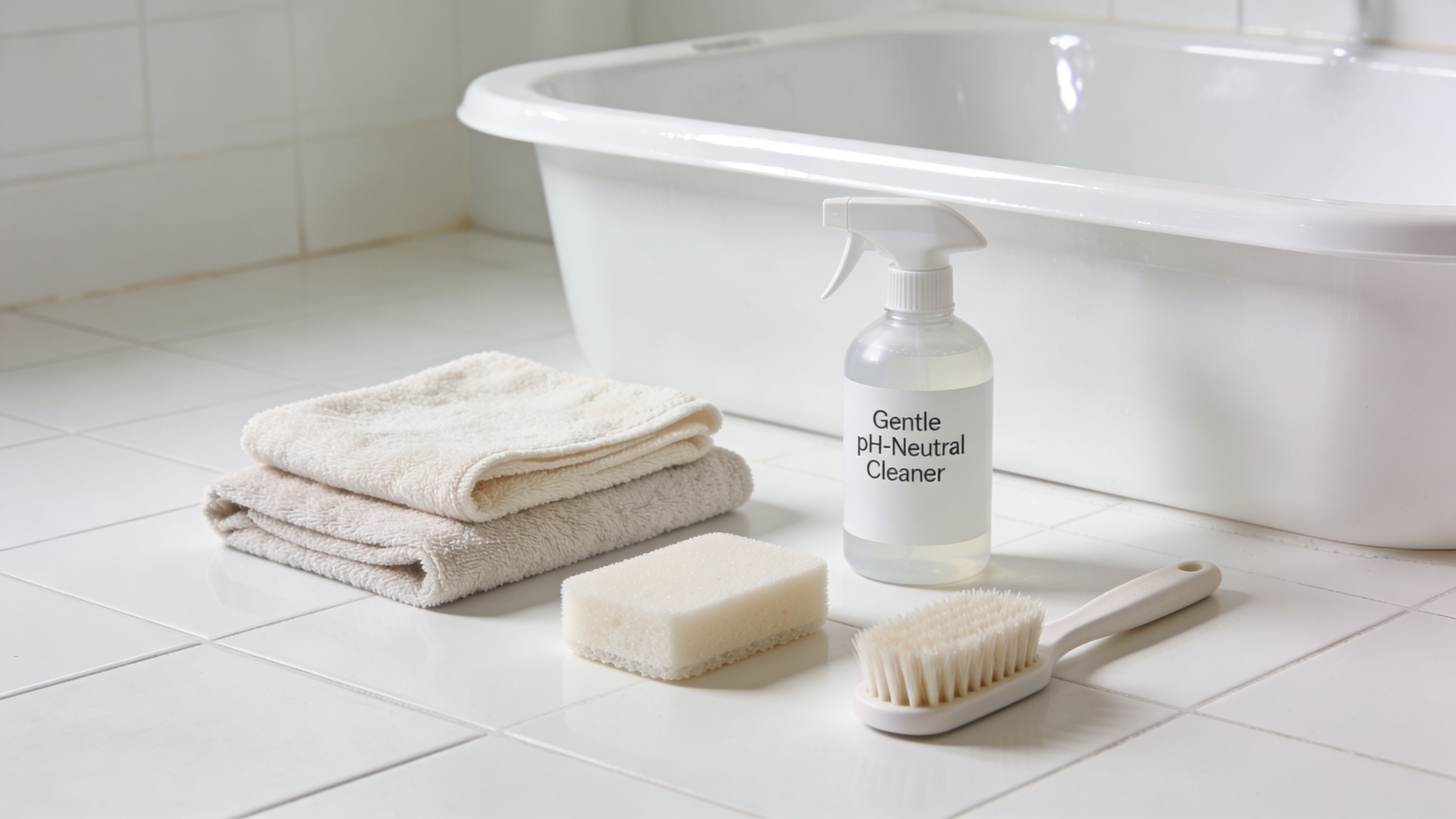
What to keep on hand
- Microfiber cloths for wiping and drying
- Soft sponges with no scrubby backing
- A soft-bristle brush for corners, caulk lines, and around fixtures
- Dish soap for routine washing
- Baking soda for a mild paste
- White vinegar for soap scum and light mineral film
- A spray bottle so you can apply cleaner evenly
- Gloves if your hands are sensitive
A simple setup like this is usually enough. If you want a fuller room-by-room reference, this cleaning supplies list is a good companion.
What I wouldn't use on a plastic tub
Skip steel wool, stiff brushes, powdered scouring cleaners, and harsh chemical mixes. They may remove the stain in front of you, but they also leave behind a rougher surface that catches the next round of grime faster.
Be especially careful with bleach-heavy or ammonia-based products. On plastic tubs, chemical damage can show up as yellowing, dullness, or etched-looking spots that don't buff out easily.
Use the softest tool that will still do the job. That's how you clean plastic well and keep it looking good.
The Weekly Routine to Prevent Buildup
The easiest way to learn how to clean plastic bathtubs is to stop treating them like a once-a-month project. Plastic tubs stay cleaner when you do small resets often.
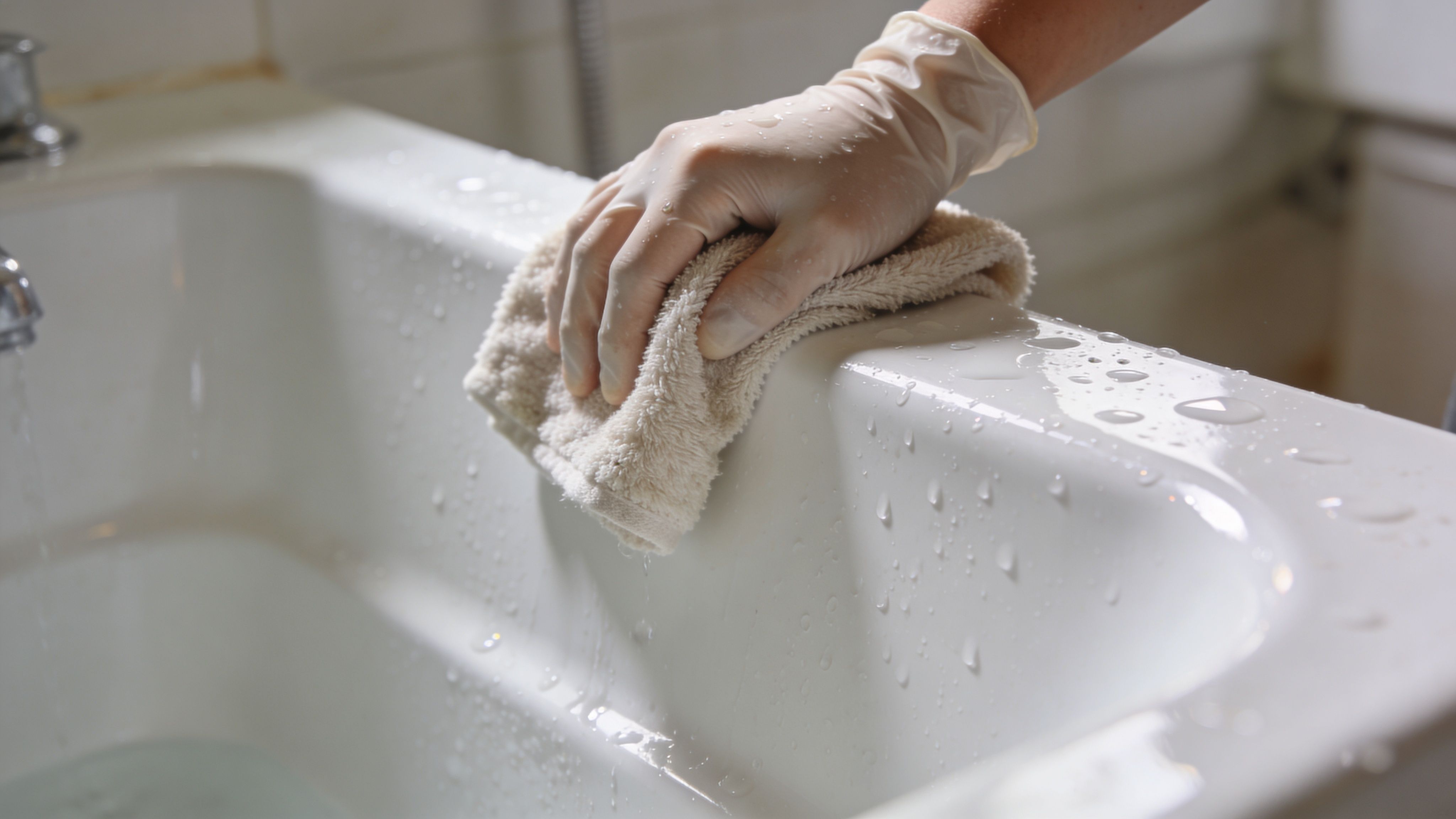
After each use
A quick rinse matters more than people think. Warm water helps loosen body oils and fresh residue before they dry onto the surface.
If you have a squeegee, run it across the walls and tub floor. In Reno, that simple habit helps a lot because minerals don't get as much time to dry into visible spotting.
Every few days
The trouble spots are usually the same every time:
- Drain area where hair and soap collect
- Back corners where water sits
- Caulk line where dust and residue cling
- Overflow plate area where splash marks build up
According to Vintage Tub's bathtub cleaning guide, drain and corner inspection every 2-3 days prevents 80% of clogs and discoloration issues , and daily acrylic-safe shower spray can reduce deep-cleaning frequency from bi-weekly to monthly, a 50% labor reduction.
That's one of the few routines I recommend without hesitation. It keeps little problems from turning into a full scrub session.
Once a week
Use a mild cleaner or dish soap with a damp microfiber cloth or soft sponge. Wipe the full basin, the tub walls, and the rim. Then rinse well and dry.
For busy households, this weekly house cleaning checklist printable helps keep bathroom upkeep from slipping.
A plastic tub usually doesn't need stronger chemicals. It needs consistency.
If you have kids, pets, or frequent guest turnover, weekly care matters even more. Reno desert dust, pollen, and tracked-in grit can make a bathroom feel dingy fast, even when it isn't technically dirty.
Deep Cleaning Your Plastic Bathtub Step by Step
When the tub has gone past routine care, use a deeper but still surface-safe method. For most plastic tubs, baking soda and white vinegar are the best place to start.
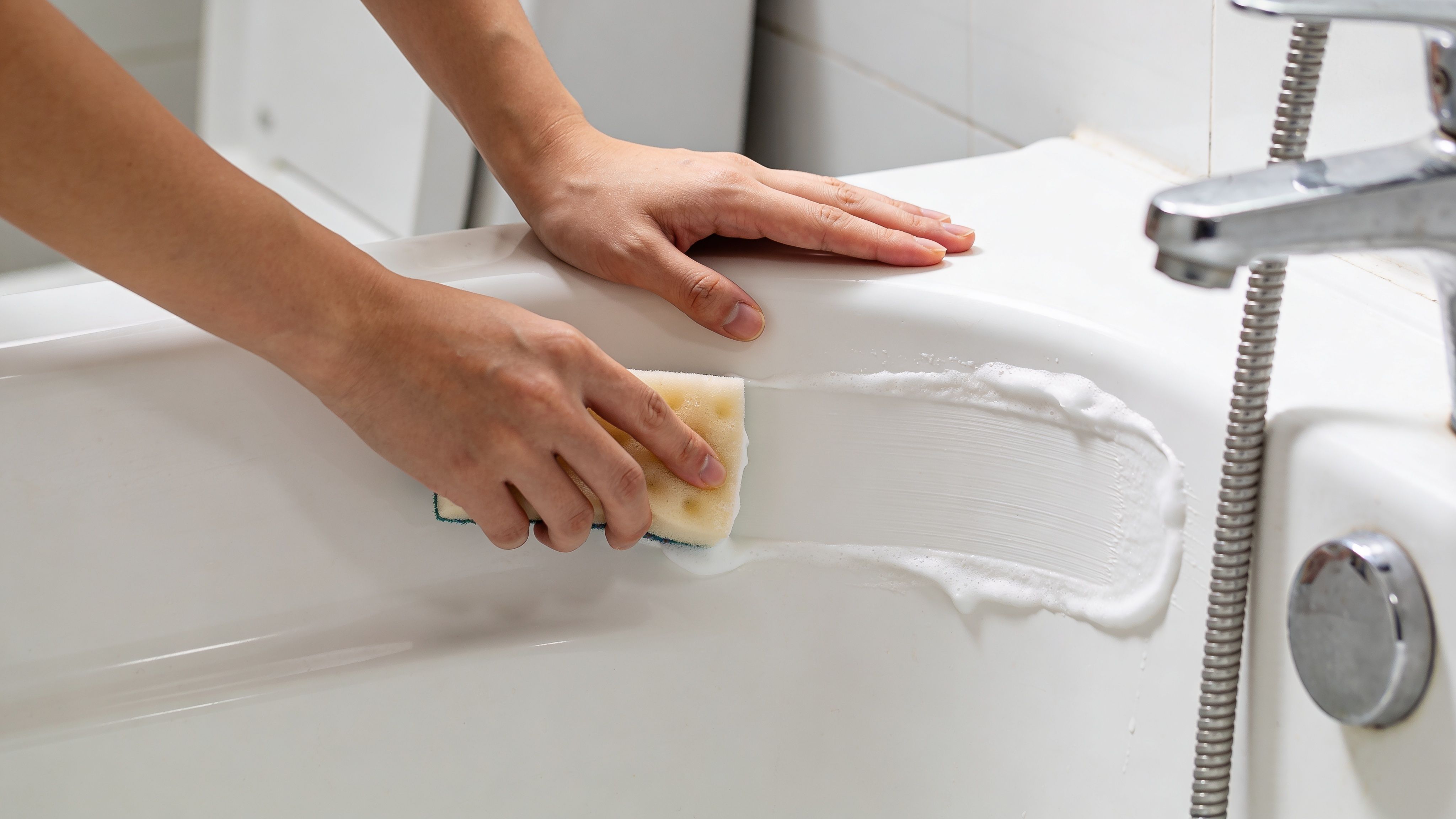
Step 1 Pre-rinse and clear the surface
Rinse the tub with warm water first. Remove bottles, bath mats, toys, and anything sitting on the ledges. If hair is caught near the drain, pull that out before you start.
Loose debris turns into sludge when cleaner hits it. You want the paste working on the tub, not on hair and grit.
Step 2 Apply a baking soda paste
Mix baking soda with a small amount of water until it forms a spreadable paste. Apply it to stained areas, soap scum bands, and the tub floor.
The method works because the paste gives gentle abrasion without the harsh scratching you get from gritty cleansers. According to Karen's Green Cleaning on plastic bathtub cleaning, baking soda and white vinegar can remove up to 90% of soap scum and light stains , and for heavier soil, letting the paste sit for at least 30 seconds or up to 10 minutes loosens dirt 80% more effectively than water alone.
Step 3 Spray vinegar and let it fizz
Spray white vinegar over the baking soda paste. You'll see the fizzing reaction start right away.
That reaction helps break down soap residue and light mineral buildup. Don't rush this part. Let it work for a few minutes while you wipe fixtures or clean the tub rim.
A visual walkthrough can help if you want to see the pacing of a proper scrub:
Step 4 Scrub gently and rinse thoroughly
Use a soft sponge or microfiber cloth to scrub in small circles. Put a bit more pressure on the floor texture and around the waterline, but keep it controlled.
Then rinse everything thoroughly. Any leftover baking soda film can dry cloudy, so keep rinsing until the tub feels smooth under your hand.
If you need a bigger room reset beyond the tub itself, this guide on how to deep clean a bathtub is useful for pairing the tub clean with the rest of the bathroom.
Targeting Tough Stains and Surface Damage
Some tubs don't just have dirt. They have a specific problem that needs a specific fix.
Hard water crust and white residue
This is the Reno classic. If you've used vinegar and the white film keeps coming back, local water chemistry is probably the reason.
According to SuperClean's guide on getting a plastic bathtub white again, in regions like Reno where mineral levels often exceed 180 mg/L , alkaline water with a pH of 7.8-8.2 can reduce vinegar's effectiveness by up to 30%. The same source notes that citric acid chelates minerals 2x more efficiently than acetic acid , and that pre-heating vinegar to 120°F can improve performance on stubborn calcium buildup.
That explains why a basic vinegar spray sometimes barely touches the crust around the drain line or tub floor.
Try this approach:
- Start with heat by using warm water first
- Use warmed vinegar for moderate mineral film
- Switch to citric acid when the deposit feels hard and chalky
- Repeat instead of over-scrubbing because repeated gentle passes are safer than one aggressive one
If hard water is your constant fight, this article on how to remove hard water stains goes deeper on the stain patterns we see around Reno and Sparks.
Mold and mildew stains
Pink and black staining around caulk lines or in textured tub floors usually needs a different cleaner. Baking soda helps with residue, but mildew responds better to oxidation.
Use a mix of 3% hydrogen peroxide and water. Apply it to the stained area, let it sit, then scrub with a soft sponge and rinse. This works well on the non-porous surface of plastic tubs without the harsh feel of stronger cleaners.
Yellowing and dullness
Yellowing isn't always a stain. Sometimes it's chemical damage or built-up residue that has changed the look of the finish.
If the yellowing is from surface grime, a gentle baking soda treatment may help. If the tub still looks uneven after cleaning, the finish may be etched or worn. At that point, more scrubbing usually doesn't fix it.
If a tub looks worse every time you "deep clean" it, the method is probably too aggressive for the material.
Minor scratches
Fine scratches trap dirt and make clean tubs look dingy. Light buffing products made for plastic or acrylic may improve appearance, but go slowly and test first.
Deep scratches are different. Once grime settles into them, cleaning becomes maintenance rather than full restoration.
What to Use and What to Avoid on Plastic Tubs
Plastic tubs reward gentle methods and punish aggressive ones.
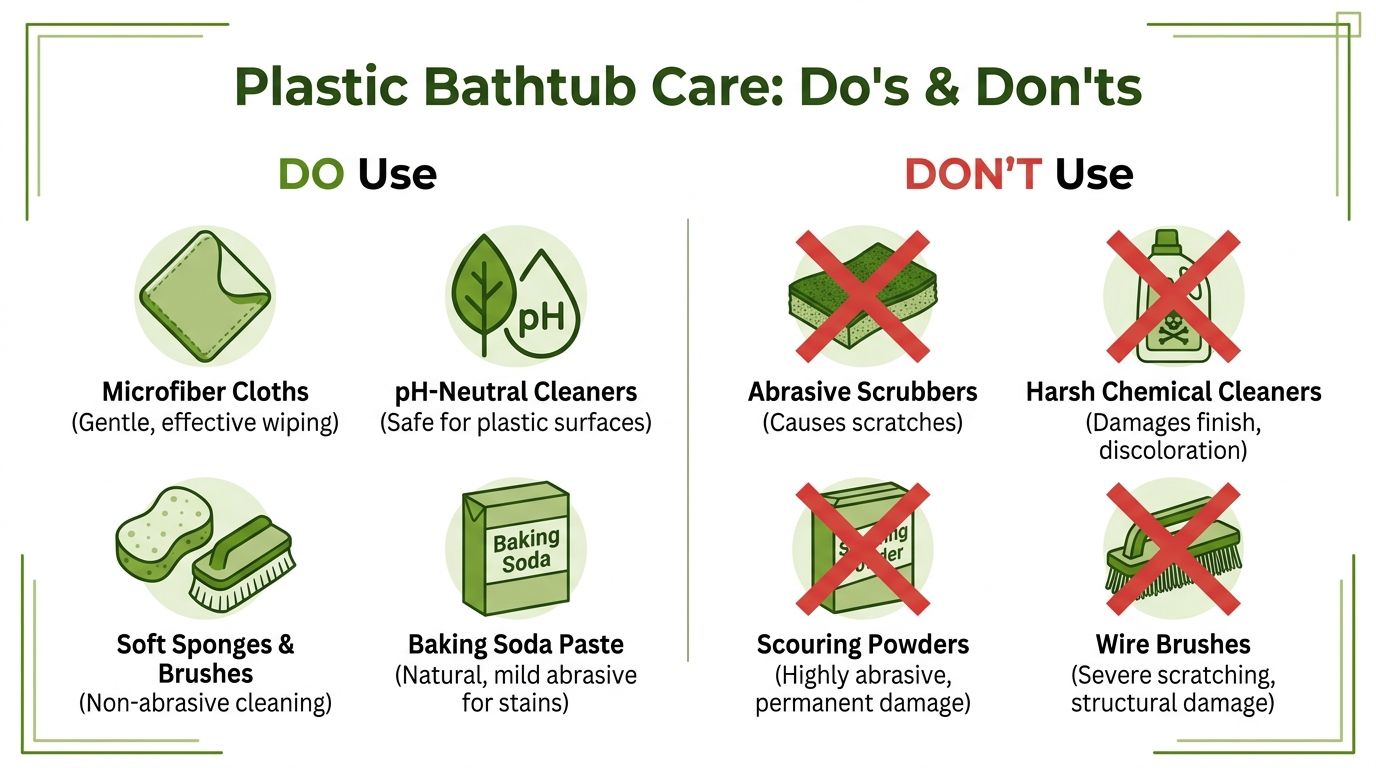
Use these
- Microfiber cloths because they wipe cleanly without grinding grit into the finish
- Soft sponges and brushes for routine scrubbing
- Dish soap and pH-neutral cleaners for regular maintenance
- Baking soda paste when you need a mild abrasive
- Hydrogen peroxide and water for mildew staining
Avoid these
- Abrasive scrubbers that leave fine scratches
- Scouring powders that dull the surface
- Wire brushes or steel wool which can permanently damage the finish
- Harsh chemical cleaners that can discolor or etch plastic
- Ammonia-heavy or bleach-heavy soaks left sitting too long
The risk isn't just cosmetic. According to Beaver Maids' guide on plastic bathtub stains, 3% hydrogen peroxide mixed with water can eliminate 95% of mold and mildew stains on plastic tubs within 30 minutes without damaging the surface , while abrasive cleaners scratch 1 in 4 plastic tubs annually and drive grime deeper into the surface.
That's why the old "just use something stronger" advice backfires so often.
When DIY Isn't Enough Professional Bathtub Cleaning in Reno
If your tub still looks chalky after careful scrubbing, or you're dealing with turnover cleaning, move-out prep, or a full bathroom reset, deep cleaning Reno NV service provides a practical answer.
That stubborn film from Reno hard water can eat up a whole Saturday. Add desert dust, a busy workweek, and tight weekend schedules, and it's easy to keep putting it off.
What's included
A professional deep clean usually covers more than the tub alone, which matters because bathroom grime spreads beyond one surface.
- Bathrooms with tub and shower detail cleaning, sink, toilet, counters, mirrors, and fixture wipe-down
- Kitchen degrease for counters, exterior surfaces, and high-touch areas
- Floors vacuumed and mopped
- Baseboards wiped during deep cleaning
- Dust removal from accessible surfaces and ledges
- Mirrors polished
- High-touch disinfecting on switches, handles, and frequently touched points
Optional add-ons often include:
- Inside oven
- Inside fridge
- Inside cabinets
- Wall spot cleaning
- Pet hair focus areas
Schedule - Clean - Inspect - Enjoy
Book online or call. You'll get a confirmation and arrival window. Cleaners arrive with supplies, follow a checklist-based clean, do a quick quality check, and you return to a spotless home.
Price range
Most cleans range from $180 to $450 depending on size, condition, and add-ons.
For homeowners and property managers comparing deep cleaning Reno NV providers, the main difference is consistency. You want clear communication, a reliable arrival window, and a crew that knows how to clean problem surfaces without damaging them.
Sparks homes often deal with the same hard water film, plus tracked-in dust from busy roads and new development areas. The right deep clean handles both.
Your Questions Answered
How long does it take?
That depends on the bathroom size, the condition of the tub, and whether you're booking a bathroom-only focus or a larger deep clean. Heavier hard water buildup and detailed corner work take longer than a routine maintenance visit.
Are supplies included?
Yes, professional cleaners typically arrive with their own supplies and equipment. That's important for plastic tubs because the tool and product choice matters as much as the scrubbing itself.
Can you handle dust from construction or remodeling nearby in Sparks?
Yes. Fine dust settles on tub rims, ledges, vents, and caulk lines fast, especially in dry, windy weather. A good deep clean addresses the whole bathroom so the tub doesn't get re-dirtied right after it's cleaned.
What if I have pets or need access coordination while I'm out?
That's common. Many homeowners need to leave entry notes, garage codes, or timing instructions around work and weekend plans. If you're booking bathtub cleaning Reno service as part of a larger clean, clear access instructions ahead of time make the visit smoother and faster.
Book your cleaning with Altitude Cleaning Crew - your trusted deep cleaning Reno NV provider in Reno. Call 775-376-5527 or book online - http://altitudecleaningcrew.fieldd.co/