
How to Get Blood Out of Mattress: Reno & Sparks Guide 2026
Need to get blood out of mattress in Reno in 2026? Our guide covers fresh & dried stains + pro tips for dry climates. Know when to call for help.

A blood spot on a mattress at 2 a.m. feels small until morning. In Reno, it often dries faster than people expect. Our air helps the surface set up quickly, and that shrinks the window for an easy cleanup.
That local piece matters. A stain that might stay workable longer in a more humid place can bond fast here, especially on light fabric covers and foam mattresses that pull liquid below the surface. For renters, landlords, Airbnb hosts, and busy households, that can turn one bad night into a move-out problem or a guest-room issue.
The goal is not just to make the red mark less visible. The mattress needs to come clean without being over-wet, and it needs to dry all the way through. I see DIY attempts fail when people use too much water, scrub hard, or treat a mattress like carpet upholstery. The stain spreads, the padding stays damp, and the spot comes back as a ring.
A controlled response works better:
- Move quickly: Fresh blood gives you the best chance of full removal, especially in Reno's dry climate where set-in stains happen fast.
- Keep moisture light: Use enough cold water or cleaner to lift the stain, not enough to soak the bed.
- Be realistic about the result: A small fresh spot is often a DIY job. Older stains, large accidents, odor, or a mattress that needs to pass a turnover inspection usually call for stronger treatment and extraction.
If you have dealt with spills on flooring before, the same basic rule applies here: speed helps, but the material changes the method. Our guide on getting stains out of carpet shows why fabric depth and drying time matter, and mattresses are less forgiving once liquid gets inside.
An Accident Happened Now What
It is 2 a.m., the sheet comes off, and there is a fresh blood spot on the mattress. In Reno, that stain does not stay workable for long. Our dry air pulls moisture out fast, so the first few minutes matter more here than they do in a more humid place.
The goal is simple. Lift as much blood as you can without pushing it deeper into the mattress or leaving the padding damp by morning.
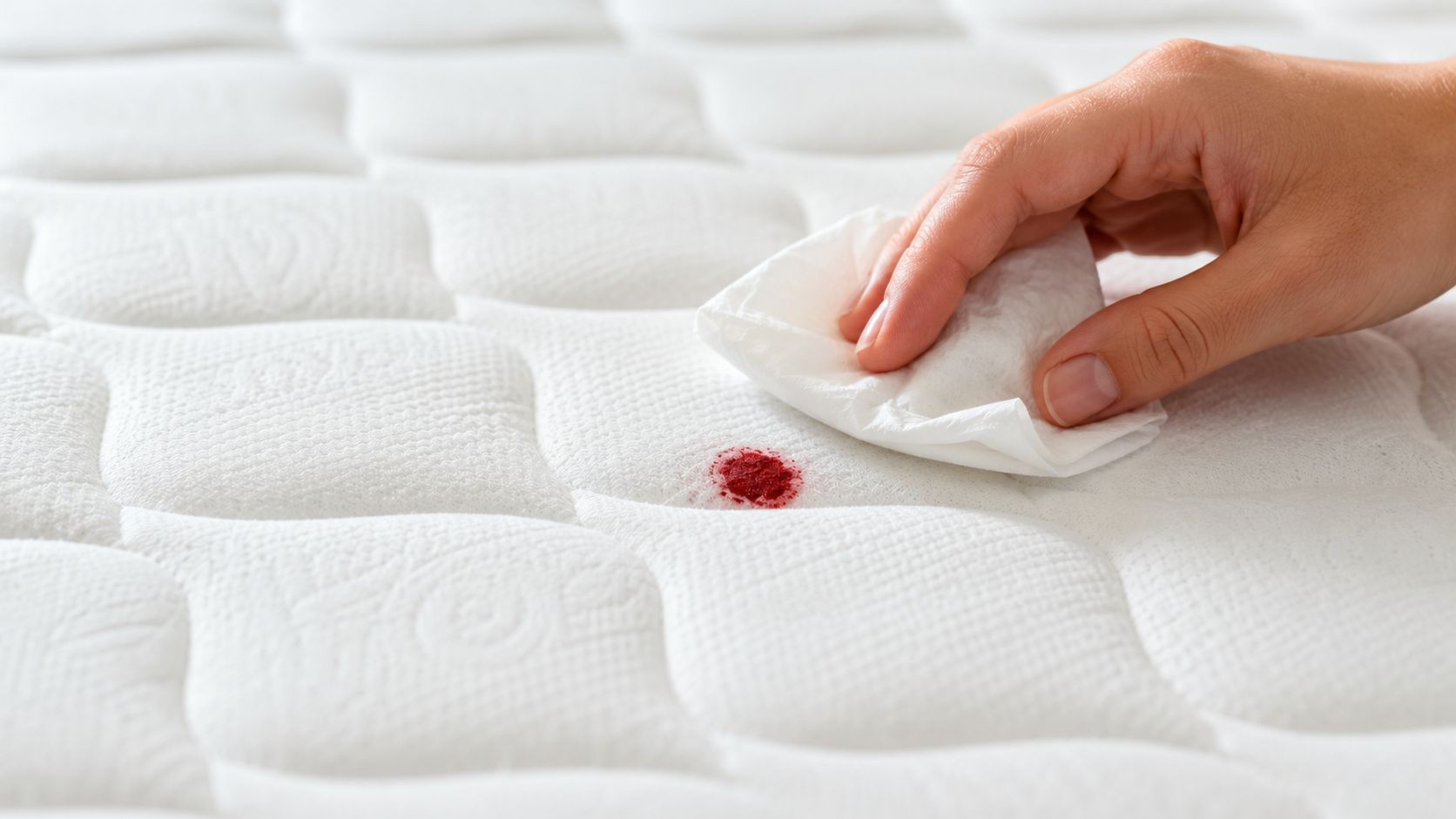
The first three things to do
- Strip the bed right away: Remove sheets, blankets, and the protector so you can see the full size of the spot and keep extra fabric from transferring blood back onto the mattress.
- Use cold water only: Cold water gives you the best chance of lifting fresh blood without setting it further into the fabric.
- Blot, don 't rub: Press with a white cloth or paper towel, then lift straight up. Switch to a clean area often.
Practical rule: Fast blotting with a small amount of cold water usually does more good than a strong cleaner used after the stain starts to dry.
If all you have nearby is paper towel, use it. A white towel or white rag is better if you have one, since colored fabrics can bleed onto a light mattress cover.
A common mistake in Reno rentals is overusing water. People pour enough on the spot to soak through the cover, then the blood wicks into the foam and the damp area spreads wider than the original stain. That creates two problems at once. The mark gets harder to fully remove, and the mattress can stay wet inside long after the surface feels dry.
That matters even more in local rentals and guest rooms. If you are trying to protect a deposit or get a room ready for the next guest, a faint ring or a lingering odor can still fail a close inspection.
If you are dealing with other household fabric spots too, our guide on how to get stains out of carpet explains why blotting and moisture control matter so much on absorbent materials. For other mattress accidents, including tackling urine and wine stains, the same principle applies. Control the moisture and treat the spot early.
What not to do in the first few minutes
- Don 't scrub: Scrubbing frays the fabric and spreads the stain outward.
- Don 't use hot water: Heat makes blood harder to remove.
- Don 't pour cleaner over a large area: Treat the spot, not the whole panel.
- Don 't keep layering product onto a wet mattress: Once the surface is saturated, stop and reassess before you drive the stain deeper.
Reno dust also sticks fast to damp fabric, so a small controlled treatment area is easier to clean and easier to dry. If the stain is large, already dried, or has gone through into the foam, DIY can still improve it, but that is where home methods often hit their limit.
Your Step-by-Step Guide to Blood Stain Removal
You get the best result by matching the method to the stain. Fresh blood responds to quick moisture control. Dried blood usually needs a slower spot treatment and a lighter touch than people expect.
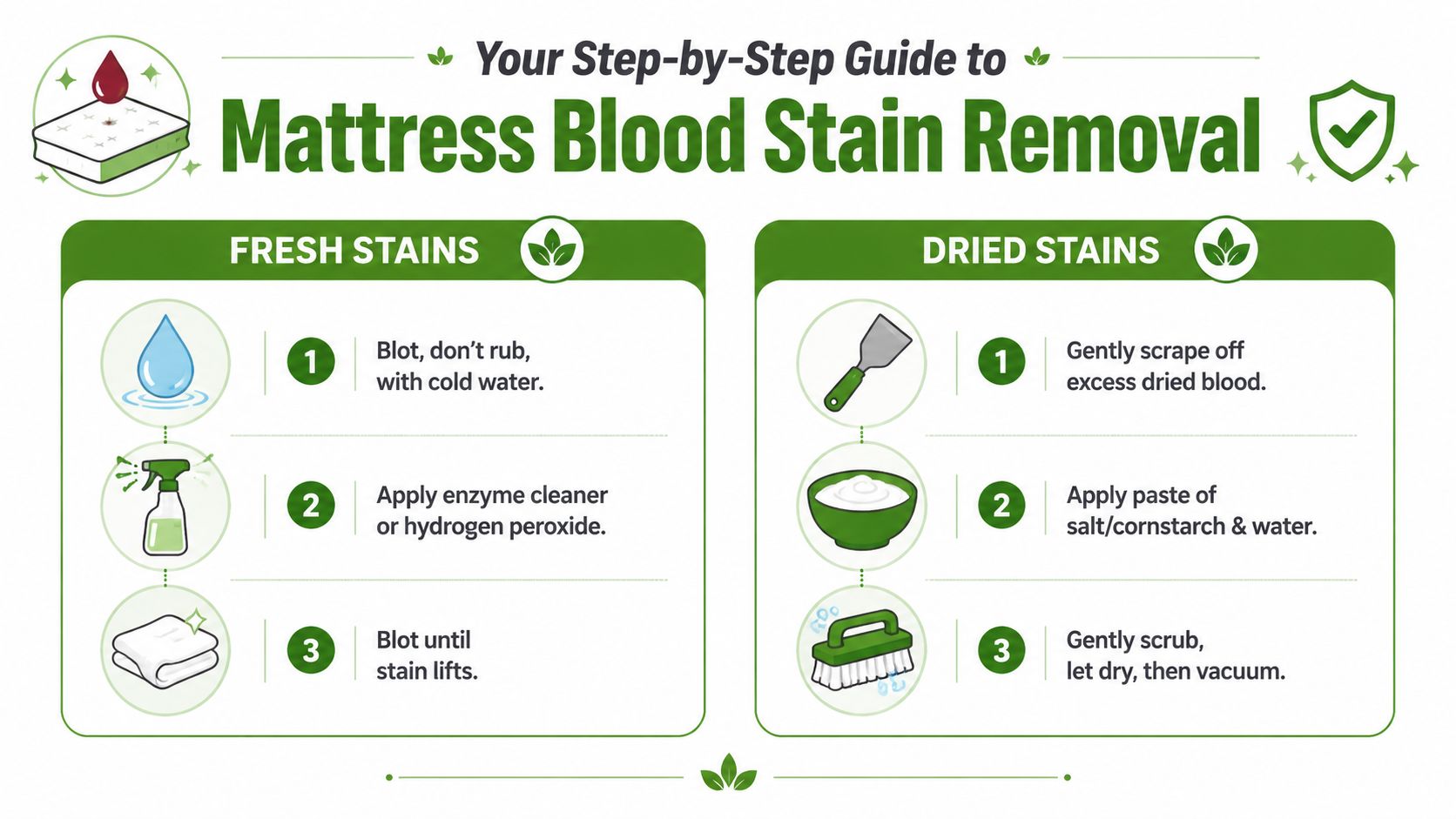
For fresh blood stains
Fresh stains are the most forgiving, but only for a short window. In Reno homes, the surface can dry fast enough to fool you into thinking the stain has stopped spreading. It has not. The fabric may look dry while residue is still sitting in the fibers below.
Start with a simple cold-water blotting method, following the same basic direction recommended in this mattress stain guide from MyBedFrames.
-
Blot from the outside in
Start at the outer edge and work toward the center. That keeps the stain from traveling into clean fabric. -
Use a cloth that is damp, not wet
Wet a white cloth with cold water and wring it out hard. The goal is controlled contact, not soaking the mattress. -
Press, hold, lift
Press the cloth onto the stain, let it absorb, then lift straight up. Rotate to a clean part of the cloth and repeat. A rubbing motion usually pushes blood deeper into the cover. -
Use baking soda only if a faint mark remains
Sprinkle a light layer over the treated spot and leave it in place until the surface feels dry, then vacuum it away. This can help pull up residual moisture and reduce a light shadow. -
Check the area only after it is fully dry
Blood often looks worse while the fabric is damp. Wait, then decide whether the stain needs another round.
What we see in Reno-Sparks homes
The most common mistake we see is treating a small fresh stain twice. Someone blots it once, leaves it alone for an hour, then comes back with a wetter towel, stronger product, and more pressure because the spot still shows. On a mattress, that usually creates a wider ring and drives more moisture into the padding.
That risk is higher in Reno's dry climate. The top panel dries quickly, so the stain looks stable before it is. In rentals, guest rooms, and move-out cleanups, that half-fixed look is what gets noticed.
If you are dealing with multiple soft surfaces in the same room, our guide on how to clean a sofa uses the same low-moisture approach that works better on upholstery and padded fabric.
Here is a helpful outside resource on tackling urine and wine stains if the mattress has more than one type of accident on it.
For dried or set-in blood stains
Dried blood is a different job. Water alone often will not do much once the residue has bonded to the fibers.
Use this order:
- Lift loose residue gently: If the stain has a dry crust, loosen it with a spoon edge or your fingernail. Keep the motion light so you do not rough up the mattress cover.
- Test a small hidden spot first: This matters with quilted tops, pillow-tops, and any fabric with dye variation.
- Apply a small amount of 3% hydrogen peroxide to the stain: Use a cotton swab or corner of a cloth, not a pour. Let it sit briefly, then blot. If the fabric lightens or the stain starts transferring, stop there and reassess.
- Use a paste when liquid control matters: A small paste made with peroxide, cornstarch, and salt can stay where you put it better than a spray. That makes it easier to treat the stain without wetting the surrounding panel.
- Blot clean and dry the area thoroughly: Once the stain lifts, remove residue with a barely damp cloth and let the mattress dry with airflow.
A visual walkthrough can help if you prefer to watch the process first.
Trade-offs to keep in mind
Peroxide can improve an old blood stain fast, but it can also affect some fabrics and finishes.
Vinegar is familiar and easy to find, but it still adds moisture. On thick foam or plush tops, extra moisture is often the bigger problem than the stain itself.
Paste treatments are slower, but they give better control. That is usually the safer choice on memory foam, pillow-top mattresses, and any bed you need to present clean for a landlord, buyer, or incoming guest.
If the stain has soaked through, has odor, or keeps reappearing as a ring after drying, DIY has probably reached its limit. At that point, a professional cleaning is usually the more reliable call.
The Right Tools for the Job and What to Avoid
The supplies matter, but control matters more. In Reno, blood can dry fast enough that a small mistake early, too much liquid, the wrong towel, hot water from the tap, can leave a bigger problem than the original spot.
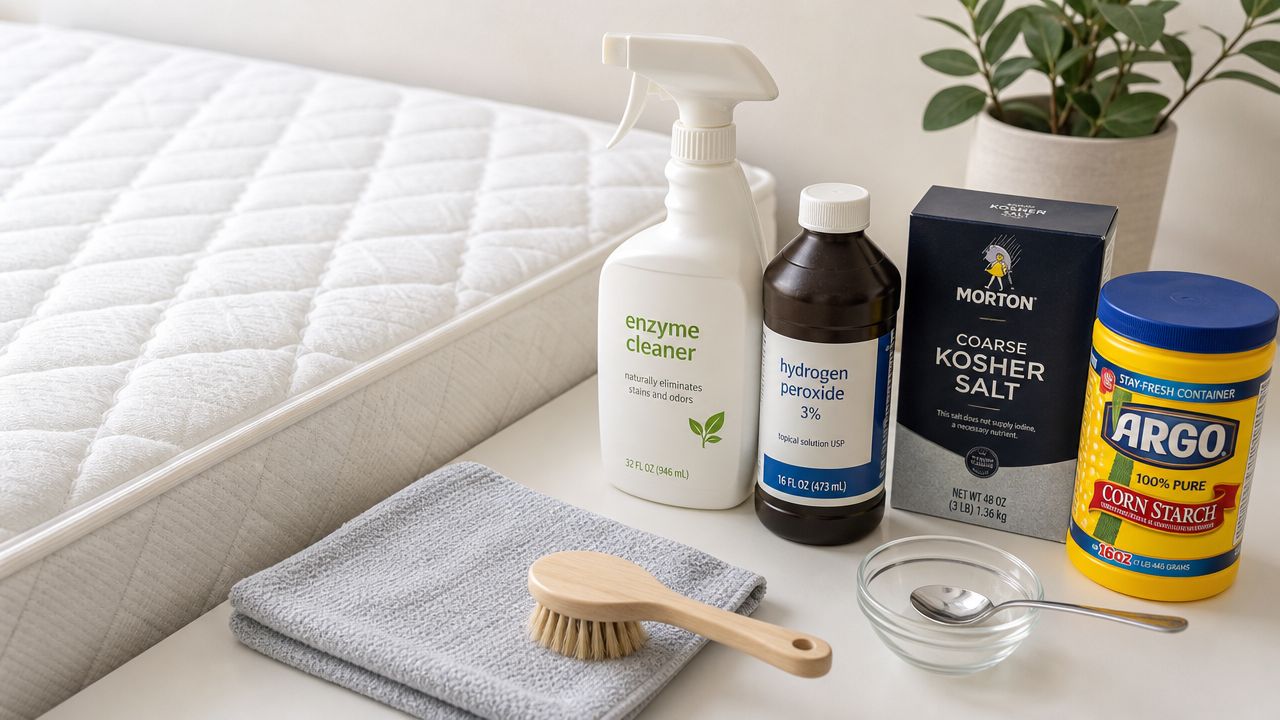
Start with tools that help you treat the stain without soaking the bed.
Use these
-
Cold water and white cloths
Cold water helps you work the stain without setting it further. White cloths also show exactly what is lifting, and they will not transfer dye onto light mattress fabric. -
Baking soda
Useful for light odor control and for absorbing a little surface moisture after spot treatment. It is a support tool, not the main stain remover. -
3% hydrogen peroxide
Best used on a small area with careful blotting. It can work well on blood, but it can also lighten some fabrics, so use it as a spot treatment only. -
Cornstarch and salt for paste treatments
A paste stays put better than a liquid. That makes it a safer option on pillow-tops, memory foam, and quilted covers where runoff can create a wider water mark. -
Enzyme cleaner
Often the better choice when the blood has dried and plain cold water is no longer doing much. Check the label first, because some products are better suited to upholstery than mattresses.
If you're comparing disinfecting products for other surfaces around the home, this article on the best disinfectant for specific surfaces gives useful context on where peroxide and alcohol fit.
For a broader rundown of practical household products, this cleaning supplies list is a good reference.
Avoid these
-
Hot water
Heat can push blood deeper into the fabric and make the stain harder to lift. -
Bleach
Bleach is too aggressive for many mattress covers and can leave discoloration that is more obvious than the original stain. -
Colored towels
Damp fabric can pull dye out of cheaper towels fast, especially on white or cream mattress panels. -
Heavy saturation
Mattresses are hard to dry all the way through. In Reno, the top may feel dry quickly because of the low humidity, while moisture stays trapped below the surface.
One warning I give renters all the time is simple. A mattress that looks dry is not always dry enough for bedding, storage, or a move-out inspection.
A local example that sticks with people
For example, we recently serviced a Wingfield Springs rental where a tenant had used hot water on a small blood spot because it seemed faster. The stain darkened, spread a little, and stayed visible in angled light. This is a common scenario in move-out cleanings, especially when someone tries to fix the problem in a hurry the night before a final walkthrough.
That is the trade-off with DIY work on a mattress. The right products can help, but the wrong method can leave a ring, a faded patch, or trapped moisture that becomes its own problem.
After any treatment, let the mattress dry fully with airflow before putting sheets back on. In Reno, the surface often feels dry sooner than it really is, so give the interior time too.
When to Call a Pro to Get Blood Out of a Mattress
You stripped the bed, treated the spot, and the mark is still there. In Reno, that happens fast. Our dry air can make a blood stain look stable on the surface while it sets deeper into the fabric, especially on mattresses that absorb quickly.
DIY has a clear limit. Once the stain is older, larger than a small spot, or sitting in a material that does not tolerate much moisture, the risk changes. At that point, people often spend more time and product chasing the stain than they would have spent getting it treated correctly the first time.

Situations where professional help makes sense
-
The stain has already set
Older blood usually needs repeated, controlled treatment. That raises the chance of lightening the fabric, leaving a ring, or pushing moisture too far down if the method is sloppy. -
The mattress is memory foam, pillow-top, or heavily padded
These materials hold liquid. The top can feel dry in Reno long before the inside dries completely. -
The stain spread beyond the surface
If blood soaked through the cover and into the fill, wiping the top is rarely enough. -
You need the mattress to look right for an inspection or guest stay
Reno and Sparks renters deal with tight move-out timelines. One visible stain can become a problem during a final walkthrough, even if the rest of the room is clean. -
You already tried a couple of treatments and the spot changed color
Once a stain turns into a stain plus a cleaning mark, the job gets harder.
What a good pro visit should include
A stain-focused service should be specific about what will happen, not vague about "seeing what comes out."
Typical scope includes:
- Assessment of stain age, fabric type, and depth
- Controlled stain treatment matched to the mattress material
- Blotting and extraction work to limit residue and excess moisture
- Drying guidance so the mattress is not put back into use too early
- A realistic outcome discussion if the stain is permanent or only partially removable
I tell Reno renters this all the time. If the mattress has to pass a landlord check, do not judge success from straight overhead lighting alone. Angled light often shows rings, shadowing, or texture changes that are easy to miss during a rushed late-night cleanup.
If you are weighing stain treatment against a larger reset before a walkthrough or turnover, this guide to professional house cleaning services explains when it makes sense to book broader help instead of patching one issue at a time.
A practical rule
Call a pro when the cost of a mistake is higher than the cost of the service. That includes set-in stains, expensive mattresses, foam construction, and any rental or guest situation where "good enough" is not good enough.
Our Simple Process and Transparent Pricing
When someone decides not to gamble on DIY, the next question is usually how the service works. It should be simple.
Schedule - Clean - Inspect - Enjoy
-
Schedule
Book online or call. You'll get a confirmation and an arrival window, so you're not stuck waiting around all day. -
Clean
Cleaners arrive with supplies and handle the stain with a checklist-based approach. That matters because mattress stains usually need restraint and sequence, not random product swapping. -
Inspect
After treatment, there's a quick quality check to make sure the work area is cleaned up properly and the next drying steps are clear. -
Enjoy
You return to a cleaner home and a mattress that's in much better shape, without the stress of second-guessing what product to try next.
Price range
Pricing depends on mattress size, stain severity, how set-in the blood is, fabric type, and whether this is part of a larger clean such as move-out or turnover service. Most homeowners request a custom estimate so the quote matches the actual scope.
For larger service visits, most cleans range from $150 to $450 depending on size, condition, and add-ons.
What affects the quote
A simple spot on an easy-to-access mattress is one thing. A stain on a heavily absorbent mattress inside a tight guest room with same-day turnover pressure is another.
Tight weekend scheduling in Reno and Sparks can matter too, especially when short-term rental hosts need fast turnaround before the next check-in.
Mattress Stain FAQs and Prevention Tips
A lot of Reno homeowners ask the same question after cleaning a mattress. "How long until we can use it again?" In our dry climate, the top fabric can feel dry fairly fast, but that does not mean the inside is ready. Foam, pillow-tops, and thicker quilting often hold moisture below the surface, so give it several hours and check for any cool or damp feel before putting sheets back on.
How long does a mattress take to dry in Reno
Dry air helps, but it can also fool you. Surface fabric dries first. The fill underneath takes longer, especially if too much liquid was used during spot treatment. Good airflow matters more than guessing, so open windows if conditions allow, run a fan, and wait until the mattress feels fully dry all the way through.
Can you treat blood stains on memory foam
Yes, but memory foam is easy to over-wet.
Use light blotting, small amounts of cleaner, and patience. If you soak foam, the stain can spread wider and the drying time jumps. That is where DIY jobs often get messier in Reno homes. The stain sets quickly in dry air, then the mattress stays damp underneath because too much solution went in.
Is the service discreet for Airbnb properties
Yes. Short-turn rentals in Midtown Reno, South Reno, and Northwest Reno often need quiet, fast service between guests. Clear arrival windows and simple access instructions help hosts fix the problem without adding more stress to turnover day.
Are supplies included
For professional service, they should be included. For DIY, keep a basic stain kit on hand with white cloths, cold water, baking soda, and a mattress-safe cleaner so you are not scrambling while the stain dries.
A waterproof mattress protector is still the cheapest way to avoid most mattress stain problems.
Prevention that helps
A few habits do more than people expect:
-
Use a quality mattress protector
This gives you a barrier that buys time and keeps a small accident from soaking into the core of the mattress. -
Check and treat stains the same day
In Reno, waiting until the next morning often means the spot has set deeper than it would in a more humid climate. -
Blot small spots early
A stain that is still near the surface is much easier to remove than one that has dried into the padding. -
Follow manufacturer care guidance
If you are not sure what your mattress fabric can handle, these product care instructions are a good reminder to check material limits before using any cleaner.
In Sparks and Reno, I see plenty of routine cleaning issues like pet hair, dust, and hard water residue. Mattress blood stains are different. They usually come with time pressure, embarrassment, or a move-out inspection hanging over the whole situation.
Fresh stains often respond well to careful DIY treatment. Older stains, larger spots, repeat accidents, and anything tied to a rental turnover or deposit deadline are better handled early by a pro. That call can save the mattress, or at least keep a bad spot from getting worse.