
10 Declutter House Tips for an Organized Reno Home
Explore 10 powerful declutter house tips to organize your space. Prep your Reno home for a more effective deep clean from Altitude Cleaning Crew.

TLDR: If you're looking for house cleaning Reno NV help after your place has filled up with extra stuff and the usual layer of dust, decluttering first helps the cleaning go much farther. These declutter house tips help Reno and Sparks homeowners clear the way so a deep clean can reach the surfaces, baseboards, vents, and corners that change how the home feels.
It’s Friday evening in Reno. You finally have a little time, the sun is still up, and you look around the house and realize the problem is bigger than a quick pickup. The counters are crowded, the floor edges are dusty, the guest room has turned into storage, and every flat surface is catching desert dust.
That kind of clutter does more than look messy. It blocks access to the places that hold grime and makes regular cleaning less effective. I see this all the time around Reno and Sparks, especially in homes getting ready for guests, a move, or a full reset after a busy stretch.
Decluttering sets up a thorough clean.
Once extra items are out of the way, it becomes much easier to wipe surfaces fully, vacuum edges, clean under furniture, and deal with the dust that keeps settling in our dry climate. That is the main point of this guide. Decluttering is not the finish line. It is the preparation that helps a professional deep clean deliver its full value.
If you want a home that feels calmer and looks spotless, do the sorting first. Then bring in Altitude Cleaning Crew to handle the detailed cleaning work that turns cleared space into a home that feels fresh the minute you walk through the door.
1. The KonMari Method Keep Only What Sparks Joy
Start with categories, not rooms. Clothes first, then books, papers, kitchen extras, and sentimental items last.
This approach works because it forces better decisions. Instead of asking, “Can I find a place for this?” you ask, “Do I want this in my life?” That’s a harder question, but it usually gets you to the right answer faster.
In Reno homes, I see this work especially well before a deep clean or move clean. Families clear out old jackets, duplicate mugs, extra bedding, and random garage overflow. Once that clutter is gone, cleaners can reach baseboards, closet floors, and corners that were blocked before.
How to do it without burning out
- Start with easy wins: Clothing is usually less emotional than paperwork or keepsakes.
- Pull everything together: Seeing all your black T-shirts or extra towels in one pile makes duplicates obvious.
- Build an exit lane: Set up one bag for donation and one for trash so removed items don't drift back inside.
Practical rule: Don't start with sentimental bins from the garage. Save those for when you've built momentum.
A short demo helps if you've never tried this method before:
One real trade-off. This method is effective, but it can be slow if every object turns into a debate. If that happens, switch from “joy” to “use plus fit.” If it doesn't get used and doesn't fit your current life, let it go.
2. The Four-Box Method Sort Donate Sell Discard
Saturday morning goes a lot better when every item has one job. Keep it, donate it, sell it, or discard it. That clear sort is what makes this method useful for busy Reno households that want visible progress before a real deep clean.
Set out four boxes or bins labeled Keep, Donate, Sell, and Discard. Start with one contained area, such as a bathroom cabinet, entry shelf, or junk drawer. Pick up each item once, decide, and drop it in the right box.

I like this method before a professional cleaning appointment because it clears the surfaces and floor space that slow a crew down. If extra pantry goods, old décor, garage overflow, or piles by the laundry room are still sitting out, cleaners spend time working around them instead of scrubbing what you want cleaned. Less clutter means better access to baseboards, corners, closet floors, and the dusty spots that collect fast in our dry Reno air.
The trade-off is simple. This method is fast, but it can create four new piles if you stop halfway.
Where people get stuck
The usual problem comes after the sorting session, not during it. Full boxes sit in the garage, donation bags stay in the trunk for weeks, and sell items turn into a second layer of storage.
- Put a deadline on sell items: If you will not list it within a few days, donation is often the better choice.
- Remove donations quickly: Schedule drop-off, request a pickup, or load the car the same day.
- Be strict with the keep box: If nearly everything stays, the house will still feel crowded and cleaning will still take longer.
- Bag discard items right away: Broken, stained, or unusable items should leave the house, not move to another corner.
Sorted boxes are progress. Removed boxes are results.
This approach also helps with the final cleaning result. Once the extra stuff is gone, a deep clean has room to matter. Counters can be fully wiped down, closet floors can be vacuumed, and furniture can be moved without bumping into stacks you meant to deal with later. That is where decluttering stops being its own project and starts paying you back with a home that can get spotless.
3. The One-Year Rule The Time-Based Decision Strategy
You open a hall closet to grab one thing, and a half-used cooler, old blankets, a box of cables, and three tote bags slide forward. The one-year rule helps in spots like that because it gives you a simple test. If you have not used an item in the last year, it needs a specific reason to stay.
This method works well for the categories that gradually fill a house. Kitchen gadgets, hobby supplies, spare linens, guest dishes, backup decor, old electronics, and duplicate tools are common examples. The rule cuts through indecision because it shifts the question from "Could I use this someday?" to "Why is this taking up clean, usable space right now?"
That trade-off matters. Keeping rarely used items means more to move, more surfaces blocked, and more places for Reno dust to settle.
Good exceptions to the rule
A one-year test is useful, but it is not rigid. Some things earn their storage space even with occasional use.
- Keep true seasonal gear: Holiday decor, snow gear, coolers, and emergency supplies may sit for months and still make sense.
- Keep occasional-use necessities: Guest bedding, a suit, a serving platter, or an air mattress can stay if you need them when the moment comes.
- Cut duplicates before rare essentials: Extra water bottles, repeat utensils, backup pans, and mystery cords are usually easier decisions than the one formal item you use twice a year.
A practical Reno example helps. If the bread maker, waffle iron, and oversized stockpot have not come out in years, they are probably costing you more in cabinet space than they return in convenience. In our dry climate, crowded shelves and overstuffed cabinets collect grit fast, and every extra item gives dust one more place to sit.
I tell homeowners to pair this rule with a quick reality check. Would you notice if this item disappeared for another six months? If the answer is no, donation or removal is usually the better call.
The payoff is bigger than a neater closet. Once low-use items are out of the way, cleaning becomes more thorough because floors, shelf corners, and closet edges are easier to reach. If you want a practical order for what to clean after you finish sorting, this room-by-room cleaning checklist helps turn a decluttered space into a properly clean one.
That is the point of this method. Decluttering is the setup. A deep clean does the finishing work, and it lands better when your home is no longer packed with things you do not use.
4. The Room-by-Room Approach Methodical Spatial Organization
Some people hate category-based decluttering. If that's you, go room by room and finish one space before touching the next.
This works well when the home is actively lived in and you need visible progress without tearing the whole place apart. Start with the room that gives the biggest daily payoff. Usually that's the main bedroom, living room, or kitchen.
Finish the room, then clean the room
A room-by-room method works best when you treat each room as a full cycle. Declutter it, organize what stays, then clean what's exposed.
That sequence matters because clutter drives a surprising amount of cleaning frustration. According to decluttering and cleaning data compiled here, clutter can eliminate 40% of housework when removed. You feel that immediately when floors are open and surfaces are no longer covered.
If you want a practical order for tackling spaces, this room by room cleaning checklist gives a useful structure after the sorting is done.
If a room isn't done, don't call it organized just because the piles got moved into matching baskets.
One caution. This method can create “almost finished” rooms all over the house. Don't leave donation bags in the hallway or keep box overflow in another bedroom. Completion means the room is usable again.
5. The 80/20 Rule Focus on High-Impact Items
Saturday gets away from people fast in Reno. You start with good intentions, then the counters are still crowded, the garage is half-blocked, and guests or cleaners are due in a few hours. The 80/20 rule helps because it puts your effort where it changes the house most.
Focus on the small share of items creating most of the mess, the visual weight, and the cleaning obstacles. In practice, that usually means oversized pieces, duplicate stuff, and anything sitting out in the open collecting dust.
This approach works well before a deep clean. Clearing the highest-impact clutter first gives cleaners better access to baseboards, floors, corners, and surfaces that usually stay partly blocked. That means better results for the time you are paying for, which is the whole point.
What to target first
- Flat surfaces that attract daily pileups: Kitchen counters, dining tables, nightstands, coffee tables, and the drop zone by the front door.
- Large items with low value: Extra chairs, unused side tables, broken storage racks, outgrown gear, and bulky appliances that live on the counter.
- Duplicates you keep buying around: Water bottles, mugs, reusable bags, cleaning sprays, baskets, and random charging cables.
- Garage and entry overflow: Sports gear, half-used paint, donation bags that never left, and boxes pushed against the wall "for now."
Take a photo before you start. I use that trick myself because a camera spots crowding faster than your brain does after months of walking past it.
Garages are a strong example. Once floor space gets swallowed up, dust, leaves, and loose debris build up around everything, and cleaning turns into moving piles instead of scrubbing. Around Reno and Sparks, that problem gets worse when wind kicks grit through the garage every time the door opens.
If you need a place to relocate what stays, these smart storage ideas for small and crowded spaces can help without turning the house into a maze of bins.
One trade-off to keep in mind. Fast visual wins can make hidden clutter easier to ignore. If you clear the counters but stuff the same mess into one hall closet, the house looks better for a day and cleans better for about five minutes. Use the 80/20 rule to open the home up first, then finish by removing, donating, or storing the rest with intention.
If an item blocks cleaning access in a high-use space, it deserves attention before the low-visibility stuff in the back of a drawer.
6. The Vertical Storage Strategy Maximize Usable Space
Sometimes the problem isn't what you own. It's where it's living.
When floors, counters, and entry benches are overloaded, vertical storage can buy back breathing room without making the house feel stripped down. Think wall shelves, pegboards, over-door organizers, hooks, and shelf risers inside cabinets.
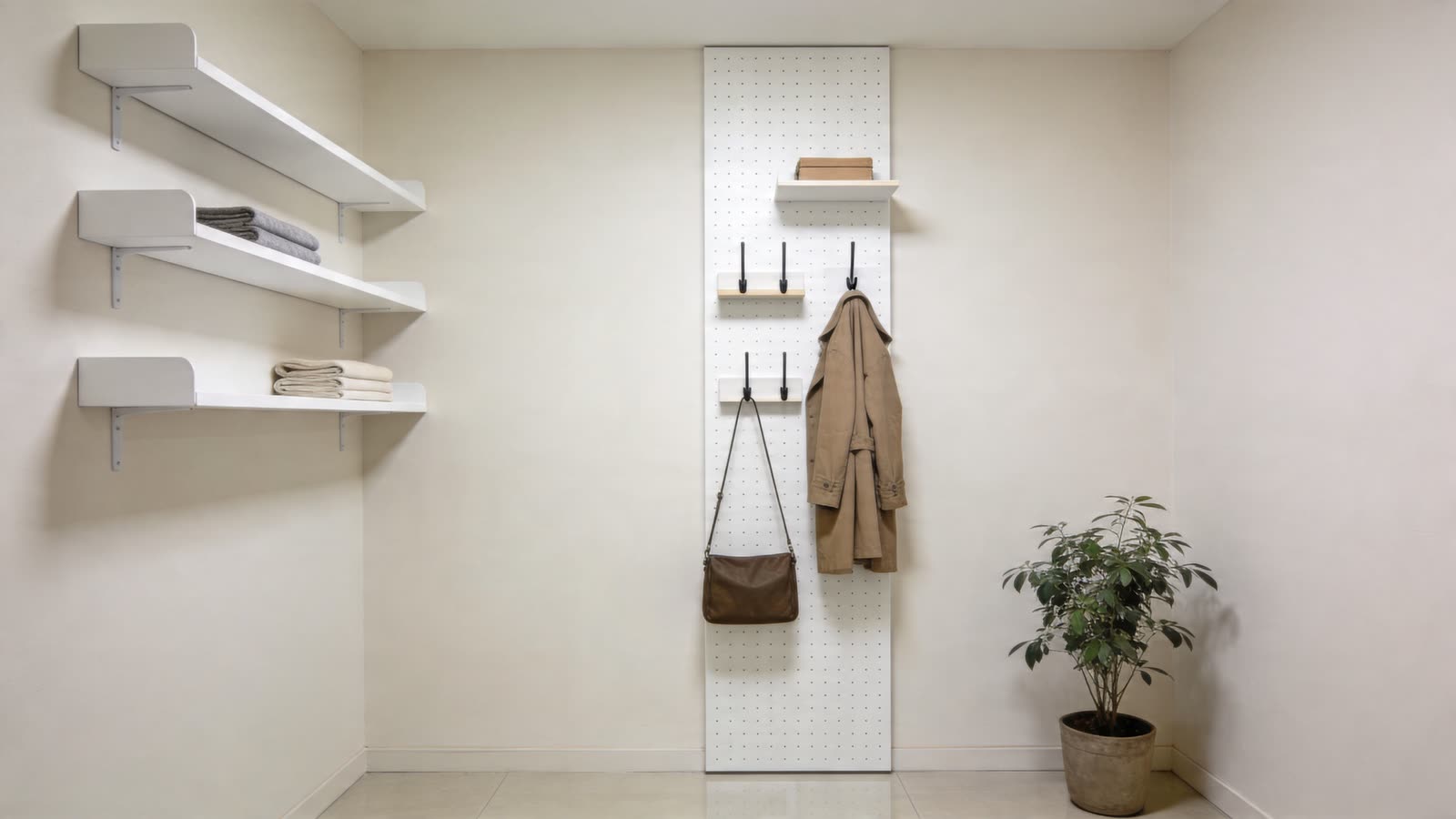
Renters in Sparks use this especially well because it helps without requiring a remodel. A narrow entry can hold backpacks and dog leashes on hooks. A pantry can work better with stacking shelves. A laundry room can handle supplies better with wall-mounted racks instead of floor baskets.
Use vertical storage carefully
Vertical systems work when they reduce clutter, not when they create a prettier version of it.
- Anchor shelves securely: Drywall and overloaded brackets don't mix.
- Store by frequency: Daily-use items should stay easy to reach.
- Leave visual breathing room: If every inch of wall gets filled, the room still feels crowded.
For more ideas that work in smaller homes, condos, and rentals, this guide to smart storage ideas is a good next step.
The trade-off is simple. Vertical storage helps organized homes. It doesn't rescue overfilled homes. If you install shelving before editing your stuff, you'll just create more places to hide clutter.
7. The Donation and Recycling Strategy Sustainable Removal
Saturday afternoon in Reno, the trunk is half full of donation bags, a broken lamp is still by the garage wall, and the cardboard from last month's delivery is picking up dust. That kind of half-finished decluttering stalls out fast. Items leave the room, but they do not leave the property.
A good donation and recycling plan fixes that. It turns "I should deal with this later" into a routine that clears space for a real reset. That matters because decluttering is only the setup. Once extra stuff is gone, floors, baseboards, corners, and hidden dust are finally easier to reach. That's when a deep clean delivers the full result instead of cleaning around leftovers.
A practical removal routine
- Keep one donation bin active: A single tote in a closet, mudroom, or laundry area keeps decisions contained.
- Sort by destination: Donations, e-waste, paper recycling, and trash should not end up in one mixed pile.
- Set a drop-off deadline: If the bag sits for weeks, it becomes storage again.
- Use local resale only for worthwhile items: A solid dresser or clean appliance may be worth listing. A $10 side table usually is not worth three no-shows and a clogged garage.
The trade-off is time. Selling can bring in some cash, but donation is often the better choice if your real goal is to get the house clear and clean this week.
This strategy helps after kids outgrow gear, after a remodel, or before a move-out clean. Removing boxes, old electronics, unused kitchen extras, and worn linens opens up the surfaces professional cleaners need access to. Better access means better results.
Around Reno, do not let donation bags sit in the garage too long. Desert dust settles into fabric, cardboard, and open bins quickly. By the time you are ready to load the car, clean items can look forgotten.
8. The Capsule Living Approach Intentional Minimalist Selection
Saturday morning gets a lot easier when you open a kitchen cabinet and see only the dishes you use, or when a bedroom shelf has a few pieces you like instead of twenty things collecting dust.
A capsule approach trims your home to the items that earn their space. Keep the best version of what gets used every week. Fewer plates, better towels, a smaller set of throw blankets, fewer decor pieces, and fewer half-used backup products under the sink. That kind of editing cuts visual noise and makes everyday cleaning faster.

This works especially well for busy households, smaller Reno homes, and short-term rentals. Guests should not have to dig through crowded drawers to find one extra towel. Homeowners should not have to dust around a wall of small decorative objects every weekend.
What capsule living changes
A simpler setup helps a room stay calmer and cleaner. Counters clear faster. Shelves wipe down faster. Closets stop jamming. The whole house feels easier to reset after a long week, especially when desert dust keeps sneaking in through windows, door gaps, and garage traffic.
Keep enough to live well. Keep the extras from taking over your surfaces.
The trade-off is personal. Capsule living asks you to choose what supports your life now instead of storing every possible backup. If you love collections, keep the pieces you enjoy and display them well. The rest can be stored carefully, rotated, or let go.
This is also where decluttering starts paying off in a deeper clean. Once shelves, nightstands, bathroom counters, and closet floors are no longer crowded, a professional team can reach the dust, edges, and buildup hiding underneath. If you want a good seasonal reset before that happens, these spring cleaning tips and tricks for a full-home refresh can help you prep the space so a deep clean delivers the full result.
9. The Seasonal Rotation System Manage Seasonal Items Efficiently
Reno homes do better when seasonal gear has a real plan.
Boots, snow jackets, ski layers, patio cushions, holiday bins, pool gear, fans, extra blankets. If all of it stays out year-round, closets and garages turn into choke points. Then cleaning around those spaces becomes a chore people keep putting off.
A simple rotation system works. Keep only the current season accessible. Everything else goes into labeled bins with clear categories. Winter gear together. Summer outdoor gear together. Holiday décor by holiday, not in one giant mixed tote.
Where to store and when to switch
- Use clear labels: “Guest bedding,” “December lights,” and “snow gloves” beat mystery bins.
- Pick one switch date each season: Calendar reminders help more than good intentions.
- Clean before storage: Don't pack away dusty or dirty items.
Spring is a great time to reset this whole system. If you need a starting point for what to rotate and what to clean during that transition, these spring cleaning tips and tricks can help you map it out.
One practical note for our area. Wildfire ash season, wind, and dry air make open garage storage rough on fabrics and soft goods. Sealed bins beat loose bags every time.
10. The Digital Decluttering Integration Reduce Physical Item Triggers
Saturday morning in Reno often starts the same way. A stack of mail on the counter, a warranty packet stuffed in a drawer, school papers on the fridge, and a receipt you kept because it might matter later. None of that looks major on its own. Together, it crowds the surfaces a cleaner needs to clean.
Digital decluttering solves a specific problem. It reduces the paper and reminder clutter that keeps showing up in the same spots, even after you tidy. Less paper on counters, desks, and entry tables means less shuffling piles around and more time spent getting those areas clean.
Start with documents that cause repeat clutter:
- Home documents: warranties, appliance manuals, insurance papers, and contractor receipts
- Personal records: tax documents, school forms, pet records, and vehicle paperwork
- Reference items: takeout menus, instruction booklets, and printed schedules that work better on your phone
Use a simple system you will stick with. Scan documents, name files clearly, and save them in folders by category, year, or household member. Adobe Scan, Dropbox, Google Drive, OneDrive, and Evernote Scannable all handle this well. The best tool is the one you will open next month.
Keep the trade-off in mind. Not every paper should be tossed after scanning. Original legal documents, certain tax records, signed contracts, and anything your accountant, insurer, or attorney wants in hard copy should stay filed in one secure place.
The payoff shows up fast. Counters stay clearer. Kitchen desks stop acting like paper graveyards. Entry tables collect less junk, which matters before a deep clean because crews can spend more effort on dust, baseboards, and buildup instead of working around stacks of paper.
Digital decluttering does not replace physical decluttering. It supports it. For Reno homeowners dealing with dust that settles fast, fewer paper piles also means fewer places for grit to collect. Clear the triggers first, then a professional deep clean from Altitude Cleaning Crew can reach the surfaces that make the whole house feel finished.
10 Decluttering Strategies Compared
| Method | 🔄 Implementation complexity | ⚡ Resource requirements | ⭐ Expected outcomes | 📊 Ideal use cases | 💡 Key tips |
|---|---|---|---|---|---|
| The KonMari Method: Keep Only What Sparks Joy | High, structured, emotionally intensive process | Medium, time blocks and emotional energy; low material cost | High, lasting behavior change, less re-cluttering | Individuals seeking permanent lifestyle change; sentimental-item decisions | Start with clothing; finish one category; schedule post-declutter cleaning |
| The Four-Box Method: Sort, Donate, Sell, Discard | Low, simple, rule-based workflow | Low, boxes and short time investment; selling adds effort | Medium‑High, quick clearance and clear action steps | Move-outs, rental turnovers, fast refreshes before cleaning | Label boxes; set deadlines; use online marketplaces |
| The One-Year Rule: The Time-Based Decision Strategy | Low, single, objective rule to apply | Low, requires tracking dates or memory prompts | Medium, removes "just in case" items, frees space | Busy professionals; seasonal item review; pre-move purging | Date items; keep exceptions list; review seasonally |
| The Room-by-Room Approach: Methodical Spatial Organization | Medium, sequential, requires planning per room | Medium, sustained time over weeks; manageable per session | High, visible progress and motivation, room-level completion | Whole-house projects, families, staged cleanings | Start with highest-impact room; set timelines; use before/after photos |
| The 80/20 Rule: Focus on High-Impact Items | Low, assessment-based, quick prioritization | Low, minimal tools; focused effort on major items | High, dramatic visual improvement with less work | Busy people and hosts needing fast wins before cleaning | Photograph space; remove large/duplicate items; clear surfaces first |
| The Vertical Storage Strategy: Maximize Usable Space | Medium, planning and installation required | Medium‑High, shelving/hardware costs; possible permissions | High, increases usable space and reduces floor clutter | Small homes, apartments, rentals (with permission) | Invest in secure shelving; use pegboards and vertical dividers |
| The Donation and Recycling Strategy: Sustainable Removal | Low‑Medium, coordination with charities and recyclers | Medium, transport, scheduling pickups, documentation | Medium‑High, sustainable disposal and community benefit | Eco-conscious declutters, move-outs, furniture removal | Research local charities; schedule pickups; keep donation receipts |
| The Capsule Living Approach: Intentional Minimalist Selection | High, major upfront curation and habit change | Medium, time investment; may need higher-quality replacements | High, serene, low-maintenance living with fewer choices | Individuals seeking long-term minimalism; small-space living | Adopt one-in/one-out; prioritize versatile, quality pieces |
| The Seasonal Rotation System: Manage Seasonal Items Efficiently | Medium, system setup and periodic rotation | Medium, storage containers and accessible storage space | Medium‑High, reduced active clutter and preserved items | Families with seasonal gear, rentals, holiday storage | Use clear labeled bins; keep inventory; store climate‑appropriate |
| The Digital Decluttering Integration: Reduce Physical Item Triggers | Medium, scanning and digital organization setup | Medium, scanner/apps, cloud storage subscription, initial time | High, less paper clutter; searchable, backed-up records | Homeowners with paperwork, property managers, renters | Use scanning apps; mirror physical folders digitally; schedule backups |
Your Decluttered Home is Ready for a Professional Shine
If you've worked through even a few of these declutter house tips, you've already done the hardest part. You've made decisions. You've cleared space. You've probably found a few things you forgot you owned and a few things you wish you'd let go of sooner.
Now the home is ready for the part people want. The clean finish.
Decluttering changes access. Professional cleaning changes the feel of the house. Once floors are open and surfaces are cleared, a cleaner can get to the edges, baseboards, cabinet fronts, vents, mirrors, bathrooms, and kitchen grime that clutter used to block.
That's the difference between a home that looks a little better and one that feels reset.
For homeowners and property managers searching for house cleaning Reno NV services, this is usually the moment they decide not to do the last stretch alone. It makes sense. After sorting, hauling, donating, and reorganizing, they are often reluctant to spend the rest of the weekend scrubbing baseboards or degreasing the oven.
That final clean is where Altitude Cleaning Crew fits in, especially for homes in Reno and Sparks dealing with:
- Desert dust buildup: Fine dust settles on shelves, vents, sills, and baseboards fast.
- Tracked-in grime: Weekend errands, pets, and dry conditions can make floors look dirty again in no time.
- Move and turnover pressure: When a property has to be inspection-ready or guest-ready, speed matters.
What's included in a deep cleaning visit
- Bathrooms: Toilets, tubs, showers, sinks, counters, mirrors, and fixture wipe-downs
- Kitchen degrease: Counters, exterior cabinet surfaces, sinks, stovetop areas, and appliance exteriors
- Floors: Vacuuming and mopping across main living areas and bedrooms
- Dust removal: Shelves, accessible surfaces, and common dust-catching zones
- Baseboards: Detailed wipe-down in the areas that need that extra reset
- High-touch disinfecting: Switches, handles, and touchpoints throughout the home
Optional add-ons
- Inside oven
- Inside fridge
- Inside cabinets
- Wall spot cleaning
- Pet hair focus areas
Schedule Clean Inspect Enjoy
Book online or call. You'll get a confirmation and arrival window, and the cleaners arrive with supplies and equipment ready to go.
They follow a checklist-based clean based on your service level and priorities. After the work is done, there’s a quick quality check so you can return to a home that feels spotless, calm, and easier to keep that way.
Most cleans range from $250 to $650 depending on size, condition, and add-ons.
Micro-FAQ
How long does it take?
It depends on the home's size, condition, and how much detail work is needed after decluttering.
Are supplies included?
Yes. Altitude Cleaning Crew arrives with supplies and equipment.
Can you handle wildfire ash dust?
Yes. Reno-area homes often need extra attention during dusty and smoky stretches, especially on vents, sills, and horizontal surfaces.
Can I book around a busy weekend schedule?
Yes, but it's smart to book early. Reno traffic and packed weekends can make last-minute timing tighter than people expect.
If you've cleared the clutter, don't stop short of the part that makes the whole home feel finished. Book your cleaning with Altitude Cleaning Crew - your trusted house cleaning Reno NV provider in Reno. Call 775-376-5527 or book online - https://altitudecleaningcrew.fieldd.co/
Altitude Cleaning Crew provides dependable house cleaning in Reno, NV for homeowners, renters, and property managers who want clear communication, solid systems, and consistently clean results. If your declutter project is done and you want the home professionally finished, Altitude Cleaning Crew is ready to help.