Commercial Building Cleaning in Reno & Sparks
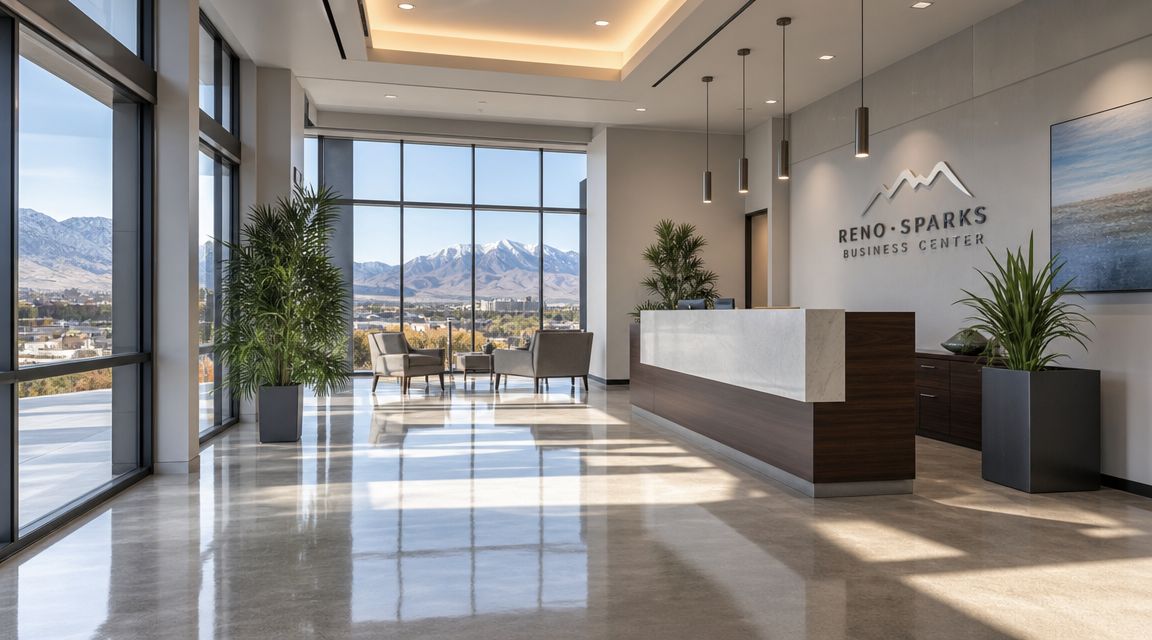
If you're looking for commercial building cleaning in Reno & Sparks, you're probably not trying to learn what a mop is. You're trying to keep a property presentable, cut tenant complaints, and stop the cycle where the building technically gets cleaned but still looks dusty by noon.
That matters more in Reno-Sparks than a lot of out-of-town vendors realize. Desert wind, hard water, wildfire ash, tracked-in grit, and uneven foot traffic all change what a workable cleaning plan looks like.
- Commercial building cleaning in Reno & Sparks needs to match local conditions. Fine dust settles fast on ledges, entry floors, vents, and baseboards, especially after windy weeks.
- The biggest issues usually aren't the obvious ones. A lobby may look fine at first glance while restroom fixtures, interior glass edges, and breakroom floors are diminishing the property's overall appeal.
- A reliable schedule beats a generic checklist. High-traffic entries, corridors, elevators, and shared-touch surfaces usually need more attention than private offices.
- Good commercial cleaning protects operations, not just appearance. The global cleaning services market is projected at USD 451.63 billion in 2025 and USD 859.20 billion by 2034, with North America as the largest market, which shows how essential cleaning is to normal business operations, not treated as an occasional extra, according to Fortune Business Insights on the cleaning services market.
Keeping Your Reno Commercial Property Clean and Profitable
A common Reno property management problem looks like this. The trash gets pulled, restrooms are serviced, floors get touched up, and yet the building still feels off. Tenants notice dust on ledges near the front glass, footprints keep showing at the entry, and the breakroom sink has that mineral film that makes a space look neglected even when it isn't.
That's usually not a labor problem first. It's a scope problem, a frequency problem, or a local-conditions problem.
In this market, commercial building cleaning isn't just about whether a crew showed up. It's about whether the plan accounts for high-desert dust, hard water, weather swings, and the fact that some zones get hammered all day while others barely change from one week to the next.
What property managers usually need
- Consistent appearance at the front. Entrances, lobbies, and shared hallways shape tenant and visitor perception faster than any back-office area.
- Restrooms that don't show buildup early. In Reno-Sparks buildings, mineral spotting on faucets and partitions can make a recently cleaned restroom look older than it is.
- Less rework and fewer callbacks. If the same complaints keep coming up, the issue is often poor task weighting, not effort.
- A cleaning partner who documents the actual scope. Buildings with mixed flooring, multiple entrances, or tenant-specific needs almost always need more detail before pricing.
Clean buildings don't stay clean by accident. Someone has to decide what gets cleaned daily, what gets cleaned on rotation, and what gets checked before small misses turn into recurring complaints.
For local managers in Sparks, South Reno, Midtown, Damonte Ranch, and the nearby submarkets, the practical question isn't whether to clean. It's how to build a service plan that holds up under real occupancy, weather, and landlord expectations.
What Commercial Cleaning Really Means in the High Desert
A basic janitorial service can empty bins, wipe surfaces, and vacuum the obvious areas. That helps. But in the Reno-Sparks corridor, that level of service often misses the things that make a building feel neglected by the end of the day.
Commercial building cleaning in the high desert has to deal with fine airborne dust, grit at entry points, hard water spotting in restrooms and break areas, and seasonal mess from smoke, ash, snow, or mud. If a provider treats every room the same and every floor the same, the property usually ends up with clean-looking corners and tired-looking main paths.
What we see in Reno-Sparks buildings
A Field Note From Our Crew
In Midtown offices, dust often builds first on upper ledges, door frames, and the edges of exposed fixtures where people don't look until sunlight hits them. In South Reno and Damonte Ranch retail restrooms, hard water film on chrome and glass can make a clean room look unfinished. In Sparks industrial and flex spaces, entry grit gets ground into flooring fast if the front zone isn't serviced more often than the rest of the suite.
Those aren't cosmetic side notes. They're the difference between a building that feels maintained and one that starts collecting complaints.
What effective service looks like here
A practical commercial cleaning program in this area usually includes:
- Traffic-based attention. Entry mats, vestibules, front halls, and elevator approaches need more frequent service than low-use offices.
- Touch-point focus. Handles, switches, rails, buttons, and shared breakroom surfaces need tighter routines than low-contact surfaces.
- Water-aware restroom cleaning. Restroom work has to account for mineral residue, not just visible splash marks.
- Dust control, not just dust movement. The wrong tools can scatter fine dust instead of removing it.
Property managers comparing vendors sometimes find it useful to look at how firms in other regions talk about floor-sensitive work and service scope. A practical example is this roundup on commercial cleaning services East Meadow, especially if you're evaluating providers that will be working around mixed flooring and finish-sensitive surfaces.
For local managers dealing with recurring dust complaints inside tenant suites, this guide on how to prevent dust in house is residential-focused but still useful for understanding why dust keeps returning to ledges, vents, and trim in dry climates.
A Breakdown of Commercial Cleaning Services and Checklists
Property managers usually don't need "cleaning." They need the right mix of recurring work, detail work, and problem-specific service. The fastest way to get a usable quote is to separate those categories clearly.

Daily and recurring janitorial
This is the backbone for occupied office buildings, medical-adjacent spaces, retail storefronts, and common areas in multi-tenant properties.
What's included
- Trash and liner service for offices, common areas, and breakrooms
- Restroom cleaning and restocking checks with attention to sinks, counters, partitions, fixtures, and floors
- Vacuuming and floor care in traffic lanes and visible presentation areas
- Surface wiping on desks, counters, reception areas, and shared-touch zones as specified
- Entry cleanup for glass smudges, tracked-in grit, and lobby presentation
- Breakroom reset including counters, sink areas, exterior appliance wipe-downs, and floor touch-up
This category works best when the provider knows which spaces need daily attention and which can run on a lighter rotation.
Deep cleaning
Deep cleans are where a lot of neglected commercial spaces finally get back under control. This is especially useful after tenant complaints, before owner visits, after seasonal dust buildup, or when a standard janitorial plan hasn't been detailed enough.
What's included
- Baseboard and edge detailing where dust collects and gets missed during routine vacuuming
- Interior glass and ledge cleaning for visible dust, fingerprints, and ash residue
- Hard water spot removal focus on faucets, sinks, shower areas if applicable, and restroom fixtures
- High dusting on vents, frames, tops of partitions, and less-accessed horizontal surfaces
- Cabinet and fixture exterior wipe-downs in breakrooms, suites, and service areas
- Detailed floor edge work around corners, under furniture edges, and along walls
A practical checklist reference for structuring that kind of detailed scope is this cleaning checklist for maid service. It's written for residential work, but the logic of breaking tasks into recurring versus detail-level work carries over well when managers are trying to scope a commercial reset.
Here's a visual walkthrough that helps illustrate the difference between basic and more detailed service:
Post-construction cleaning
New construction and remodel cleanup in places like Somersett, Spanish Springs, and South Reno often looks easy until the fine dust starts reappearing on every horizontal surface. Post-construction cleanup isn't standard janitorial work.
What's included
- Fine dust removal from window tracks, ledges, trim, vents, and hard-to-see shelf areas
- Sticker, residue, and surface prep cleanup on fixtures, glass, and finished materials where appropriate
- Detailed floor cleaning to remove grit that can scratch or dull surfaces
- Cabinet and interior surface wipe-downs where construction dust has settled
- Touch-point cleanup around doors, switches, hardware, and newly installed fixtures
Floor care and windows
Some buildings don't need more general cleaning. They need better floor presentation or interior glass maintenance.
What's included
- Hard floor damp mopping and detail edge work
- Carpet vacuum focus in traffic paths
- Interior window and partition glass cleaning
- Entry area cleanup where dust and footprints show first
For managers comparing indoor janitorial work with exterior presentation needs, this piece on Water Works Power Washing expertise is useful context. Exterior walkways, entries, and storefront approaches often affect how people judge indoor cleanliness before they even step inside.
Restroom sanitation
Restrooms are where minor misses become major complaints.
What's included
- Toilet, urinal, sink, and counter cleaning
- Mirror polishing and fixture wipe-downs
- Partition spot cleaning
- Floor attention around corners and bases
- Supply checks and visible presentation reset
In Reno-Sparks, hard water can make restroom maintenance look inconsistent unless the crew is trained to target mineral film, not just surface soil.
Building a Smart Cleaning Schedule for Your Property
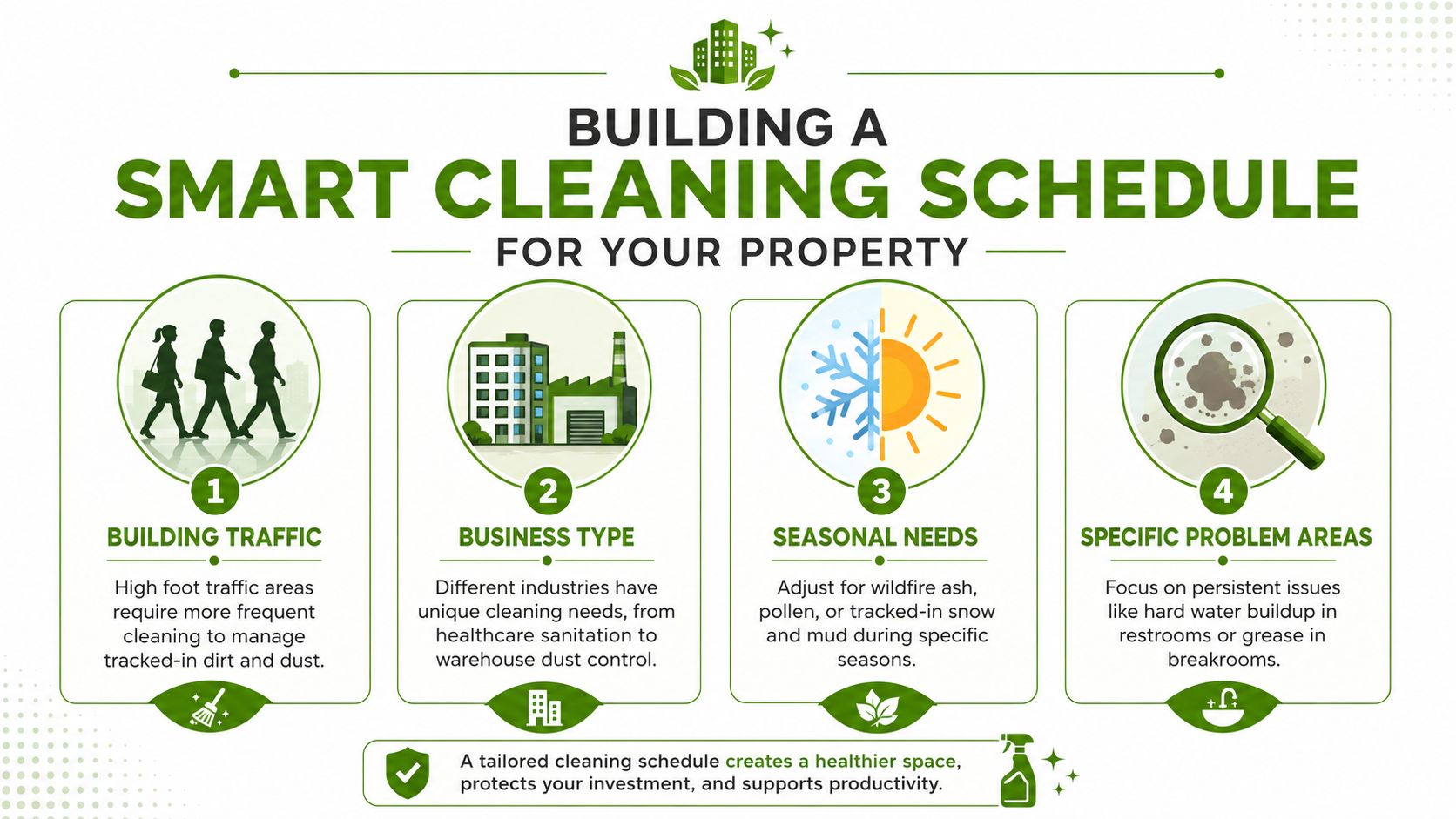
A smart cleaning schedule starts with one question. Where does the building get dirty first?
Most properties don't need equal cleaning everywhere. They need heavier attention where people enter, wait, touch surfaces, eat, and move repeatedly through the day. That's consistent with Green Seal GS-42 commercial cleaning standards, which define cleaning plans by frequency and traffic, including daily cleaning for heavy-traffic zones such as entrances, corridors, break areas, congested areas, main passageways, and primary office areas.
Areas that usually need the most frequent service
- Entrances and vestibules because dirt, dust, ash, slush, and grit all arrive here first
- Corridors and main paths because appearance drops fast once traffic lanes show debris
- Breakrooms because spills, fingerprints, and odors build quicker than managers expect
- Restrooms because visible buildup creates instant perception problems
- Shared touch points such as handles, rails, switches, and buttons
Lower-touch offices, storage rooms, and closed suites can often run on a less frequent detail cycle if the traffic is light.
Seasonal adjustments matter in Reno
A fixed schedule that ignores the season usually fails.
During wildfire ash periods, interior ledges and entry areas may need more attention. During winter weather, slush, mud, and salt-like residue at the front can force more frequent floor care. In windy dry stretches, dust can build on trim, partition tops, and sills faster than the normal routine accounts for.
A good schedule follows the dirt. It doesn't follow a template.
A local example
We adjusted a Midtown Reno retail cleaning plan during a busy stretch by putting more labor into the front entry, sales floor edges, and restroom resets while scaling back low-use back-office touchups to a rotating schedule. The property looked better to customers because the visible problem areas got serviced at the right cadence instead of giving every area the same time.
That kind of adjustment is easier when the provider has a system for scheduling, notes, and recurring task changes. Property managers evaluating vendors may want to find top cleaning business software just to understand what organized route planning, checklists, and job tracking should look like behind the scenes.
A workable scheduling approach
| Area | Typical priority | Best approach |
|---|---|---|
| Entry and lobby | High | Daily or frequent service based on traffic and weather |
| Restrooms | High | Frequent cleaning with mineral-buildup monitoring |
| Breakrooms | High | Routine cleaning plus periodic deeper detail |
| Private offices | Moderate to low | Recurring service with rotational detail work |
| Vents, ledges, high dusting | Rotational | Weekly or monthly depending on dust load |
Reno dust has a way of showing up on baseboards, blinds, and floors faster than many national cleaning templates account for.
Pricing, Contracts, and Vetting Your Reno Cleaning Provider
Commercial cleaning pricing gets messy when the quote is based on assumptions instead of a real walkthrough. Two properties can have similar square footage and need very different labor depending on floor type, layout, traffic, restroom condition, entry exposure, and whether the building has ongoing dust or hard-water issues.
That's why serious quoting starts with scoping, not guessing.
What changes the price
- Building size and layout. A straightforward suite is easier to service than a chopped-up floorplan with multiple entries and mixed use areas.
- Floor types. Carpet, tile, concrete, and specialty flooring don't take the same tools or time.
- Service frequency. Recurring janitorial pricing differs from one-time resets, post-construction cleanup, or periodic deep detail work.
- Condition of the property. A building that has been maintained consistently is different from one that needs a catch-up clean before routine service begins.
- Special add-ons. Interior glass, post-construction dust removal, heavy restroom buildup, or detailed floor edge work all affect scope.
Pricing depends on square footage, condition, floor types, service frequency, and add-ons. Most property managers request a custom estimate so the quote matches the actual scope.
Why walkthrough documentation matters
Industry walkthrough guidance emphasizes documenting the property with photos or video, noting windows, entrances, floor types, room measurements, and special conditions so the final quote reflects the actual work. That's a practical protection against scope creep and missed assumptions, as outlined in this walkthrough-focused guidance on documenting commercial cleaning bids.
If you're requesting estimates from more than one provider, this guide on how a cleaning service quote should be built can help you compare them more intelligently.
Questions worth asking before you sign
Ask direct questions. Vague answers now usually become recurring problems later.
- How do you define the scope? Ask for room-by-room tasks, frequency, and exclusions.
- What happens if conditions change? Tenant move-outs, construction dust, and seasonal issues can all affect service needs.
- How do you handle quality checks? If there isn't a process, consistency usually depends on the individual cleaner's habits.
- Who provides supplies and equipment? Don't assume.
- Can you work around occupancy and access rules? Especially important in multi-tenant buildings and spaces with alarm procedures.
- Do you have experience with buildings like this one? Office, retail, industrial flex, and mixed-use properties all create different cleaning pressures.
What doesn't work
The lowest bid often leaves out the work that keeps the property looking maintained. That usually shows up later as add-on charges, recurring complaints, or a constant push-pull over what was "included."
Move-out style detailing for one tenant suite, for example, is not the same as routine janitorial work for a whole building. If a provider prices both like they're interchangeable, problems usually follow.
Our Proven Process for Reliable Commercial Cleaning
Reliable commercial building cleaning comes from process. Not from promises, and not from hoping the same crew member remembers every detail every visit.
That matters in Reno-Sparks because the environment is unforgiving. Fine dust returns, hard water keeps showing on fixtures, and entries can look worn again quickly if the service plan isn't repeatable.
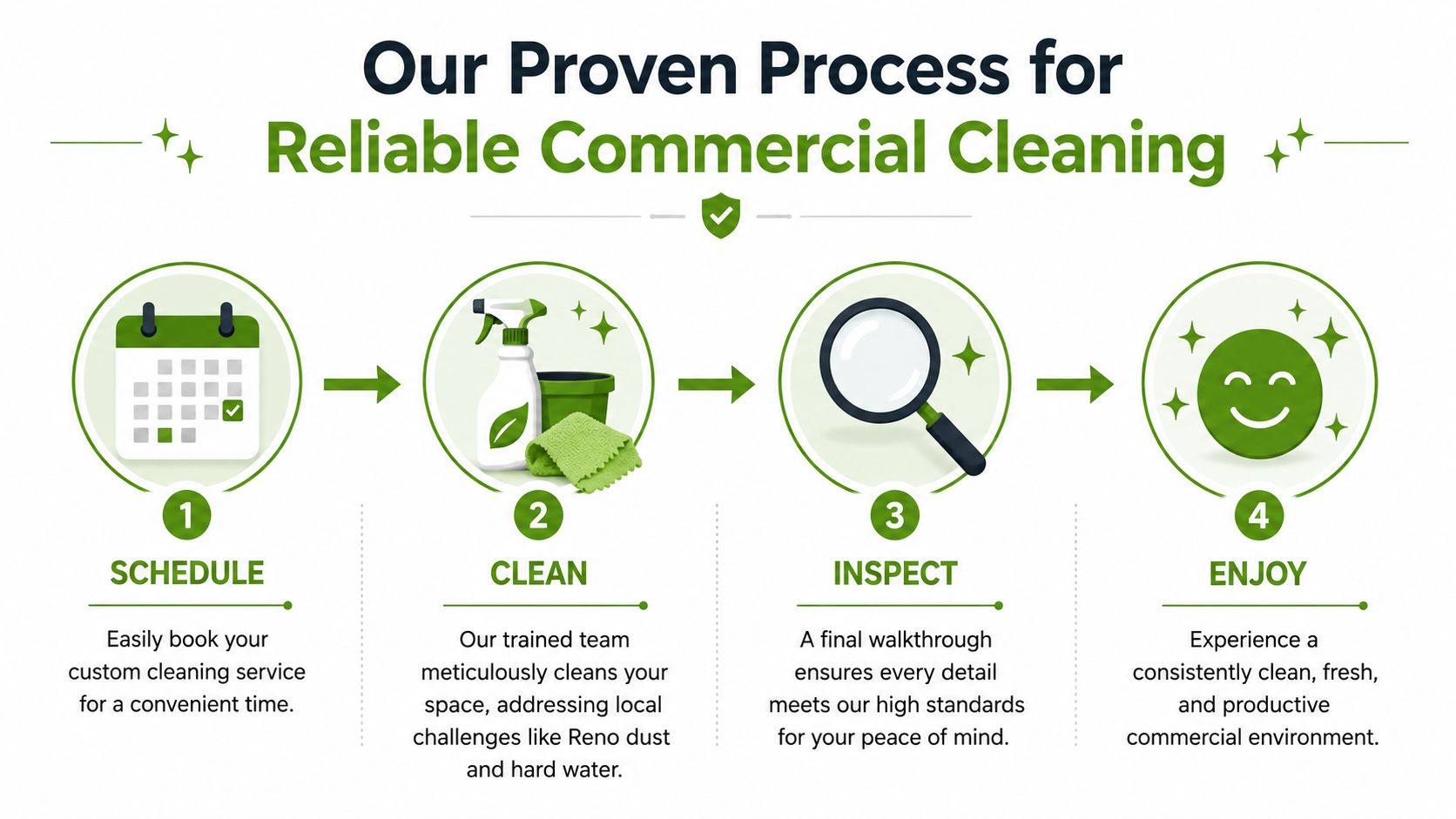
Schedule
Book online or call. The key first step is confirming the exact scope, site access, preferred service window, and any building rules that affect the visit.
For local operators like Altitude Cleaning Crew, that usually means aligning arrival windows with tenant access, alarm procedures, and whether the property needs recurring janitorial work, a deep clean, or post-construction cleanup.
Clean
The crew arrives with supplies and works from a checklist-based scope. That matters because a consistent sequence helps prevent skipped rooms, uneven restroom work, or visible misses in front-facing areas.
High-touch points, heavy-traffic zones, floors, restrooms, and break areas usually get prioritized before lower-impact spaces.
Inspect
A quick quality check catches the small things that trigger most callbacks. Smears on glass, dust left on ledges, trash liner issues, floor debris at edges, or restroom fixture spotting often show up here.
Practical rule: If a company can't explain how it checks its own work before you see it, you're probably going to be the inspector.
Enjoy
This is the part property managers care about. The building stays presentable, tenant complaints drop, and you don't have to chase the cleaner to find out whether the work was done.
That approach lines up with a broader operational reality in the trade. Experienced cleaning operators consistently point out that reliability comes from repeatable systems, standardized scopes, end-of-service checks, and clear role-based staffing, as discussed in this guidance on building repeatable cleaning systems.
In Sparks homes and buildings, pet hair and hard water buildup are two of the most common things people ask cleaners to focus on. In commercial spaces, the equivalent is usually entry grit, restroom mineral spotting, and visible dust in the places tenants notice first.
Questions for Reno & Sparks Property Managers
A few questions tend to come up right before a manager decides whether to move forward.
How do you handle keys, alarm codes, and building access
Access instructions should be documented before the first visit. That includes who grants access, who disarms, restricted areas, and where the crew can and can't enter. For multi-tenant properties, this is especially important when some suites are serviced and others aren't.
Can you clean during business hours
Sometimes yes, but it depends on the building. Daytime cleaning works best when the scope is built around low-disruption tasks and the property has a clear plan for restrooms, entries, and shared areas. After-hours service is often simpler for detailed floor care, breakroom cleaning, and suite access.
Are supplies included
That should be clarified in writing before service starts. Some providers include standard supplies and equipment, while consumables or specialty products may be handled differently depending on the property.
What kind of buildings need a deep clean before recurring service
Buildings coming out of tenant turnover, construction, long gaps in service, or seasonal dust buildup often benefit from a reset first. That's especially true when baseboards, window ledges, restroom fixtures, and floor edges already show accumulated soil.
For managers balancing tenant turns and recurring upkeep, this overview of property management cleaning services is useful background.
Move-out cleans around Reno-Sparks often come down to the details landlords notice first, kitchens, bathrooms, floors, and baseboards.
If your building is dealing with dust, hard water spotting, tenant complaints, or inconsistent janitorial results, a tighter scope and better schedule usually fix the problem faster than switching crews over and over. For commercial building cleaning in Reno & Sparks, Altitude Cleaning Crew provides local service built around real Reno-Sparks conditions and practical cleaning workflows. Call 775-376-5527 or book online at Altitude Cleaning Crew booking.
Flat-Rate House Cleaning Services You Can Count On
From downtown Reno apartments to family homes across Sparks, our team delivers reliable, professional house cleaning you can count on.