
Reno's Top Tips for Cleaning Natural Stone Shower
Master cleaning natural stone shower in Reno, 2026. Conquer hard water stains & desert dust. For professional results, book Altitude Cleaning Crew today!
If you're looking up cleaning natural stone shower problems in Reno, you're probably already dealing with the same thing we see all over the Reno-Sparks area. A stone shower that looked rich and clean when it was installed now has a dull film, chalky spots, or darkened areas that never seem to come fully clean.
This matters more here than it does in a lot of other places. Reno homeowners, Sparks renters, Airbnb hosts in Midtown, and property managers in South Reno all run into the same local pattern. Hard water, dry dust, and daily shower use team up fast. Generic internet advice usually makes it worse, especially when it pushes vinegar or heavy bathroom descalers on natural stone.
Your Guide to Cleaning Natural Stone in Reno
Natural stone showers can stay beautiful in Reno, but they need the right routine. The goal isn't just making the shower look better today. It's protecting the surface so hard water, residue, and moisture don't slowly wear it down.
Quick takeaways
- Use neutral products: The [Natural Stone Institute recommends](https://www.naturalstoneinstitute.org/consumers/care/) a neutral cleaner, stone soap, or mild dishwashing detergent with warm water for stone surfaces.
- Squeegee after showers: In shower use specifically, the same guidance says using a squeegee after each use helps minimize soap scum.
- Drying matters: Removing excess water is one of the most practical ways to cut down on mineral spotting and dull residue on stone.
- Deep damage is different: If the surface is etched or permanently dulled, cleaning alone usually won't bring it back.
A lot of local homeowners start with the same complaint. "I clean it all the time, but it still looks cloudy." In Reno, that usually points to buildup, not neglect.
What We See in Reno-Sparks Homes
In Somersett and Northwest Reno, darker slate showers often show a white, chalky film first. It stands out hard against dark stone, especially around the lower wall, niche shelves, and corners where water sits longer.
In newer homes around Damonte Ranch and South Reno, travertine and lighter stone can look less dramatic at first. Instead of bright white spotting, you get a soft haze that makes the shower look tired even when it's technically clean.
Local reality: Reno dust doesn't stay in the living room. It settles on bathroom ledges, window trim, exhaust covers, and shower edges, then mixes with moisture and product residue.
In Sparks and Spanish Springs, the biggest issue is usually mineral buildup on stone near fixtures, door tracks, and lower wall sections where water dries in place. That's why random online hacks often fail here. They're written for general soap scum. Our local problem is usually soap scum plus hard water.
If you're in Midtown Reno with an older bath remodel, the challenge can be even trickier. Older marble or limestone showers may already have surface wear from years of the wrong cleaner. At that point, the shower isn't just dirty. The finish itself may be compromised.
First Step Know Your Stone Type
Before you scrub anything, identify the stone. That's the difference between routine maintenance and accidental damage.
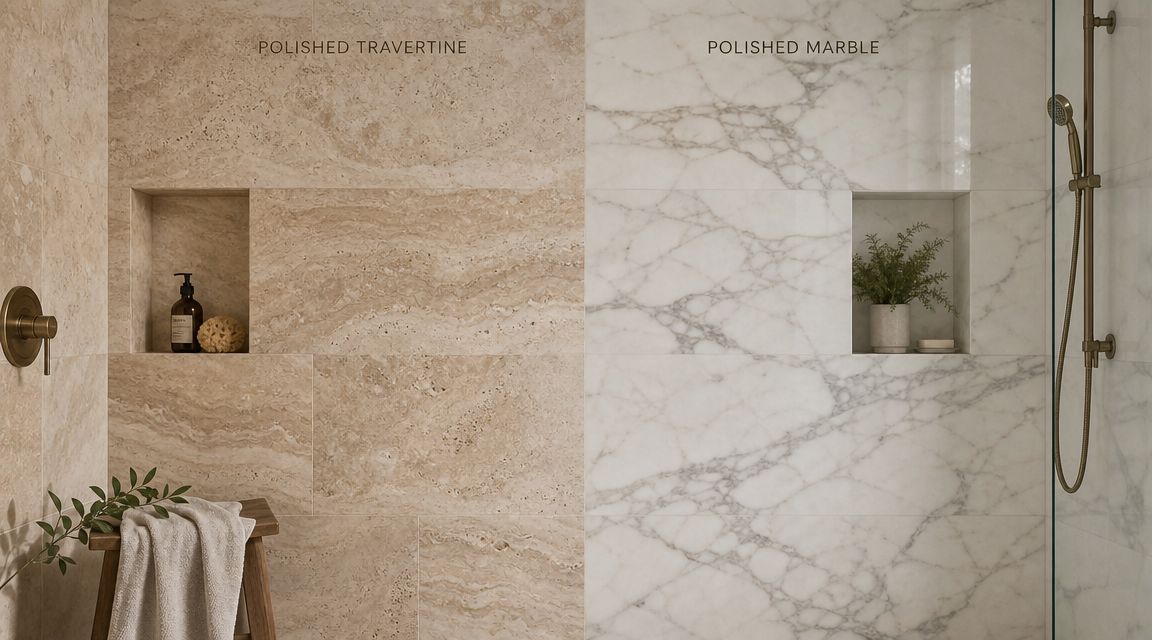
The common shower stones we see locally
Travertine usually has a softer look with natural pits, pores, or filled voids. It's common in larger showers and upscale bath remodels around South Reno and Somersett. Those pores can trap residue, which is why the shower may feel clean but still look dingy.
Marble has veining and a smoother, more polished appearance. It shows etching fast if someone uses vinegar, acidic spray, or the wrong descaler. In a shower, polished marble can lose its shine in uneven patches.
Slate has a textured, layered look and tends to hide some dirt better than lighter stone. But in Reno homes, slate often makes mineral film more obvious because the white haze contrasts so much against the darker surface.
Why stone type changes the cleaning plan
A polished marble wall and a textured slate floor don't respond the same way to moisture, residue, or scrubbing. That's where homeowners get into trouble.
- Porous stone holds residue: Travertine and some textured stones grab soap, shampoo residue, and fine mineral deposits more easily.
- Calcium-based stone etches easier: Marble and travertine are less forgiving when acidic products touch them.
- Texture changes your tools: A soft microfiber works fine on smooth walls, but textured slate may need a very gentle soft-bristle brush to reach surface variation.
A shower can be dirty, etched, or both. If you don't know which one you're dealing with, it's easy to chase the wrong fix.
When in doubt, treat the surface like it's delicate until you know otherwise.
Safe Cleaners vs What to Never Use
Reno showers fool people. The white film looks like ordinary soap scum, so homeowners reach for vinegar, a lime remover, or the strongest bathroom spray under the sink. On natural stone, that shortcut can leave a surface permanently dull by the time the buildup is gone.
Safe stone cleaning starts with a simple filter. Use products made for stone or mild soap solutions that clean without reacting with the surface. Skip anything built to dissolve mineral scale fast.
Effective and Safe Cleaners
For day-to-day cleaning, boring is the right call.
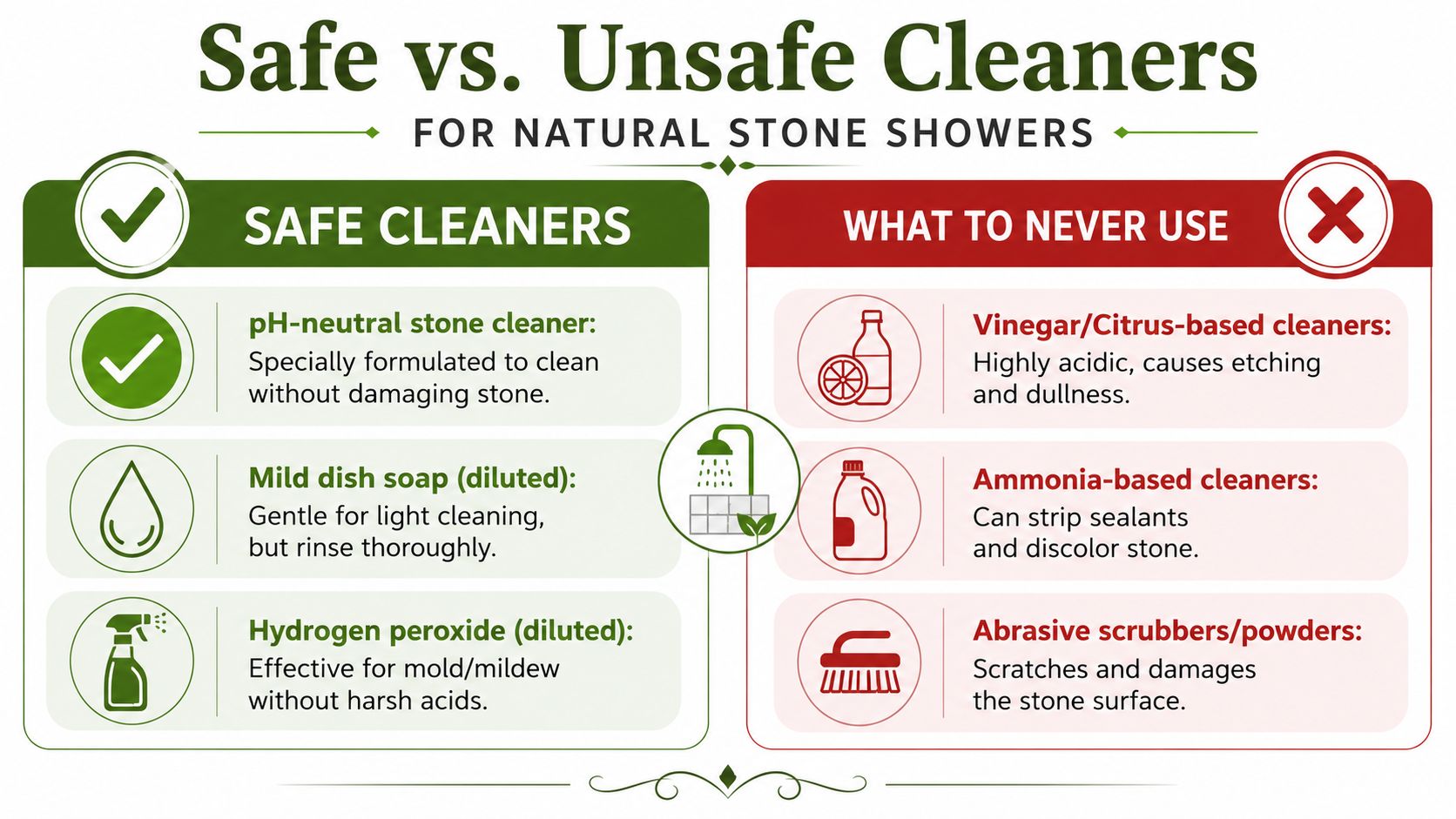
The safest options are usually:
- A pH-neutral stone cleaner: Best for routine shower cleaning, especially on marble, travertine, and other calcium-based stone.
- A small amount of mild dish soap in warm water: Fine for light residue if you rinse thoroughly so it does not leave its own film behind.
- Soft microfiber cloths and soft-bristle brushes: Enough scrubbing power for residue without grinding grit into the finish.
In Reno-Sparks, I tell people to judge cleaners by what they are designed to do. If the label promises to cut lime, melt calcium, or remove hard water fast, it is usually the wrong product for stone. Hard water here makes that tempting, but stone-safe cleaning is slower on purpose.
If you want to read labels more carefully, understanding eco-friendly cleaning ingredients helps. "Natural" and "plant-based" are not the same as stone-safe.
What to never use on stone showers
Damage usually starts with products that work great on other bathroom surfaces.
- Vinegar: Common online advice, rough on many natural stones.
- Citrus cleaners: Fresh smell, same acid problem.
- Ammonia-heavy products: Repeated use can dull some finishes.
- Harsh bathroom sprays: Many are formulated for fiberglass, porcelain, and glass, not sealed stone.
- Abrasive powders and stiff scrub pads: These can scratch the finish and wear down the sealer.
Bleach also gets overused. It does not remove mineral deposits, and it pushes people toward a stronger-is-better routine that causes more trouble than it solves. For a related example, our post on whether white vinegar kills mold shows how common bathroom advice falls apart once surface safety matters.
One rule saves a lot of stone in this area. If a cleaner advertises fast descaling or aggressive lime removal, keep it off the stone until you verify it is specifically approved for natural stone use.
That is the Reno-Sparks reality check. Internet tips are often written for tile, glass, or softer water conditions. Local hard water and desert dust leave behind stubborn residue, but harsh chemistry is still the wrong fix for stone.
A Practical Maintenance Routine for Reno Showers
A Reno stone shower usually looks fine right after cleaning, then the hard water dries and leaves a fresh outline on the valve trim, the bench, and the lower wall by the next day. That is why the routine here has to focus on drying and residue control, not just spraying cleaner once a week.
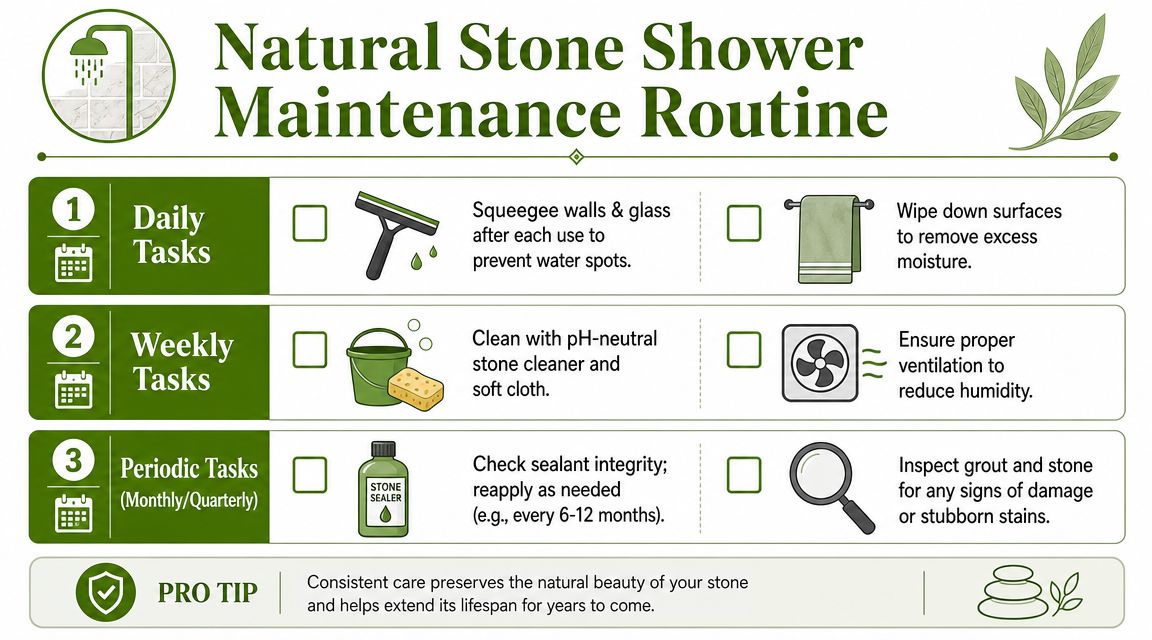
Daily habits that do most of the work
Use a squeegee on the walls and glass after each shower. In our climate, that simple pass cuts down the water that would otherwise dry into mineral haze.
Then wipe the places where water lingers. Benches, corners, niches, the curb, and the edge of the pan are the first spots to show trouble in Reno-Sparks homes. If you leave those wet day after day, buildup gets a head start and the shower starts looking dingy even when the stone itself is still in good shape.
Run the bath fan long enough to clear humidity. Open the door or crack a window if the room tends to stay damp.
Weekly cleaning that won't wear down the finish
Once a week is a solid rhythm for many households if the shower is getting dried between uses. The goal is to remove body oils, soap film, and desert dust before they bond with mineral residue and turn into that stubborn gray-white layer people fight later.
A weekly routine that holds up in local bathrooms looks like this:
- Spray lightly: Use a pH-neutral cleaner made for natural stone on the walls, floor, and fixtures.
- Give it a short dwell time: Let the cleaner loosen routine grime, but do not let it dry on the surface.
- Scrub gently: Use microfiber or a soft brush, especially on grout joints and textured stone.
- Rinse thoroughly: Cleaner residue attracts more soil than people realize.
- Dry the problem areas: Finish with a squeegee and a towel on corners, trim, and horizontal surfaces.
That last step matters more here than many national guides admit. In Sparks and Spanish Springs, hard water can leave a visible trace from one missed rinse-and-dry cycle.
If you want a good companion read on preventing damage to sensitive tiles, that resource does a nice job reinforcing the "gentle but consistent" approach.
Periodic checks that save headaches later
Sealer needs a reality check now and then. Water resistance fades first in the spots that get daily spray and foot traffic, usually the floor, lower walls, and bench tops.
A simple test works well. Put a few drops of water on the stone after it is clean and dry. If the water beads for a bit, the sealer is still doing its job. If the stone darkens quickly or the water soaks in, it is time to plan for resealing.
The Natural Stone Institute's natural stone shower care overview lines up with what we see in the field. Sealers help, but they do not turn stone into a maintenance-free surface.
That trade-off catches homeowners all the time. Sealed stone gives you more breathing room, but it does not excuse skipped drying, soap residue, or mineral buildup from Reno water.
How to Tackle Stains Etching and Hard Water Buildup
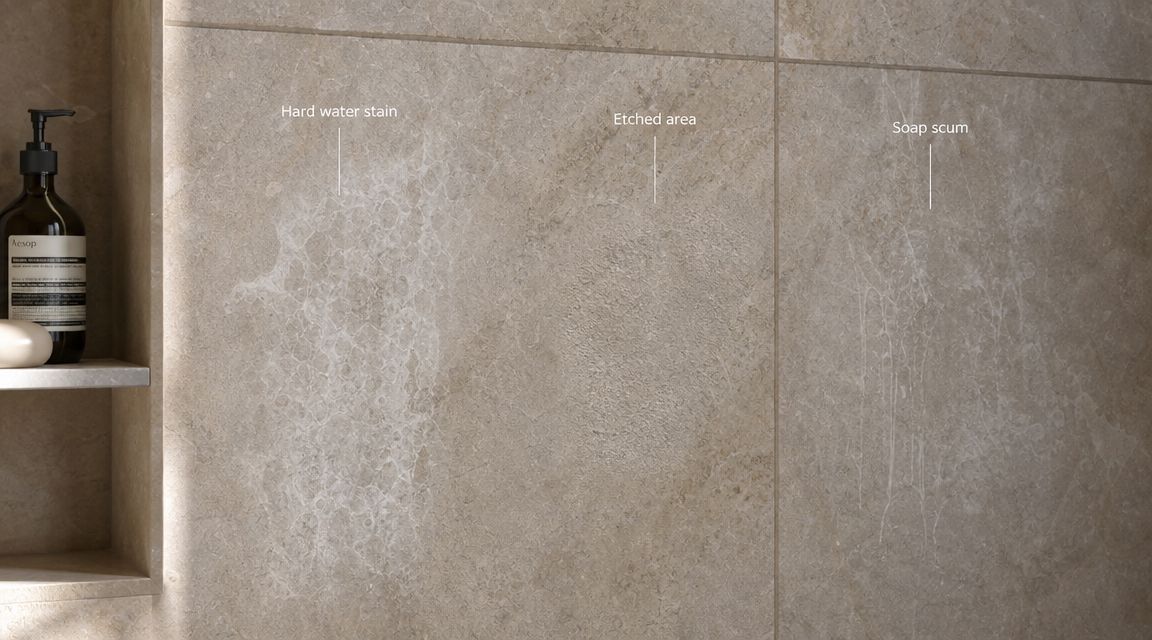
You wipe down the shower, the stone dries, and the white haze is still there. In Reno, that usually means you are not looking at plain soap scum. Hard water leaves mineral crust, desert dust sticks to product residue, and acid damage can leave stone looking dull even after it is clean.
How to tell the difference
Start with what your hand and your eye tell you. These problems can look similar from a few feet away, but they behave very differently once you touch the surface.
| Problem | What it usually looks like | What it feels like | Best next move |
|---|---|---|---|
| Soap scum | Filmy, cloudy, sometimes slightly greasy | Waxy or draggy | Neutral cleaner and gentle scrubbing |
| Hard water buildup | Chalky, crusty, white or light-colored residue | Rough or gritty | Stone-safe treatment used carefully |
| Etching | Dull, flat, lightened patches in the finish | Smooth but damaged-looking | Professional refinishing or polishing |
Around Sparks and Spanish Springs, the rough white ring near fixtures, shower corners, and lower wall sections is often mineral scale. In older Reno homes with marble or travertine, smooth dull spots are often etching from acidic bathroom products used years ago. Those marks do not scrub off because the finish itself has changed.
That distinction saves stone.
What you can handle yourself
Soap scum is usually manageable with patience. Use a pH-neutral stone cleaner, warm water, and a soft brush or white nylon pad. Let the cleaner dwell a bit, agitate lightly, and rinse well. If the residue feels slick or waxy, you are probably on the right track.
Hard water buildup takes more restraint. In such instances, generic internet advice falls apart for Reno showers. A lot of national cleaning tips assume mild mineral residue. Our water often leaves heavier deposits, especially on shower heads, valve trim, corners, and any spot where water sits and dries slowly. Scrubbing harder does not solve that. It often just grinds grit across the finish.
What needs a different plan
Etching is not a cleaning problem. It is surface damage. The stone may be free of residue and still look blotchy, faded, or flat.
I see this a lot after someone uses vinegar, a bathroom descaler, or a lime remover because the shower looked cloudy. The product strips away part of the finish, especially on marble, limestone, and travertine. Once that happens, cleaning can remove soil, but it will not restore the original polish or hone.
A clean shower can still look worn out if the stone has been etched.
This walkthrough is helpful if you want to see how surface damage can show up in real stone care situations:
A Reno-Sparks reality check
Local showers collect buildup in layers. Fine dust settles on the stone. Body products and soap give that dust something to cling to. Hard water dries over the top and leaves a crust that makes the whole surface look uniformly dull. Homeowners often treat all of it like one problem and reach for one strong product. That is usually where damage starts.
Handle each issue for what it is. Clean residue gently. Treat mineral buildup carefully with stone-safe methods. Stop and reassess if the surface looks dull but feels smooth. That last category is often finish damage, not dirt.
Professional Stone Care and Resealing
There comes a point where DIY stops being efficient. If the shower still looks dull after proper neutral cleaning, if white buildup has hardened in place, or if the surface no longer sheds water well, professional stone care usually makes more sense than trial-and-error.
We see that especially in older Midtown Reno homes with marble showers. A homeowner has tried every safe-looking bathroom product on the shelf, but the stone still looks flat and tired. In many of those cases, the issue isn't just dirt. It's years of mineral buildup plus finish damage from the wrong chemistry.
What's included in a professional stone shower service
For homeowners and property managers comparing options, a professional deep clean for a stone shower usually focuses on the areas that create the most visible wear and the most frustration.
Typical scope often includes:
- Stone surface cleaning: Walls, floor, bench, curb, and niches cleaned with stone-safe methods.
- Detail work around fixtures: The areas where chalky buildup collects fastest.
- Grout line attention: Especially where residue settles into corners and lower seams.
- Residue removal: Soap film, body product buildup, and surface haze addressed carefully.
- Sealer check: Water behavior reviewed to see whether protection is still doing its job.
- Resealing when appropriate: Especially in daily-use bathrooms where moisture exposure is constant.
If shower glass is part of the same frustration, this guide to spotless shower glass is a useful companion read because stone and glass usually show the same hard water story at the same time.
For marble-specific issues, homeowners dealing with dull spots or sensitive polished surfaces may also want this guide on cleaning a marble shower the right way.
A specific local scenario
In Reno move-out and pre-sale cleans, stone showers often look fine from the doorway. Up close is where the problem shows. White buildup around the drain line, darkened grout at the back corners, and a haze on the wall tile that won't wipe off with a standard spray.
That's common in South Reno and Damonte Ranch homes where the bathroom layout has large stone wall areas and glass enclosures that put every spot on display. In Sparks rentals, the pressure is different. Owners and tenants want the shower to look cared for before a walkthrough, and dull stone makes the whole bathroom read as neglected even when the rest of the room is clean.
Schedule Clean Inspect Enjoy
This is the process often preferred because it's simple and predictable.
Schedule
- Book online or call: Start with the shower condition, stone type if known, and whether sealing may be needed.
- Confirm access details: Helpful for occupied homes, rentals, and short-term turnover schedules.
- Get an arrival window: That matters in Reno-Sparks, especially on tight weekends.
Clean
- Supplies are brought in: The cleaner should arrive with the right stone-safe products and soft tools.
- Checklist-based work: Shower walls, floor, grout lines, and problem buildup areas are addressed methodically.
- Careful product selection: Stone-safe work is slower and more deliberate than general bathroom cleaning.
Inspect
- Quick quality check: Look for remaining haze, trouble spots around fixtures, and any signs of etching versus residue.
- Sealer behavior reviewed: Water beading tells you a lot.
- Next-step recommendation: Maintenance cleaning, resealing, or restoration referral depending on condition.
Enjoy
- Return to a cleaner shower: The difference should be visible in the stone tone, the edges, and the overall finish.
- Maintain it with lighter effort: Once heavy buildup is removed, weekly upkeep is much easier.
Price range
Pricing depends on the stone type, shower size, condition, and whether resealing is needed. Most homeowners request a custom estimate so the quote matches the actual scope.
Micro FAQ
Can you remove the white, chalky film?
Sometimes yes, if it's surface mineral buildup. If the stone has been etched by acidic products, cleaning won't fully reverse that.
How do I know if the shower needs resealing?
Watch how water behaves. If it stops beading and starts soaking in or darkening the stone, the sealer may be wearing out.
Are supplies included in a professional clean?
Most professional services bring their own products and tools so the cleaner can match the method to the stone.
How long does sealing take to cure?
Cure time varies by product, so the safest move is to follow the service instructions given for that specific sealer and shower.
Reno dust has a way of landing on every ledge and mixing with bathroom moisture surprisingly quickly.
In Sparks homes, hard water residue and shower glass spotting usually show up together, which is why the shower often needs a full-surface approach instead of a quick touch-up.
Natural stone showers look best when the care matches Reno's hard water reality, not generic internet shortcuts. If you need help with cleaning natural stone shower buildup in Reno, Altitude Cleaning Crew provides practical, detail-focused cleaning for homes across the Reno-Sparks area. Call 775-376-5527 or book online at Altitude Cleaning Crew booking.