
Cleaner For Furniture: Expert Care in Reno, NV
Expert cleaner for furniture in Reno, NV. Tackle desert dust on wood, leather, & upholstery. Get pro tips or book your deep cleaning service!

TLDR: If you're looking for deep cleaning Reno NV service because your furniture still looks dusty after you wipe it down, you're not imagining it. In Reno and Sparks, dry air, desert dust, and pollen make furniture harder to clean well with store-bought products alone.
If you're a homeowner, renter, or property manager trying to get a home completely spotless, guest-ready, or inspection-ready, the goal isn't just shiny tables. It's cleaner furniture, less dust settling back down, and safer methods for wood, leather, and upholstery.
Your Search for Deep Cleaning in Reno Ends Here
A lot of people searching for a cleaner for furniture are really trying to solve a bigger problem. The couch holds dust, the dining chairs look dull, the wood surfaces feel filmy, and the room never seems fully clean. That's exactly where deep cleaning Reno NV matters.
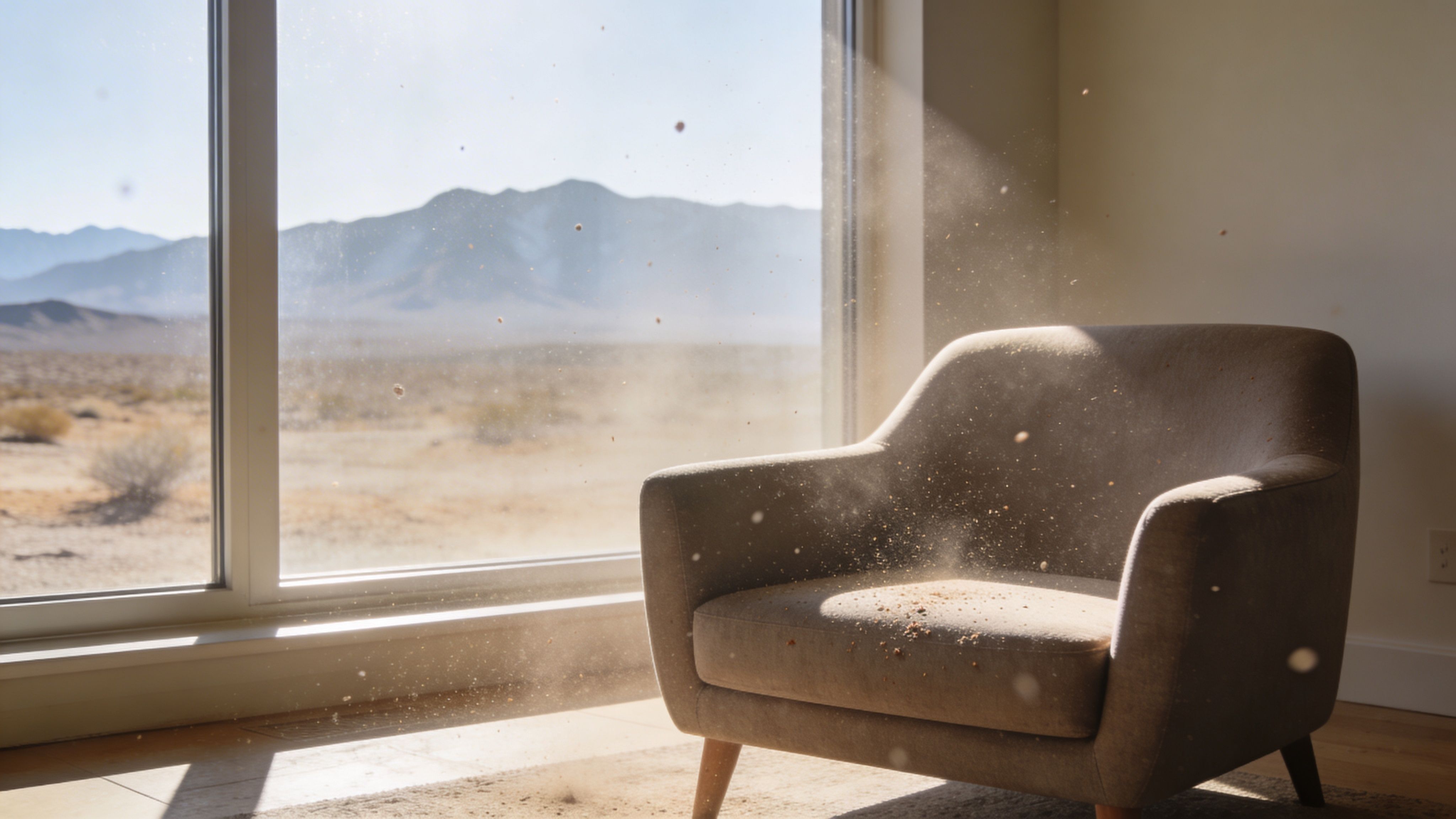
In Reno and Sparks, furniture gets hit from all sides. Desert winds push in fine dust. Mountain pollen sneaks in during shoulder seasons. Open windows help the house breathe, but they also bring in grit that settles into fabric, seams, and wood grain.
A quick spray-and-wipe can make furniture look better for a day. It usually doesn't solve buildup.
For buyers comparing cleaning services right now, the question is simple. Do you want a light surface reset, or do you want a home that feels fully cleaned when you walk in?
A proper deep clean handles the obvious surfaces and the overlooked ones:
- Dust-loaded upholstery
- Wood furniture with residue or polish buildup
- Leather that dries out in Reno 's air
- Fine debris trapped in seams, edges, and under cushions
- Touch points that collect skin oils and daily grime
Practical rule: If furniture looks clean but still feels dusty by the next day, the issue usually isn't more spray. It's trapped particulate and residue.
That matters for move-outs, seasonal resets, and homes that haven't had a top-to-bottom clean in a while.
People in the Truckee Meadows know the routine. You dust, then the next gust rolls through and it feels like you never started. That's why furniture care has to be part of a full-house approach, not an afterthought.
The Unique Challenge of Cleaning Furniture in Reno
Reno isn't a forgiving place for DIY furniture cleaning. The climate changes how products behave on surfaces.
Dry air changes the cleaner
In high-altitude areas like Reno, around 4,500 ft , lower humidity causes cleaning solutions to evaporate faster. That raises the risk of residue buildup by 25-40% , which is why alcohol-free, higher-moisture formulas are often a better fit than solvent-heavy polishes in dry conditions, as noted in this upholstery cleaning guidance for dry climates.
That residue is a big reason DIY furniture cleaning disappoints here. People apply a product, it flashes off fast, and what's left behind can grab more dust.
Dust here is finer than people expect
Reno dust isn't just visible dirt on a tabletop. It gets into welt lines, under cushions, around nailheads, inside carved wood details, and into textured fabrics.
On upholstery, that means the surface may look acceptable while the fabric still holds dry particulate. On wood, it mixes with polish and skin oils into a hazy film. On leather, it can sit on the surface long enough to dull the finish and increase friction.
Generic advice often fails locally
A lot of furniture cleaning advice online assumes a milder climate. It tells people to lightly mist, wipe quickly, and move on. In Reno, that can leave uneven drying, streaking, or dusty residue.
Three trade-offs matter here:
- Fast-drying sprays can streak before you level them out.
- Heavy oil-based polishes can make dust stick faster.
- Too much moisture can still damage sensitive materials, especially if the wrong product is used.
In dry climates, the "safe-looking" product isn't always the safer one. Fast evaporation can create its own problems.
Why professionals usually get better results
A trained cleaner doesn't just pick a stronger product. They match moisture, agitation, and extraction to the material.
That matters in high-desert homes where one room may get constant sun, another gets tracked-in pollen, and another sits closed up collecting stale dust. A proper furniture clean accounts for all of that instead of treating every surface the same way.
The Professional's Guide to a Proper Furniture Clean
A proper furniture clean starts before any product touches the surface. In Reno, that matters more than people expect. Dry air, fast evaporation, and fine dust change how wood, leather, and fabric respond to cleaning, so the safest method is usually the one with the best control.
Safely cleaning wood and varnished surfaces
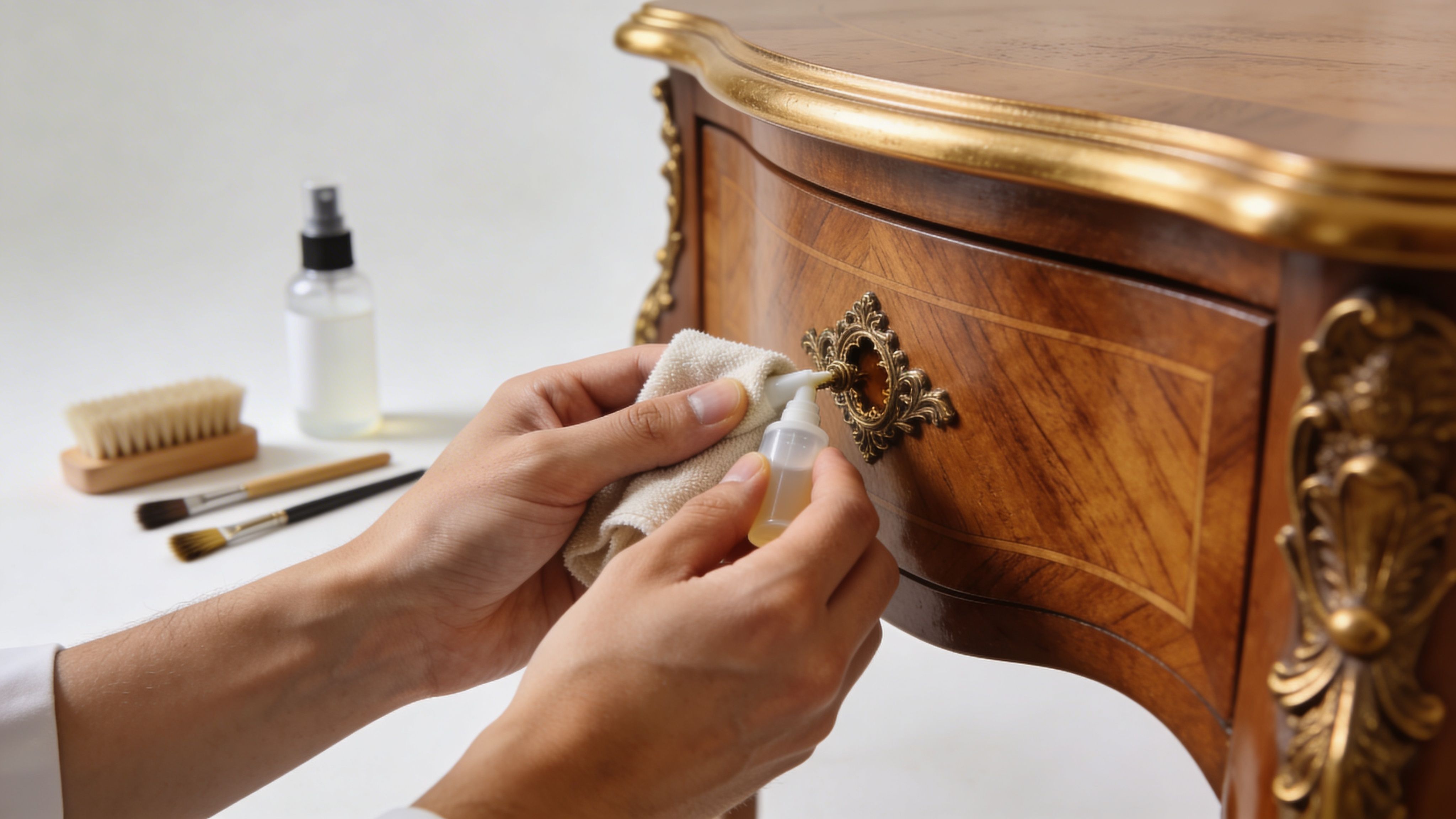
Wood furniture gets damaged less by dirt alone and more by residue, moisture, and bad product choice. I see it all the time on sideboards, dining sets, and older bedroom pieces. A surface gets sprayed over and over, the shine looks better for a week, then the finish starts looking cloudy or sticky.
Start dry. Always.
Loose dust should come off with a soft microfiber cloth or vacuum brush attachment before any damp wiping. If dust is still sitting on the surface, even a mild cleaner can turn it into a gritty film that settles into trim, corners, and open grain.
A safe routine usually looks like this:
- Remove dry dust first with microfiber or a soft brush attachment.
- Use a lightly damp cloth for fingerprints or grime.
- Dry the surface right away with a second clean cloth.
- Use very little product on veneer, antique finishes, and carved details.
Reno's sun and dry indoor air also change the equation. Wood can lose moisture over time, while surface polishes build up faster than people realize. Heavy polish does not protect every piece. On many finishes, it leaves a slick layer that grabs the next round of dust and pollen.
These mistakes cause the most trouble:
- Aerosol polish used too often
- Bleach, ammonia, or degreasers on finished wood
- Wet cloths left sitting on veneer edges
- Using one dirty rag for the whole piece
The right cleaner depends on the finish already on the furniture. Painted wood, lacquer, shellac, waxed surfaces, and modern varnish all react differently. If the piece is older, inherited, or already showing haze, darkening, or lifted edges, professional cleaning is the safer call because the goal is to remove buildup without taking finish with it.
Reviving and protecting leather furniture
Leather dries out faster in Reno than it does in milder climates. High-use areas like seat fronts, arm caps, and headrest zones usually show it first. The surface starts looking dull, then it feels a little rough, and eventually small cracks or color wear show up where body oils and friction have been sitting.
Older upholstery traditions did use oils and conditioning treatments, as noted in this historical overview of upholstery cleaning. Modern leather care is more selective. Strong household cleaners, vinegar mixes, and heavy soaking create more problems than they solve.
Good leather cleaning stays controlled:
- Vacuum or dust first so dry grit does not scratch the finish
- Apply cleaner to the cloth , not directly onto the leather
- Spot test in a hidden area
- Condition only when the leather type calls for it
Common DIY mistakes are easy to spot later:
- Too much liquid around seams
- Aggressive scrubbing on one dark spot
- All-purpose kitchen or bathroom cleaners
- Homemade mixtures used without testing
Leather is not one material with one rule set. Protected leather, semi-aniline leather, nubuck, bonded leather, and faux leather all need different handling. That is where DIY often goes wrong. The stain may come out, but the finish changes, the color lightens, or the surface dries unevenly.
If leather has body oil buildup, pet odor, dye transfer, or cracking near stitched areas, professional cleaning usually gives a better result because the work is not just about washing. It is about cleaning without stressing the material further.
Deep cleaning upholstery and fabric couches
Fabric furniture holds more contamination than the surface shows. In Reno homes, that often means dust packed into the arms, pollen in the back cushions, and fine grit settling into the weave long before the couch looks dirty from across the room.
Modern upholstery cleaning methods grew out of the shift from manual dust removal to suction-based cleaning systems in the early 1900s. What matters today is the principle behind that change. Dry soil should be removed first, and moisture should be matched to the fabric instead of guessed.
That is why fabric identification comes first. Cleaning codes such as W, S, W/S, or X are not decorative tags. They tell you how much moisture or solvent the fabric can handle. Ignore that label and a small spill can turn into browning, ring marks, shrinkage, or a stiff patch that never blends back in.
A safe order of work is simple:
- Vacuum first
- Check the fabric code
- Test any cleaner in a hidden area
- Blot instead of scrub
- Use only the amount of moisture the fabric can handle
Hot water extraction can work very well on upholstery, but only on suitable fabric and only with proper recovery. Too much water, weak extraction, or rushed drying leaves cushions damp deep inside. In Reno, the surface may feel dry quickly while moisture is still sitting below the fabric. That is one reason uneven results are common with rental machines and spot cleaners.
If you want a practical starting point for maintenance, this guide on how to clean a sofa covers the basics. For full-piece soil removal, odor treatment, and stain correction, professional service is safer because the whole fabric surface gets cleaned evenly and dried correctly.
Here's a quick visual on upholstery technique and why method matters:
Common fabric mistakes
| Material issue | DIY mistake | Likely result |
|---|---|---|
| Light upholstery | Over-wetting one cushion | Rings or uneven drying |
| Delicate weave | Hard brush scrubbing | Distortion or fuzzing |
| Unknown stain | Mixing products | Setting the stain deeper |
| Dusty couch | Spot cleaning only | Clean patch on dirty fabric |
A lot of poor upholstery cleaning looks acceptable for a day or two. Then the problem shows back up. One arm dries brighter than the rest, one cushion feels stiff, or the odor returns because the soil underneath never came out.
Mastering microfiber cleaning techniques
Microfiber is forgiving right up until it isn't. It hides dust well, but it also traps it fast. In Reno, that means desert dust, pet dander, and pollen settle into the nap and stay there until the fabric starts feeling rough or looking shaded.
The main risk with microfiber is poor moisture control. Too wet, and it can dry with marks or stiffness. Too dry, and residue stays in place. Good results come from careful section-by-section cleaning, followed by proper drying and grooming of the fibers.
A practical microfiber routine includes:
- Vacuuming seams, edges, and the full surface
- Using the least moisture that will clean
- Working in controlled sections
- Resetting the nap after drying, if the fabric allows it
Directional shading confuses a lot of homeowners. Sometimes the fabric is clean, but the fibers dried in different directions and the piece looks blotchy. Sometimes it is residue. Sometimes it is both. Knowing the difference takes experience, especially on large sectionals and heavily used family-room furniture.
Clean microfiber should feel even, not crunchy or tacky. If it dries stiff, there is usually leftover residue, too much product, too much water, or all three. At that point, another round of DIY often makes the piece harder to correct. Professional cleaning is the better option because the goal is a uniform result across the whole furniture piece, not one cleaner-looking cushion.
What a Professional Deep Clean Includes
A deep clean should improve the whole home, not just a few visible surfaces. Furniture matters because it holds dust and affects how clean the room feels, but it works best as part of a broader reset.
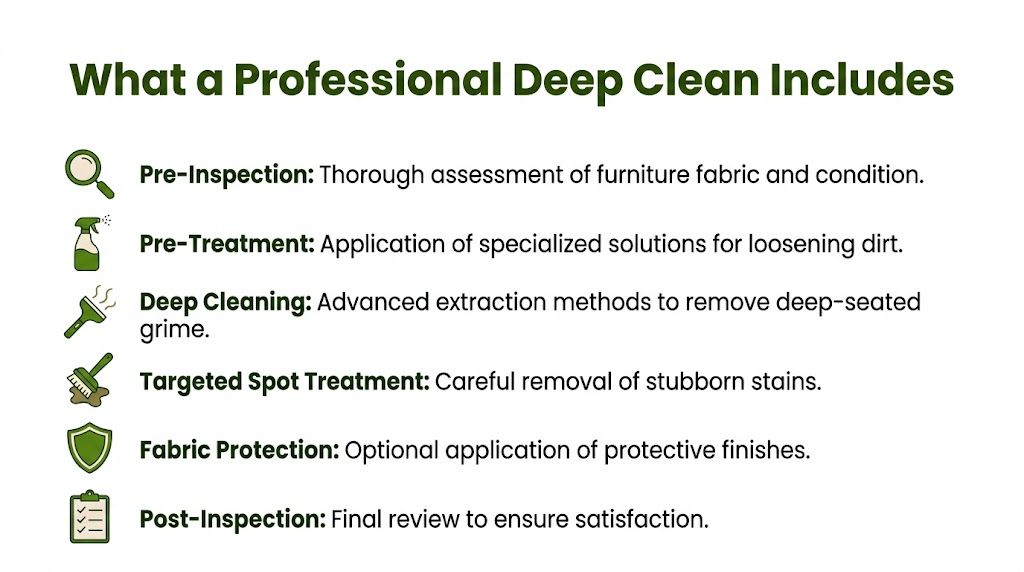
For a practical whole-home standard, a professional deep cleaning checklist should cover the neglected edges, not just the middle of the room.
What's included
- Bathrooms \- sinks, toilets, tubs or showers, mirrors, counters, and exterior surfaces
- Kitchen degrease \- counters, sink, stovetop exterior, cabinet exteriors, and wipe-down of reachable surfaces
- Floors \- vacuuming and mopping based on surface type
- Baseboards \- detail dust and wipe-down where buildup shows
- Dust removal \- furniture tops, shelves, ledges, and accessible décor surfaces
- Mirrors \- cleaned and polished dry
- High-touch disinfecting \- switches, handles, pulls, and similar touch points
Optional add-ons
- Inside oven
- Inside fridge
- Inside cabinets
- Wall spot cleaning
- Pet hair focus areas
DIY versus professional work
DIY has a place for maintenance. It makes sense for a quick wipe-down, a fresh spill, or weekly dust control.
Professional work is a better fit when:
- Dust has settled deep into upholstery
- Furniture has mixed materials
- The house needs to feel reset, not just tidied
- You 're preparing for guests, tenants, or a walkthrough
- You don 't want to gamble with staining or residue
The biggest difference is consistency. Homeowners usually clean what they can see first. Professionals work from a system and catch what people miss.
Advanced Stain and Odor Removal for Reno Homes
Reno homes collect more than visible dust. Odors settle into soft furniture along with pet dander, food spills, smoke residue, and fine outdoor particles.
For fresh accidents, fast action helps. Blot, don't scrub. Lift solids first. Keep the stain from spreading. Use as little product as possible until you know what the fabric can handle.
That said, set-in odor is rarely a one-step problem.
Why standard vacuums fall short
For deep dust and allergen removal from furniture, multi-step HEPA vacuuming makes a real difference. HEPA vacuums filter at 0.3 microns with 99.97% efficiency and achieved a 54.7% lead dust reduction on upholstery , while also reducing airborne particles by over 90% , according to this evaluation of HEPA cleaning methods.
That matters in homes dealing with:
- Wildfire ash dust
- Heavy pollen seasons
- Pet hair and dander
- Post-renovation fine dust
A regular vacuum can improve the look of a couch. It usually won't handle the finest particulate well enough for a true reset.
Odor needs removal, not cover-up
Sprays that add fragrance can make a room smell better briefly. If the source is still in the fabric, the odor usually returns.
The harder jobs tend to involve:
- Pet accidents that reached the cushion or padding
- Food or drink spills that dried below the surface
- Smoke odor trapped in soft furnishings
- Dust mixed with body oils on armrests and headrests
Smell is often the last sign to leave and the first sign to come back when cleaning stayed on the surface.
If the furniture still smells clean only for a few hours, it probably needs extraction or a more complete removal process than household products can provide.
When to Call for Professional Deep Cleaning in Reno NV
Some furniture problems are worth handling yourself. Others aren't. If the piece is valuable, the stain is set, or the home needs to be inspection-ready, deep cleaning in Reno NV usually makes more sense than trial and error.
The situations that justify a pro
- Move-out prep when you need the place looking deposit-ready
- Seasonal deep cleaning after dust, pollen, or ash buildup
- Pet-heavy homes where odor and hair are embedded in soft furniture
- Delicate materials like leather, wool blends, antique wood, or specialty upholstery
- Busy schedules when your weekend is already packed
Reno traffic, errands, and tight Saturday timing can turn a "quick furniture clean" into half the day. Then the cushions are still damp.
Why extraction changes the result
Professional hot water extraction removes 85-95% of deep contaminants from upholstery, uses water at 140-200°F , and kills over 99% of bacteria and dust mites when done correctly, according to this overview of upholstery hot water extraction. Proper technique also helps avoid DIY overwetting, which can lead to mold or fabric damage.
That difference matters when a couch doesn't just need to look better. It needs to be cleaner below the surface.
Schedule - Clean - Inspect - Enjoy
- Schedule \- Book online or call. Share the home size, condition, and any problem areas.
- Clean \- The crew arrives with supplies and works from a checklist-based plan.
- Inspect \- A quick quality check catches missed detail areas.
- Enjoy \- You come back to a home that feels reset, not half-finished.
Price range
Most cleans range from $250 to $600 depending on size, condition, and add-ons.
Keeping Your Furniture Fresh Between Cleans
A Reno living room can look dusty again a day or two after cleaning, especially in dry, windy stretches. That does not always mean the last cleaning failed. It usually means desert dust, mountain pollen, and low humidity are settling back onto fabric, wood, and leather faster than many homeowners expect.
Between professional visits, the goal is simple. Keep loose soil from turning into embedded grime. Once fine dust gets worked into upholstery fibers or sits on wood long enough to mix with body oils and residue, routine wipe-downs stop being enough.
A practical between-cleans routine looks like this:
- Dust lightly and often on wood, metal, and sealed surfaces. In Reno, frequent light removal is safer than letting grit build up and then scrubbing hard.
- Vacuum upholstery with a brush or upholstery tool at the arms, seat deck, under cushions, and along seams where dust and pollen collect first.
- Blot spills right away with a clean, absorbent cloth. Press. Do not rub, because rubbing pushes moisture and stain deeper into the fabric.
- Use minimal product on furniture. In dry homes, leftover cleaner residue can grab new dust quickly and leave surfaces looking dull again.
- Rotate cushions if the fabric allows it so sun exposure and daily wear do not hit the same spots every week.
Microfiber cloths are still one of the better tools for day-to-day care, but technique matters more than the cloth itself. I tell clients to use one cloth to lift dust and a second dry cloth to catch what is left and buff the surface clean. That approach cuts down on streaking, especially on dark wood and smooth finishes that show every swipe.
Material matters too. Leather dries out faster here, so heavy sprays and too much water can do more harm than good. Wood furniture often needs gentle dust removal and occasional finish-safe care, not soaking or aggressive polishing. Upholstery handles regular vacuuming well, but spot treatment is where DIY mistakes usually show up first.
If furniture starts looking dingy again soon after you clean it, or the fabric feels rough, sticky, or smells stale, the issue is usually below the surface. That is the point where professional cleaning makes more sense than adding another spray bottle to the shelf.
Reno & Sparks Furniture Cleaning Questions Answered
How long does it take?
It depends on the home's size, furniture condition, and whether you're booking a light refresh or a true deep clean. Homes with heavy dust buildup, pet hair, or move-out level detail naturally take longer.
Are supplies included?
Yes, professional cleaners typically bring their own supplies and equipment. That's important because furniture-safe cleaning depends on using the right tools, cloths, and fabric-appropriate products.
Can you handle wildfire ash dust?
Yes. Ash behaves differently than normal household dust and needs careful removal so it isn't spread deeper into upholstery or back into the air. That's one reason many Reno homeowners book after smoke and ash season.
What if I have pets?
That's common in Reno and Sparks homes. Pet hair, dander, and odor usually need more than lint rolling or deodorizing spray, especially on sectionals, dining chairs, and favorite nap spots.
Can I book around a busy weekend?
Yes. It's smart to book early if you need a Friday or weekend slot. Reno schedules fill fast around events, family visits, and move dates.
Do you clean in Sparks too?
Yes. Homeowners and property managers in Sparks deal with the same dry air, blowing dust, and pollen issues that affect furniture in Reno homes.
Book Your Deep Cleaning in Reno NV Today
If you're done fighting dust, streaks, and furniture that never feels fully clean, book the service that handles the whole home properly. You can also learn more about the service here: deep cleaning.
Book your cleaning with Altitude Cleaning Crew - your trusted deep cleaning Reno NV provider in Reno. Call 775-376-5527 or book online - http://altitudecleaningcrew.fieldd.co/
A CTA for Altitude Cleaning Crew.