
Expert Tips To Clean White Grout Spotlessly
Learn how to clean white grout in Reno NV. Our guide tackles desert dust & hard water stains, ensuring a spotless finish. Know when to DIY or call pros.

White grout starts bright, then Reno dust, tracked-in grit, hard water, and shower residue turn it gray faster than most homeowners expect. If you're searching for grout cleaning Reno NV , you're probably already tired of scrubbing lines that never seem fully white again.
This guide is for Reno and Sparks homeowners, landlords, and property managers who want clean white grout that looks fresh again, not just damp and temporarily lighter. The goal is simple: know what you can handle yourself, avoid the cleaners that make things worse, and recognize when a professional reset is the smarter move.
The Unending Battle for Clean White Grout in Your Reno Home
A lot of people notice the same pattern. The tile still looks decent, but the grout lines are more telling. In a shower, they go from bright white to dull beige. In a kitchen, they pick up grease and tracked-in dirt. On entry floors, Reno's desert dust settles into every joint and hangs on.
That's why grout cleaning Reno NV isn't the same as generic internet advice written for milder climates. Around here, fine dust, alkaline water, and day-to-day traffic create a mess that keeps coming back if the grout was never sealed properly in the first place.
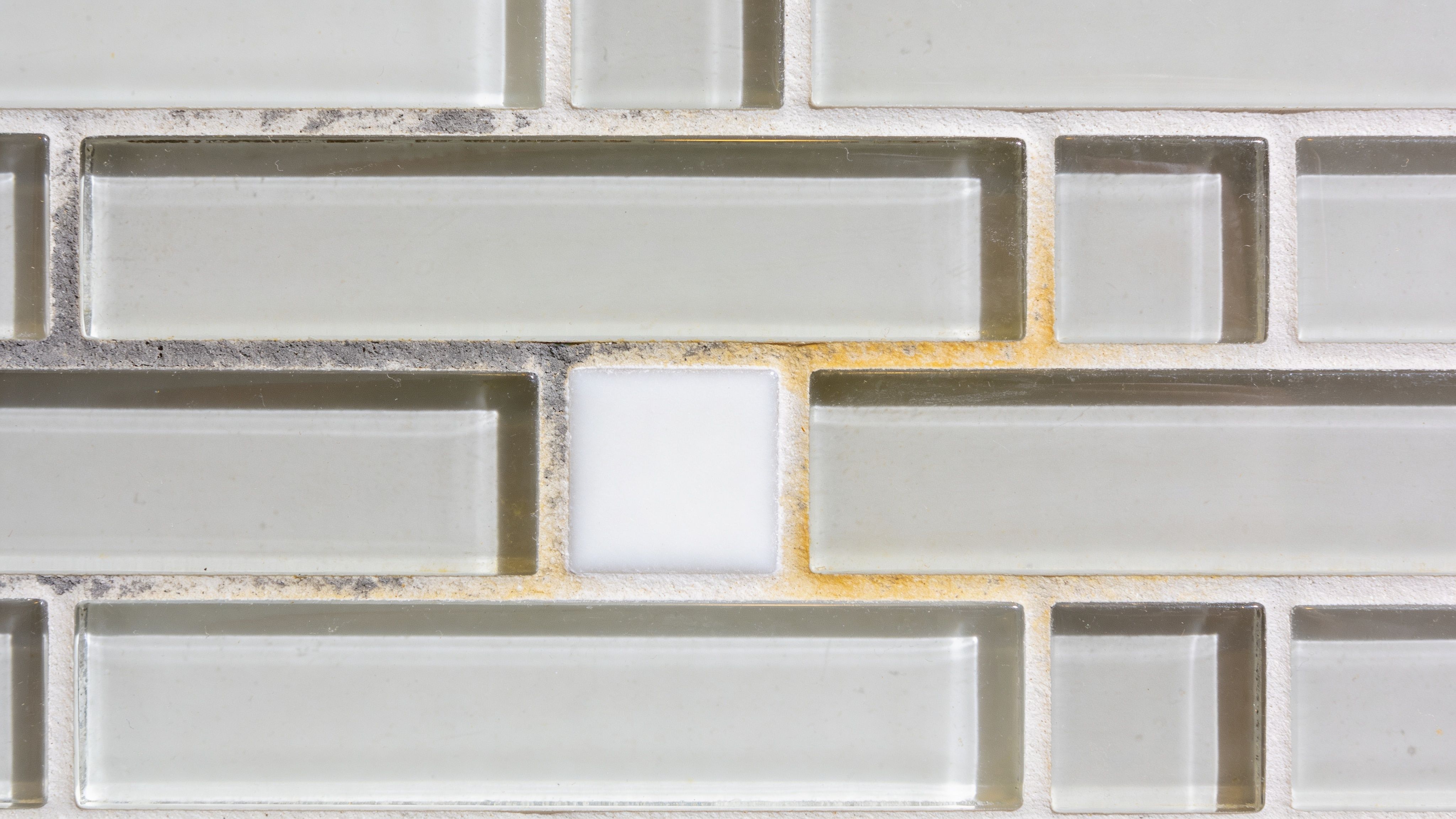
Why white grout frustrates people so fast
White grout looks sharp because it highlights clean tile edges and gives bathrooms and kitchens that crisp finish. The downside is that it shows everything.
A little soap film yellows it. A little dust grays it. Hard water leaves mineral residue that can make the lines look older than they are.
Practical rule: If your tile looks clean but the lines still look tired, the problem usually isn't your mop. It's buildup sitting inside porous grout.
What actually helps
The fix depends on what kind of stain you're dealing with. Surface grime, kitchen grease, shower mildew, and hard water haze all respond differently. That's why random mixing and aggressive scrubbing usually wastes a Saturday and still leaves the floor looking uneven.
What works better is a trade-off mindset:
- Mild buildup often responds to the right DIY cleaner and dwell time
- Hard water residue usually needs a different approach than greasy kitchen grout
- Severely stained grout may need steam, refinishing, or regrouting instead of one more spray bottle
In Reno homes, I see people blame themselves for "not cleaning enough" when the bigger issue is that the grout is acting exactly like grout does when dust, moisture, and residue keep settling into it. Clean white grout is possible, but it takes the right method and a little honesty about what stage the grout is in.
Why Grout Gets So Dirty in the Reno and Sparks Area
Grout gets dirty because it isn't a solid barrier like glazed tile. It's more like a sponge with tiny openings that pull in moisture and residue. According to tile and grout maintenance facts from TruClean Surface Care, unsealed grout can absorb up to 20-30% of its weight in water within hours , which speeds up dirt and mildew buildup.
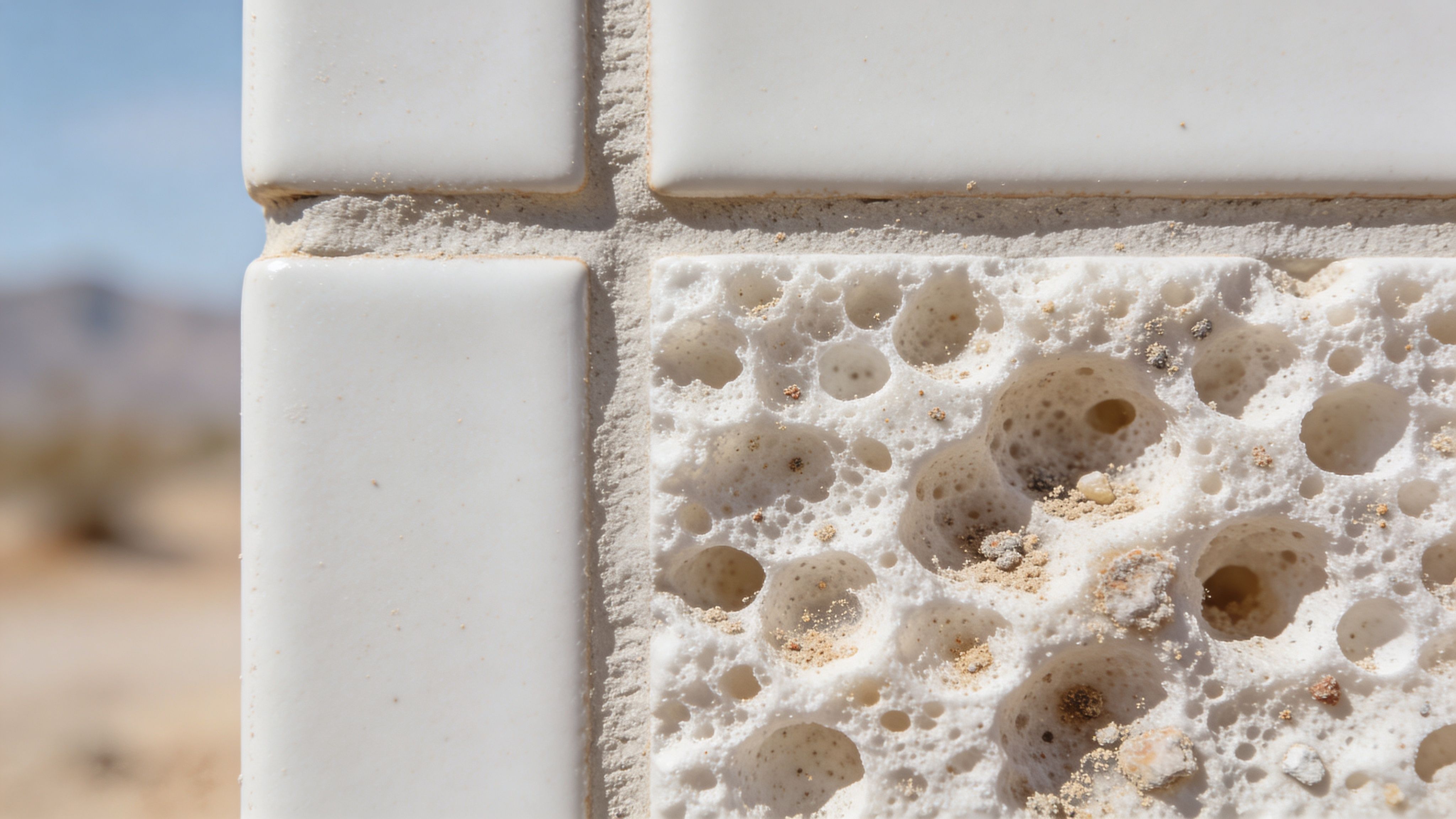
Porous grout holds onto more than you think
Once moisture gets in, it doesn't come alone. It pulls in body oils, soap residue, cooking grease, mop water, and whatever came in on shoes. White grout shows that buildup earlier than darker grout, but the same process happens in every color.
If the grout was never sealed, or the sealer has worn off, the staining gets deeper and harder to lift. That's one reason some homes look dingy again right after a quick surface clean.
Reno conditions make the problem worse
In Reno and Sparks, grout deals with more than indoor mess. Desert winds push in fine dust that settles low, especially along kitchen edges, bathrooms, and entry tile. In spring, pollen adds another layer. In colder months, people track in wet grime that dries in place.
Hard water adds its own headache. Shower grout often ends up with a chalky or rusty look because mineral residue keeps drying on the surface. Kitchen grout near sinks can also yellow faster when soap film and minerals combine.
For homeowners trying to stay ahead of the mess, prevention matters as much as cleaning. If dust is a constant battle in your house, this guide on how to prevent dust in house helps explain why floors and grout lines get dirty again so quickly.
Reno grout problems usually come from layers. Dust, minerals, soap film, and moisture build on each other until the grout stops looking white even right after mopping.
The local pattern I see most
The worst grout usually shows up in a few predictable places:
- Shower floors and corners where moisture sits
- Kitchen walkways where grease and foot traffic mix
- Entry tile where dust and outdoor grit grind into joints
- Around toilets and vanities where splashes and cleaner residue collect
When people understand that grout is porous first and dirty second, their cleaning choices get a lot smarter.
Your DIY Grout Cleaning Toolkit and Safety Essentials
Before you scrub anything, get the right tools together. Most grout-cleaning mistakes start with the wrong brush, the wrong chemical, or both. You don't need a garage full of specialty gear, but you do need a kit that gives you control.
A good starting point is this practical cleaning supplies list, then add a few grout-specific items.
What to keep in your grout kit
Start with tools that clean grout without shredding it.
- Grout brush: Stiffer and more effective than an old toothbrush
- Spray bottles: One for vinegar mixes, one for plain water
- Microfiber cloths: For wiping residue off tile after scrubbing
- Small bowl or cup: For mixing paste cleaners
- Gloves: Important if you're using vinegar, peroxide, or bleach
- Knee pad or folded towel: Not glamorous, but your back will thank you
If you want one upgrade that makes a real difference, buy a dedicated grout brush. Toothbrushes are fine for corners, but they don't move enough residue on floor joints.
The useful DIY ingredients
A few household basics cover most white grout jobs:
- White vinegar for mineral film and general grime
- Dish detergent to break up residue
- Baking soda for gentle abrasion
- Hydrogen peroxide for paste-based whitening methods
- Bleach only in the right situation, and only with care
Don't treat every stain like it needs the strongest chemical in the cabinet. That's how grout gets etched, faded, or left with patchy results.
Safety note: Never mix bleach with other cleaners. Keep windows open, run the bathroom fan, and wear gloves if you're working in a small shower.
What not to use casually
These are the usual troublemakers:
- Wire brushes: Too aggressive
- Undiluted mystery cleaners: Hard to control
- Acid-heavy products: Risky on grout
- Magic thinking: Spraying and rinsing without dwell time rarely does much
For DIY cleaning, the biggest advantage isn't brute force. It's using the right cleaner, letting it sit long enough, and scrubbing only as much as the grout can handle.
Step-by-Step DIY Methods for Restoring White Grout
You scrub the bathroom floor on Saturday, step back, and the tile looks better but the grout still reads gray. That happens a lot in Reno homes. Desert dust settles into the pores, hard water leaves a chalky film, and white grout holds both.
The method matters more than force. Start with the lightest option that matches the stain, then move up only if the grout still looks dirty after a full rinse and dry. If you are working on floors, this guide on how to deep clean tile floors gives more detail on handling larger areas without leaving residue behind.
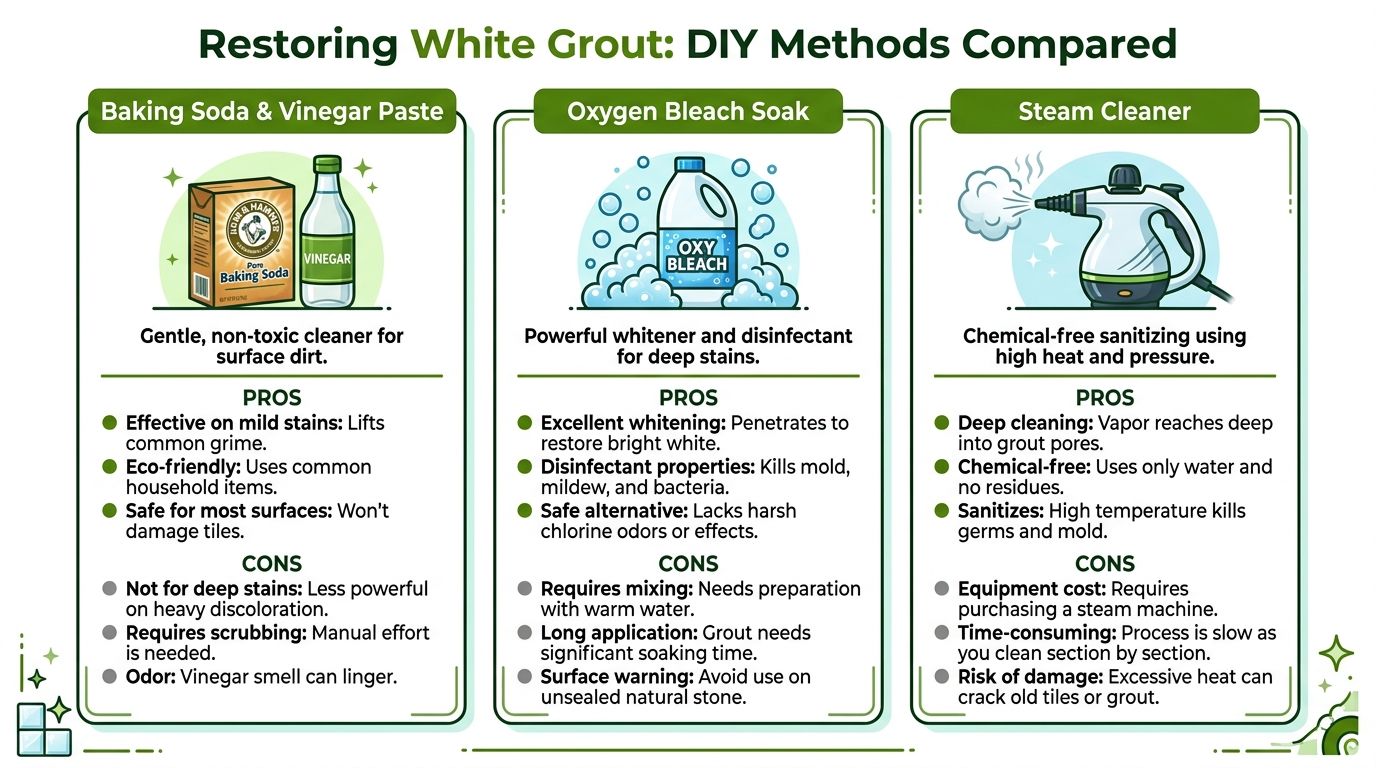
The vinegar and dish soap method for general grime
For white grout that looks dull, dusty, or lightly yellowed, start here. In many Reno bathrooms and entryways, this is enough to cut through the mix of soap film, tracked-in grit, and mineral haze.
Comparative grout-cleaner testing published by Brendid found a vinegar and dish soap mix performed well for general grime. It is a practical first pass before you move to a paste or a stronger product.
How to do it:
- Mix ½ cup white vinegar with 1 tablespoon dish detergent
- Apply it directly to the grout lines
- Let it sit for about 10 minutes
- Scrub with a grout brush or clean dry toothbrush
- Rinse with water and wipe dry
Use moderate pressure. Grinding too hard just wears out the brush and pushes dirty slurry around the tile.
A quick visual walk-through can help if you want to see technique and brush pressure before you start.
The baking soda and peroxide paste for whitening
Paste works better than a thin spray when the grout has absorbed discoloration. I use this approach for shower floors, older bathroom grout, and kitchen joints that still look dingy after basic cleaning.
Basic approach:
- Make a thin paste with baking soda and hydrogen peroxide
- Spread it onto the grout lines
- Let it sit for 15-20 minutes
- Scrub, then rinse thoroughly
This takes longer, and you will feel it in your knees if you are doing a full floor. The payoff is better contact time, especially on grout lines that have picked up stubborn buildup from mineral-heavy water and fine dust.
Do not judge the result while the grout is still wet. White grout almost always looks darker until it fully dries.
The bleach method for white sanded grout only
Bleach is the method people reach for first, but it should be farther down the list. It can help on white sanded grout when the goal is surface whitening, but it is easy to misuse.
According to Floorelf's grout cleaning guidance, white sanded grout can often tolerate a diluted bleach solution at a 1:10 ratio , but bleach on colored grout can cause permanent discoloration.
If you know you have white sanded grout and want to try it:
- Mix 1 part bleach to 10 parts water
- Apply carefully to the grout only
- Let it dwell for about 2 minutes
- Scrub with a stiff brush
- Rinse very well
Skip bleach if you are unsure what type of grout you have, if the grout is cracked, or if the area has natural stone nearby. In older Reno homes, I also see patchy results where hard water buildup is the underlying problem. Bleach can lighten organic stains, but it does not remove mineral deposits well.
When DIY stops making sense
Some grout is stained past the point of simple cleaning. In severe cases, earlier testing and restoration examples from Brendid showed standard cleaning often fell short, while refinishing products were more effective but took much more hands-on work.
That lines up with field experience. If the grout still looks blotchy after two honest cleaning attempts, if dark areas return fast, or if the joints feel rough, soft, or uneven, more scrubbing usually wastes time.
At that stage, the better move is either grout color sealing, spot repair, or a professional deep-clean service that includes tile and grout scrubbing, such as Altitude Cleaning Crew 's deep cleaning service. Cleaning can fix surface soil. It cannot reverse damaged grout.
Troubleshooting Common Grout Stains and Problems
A Reno shower can look clean at a glance, then show black corners, orange drip lines, or yellow grout that never seems to come back to white. In this climate, the stain pattern usually points to the underlying issue. Desert dust, hard water, soap film, and failed caulk leave different clues, and the fix changes with the cause.
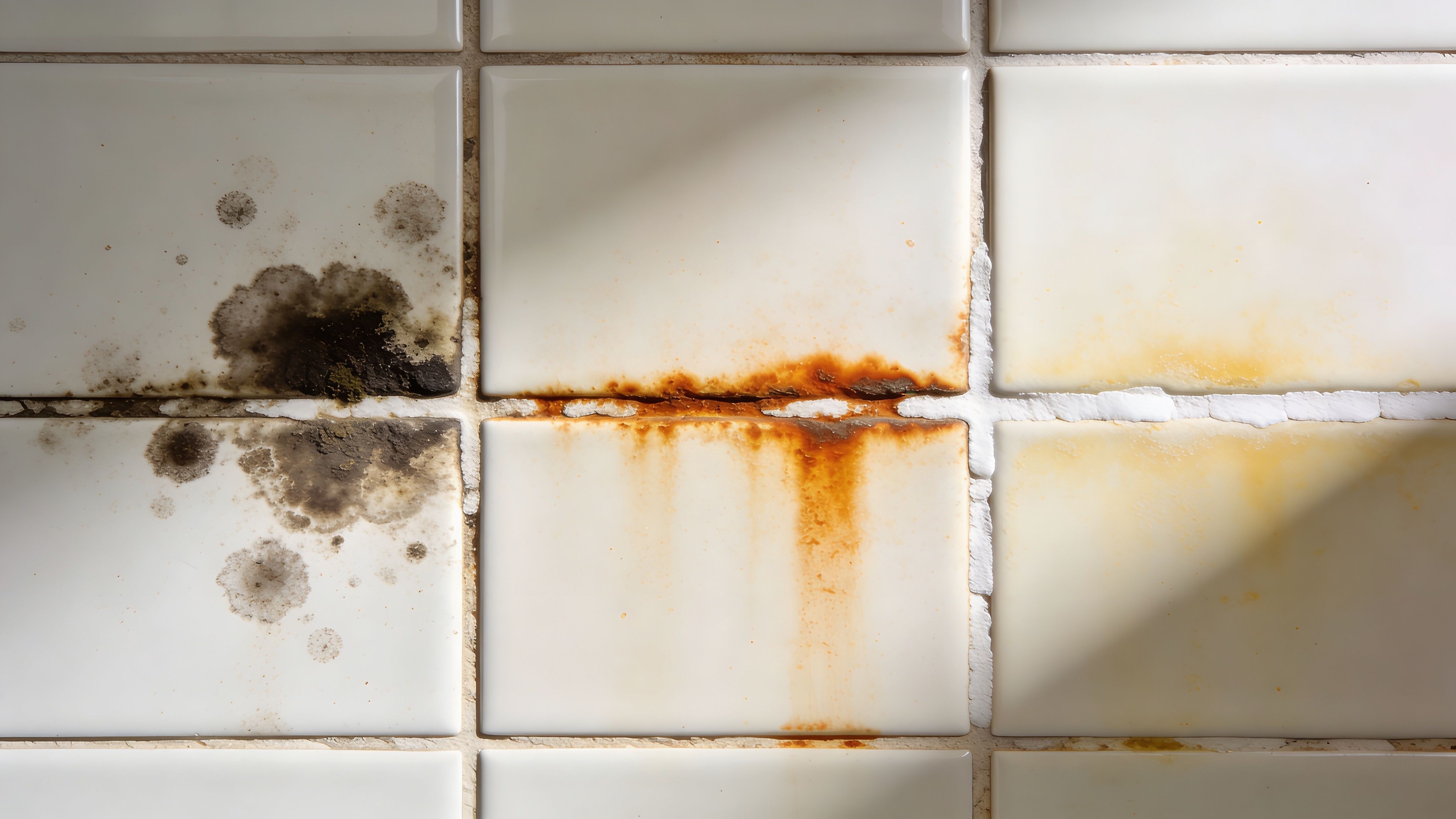
Black or pink spots in shower grout
These spots usually show up where moisture lingers longest. Corners, lower wall rows, niches, and joints near old caulk are the usual trouble areas. Pink buildup is often surface bacteria or soap residue. Black staining is more likely mildew, embedded grime, or moisture working below the surface.
Start by checking the grout itself. If it still feels hard and looks intact, a focused cleaning pass may solve it. If it stays dark after cleaning, feels soft, or keeps coming back in the same spot, the problem is often failed caulk, trapped moisture, or damaged grout instead of simple surface dirt.
Hard water can make the stain look worse and keep cleaners from reaching it well. If you also see chalky white residue or orange lines, this guide on how to remove hard water stains from tile and grout will help you sort out the mineral side of the problem.
Orange or rust-colored staining
Around Reno and Sparks, orange staining often traces back to mineral-heavy water. It shows up where water drips over and over, around fixtures, along shower edges, and sometimes near toilet bases or sink splash zones.
This type of buildup responds better to an acid-based approach than a whitening approach. Vinegar is often the safer first step for DIY work, especially when the grout is white and the surrounding tile is not natural stone. Bleach can brighten some stains, but it does very little against mineral deposits. If the orange color stays after a proper rinse and scrub, you are usually dealing with a deposit that needs dissolution, not more brushing.
Yellow grout in kitchens or around sinks
Yellow grout is often a residue problem before it is a stain problem. I see this a lot on kitchen floors in Reno homes where dust gets tracked in, then mixes with cooking grease and mop water. The grout starts looking dingy, then turns yellow or tan in the traffic lanes.
The usual sources are:
- Grease and cooking film near ranges and prep areas
- Soap residue around sinks
- Dirty mop water that settles into the joints
- Dust mixed with cleaner residue , which is common in our dry, windy conditions
Start with a mild cleaner that can break film without leaving more behind. If that lifts the yellow cast, rinse thoroughly and let it dry before deciding the grout is permanently stained. A lot of homeowners jump to stronger chemicals too early and end up setting residue deeper into porous grout.
White grout that looks yellow often needs film removal first, then stain treatment only if discoloration remains.
Patchy whitening after bleach
Uneven white lines after bleach usually mean the grout cleaned unevenly, not that it cleaned well. One section had surface soil lifted. Another still has mineral scale, old sealer, or embedded grime. In older Reno homes, I also see repairs done with different grout batches, and those joints never respond exactly the same way.
If the grout now looks blotchy instead of dirty, stop scrubbing for a minute and assess what changed. Patchiness can come from bleach on mixed grout types, leftover hard water scale, or grout that has already started to break down. More cleaning may improve it a little, but it rarely makes it uniform again.
At that point, the practical options are limited. Spot repair can help if only a few joints are damaged. Color sealing makes more sense when the grout is sound but permanently uneven. If the lines feel rough, soft, recessed, or inconsistent across the room, professional restoration is usually a better use of time than another weekend of trial and error.
How to Keep Grout White The Ultimate Prevention Strategy
If you want clean white grout to last, cleaning isn't the main strategy. Sealing is.
Freshly cleaned grout looks good because the residue is gone. Sealed grout stays cleaner because it doesn't absorb new mess as easily. That's the difference most homeowners feel right away after a real reset.
Why sealing matters so much
In high-humidity spots like showers, unsealed grout absorbs soap scum 3x faster , and applying a penetrating sealer after cleaning can extend the life of clean grout by 6-12 months while reducing the need for deep cleans by up to 50% , according to Good Housekeeping's grout cleaning guidance.
For Reno homes, sealing matters in bathrooms, but also on kitchen floors and entry tile where dust keeps settling into the joints.
What a workable prevention routine looks like
You don't need an elaborate maintenance plan. You need a few habits that stop buildup before it settles in.
- Dry the shower: Use a squeegee or towel on wet tile after use
- Run the exhaust fan: Moisture left in the room feeds staining
- Wipe spills early: Especially oils, soaps, and anything near sinks
- Use gentler cleaners regularly: Heavy rescue jobs are harder on grout
- Seal after deep cleaning: Let the grout dry fully first
A penetrating sealer is usually the practical choice because it soaks into the grout instead of leaving a surface film. That's especially useful in a home where dust and mineral residue are constant.
Sealing isn't a finishing touch. It's the step that keeps you from doing the same grout job over and over.
The trade-off homeowners should know
Sealing doesn't make grout maintenance-free. It makes it manageable. You'll still need routine cleaning, but you'll spend less time fighting stains that have already sunk in.
If you skip sealing, white grout may look clean for a short stretch and then slide right back to dingy. That's why prevention beats rescue every time.
When to Call for Professional Grout Cleaning in Reno NV
Sometimes DIY gets you there. Sometimes it gets you sweaty, annoyed, and still staring at dirty grout. If you've already tried multiple methods and the lines still look gray, yellow, or blotchy, it's time to stop throwing more chemicals at it.
This is the point where grout cleaning Reno NV becomes a service decision instead of a weekend project.
Signs it's time to hand it off
Call for professional help when you notice any of these:
- Stains won 't lift: The grout still looks dirty after repeated cleaning
- Lines are uneven in color: Some sections brighten, others stay dark
- Grout is cracking or crumbling: Cleaning won't repair damaged joints
- The area is large: Whole-floor grout cleaning is slow and physically rough
- You need a fast reset: Move-outs, rentals, and showings don't leave much time
According to SaniGLAZE's grout myth article, repeated bleach use can deteriorate grout porosity by 25% over time, while professional steam cleaning penetrates 90% deeper without damage and restores original color in over 85% of cases. That's the difference between whitening the surface and pulling buildup out.
What's included in a professional deep clean
For homeowners and property managers in Reno and Sparks, a grout-focused deep clean usually makes the most sense as part of a full reset.
What 's included
- Bathrooms: Tile surface cleaning, grout scrubbing, fixtures, mirrors, sinks, tubs, showers, toilets
- Kitchen degrease: Counters, exterior cabinet fronts, backsplash areas, sink zone detail
- Floors: Vacuuming, mopping, and extra attention to tile joints
- Baseboards: Dust and wipe-down during deep clean service
- Dust removal: Useful after desert wind, remodeling dust, or neglected turnover periods
- High-touch disinfecting: Handles, switches, and frequently touched surfaces
Optional add-ons
- Inside oven
- Inside fridge
- Inside cabinets
- Wall spot cleaning
- Pet hair focus areas
Schedule - Clean - Inspect - Enjoy
The process should be simple.
Schedule - Book online or call, choose your service, and get a confirmation plus arrival window.
Clean - Cleaners arrive with supplies and follow a checklist-based clean.
Inspect - A quick quality check catches missed areas and confirms priorities were handled.
Enjoy - You come back to a home that feels reset instead of half-finished.
Most cleans range from $250 to $600 depending on size, condition, and add-ons.
Reno desert dust gets into every low surface in the house. Add hard water and busy schedules, and grout is one of the first things to slip.
Your Grout Cleaning Questions Answered
How long does grout cleaning take
A small shower may take much less time than a full kitchen and main floor tile reset. For professional service, timing depends on square footage, buildup, and whether the grout just needs cleaning or also needs follow-up sealing or touch-up work.
Are supplies included
Yes. For a professional clean, cleaners should arrive with supplies and equipment needed for the checklist-based service.
Can you help with rental turnovers or move-outs
Yes. That's often when grout matters most because dingy bathroom lines and kitchen floor grout stand out during walk-throughs. Property managers in Reno and Sparks usually want the home looking clean, bright, and ready for the next occupant without delays.
What if my home gets dusty fast
That's common here. Desert winds, pollen, and everyday foot traffic make floor grout look dirty sooner than homeowners expect, even in otherwise tidy homes.
Reno weekends book up fast, and traffic across town doesn't help when you're trying to fit one more project in before guests arrive or keys change hands.
Book your cleaning with Altitude Cleaning Crew - your trusted grout cleaning Reno NV provider in Reno. Call 775-376-5527 or book online - schedule your cleaning appointment